To explore new ways to control this fundamental force of nature, scientists from the City College of New York (CCNY) trapped light inside a magnetic metamaterial and made the material itself 10 times more magnetic in the process.
Next up, magnetic lasers and lots and lots of more magnetic memory savings.
(Note that Popular Mechanics links the phrase “magneto-optical technologies” to an article claiming that the US has somehow managed to reverse-engineer alien technology from crashed UFOs…Um…OK…)
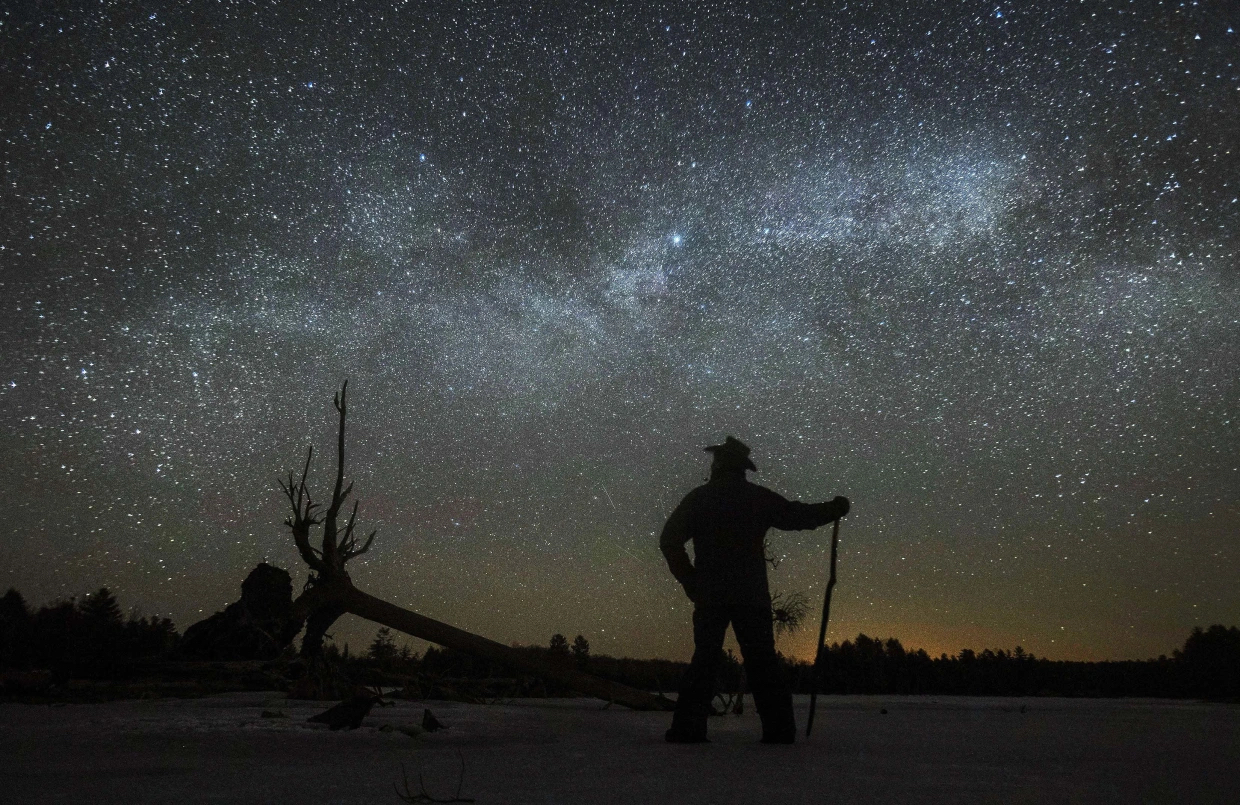
A new study that analyzes data from more than 50,000 amateur stargazers finds that artificial lighting is making the night sky about 10% brighter each year.
Each spring in my Current Events and Global Issues class, I have students read about environmental issues.
Pollution is obviously related. But they almost never guess the “seven types of pollution” (yes, I know some people country eight, or ten, or even twelve…it all depends on how you categorize them).
Maybe it’s because most of my students (to the order of 90%) come from medium and large cities. To me, having grown up in a mostly rural area (in elementary school, my town had about 400 residents and in junior and senior high I lived in a “queen village” that had — gasp — an incredible 4,000 residents) — well, being surrounded by darkness was no big deal.
We could see stars from our backyard. Lots of stars. We learned all the major constellations (of the Northern Hemisphere, anyway, since that’s what we could see).
And more importantly we could see lightning bugs (or “fireflies” or “glowworms” or “candle bugs” etc). Decreasing water quality is thought to contribute to their declining numbers, but it’s far more likely that our insistence on lighting up the skies all the time are preventing them from finding a mate (hence the reason they “flicker” at night).


 M Thomas Apple Author Page