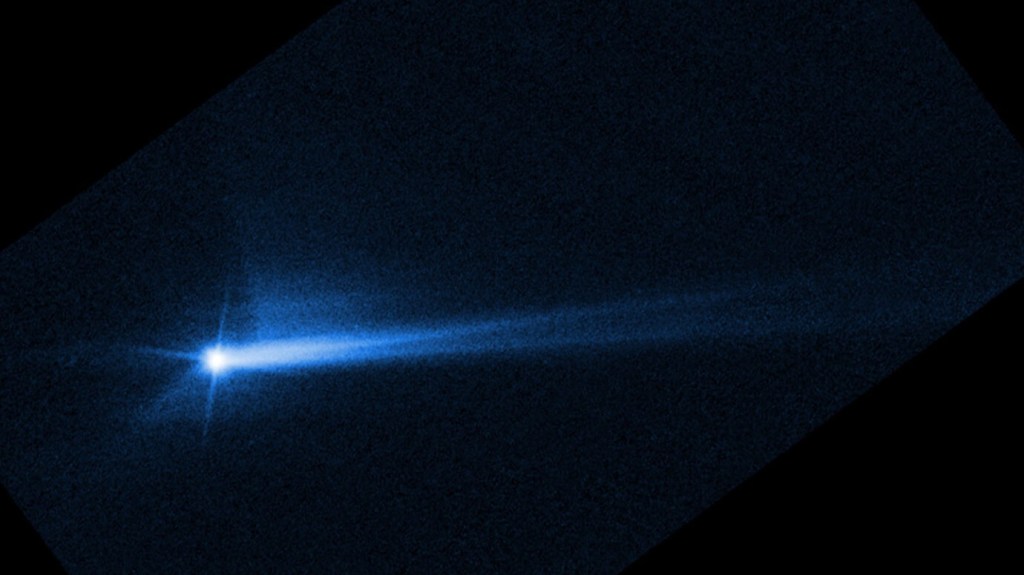
A change of 32 minutes in orbit — but only 4% of the total orbital period. To deflect an asteroid away from Earth, it’d better be done several years in advance. 🌏
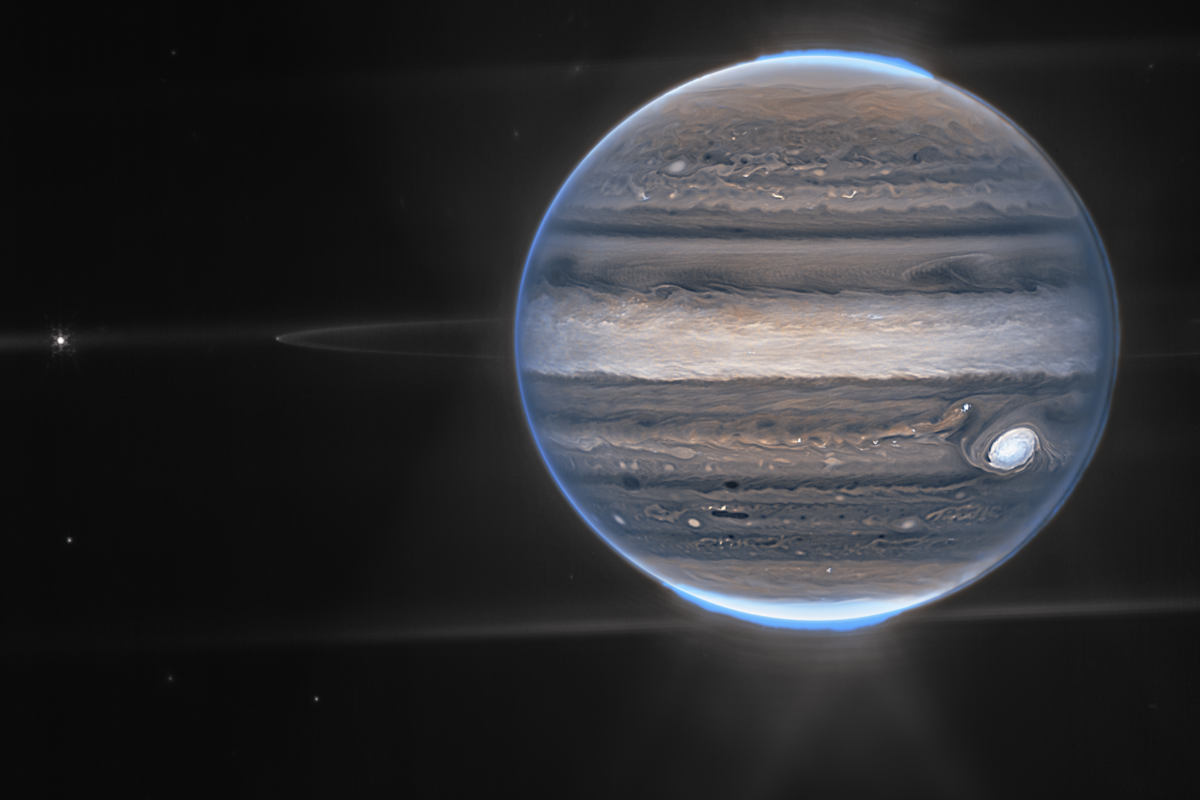
Courtesy NASA. Note that the blue, white, green, yellow, and orange colors are artificial, only added to make features revealed by infrared stand out for human eyes. You can see the planet’s rings, aurora, and two “tiny” moons (at left; they’re not really that tiny!).
“We’ve never seen Jupiter like this. It’s all quite incredible,” said planetary astronomer Imke de Pater, of the University of California, Berkeley, who helped lead the observations.
“We hadn’t really expected it to be this good, to be honest,” she added in a statement.
The above is supposed to be in “quote” format, but WP really messed up this feature when they switched to so-called “block” mode (which I can’t stand).
Anyway, the image is fairly spectacular, from the new James Webb Space Telescope which is positioned 1 million miles away from Earth (i.e., in the second LaGrange point, or L2).