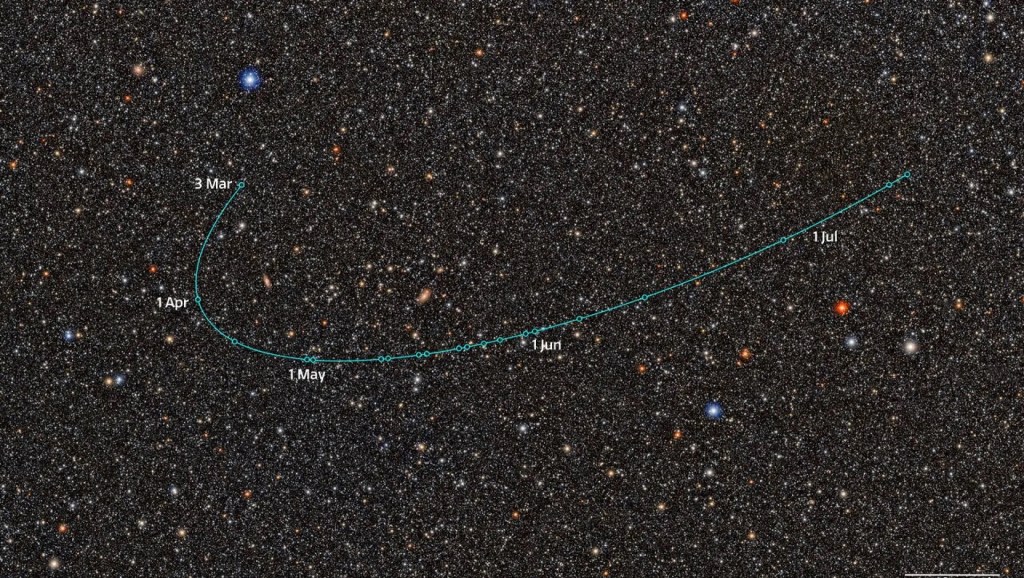
The new dwarf planet candidate joins thousands of known objects in an area of the solar system beyond Neptune known as the Kuiper Belt. And the scientists say there may be more of them.
The Vera C Rubin Observatory (in Chile) which enabled astrophysicists from Harvard to spot “2026 ED138” will be featured in an upcoming documentary in mid-December. Probably too early to confirm the finding, but still, I hope they keep finding more. The Kuiper Belt is out there. WAY out there…
A newly discovered object is the most-distant body ever observed in the solar system—and the first object ever found orbiting at more than 100 times the distance from Earth to the sun.
Keep in mind this is in addition to several other dwarf planets — Eris, the “Goblin,” and Sedna. Oh, and of course Ceres (which is much closer than the others). And Pluto. Which used to be a “planet” and not a “dwarf planet” (I say COUNT THEM ALL! Planet / dwarf planet / who cares).
So why is 2018 VG18 important?
Because it adds to the existing body of knowledge indicating the possible existence of a mysterious “Planet 9” (which used to be Planet X before Pluto got demoted) — which still has not been actually observed (emphasis!) and yet is the source of endless internet hoaxes, influencing all the whackadoodles who think we’re about to be invaded by alien hordes and/or that the Nibiru Apocalypse is coming / has come / will have had already been coming repeatedly (the date keeps getting changed when the end fails to occur).