M Thomas Apple Author Page

Science fiction, actual science, history, and personal ranting about life, the universe, and everything

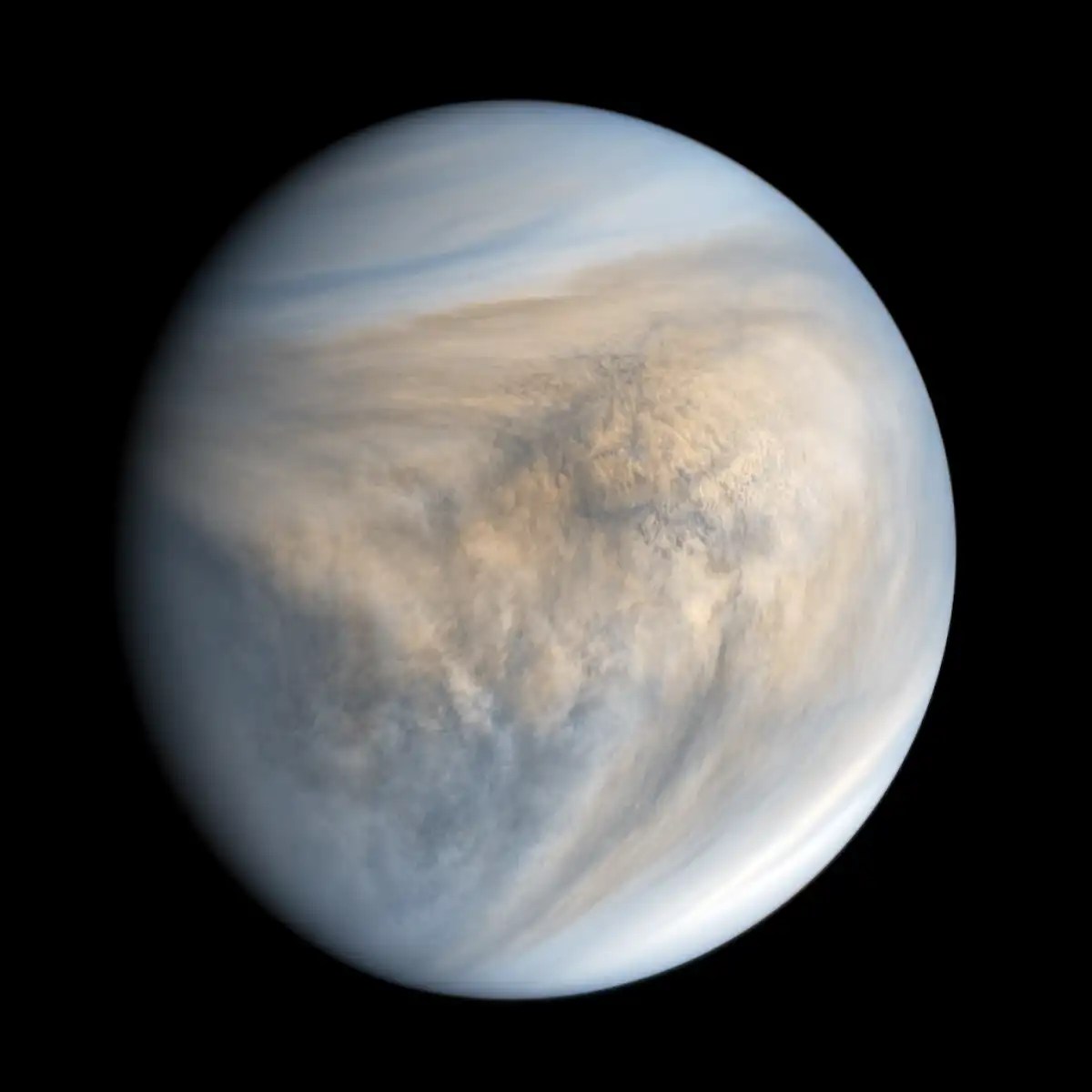
Venus used to have as much water as Earth. What happened?

May 7, 2024
MThomas

Over time, that water has nearly all been lost. Figuring out how, when and why Venus lost its water helps planetary scientists like me understand what makes a planet habitable — or what can make a habitable planet transform into an uninhabitable world.

https://theconversation.com/venus-is-losing-water-faster-than-previously-thought-heres-what-that-could-mean-for-the-early-planets-habitability-229342

The process in which Venus lost most of its water is called “hydrodynamic escape.” When Venus got too hot, the hydrogen in its atmosphere left. (The linked article explains this using a metaphor of having too many blankets on your bed.)

However, Venus is still losing hydrogen, even though there is too little of it for hydrodynamic escape to work. So, logically, there must be another process at work: “HCO⁺ dissociative recombination,” in which individually positively charged atoms of hydrogen, carbon, and oxygen in the atmosphere react with negatively charged electrons. The process was first examined on Mars, and based on a reexamination of results from previous missions (Pioneer Venus 1 and Pioneer Venus 2), the same research group thinks it’s time to try it on Venus…perhaps a first step to seeing whether Venus had life at some point.

Water molecules detected on the surface of an asteroid in space for the first time

March 13, 2024
MThomas

Water molecules have been detected in asteroid samples returned to Earth, but this marks the first time that the molecules have been discovered on the surface of an asteroid in space. The team studied four silicate-rich asteroids using data from the now-retired Stratospheric Observatory for Infrared Astronomy(SOFIA). 

https://www.popsci.com/science/water-asteroid-space/

The asteroids in question are Iris (124 miles / 200 km in diameter) and Massalia (84 miles / 135 km). Both are in the asteroid belt between Mars and Jupiter. Iris is about the size of the US state of Maryland, while Massalia is roughly the size of Connecticut.

Note that the same observatory also found water on the Moon, about a “12-ounce bottle” worth. Not nearly enough for a settlement, but where there’s surface water (albeit trapped in soil on the surface), there’s likely to be more underneath.

(See also https://www.swri.org/press-release/swri-scientists-identify-water-molecules-asteroids-the-first-time — the PopSci linked article above essentially plagiarised almost its entire text. Bad scientist, bad.)

Original article here: Arrendono et al. (2024) Detection of molecular H20 on nominally anhydrous asteroids. Planet. Sci. J. 5. 37 doi 10.3847/PSJ/ad18b8 – good luck trying to read it!

Blog at WordPress.com.
The Silmaril Chick

Writing Fanfiction in the worlds of Tolkien and Beyond!

Our Awesome Universe

Learning more about our place in the universe...

TechWordly

Best Tech Gadgets Advise

Weird Science Marvel Comics

Marvel Comics Reviews, Previews and News

Universe discoveries

Writing blogs is miracle I am a writer blogger and my site mission is to give information on maximum information to audiences

Robby Robin's Journey

Reflections of an inquiring retiree ...

Fox Reviews Rock

Rock & Metal Reviews That Hit Hard

My little corner of the world

Short stories | Reflections | Poetry

DimmaJo Blog

Read | Reflect | Grow