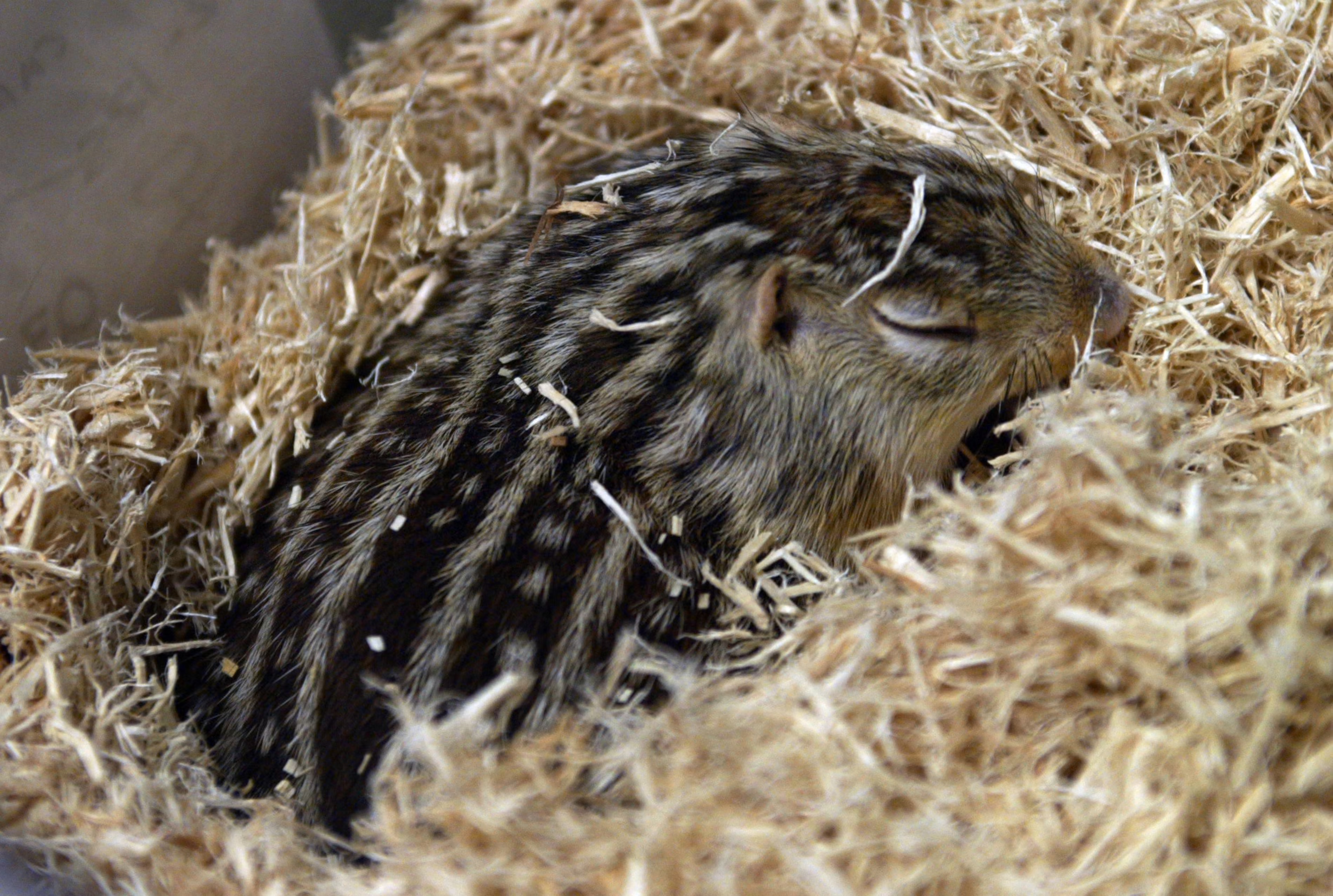
Ground squirrels reduce their metabolism during hibernation; could humans do it, too, with some genetic tweaks?
Hibernation is extremely complex – after all, it affects every cell in the body – and there are almost certainly multiple switches involved in the process. MIT neuroscience researcher Siniša Hrvatin has identified another brain region that seems to play a key role in the process. In a paper published earlier this year (but not yet peer-reviewed), he and his team targeted a region known as the preoptic area, which plays a key role in metabolism and temperature. By activating neurons in the preoptic area of hamsters, the researchers put them into torpor, lowering the animals’ body temperature to 15C.
The key would be whether this is possible in humans.
And, of course, whether revival can be timed and automated – or perhaps with robotic (AI) assistance…
Of course, science fiction has posited “sleeper ships” for decades now. The Songs of Distant Earth (Arthur C. Clarke, one of the “Big Three”) is probably the most well-known of the classic sleeper ship stories, but there are plenty of others to choose from…
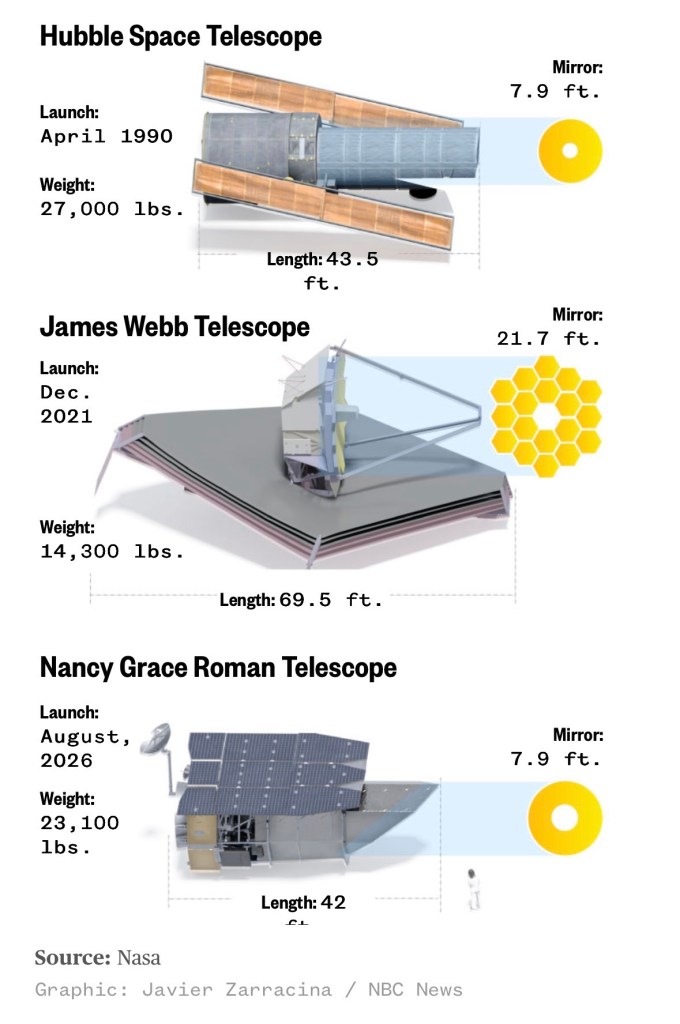
“In the mission’s first five years, it’s expected to unveil more than 100,000 distant worlds, hundreds of millions of stars, and billions of galaxies,” [Julie McEnery, senior project scientist] said.
It should be ready for launch in August, to be parked at the L2 Lagrange space near James Webb ((which has been there since 2021).
Two decades in the making. Yet “under budget and ahead of schedule”? Really?
I’m all for discovering tens of thousands of possibly inhabited worlds and learning more about dark energy and dark matter. But I’d also like to see a little more practical tech from NASA. How will this help us settle the solar system and figure out how to visit other systems?
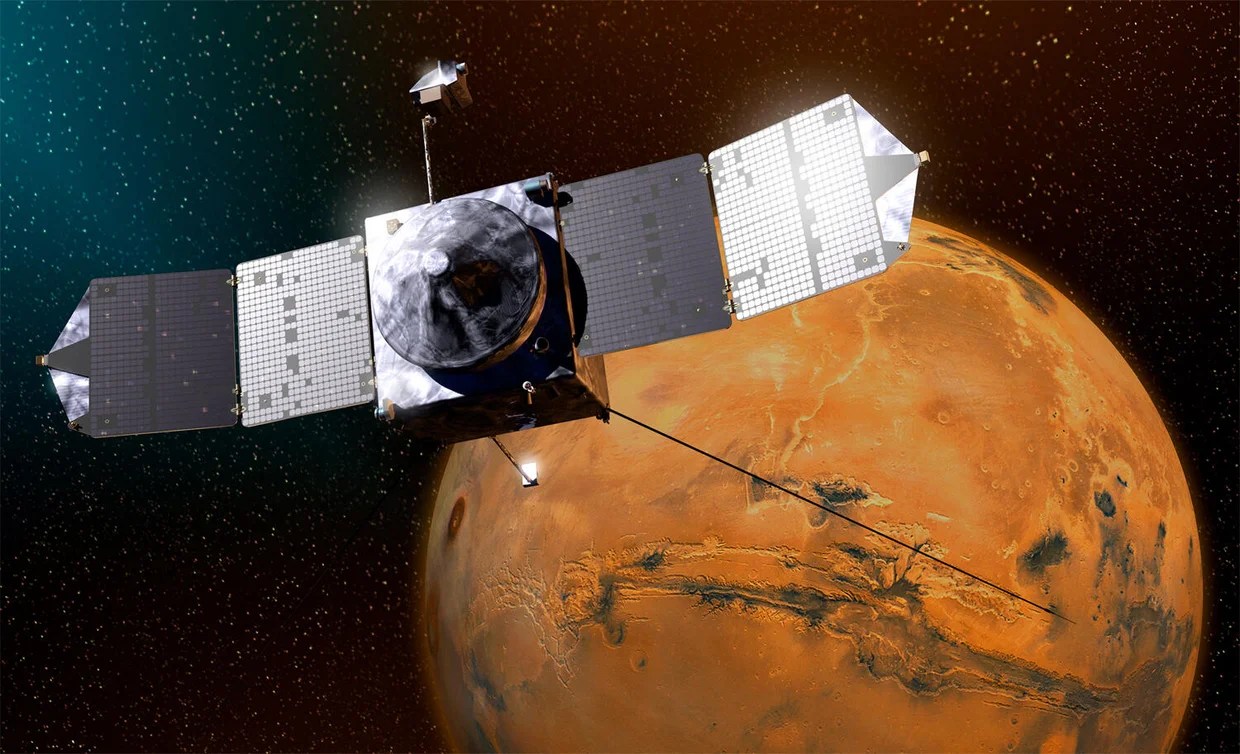
Originally designed to operate for just one year around Mars, MAVEN’s mission was repeatedly extended, enabling the most extensive research into the workings of the Martian atmosphere ever attempted.
Thanks to MAVEN, we know how the Mars atmosphere has been eroded by solar wind over billions of years. Designed to work for a single year, it operated for over eleven years.
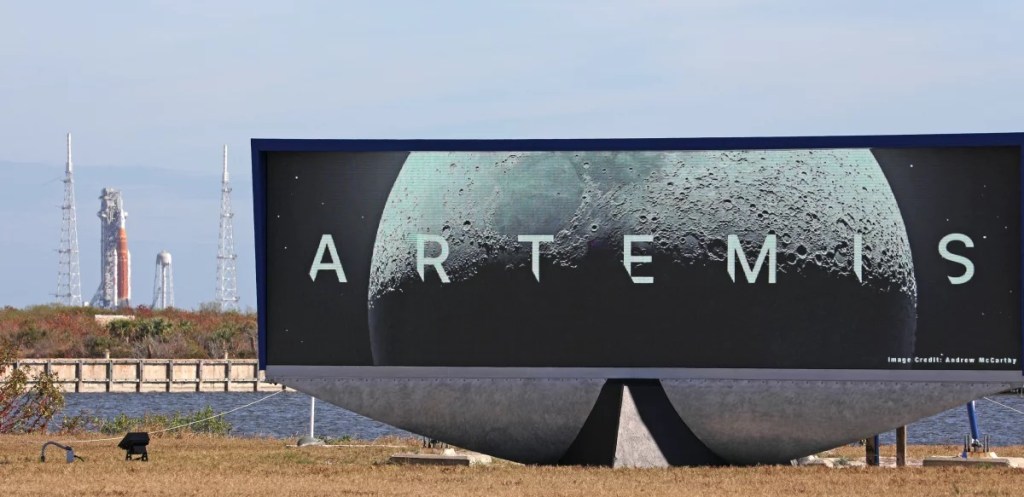
Just one day after NASA said it was eyeing a potential March 6 launch date for the Artemis II lunar mission, the space agency said Saturday that complications with the rocket could delay all launch attempts in March from the Kennedy Space Center in Florida.
(Btw, WordPress, the “quote” field used to have a separate area where you could put a link to the quote’s source. Where did that go? Nothing like helping the spread of unverified fake news…)
NASA’s plans for Mars sample return are effectively cancelled as part of a bill approved by the U.S. Congress, ending efforts to collect Perseverance rover samples that could contain evidence of alien life.
In two separate papers published Monday in the Astrophysical Journal Letters, astronomers zeroed in on the TRAPPIST-1 system, which consists of seven rocky planets that orbit a single star. Both studies outlined initial results from observations by NASA’s James Webb Space Telescope, suggesting that one planet in particular, known as TRAPPIST-1e, may have a nitrogen-rich atmosphere like Earth’s, though follow-up studies are needed to confirm the discovery.
Trappist 1e is in the “Goldilocks zone” in orbit around its star (i.e., not too cold, not too hot, just right). However, the Webb telescope can’t determine whether its atmosphere has any carbon dioxide, hydrogen, or oxygen, only nitrogen. Yet nitrogen is a clear sign that life is possible, because without nitrogen, DNA and other proteins are not possible. Of course, it could be simply a whole lot of microbes. Or even just ammonia.
Closer to home, the Mars rover Perseverance has found evidence of life in the distant past. Maybe. It found evidence that certain rock features may have happened because of microbes.
May.
That’s how science works, folks. A whole lot of maybes.
The researchers argue that “if” trees could be planted on Mars…
OK, just stop right there. I’m pretty sure Mars will struggle to support even grass, let alone trees.
And the argument that, due to a lack of oxygen, flammable wooden structures in space would not be in danger strikes me as a bit ludicrous…surely there would be oxygen inside the wooden structures?
And, you know, I do think I’ve seen this before some where…nah…
According to Thorne, who served as a consultant on the science of Interstellar, quantum mechanics could hypothetically explain a way to time travel via wormhole. So far, it’s a thought experiment that leads to the conclusion that you’d lose information along the way—not very practical.
First off, I’m incredibly annoyed at the way WordPress has screwed up the “quotation” function. It seems they are more focused on encouraging bloggers to use AI to write.
Uh. I don’t need AI. I blog. The end. WTH is the point of using AI to write my thoughts? It’s already being trained to USE my blog in the first place! Idiots.
OK. Second, the Popular Mechanics article I’m linking to is entitled “Interstellar travel is possible if we break into a higher dimension, scientists say.”
Only, that is NOT what scientists say. It’s still a thought experiment!