If you were going to open up a shop, what would you sell?
OK, OK, in all seriousness, I would probably open a jazz café / restaurant. But only on the weekends.
We live at the foot of a mountain trail, and it’s really popular with retired folks and young families.
My wife and I have already begun thinking about our “second life” after retirement, and I’ve been frankly bored with the whole EFL teaching thing for a while now.
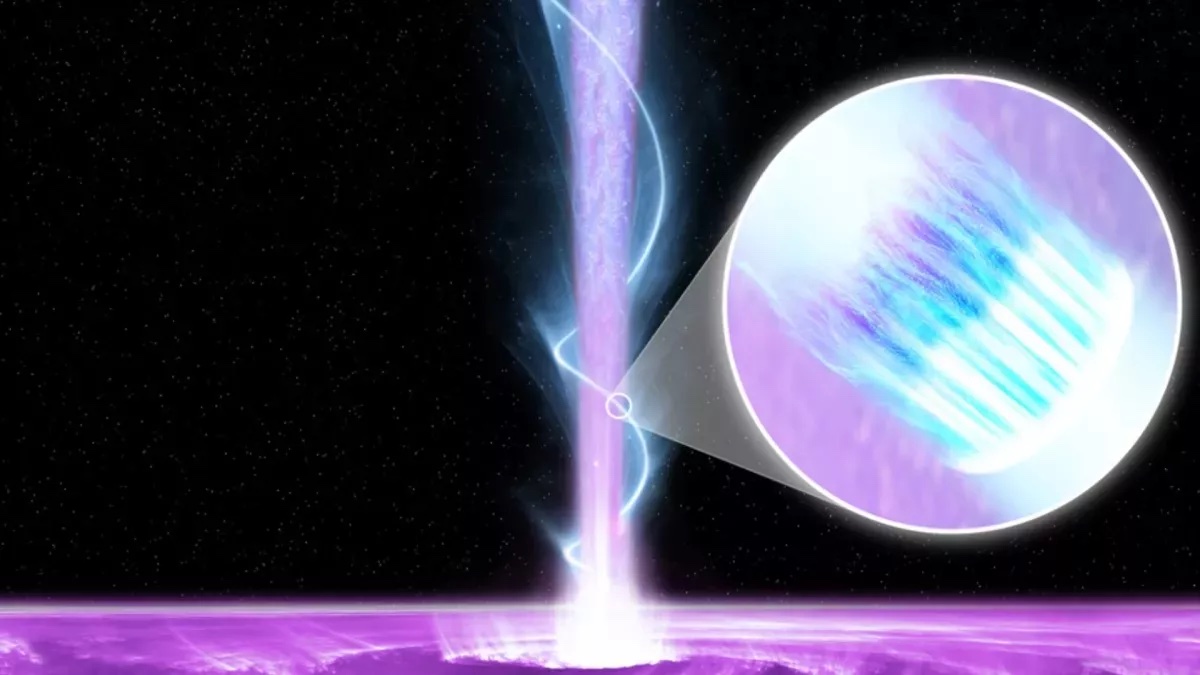
A NASA mission has observed a supermassive black hole pointing its highly energetic jet straight toward Earth. Don’t panic just yet, though. As fearsome as this cosmic event is, it’s located at a very safe distance of about 400 million light-years away.
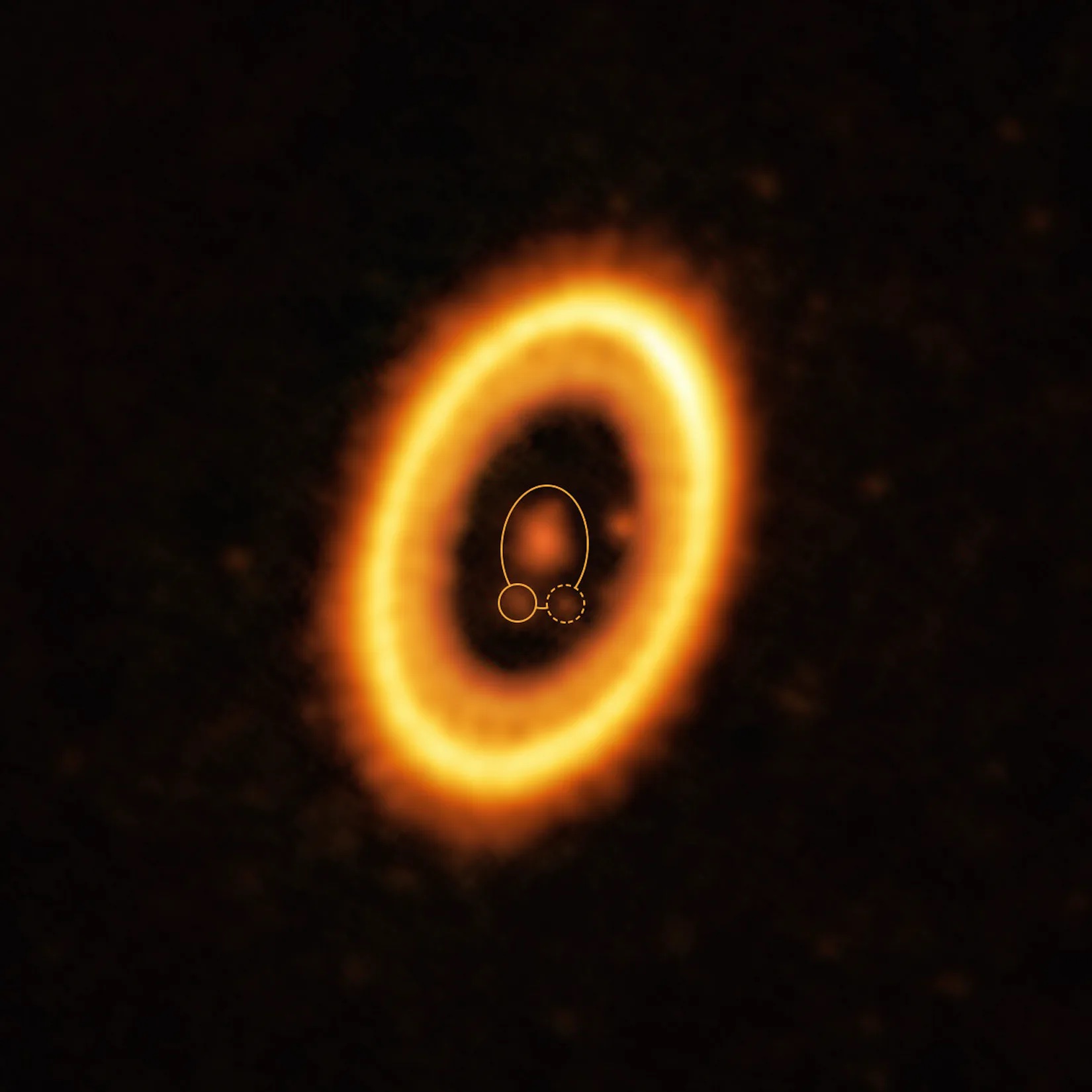
The two planets are in circles that kind of look like, er….let’s just call the whole thing a cosmic donut (the outer “halo” is the protoplanetary disc of gas and dust from which planets eventually coalesce).
We already know that more than one object can share the same orbit; Jupiter has a collection of 120,000 asteroids following its same path around the Sun, for example. Earth has one, too. But although it’s theoretically possible, astronomers have never discovered two whole planets sharing the same orbit around a star before.
Hmm…the language here is a bit misleading. The two objects are technically not both “planets.”
The article comments later on that the object in the dotted line circle is “a cloud of debris about twice the mass of our Moon trailing a bit behind the innermost gas giant” in one of its LaGrange points (where “Trojan” asteroids follow gas giants such as Jupiter and Saturn). So it’s way too early to say that “two” planets formed in the same orbit.
Still, this is the first time that astronomers have spotted two such objects this close to one another in the same orbit. Who knows if both will remain viable (the debris cloud could become partly or mostly absorbed by the gas giant with the rest either being expelled or thrust into separate orbits).
So why is this called a “cosmic unicorn”?
Apparently because although such Trojans “are allowed to exist by theory, but no one has ever detected them.”
Um. OK.
So, like, totally NOT at all like this? Kind of a bummer, really…
Superconductors are materials that allow electrical current to flow with no resistance, a property that would revolutionize power grids where energy is lost in transmission as well as advance fields such as computing chips, where electrical resistance acts as a speed limit.
The hallmark of science is replicability. I.e., can two independent teams of researchers, using similar means, methods, and materials in completely different settings, replicate the findings of the original team?
So…
Researchers from at least three Chinese universities have in recent days said they produced versions of LK-99 with varying results. One team from the Huazhong University of Science and Technology posted a video purporting to show the material levitating over a magnet, which is important because true superconductors can float over a magnet in any orientation, without spinning like a compass.
But…
…another team, from Qufu Normal University, said they did not observe zero resistance, one of required characteristics of a superconductor. A third, from the Southeast University in the eastern Chinese city of Nanjing, said they measured zero resistance, but only at a temperature of 110 Kelvin (-163 degree Celsius).
And…
The possible bad news for LK-99 is that the superconducting field is full of materials that hold promise at first but fall apart under scrutiny. Researchers even have a handy name for them — unidentified superconducting objects.
A.k.a “USOs.” As the linked article points out, plenty of smart, hardworking researchers have claimed to have found a “superconductor,” but then their claims simply fall apart under scrutiny.





 M Thomas Apple Author Page