This family of comets originated from a large parent comet that broke up into smaller fragments well over a thousand years ago. The sungrazers continue to orbit around the sun today.
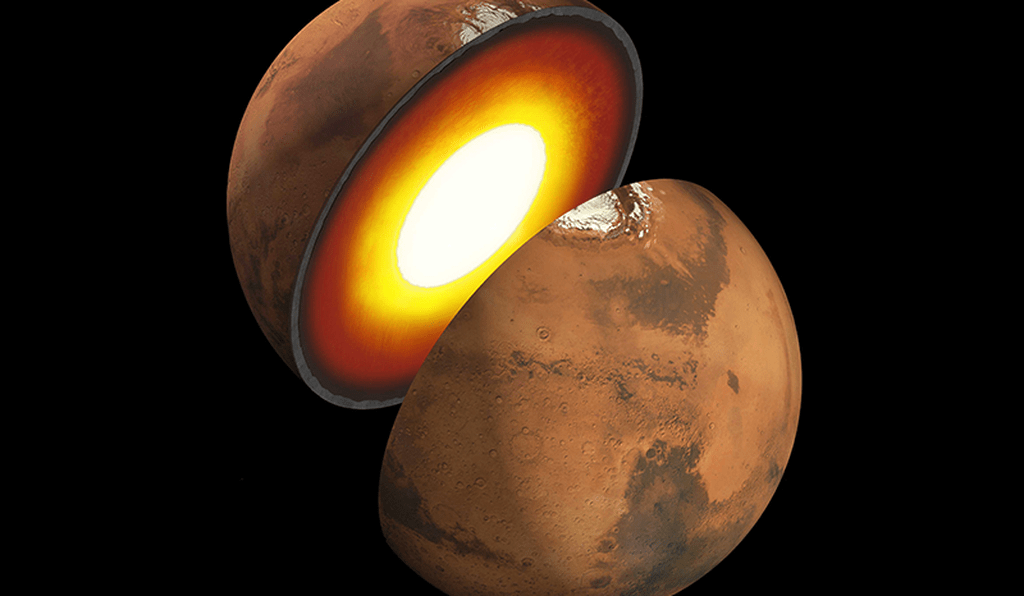
Despite the lack of large marsquakes, the researchers were able to estimate how thick Mars’ crust is. They predict it has three layers—but possibly two—that are between 12.4 and 23 miles thick, reports Nature. Mars’ crust is considerably thinner than that of Earth, which can be up to 25 miles thick—and that’s surprising, reports Science.
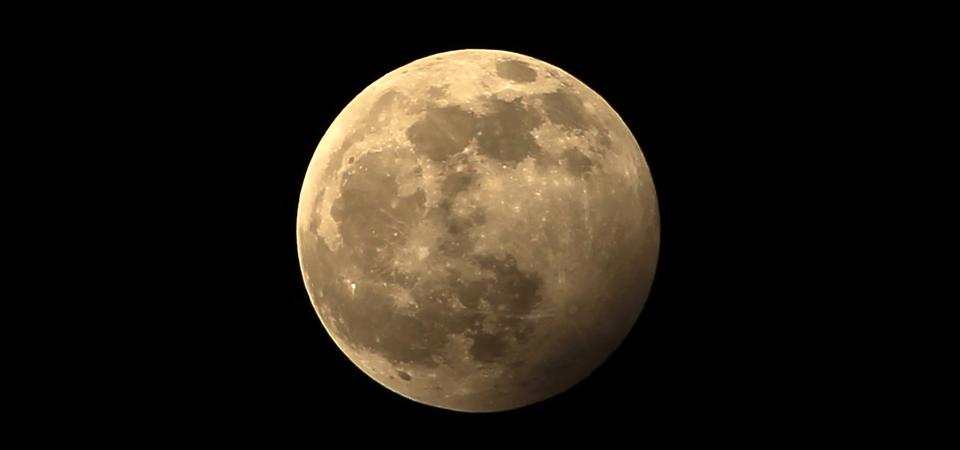
Visible from the Americas, Australia and Asia, the “Beaver Moon” will pass through Earth’s outer shadow (penumbra) at 07:32 Universal Time, causing a slight penumbral lunar eclipse that will see 83% of the Moon visibly darken at 9:42 Universal Time…
…the team’s results suggest that, while the physical processes that drive the structure of the Universe and the structure of the human brain are extremely different, they can result in similar levels of complexity and self-organisation…
On the scorching hot planet, hundreds of light-years away, oceans are made of molten lava, winds reach supersonic speeds and rain is made of rocks. Scientists have referred to the bizarre, hellish exoplanet as one of the most “extreme” ever discovered.
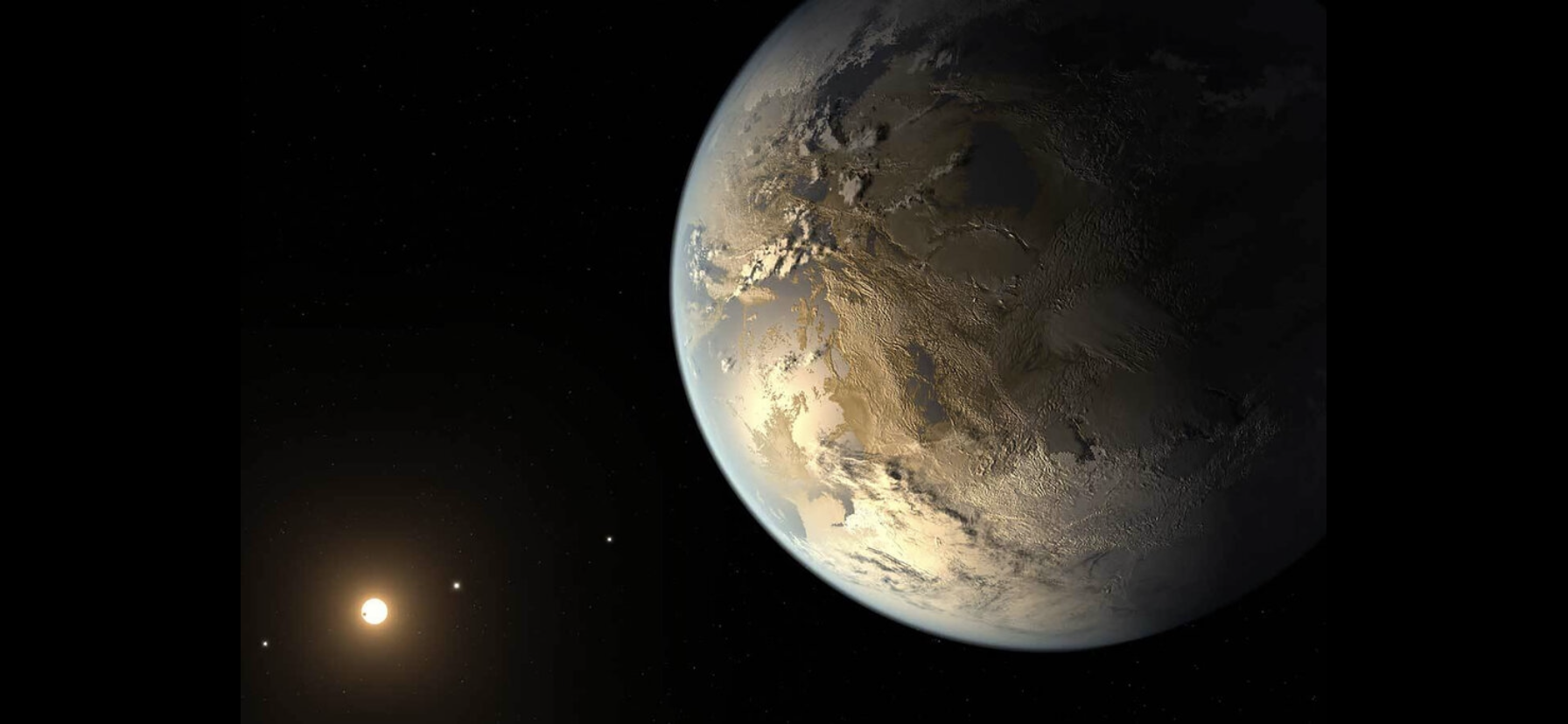
According to NASA estimates there are at least 100 billion stars in the Milky Way, of which about 4 billion are sunlike. If only 7 percent of those stars have habitable planets — a seriously conservative estimate — there could be as many as 300 million potentially habitable Earths out there in the whole Milky Way alone.
It takes a while to collect, sort through, analyze, write up, endure peer review, and publish data from scientific projects.
That’s why finally we’re seeing this, 11 years after Kepler was launched to scour the galaxy for exoplanets.
Now the real challenge will be figuring out how to get there…
It’s time to move on the next factor in the Drake equation for extraterrestrial civilizations: the fraction of these worlds on which life emerges. The search for even a single slime mold on some alien rock would revolutionize biology, and it is a worthy agenda for the next half-century as humans continue the climb out of ourselves and into the universe in the endless quest to end our cosmic loneliness.
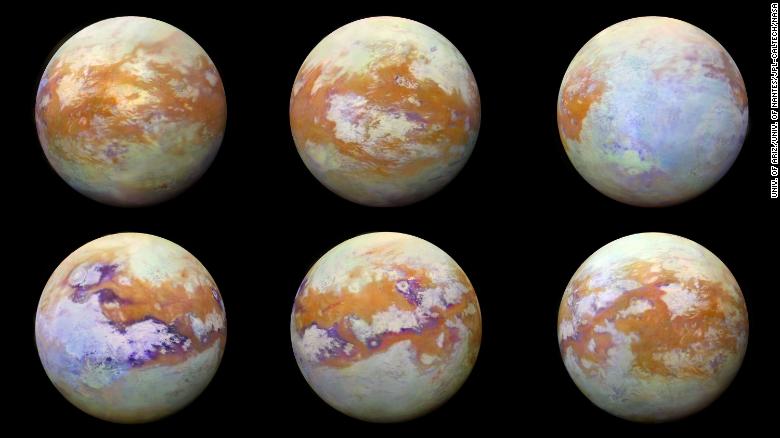
Cyclopropenylidene is the second cyclic or closed-loop molecule detected at Titan; the first was benzene in 2003. Benzene is an organic chemical compound composed of carbon and hydrogen atoms…Cyclic molecules are crucial because they form the backbone rings for the nucleobases of DNA, according to NASA.
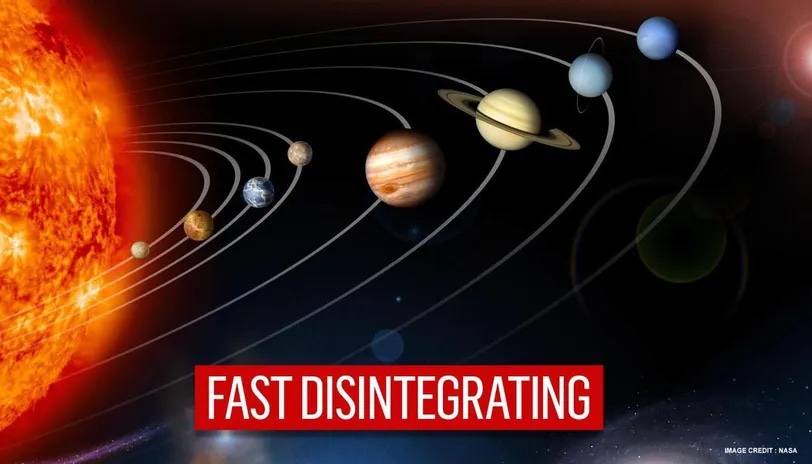
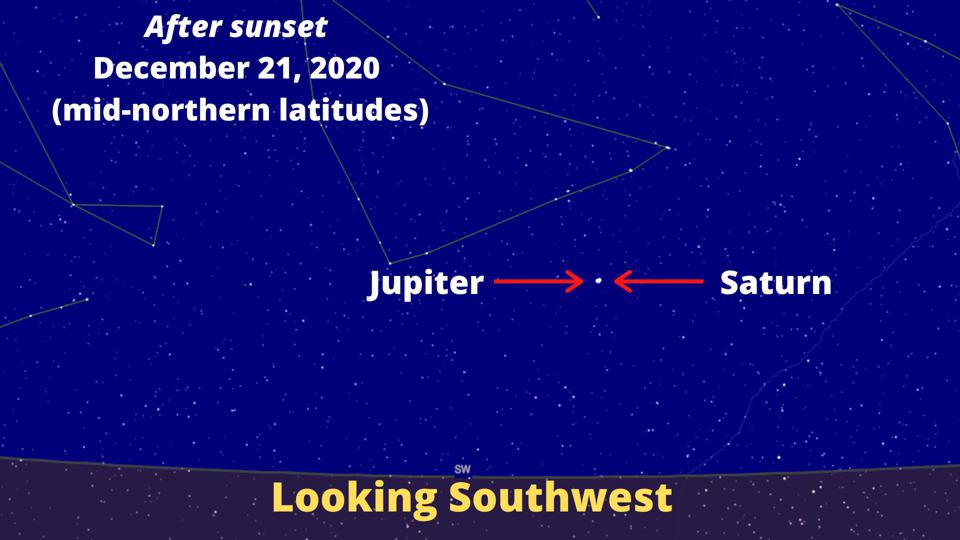
Mars to the East, Jupiter to the South…hey, is that a Saturn?
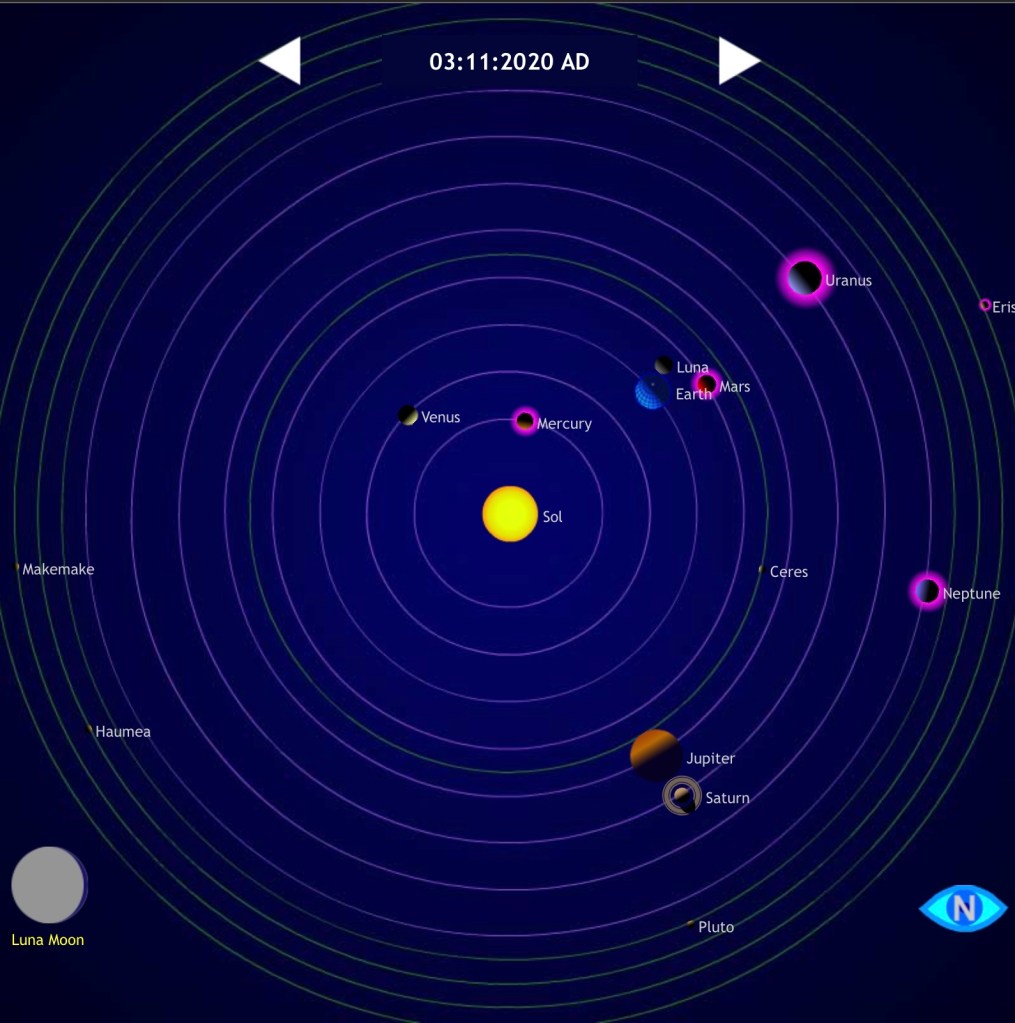
Also, go over to https://www.theplanetstoday.com to see how Jupiter and Saturn are both currently in a heliocentric conjunction (i.e., lined up with the Sun) on November 2nd.




 M Thomas Apple Author Page