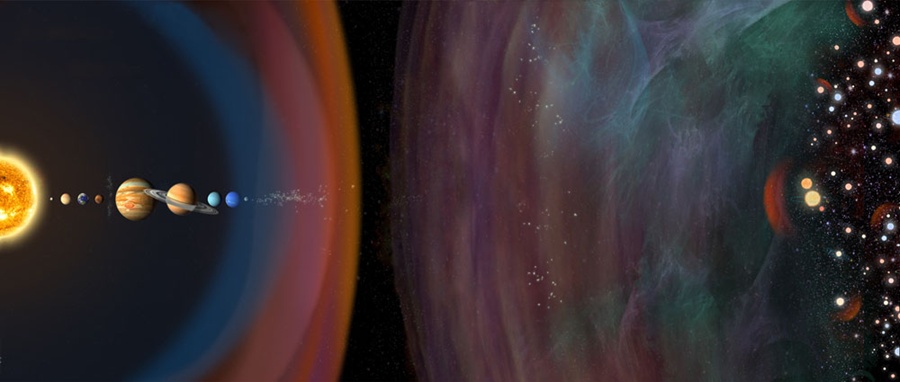
“It is time to venture beyond the known planets, on toward the stars.”
Yes, I agree, but I don’t see how any of the ideas in this article will help us achieve that goal. I think the problem is the reliance on conventional means of propulsion. Clearly some sort of bending of space/time is needed to leave the solar system faster than, say, a decade, let alone reach other star systems.
Dawn already used an ion engine (way too slow). The solar gravitational lens is neat but it won’t take us there physically. The “space-based laser” idea is funky but impractical.
Getting off Earth should help (Moon Base, Mars, somewhere else like Triton). Escaping our own planet’s gravity well takes way too much effort. But after that, it’s time to forget about rockets and start thinking of truly “wacked out” ideas.
For starters, Discover, how about dumping your absolutely awful page design? Yeesh, this page is hard to read.
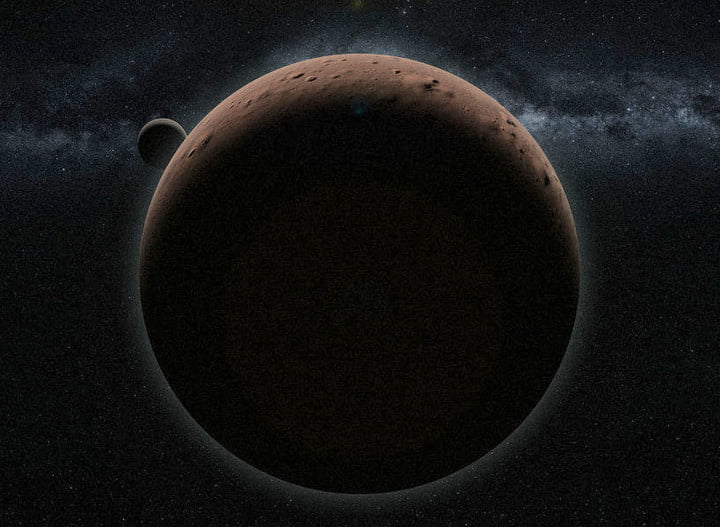
The three choices fit IAU naming regulations and are associated with mythological creatures and figures that reflect aspects of 2007 OR10’s physical properties, which include rock, water ice, possibly methane ice, and a surface that’s red in color.
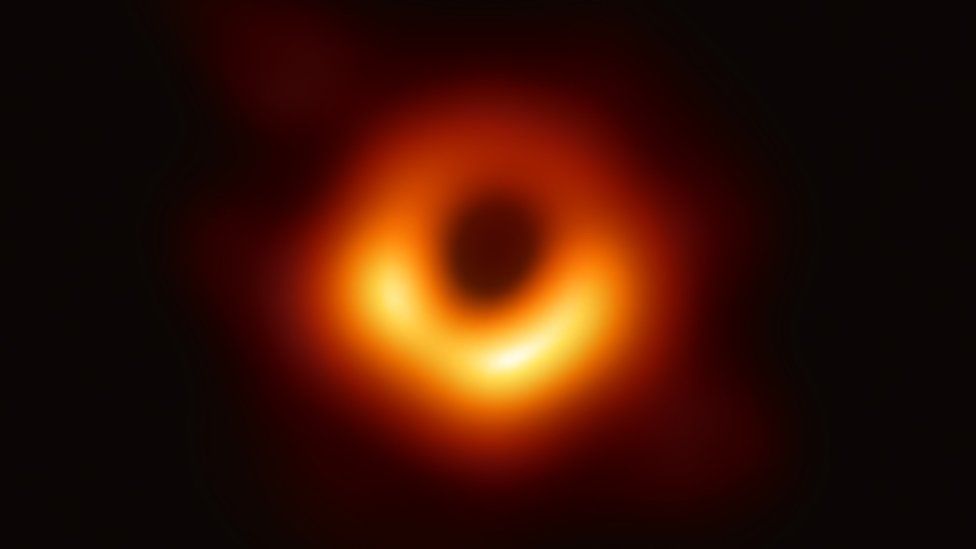
“What we see is larger than the size of our entire Solar System,” he said.
“It has a mass 6.5 billion times that of the Sun. And it is one of the heaviest black holes that we think exists. It is an absolute monster, the heavyweight champion of black holes in the Universe.”
So this demonstrates two things.
One – Einstein was right (when wasn’t he, at this point).
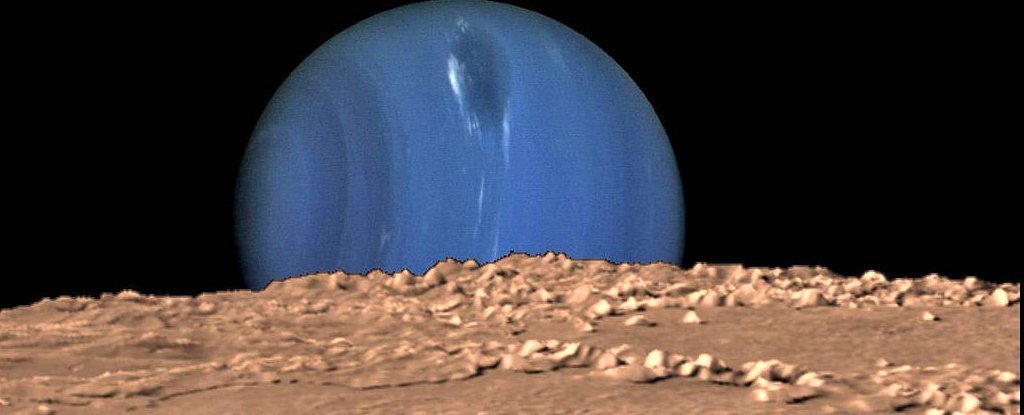
We’ve learned a lot about Neptune’s largest moon, Triton, since it was first discovered in 1846. Some scientists believe it could be an “ocean world” with liquid water — and maybe even harbor life.
And now, pending approval, we might soon get our best glimpse yet. NASA’s Jet Propulsion Laboratory proposed on Tuesday [19 March 2019] at a conference in Texas to send a spacecraft called “Trident” to Triton — with the goal of sussing out whether it’s a habitable world.
A low-cost mission that would give us decent photos and even video of Triton, Io, and even Venus. Let’s do this.
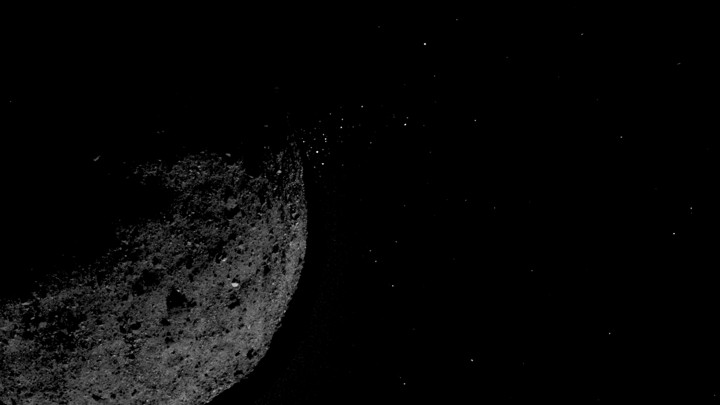
OK, not actually glitterspray. Lots of tiny moons. Micromoons?
Exploding out of Bennu, which is an asteroid circling way out near Pluto right now, but will intersect Earth’s orbit in September 2060. And in 2135. And in 2175. And maybe soon again after that.
Doomsayers, prepare yourselves!
(Cumulative 1 in 2700 chance it’ll hit Earth by then. Too bad Bruce Willis won’t be around to save us.)


 We’ve learned a lot about Neptune’s largest moon, Triton, since it was first discovered in 1846. Some scientists