M Thomas Apple Author Page

Science fiction, actual science, history, and personal ranting about life, the universe, and everything

3I/Atlas coming to a planet near you!

December 19, 2025
MThomas

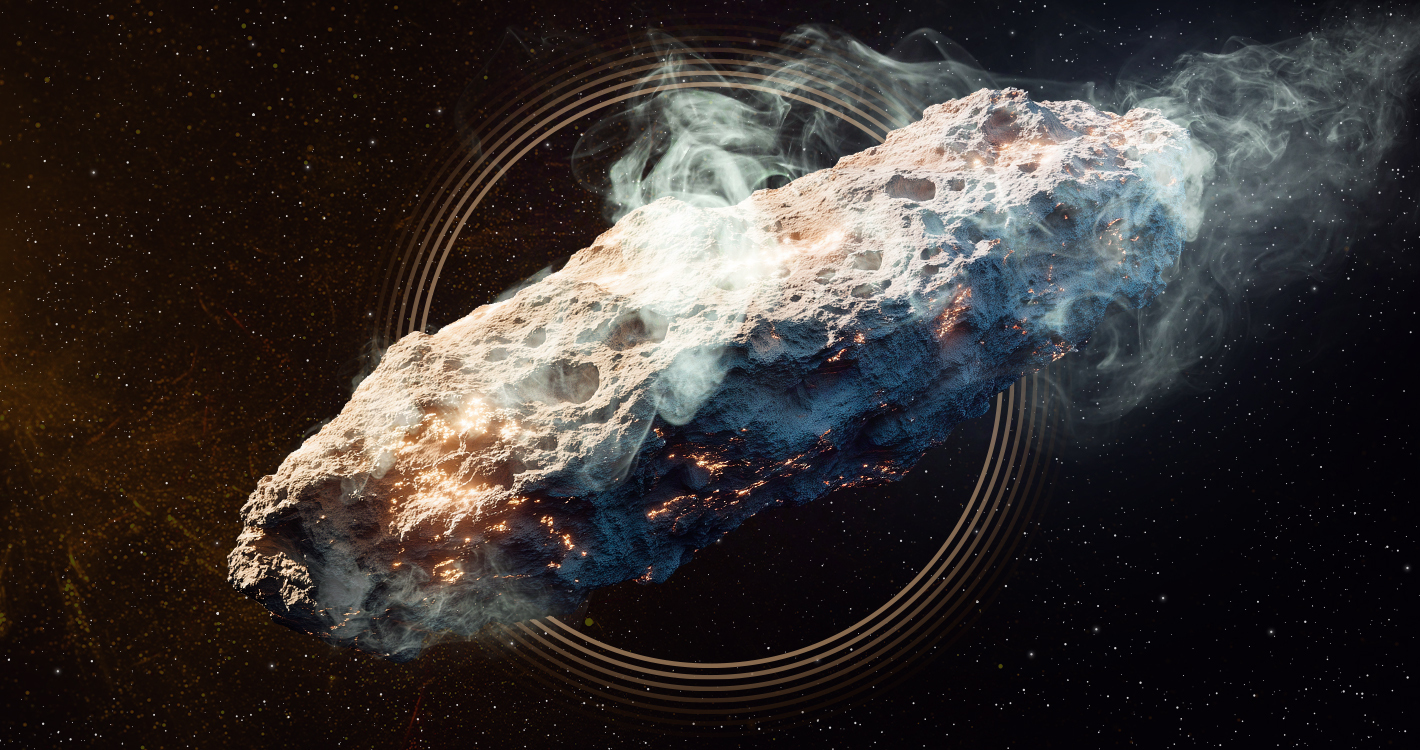
3I/Atlas. Not a real photo. Also, not aliens. Sorry.

https://www.space.com/news/live/interstellar-comet-3i-atlas-closest-to-earth-flyby-week-dec-18-2025

Discovered on July 1 by the NASA-funded ATLAS telescopes in Chile, 3I/ATLAS is only the third confirmed interstellar object known to have passed through our cosmic neighborhood, following 1I/‘Oumuamua in 2017 and comet 2I/Borisov in 2019. Its trajectory shows that it originated from beyond our solar system and will eventually travel back into interstellar space.

https://www.space.com/astronomy/comets/interstellar-comet-3i-atlas-makes-its-closest-approach-to-earth-on-dec-19-heres-what-you-need-to-know

Of course, Avi Loeb has already claimed (once again) that an interstellar comet is an “alien probe.”

And naturally, other astrophysicists immediately refuted him. Again.

It’s fast. REAL fast. So fast that even as it entered the solar system it was traveling the distance from the Earth to the Sun in only a month, and then it began to pick up even more speed (from the Sun’s gravity, NOT from “jets out the back” or whatever else unscientific SF fans say online).

Of course, we can assume that the aliens’ spaceship will detach from it precisely during its approach to Mars, or during its passage through perihelion when we cannot see it. In this case, it will have to slow down by more than 20 km/s.

And even so, this will not help the aliens much, because the trajectory will remain retrograde relative to the direction of the planets’ rotation around the Sun. So, if the aliens who flew to us billions of years ago have a plan that is a little more complicated than becoming kamikaze pilots, they will have to slow down again, spending a lot of energy on it. And the aliens still need to get that energy from somewhere.

So, most likely, we should not expect any extraterrestrial visitors at the end of the year. And we will not be able to admire the interstellar comet itself. By the time it emerges from behind the Sun, its brightness will already be approximately 11 stellar magnitudes, meaning it will be inaccessible even to small amateur instruments, let alone the naked eye.

So, nah. Sorry.

–> LIVESTREAM from 11 p.m. EST December 19th here: https://www.space.com/astronomy/comets/watch-interstellar-comet-3i-atlas-make-its-closest-approach-to-earth-in-free-livestream-on-dec-18

(FWIW, the last two sentences are NOT supposed to be quotes, but wordpress is quite frankly broken.)

Life on Trappist 1e?

September 12, 2025
MThomas

In two separate papers published Monday in the Astrophysical Journal Letters, astronomers zeroed in on the TRAPPIST-1 system, which consists of seven rocky planets that orbit a single star. Both studies outlined initial results from observations by NASA’s James Webb Space Telescope, suggesting that one planet in particular, known as TRAPPIST-1e, may have a nitrogen-rich atmosphere like Earth’s, though follow-up studies are needed to confirm the discovery.

https://www.nbcnews.com/science/space/trappist1e-atmosphere-extraterrestrial-life-planet-earth-conditions-rcna229839

Trappist 1e is in the “Goldilocks zone” in orbit around its star (i.e., not too cold, not too hot, just right). However, the Webb telescope can’t determine whether its atmosphere has any carbon dioxide, hydrogen, or oxygen, only nitrogen. Yet nitrogen is a clear sign that life is possible, because without nitrogen, DNA and other proteins are not possible. Of course, it could be simply a whole lot of microbes. Or even just ammonia.

Closer to home, the Mars rover Perseverance has found evidence of life in the distant past. Maybe. It found evidence that certain rock features may have happened because of microbes.

May.

That’s how science works, folks. A whole lot of maybes.

(I still think we need more catchy names for the Trappists. I mean, come on.

Get ready for the great planetary alignment February 28th!

February 27, 2025
MThomas

Note: Planets do not line up like this…

The best day to see all seven major planets (yes, you read that right, all seven!) is Friday, February 28th.

The link will describe (and give pictures) of where to find them all in the night sky.

Finding Orion is the key to most of them. Knowing where the Pleiades are helps, too.

The next time this “parade” appears will be 2040, so fingers crossed for clear skies!

https://www.skyatnightmagazine.com/news/seven-planet-parade-28-february-2025

New study of moons of Uranus suggests life

November 14, 2024
MThomas

Note: this is artwork and not an actual image

The planet Uranus and its five biggest moons may not be the dead sterile worlds that scientists have long thought.

Instead, they may have oceans, and the moons may even be capable of supporting life, scientists say.

https://www.bbc.com/news/articles/cgk1333k0ypo

Cue the jokes in five…four…three…

“So, you mean there really is life in…ah…”

Note that this is not from new data. It’s a re-analysis of what Voyager 2 sent back decades ago. Basically, it just had a bad day, with magnetic storms screwing up the scan.

Still…

There could be moons there that could have the conditions that are necessary for life, they might have oceans that below the surface that could be teeming with fish!

I think this is a bit of an exaggeration…

Chinese scientists “create” water from lunar soil

September 4, 2024
MThomas

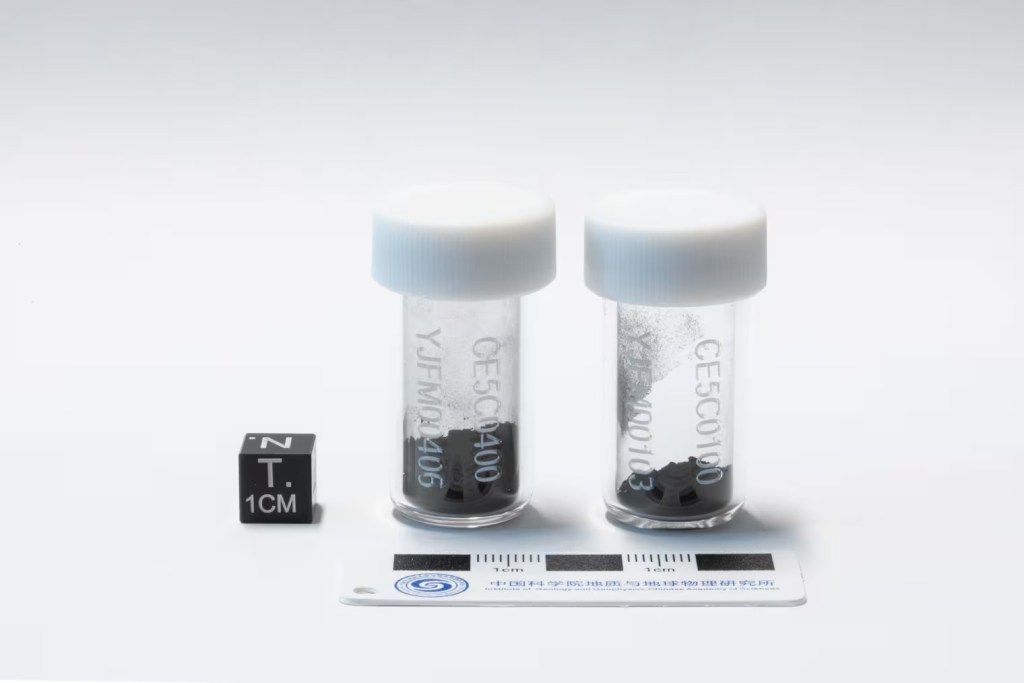
Using the new method, one metric tonne of lunar soil will be able to produce about 51 to 76 kilograms of water, equivalent to more than a hundred 500-millileter bottles of water, or the daily drinking water consumption of 50 people, the state broadcaster said.

https://www.nbcnews.com/science/space/chinese-scientists-use-lunar-soil-produce-water-rcna167951

The soil was from the 2020 expedition, which was the first in 44 years to bring back soil from the Moon.

Considering all of NASA’s problems, it looks like China will have a moon base years before the US does…and probably in prime resource locations as well.

And don’t forget that the hydrogen in the soil can also be used for rocket fuel. It would be a lot easier to launch ships to Mars and beyond without having to deal with Earth’s gravity…

WASP-76b is a hellish planet – but with “glory”

April 11, 2024
MThomas

There are many words that could be used to describe WASP-76b — hellish, scorching, turbulent, chaotic, and even violent. This is a planet outside the solar system that sits so close to its star it gets hot enough to vaporize lead. So, as you can imagine, until now, “glorious” wasn’t one of those words.

https://www.space.com/hellish-exoplanet-rainbow-glory-effect-cheops

This planet (located in the constellation Pisces) seems to have a rainbow effect of concentric rings…despite being so hot that iron falls from the sky.

Bringer of Light: Locations video

March 15, 2024
MThomas


This time I figured out how to import the slides directly into mmHmm, and I managed to update my MacOS to Sonoma, which allowed me to use my USB mic (yay). But I also called Ceres a “moon” at some point (it’s not a Moon but a dwarf planet in the asteroid belt near Mars). Oops. Not enough time to edit that bit out or record it again, so just word to the wise! Always fact-check videos, folks. Enjoy!

Water molecules detected on the surface of an asteroid in space for the first time

March 13, 2024
MThomas

Water molecules have been detected in asteroid samples returned to Earth, but this marks the first time that the molecules have been discovered on the surface of an asteroid in space. The team studied four silicate-rich asteroids using data from the now-retired Stratospheric Observatory for Infrared Astronomy(SOFIA). 

https://www.popsci.com/science/water-asteroid-space/

The asteroids in question are Iris (124 miles / 200 km in diameter) and Massalia (84 miles / 135 km). Both are in the asteroid belt between Mars and Jupiter. Iris is about the size of the US state of Maryland, while Massalia is roughly the size of Connecticut.

Note that the same observatory also found water on the Moon, about a “12-ounce bottle” worth. Not nearly enough for a settlement, but where there’s surface water (albeit trapped in soil on the surface), there’s likely to be more underneath.

(See also https://www.swri.org/press-release/swri-scientists-identify-water-molecules-asteroids-the-first-time — the PopSci linked article above essentially plagiarised almost its entire text. Bad scientist, bad.)

Original article here: Arrendono et al. (2024) Detection of molecular H20 on nominally anhydrous asteroids. Planet. Sci. J. 5. 37 doi 10.3847/PSJ/ad18b8 – good luck trying to read it!

Yet another “super-Earth” – maybe with a sibling?

February 28, 2024
MThomas

So, astronomers need to know both mass and diameter to determine whether a planet is truly similar enough to ours to host some form of Earth-like life. If the planet has a low mass and a large radius, it is likely like a so-called mini-Neptune with a gassy atmosphere and little rock. If it has a higher mass but a smaller radius, it’s probably a rocky planet like ours.

The possibility that TOI-715 b is rocky “would be exciting because that supports it being more of a habitable planet versus some sort of other world,” says Moran.

https://www.astronomy.com/science/recently-discovered-super-earth-might-be-habitable/

TOI-715 orbits a red dwarf star around 137 light years away, so we won’t be getting there any time soon. But after finding this planet last year, astronomers also are trying to confirm the existence of another smaller, closer to Earth-sized planet in the habitable zone (i.e., in an orbit that permits liquid water necessary for life to evolve).

And the name of the possibly new “sibling” planet?

“TIC 271971130.02”

Uh. We gotta come up with cooler names, folks.

For starters, they orbit a dwarf star.

That’s no m…no, wait, sorry, it is!

February 25, 2024
MThomas

Astronomers have found three previously unknown moons in our solar system — two additional moons circling Neptune and one around Uranus.

https://www.nbcnews.com/science/space/astronomers-spot-new-tiny-moons-neptune-uranus-rcna140285

One takes nearly 27 years to circle Neptune.

The “new” moon of Uranus is only 8 kilometers (5 miles) in diameter.

And there are likely many more yet to be discovered.

Blog at WordPress.com.
The Silmaril Chick

Writing Fanfiction in the worlds of Tolkien and Beyond!

Our Awesome Universe

Learning more about our place in the universe...

TechWordly

Best Tech Gadgets Advise

Weird Science Marvel Comics

Marvel Comics Reviews, Previews and News

Universe discoveries

Writing blogs is miracle I am a writer blogger and my site mission is to give information on maximum information to audiences

Robby Robin's Journey

Reflections of an inquiring retiree ...

Fox Reviews Rock

Rock & Metal Reviews That Hit Hard

My little corner of the world

Short stories | Reflections | Poetry

DimmaJo Blog

Read | Reflect | Grow