M Thomas Apple Author Page

Science fiction, actual science, history, and personal ranting about life, the universe, and everything

Chandrayaan-3 to the Moon!

July 19, 2023
MThomas

I love the helpful explanation about the scale…

“If we want to develop the Moon as an outpost, a gateway to deep space, then we need to carry out many more explorations to see what sort of habitat would we be able to build there with the locally-available material and how will we carry supplies to our people there,” Mr Annadurai says.

https://www.bbc.com/news/world-asia-india-66185565

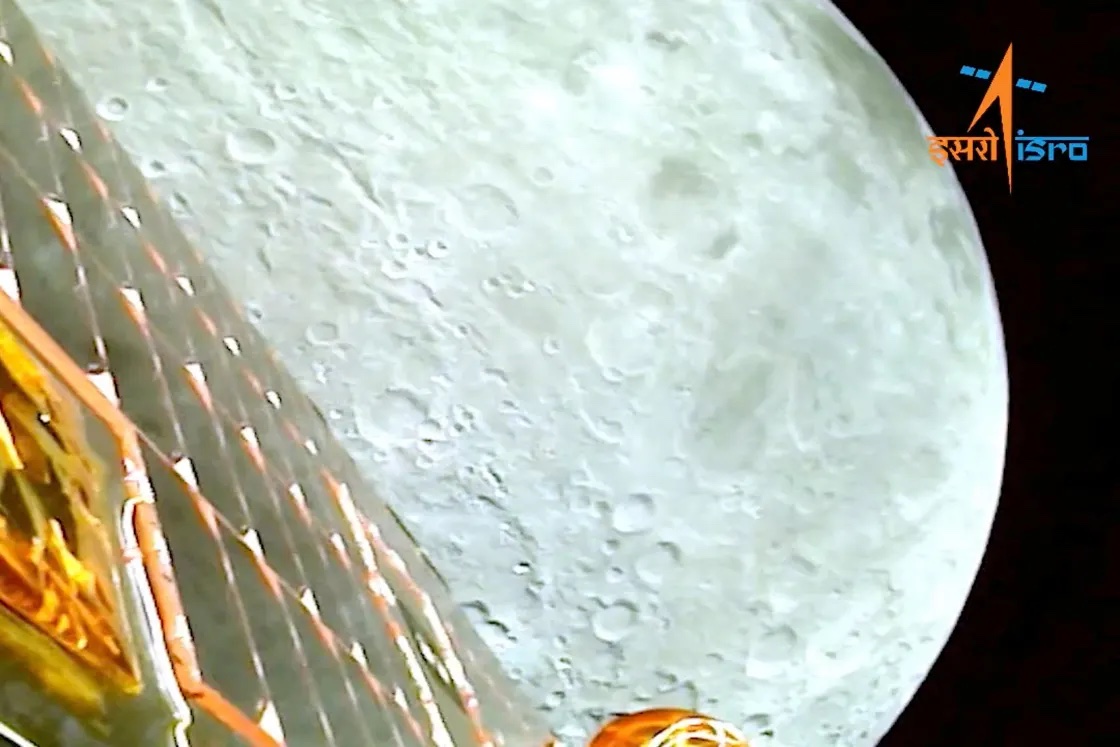
Chandrayaan-1 was India’s first successful Moon launch in 2008 — it deliberately crashed in order to measure the amount of water at the South Pole.

Chandrayaan-2 was only partly successful, as it did put an orbiter around the Moon, but the rover crashed. (The orbiter is still there, sending back information on a regular basis.)

Now, Chandrayaan-3 aims to finally land a rover and do some research exploring.

Let’s hope they can get it to land safely this time…

Phosphorus on Enceladus boosts chances for life?

July 2, 2023
MThomas

According to legend, the ancient giant Enceladus vents sulfur from his tomb. According to data, Saturn’s tiny moon Enceladus vents more than that.

https://www.astronomy.com/science/phosphate-find-on-enceladus-boosts-chances-for-life/

Scientists have suspected for a long time that this tiny moon of Saturn may be the best place in our solar system to look for life.

Now they have confirmed evidence of all six crucial elements necessary for life to exist (life as we know it, anyway): carbon (C), hydrogen (H), nitrogen (N), oxygen (O), phosphorus (P), and sulphur (S). If present as a phosphate, essential for DNA and RNA to exist, the discovery of phosphorus on the 310-mile-wide Enceladus may indicate life of sort sort, perhaps at a microscopic level beneath the icy surface.

One guess is that the oceans of Enceladus have at least 100 times more phosphorus than the Earth’s oceans. That would make for quite the carbonated fizzy pop. Methane has already been seen coming out out of various “ice geysers” (a.k.a. cryovolcanoes). Since methane results from rotten organic material, there logically should be something alive out there.

Now we just have to get back out there and figure out a way to find them.

Why Mars Shivers: The Explanation Behind Marsquakes

May 31, 2023
MThomas

The post Why Mars Shivers: The Explanation Behind Marsquakes first appeared May 30, 2023 on Science Recent – Your Daily Science Source.The human …

Why Mars Shivers: The Explanation Behind Marsquakes

Something else for future potential Mars settlements to consider….

Cancel your asteroid insurance – for the next thousand years

May 22, 2023
MThomas

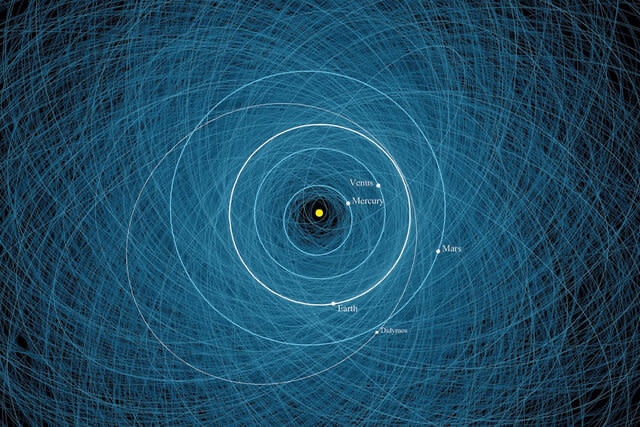
Does anybody remember Spirographs?

Of all the asteroids they modeled, the one with the largest risk of impact was a kilometer-wide asteroid known as 1994 PC1. Over the next thousand years, the probability that 1994 PC1 will cross within the orbit of the Moon is a paltry 0.00151%, hardly worth worrying about.

https://www.yahoo.com/entertainment/cancel-asteroid-insurance-earth-declared-150002866.html

Thanks to Glen Hill over at Engagin’ Science (formerly Scientia, which apparently was far too Latin- and science-esque for search engines to handle) for bringing this (not-so Earth-shattering) info to my attention.

Sorry, folks. Hollywood was once again wrong (sigh).

😂

Another “hard landing”?

April 26, 2023
MThomas

Artist’s depiction of what will never happen now

“We have to assume that we could not complete the landing on the lunar surface,” Hakamada said.

https://www.cnbc.com/amp/2023/04/25/ispace-moon-landing-watch-live.html

Or…

…Ispace engineers observed that the estimated remaining propellant was “at the lower threshold and shortly afterward the descent speed rapidly increased.”

https://www.nytimes.com/2023/04/25/science/ispace-moon-lander-japan.html

Or as the New York Times reporter succinctly puts it: “In other words, the spacecraft ran out of fuel and fell.”

Another “hard landing on the lunar surface.”

I.e., it crashed onto the Moon and went kablooie.

So much for private company based space exploration.

Spaceships are having a difficult week…

JUICE it ESA!

April 14, 2023
MThomas

Led by the European Space Agency (ESA), the mission will orbit the largest planet in the solar system and explore its icy moons, which scientists think could support living organisms.

JUICE will explore three possible ocean-bearing moons – Europa, Ganymede and Callisto. Under their icy surfaces are thought to be huge oceans of water – a crucial ingredient for life as we know it.

https://www.aljazeera.com/news/2023/4/13/explaining-juice-mission-to-jupiter-and-its-moons

The “Jupiter Icy Moons Explorer” is the first time an ESA-headed project will visit another moon.

If it launches successfully, of course.

Lift off in less than seven hours from French Guiana!

Great job by Alzajeera, although “Earth is about 4.1 times the size of Europa and is believed to have a young and active surface that may vent water vapour to space via plumes and geysers.” is a bit misleading (Europa, not Earth, is believed to have…)

Copy editor!

🤞 🚀 🇬🇫

UPDATE

The launch was successful, and the 90 m2 solar array also deployed successfully.

Now we just have to sit and wait until 2031!

Artemis crew to be most diverse Moon crew

April 8, 2023
MThomas

The astronauts will be the first humans to fly in the vicinity of the moon in more than 50 years. They will also be the first to launch aboard NASA’s next-generation megarocket and Orion space capsule. The crew will not land on the moon but will swing around the celestial body, testing the performance of the Orion spacecraft, before returning to Earth.

https://www.nbcnews.com/science/space/nasa-announces-astronauts-will-orbit-moon-year-rcna77896

They won’t land, only orbit. But a first is a first.

Let’s go to Mars, already.

The strangeness of Mercury’s huge core

March 30, 2023
MThomas

Mercury is a planet that just doesn’t make sense. It’s incredibly small yet hosts a relatively massive core. Mercury is so strange that astronomers have not been able to explain its properties with simulations of the solar system’s formation. But now, researchers have found an important clue, and Mercury’s weirdness appears to be the fault of the giant planets.

https://www.space.com/mercury-weird-because-of-jupiter-outer-planets

Basically, Mercury is nearly as dense as the Earth despite being less than 6% the size. This is due to the gas giants in our solar system yanking material (“planetesimals” and protoplanets) and ejecting it from the solar system, leaving Mercury with very little material left to form itself.

But there are plenty of questions still…

Another day, another rocket failure…

March 10, 2023
MThomas

With just over a minute to go before liftoff, a California aerospace startup opted to stand down from launching the world’s first 3D-printed rocket on its inaugural test flight.

https://www.nbcnews.com/science/space/worlds-first-3d-printed-rocket-set-make-inaugural-flight-rcna73868

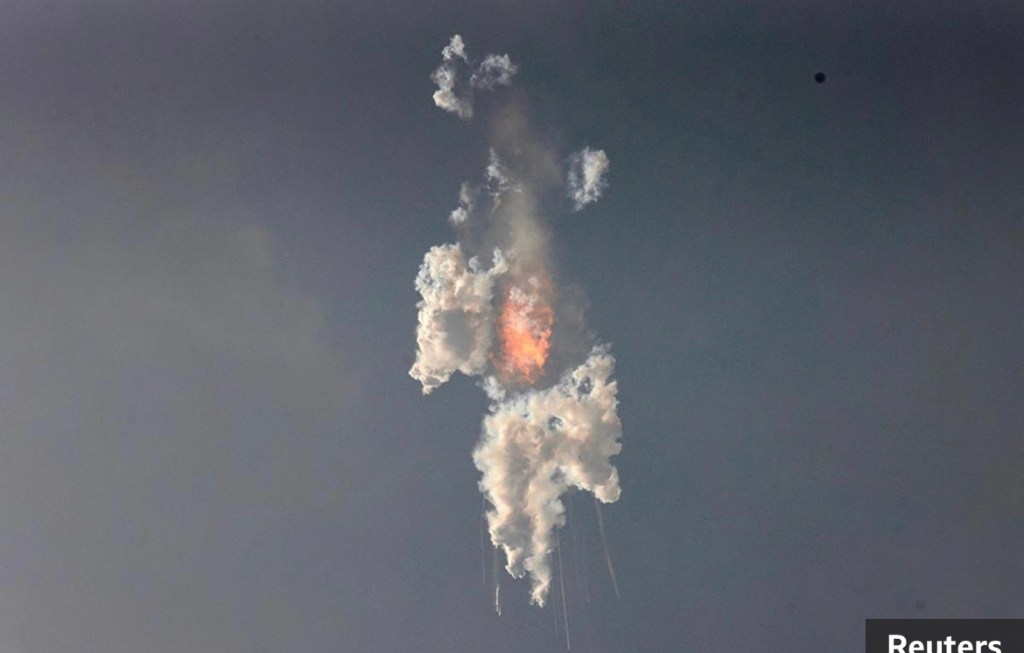
At least unlike the spectacular self-destruction of JAXA’s H3 this past Tuesday (Monday, Japan time), the team testing the California rocket wisely decided that it’s not a bright idea to stick a billion dollar satellite on an untested rocket. Repeatedly.

I’m beginning to feel that using 3D printed parts may not be the way to go with rocket engines…

Elementary school students show NASA that EpiPens are toxic in space

March 8, 2023
MThomas

For the program, the 9- to 12-year-old students designed an experiment in which epinephrine samples were placed into tiny cubes and sent to the edge of space via either a high-altitude balloon or a rocket. Once back on Earth, researchers from the John L. Holmes Mass Spectrometry Facility at the University of Ottawa tested the samples and found that only 87% contained pure epinephrine, while the other 13% had been “transformed into extremely poisonous benzoic acid derivatives,” according to a University of Ottawa statement(opens in new tab).

https://www.livescience.com/elementary-schoolers-prove-epipens-become-fatally-toxic-in-space-something-nasa-never-knew

EpiPens are already dangerous enough as it is, and lots of people who have one don’t know how to use it properly.

So…uh…why would an astronaut have this thing in space to begin with? NASA should know the full medical history of all its astronauts before even considering sending them into space.

Blog at WordPress.com.
The Silmaril Chick

Writing Fanfiction in the worlds of Tolkien and Beyond!

Our Awesome Universe

Learning more about our place in the universe...

TechWordly

Best Tech Gadgets Advise

Weird Science Marvel Comics

Marvel Comics Reviews, Previews and News

Universe discoveries

Writing blogs is miracle I am a writer blogger and my site mission is to give information on maximum information to audiences

Robby Robin's Journey

Reflections of an inquiring retiree ...

Stylish Home Solutions

Simple ideas to make every room feel stylish and welcoming

Fox Reviews Rock

Rock & Metal Reviews That Hit Hard

My little corner of the world

Short stories | Reflections | Poetry

Dimmajoblog

Read. Reflect. Grow