M Thomas Apple Author Page

Science fiction, actual science, history, and personal ranting about life, the universe, and everything

The Broken Valley: The Hidden German Civil War of the American Revolution

October 31, 2026
MThomas

This is the third of a series of posts introducing the five-part historical fiction novel Unbowed, which will be published in November 2026. All five parts are based on true events and real people – my ancestors. The first post described the outcome of the Battle of Dunbar in 1650 and one of its survivors, Malcolm MacCallum, ending with the Salem Witch Trials. The second post described the raid on Saratoga in 1745 and how John MacClure eventually managed to forge a new life with his family in New France prior to the Seven Years War / French and Indian War.

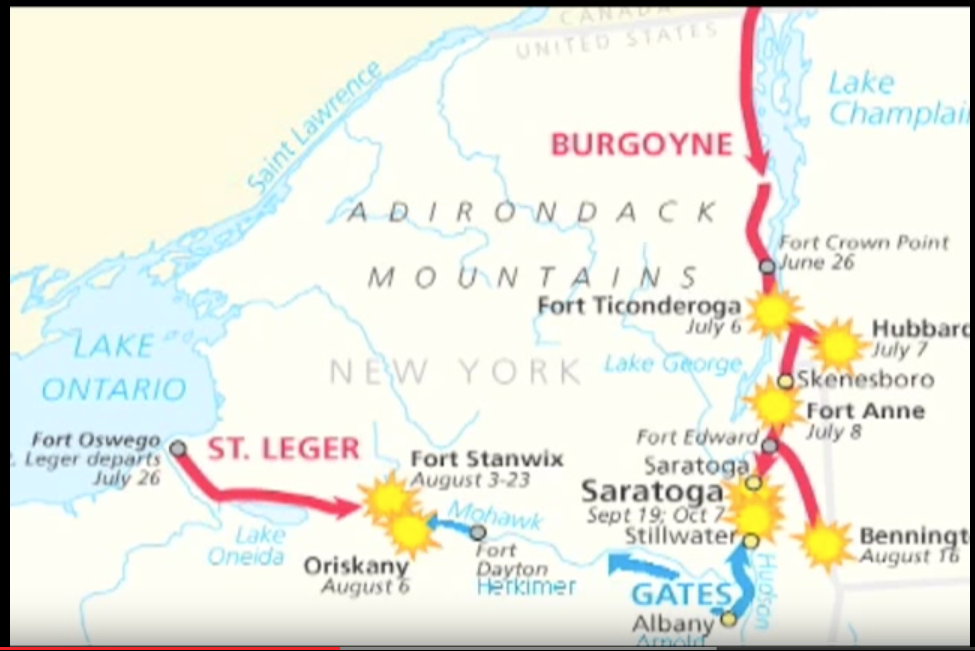
When we picture the American Revolution in New York, we often imagine a clear-cut battle between liberty-loving colonists and oppressive British redcoats. If we think about ethnic rivalries, we assume the local Dutch colonists were the ones leading the charge. After all, the Dutch had a historic axe to grind: a century earlier, the British military had sailed into New York harbor and seized New Netherland from their ancestors. For the majority of Dutch families in the Hudson and Mohawk valleys, the Revolution was an eager opportunity to finally throw off the British yoke.

But if you look closer at the muster rolls of Saratoga and Claverack, a much darker, internal tragedy emerges.

The deepest, most bitter fractures of the Revolutionary War didn’t happen between different ethnic groups. They happened within communities of Palatine German immigrants. These families had fled religious devastation in Europe, only to find themselves caught in a brutal, neighbor-against-neighbor civil war on the New York frontier—a conflict that tore brothers, cousins, and lifelong friends apart at the roots.

The Refugee Inheritance

The Palatine Germans arrived in New York in the early 1700s as impoverished refugees. Fleeing the scorched-earth campaigns of Louis XIV in the Rhineland, they had been rescued by Queen Anne of England, who granted them passage and settlement lands in exchange for their labor.

Because of this history, the Palatines viewed the escalating conflict of the 1770s through a completely different lens than their Dutch neighbors. To many Palatines, the British Crown wasn’t a distant tyrant; it was the imperial shield that had saved their grandparents from starvation and absolute annihilation in Europe.

When the local Rebel Committees of Safety began forcing citizens to sign the “Articles of Association”—an explicit oath of rebellion against the King—the Palatine communities fractured down the middle. To sign meant betraying the Crown that had given them refuge. To refuse meant being branded a traitor, facing imprisonment, and watching your farm be seized or burned.

The Ghost March of Claverack

In Part III of Unbowed, this agonizing choice falls squarely on Henry Simmons (originally Johann Hendrich Simon). A proud Palatine farmer, Henry refuses to sign the rebel test. As the shadow of the gallows creeps closer, he makes a desperate, dangerous decision.

In the dead of night, Henry leads twenty-seven of his unarmed Palatine neighbors on an grueling, seventy-five-mile “ghost march” through the wilderness to reach the safety of the advancing British forces.

When they finally arrive at the British camps, condescending regular British officers hand them cast-off weapons and form them into provincial volunteer units. When the opposing armies finally collide at the Battle of Saratoga in 1777, the true horror of the conflict is realized: Henry’s loyalist volunteers find themselves trading deadly volleys across the fields of Freeman’s Farm with their own Palatine kin—including members of the Bohnenstiehl family, later written as Bonesteel—who had enlisted under the rebel banner in the Albany Militia.

Scorched Earth and Scattered Seeds

While the men slaughtered one another on the battlefields, the women and children bore the brunt of the home-front terror. Anna Margreda Simmons stayed behind on the family farm, navigating starvation and the constant threat of rebel reprisals. When the British military launched a scorched-earth campaign that burned Kingston and surrounding farmlands to ash, the sky turned black with the smoke of a dying world.

Following General Burgoyne’s catastrophic surrender at Saratoga, the fracture in the families became permanent. Henry was forced to lead a caravan of four hundred desperate Loyalist refugees across a frozen Lake Champlain into a bitter Canadian exile.

But his nine-year-old son David chose to stay behind in New York with his rebel uncle. In a single generation, the family’s roots were violently severed.

The Dutch colonists won their long-awaited vengeance against the British Crown, but the Bonesteels and Simmons paid the price in blood and exile.

Part III of UNBOWED resurrects this forgotten civil war, reminding us that the birth of America was not a clean ideological triumph, but a deeply human tragedy of divided loyalties and fractured bloodlines.


UNBOWED: Five Generations of Captivity, Rebellion, and Survival on the American Frontier launches on Thanksgiving Day, November 2026.

[👉 Subscribe to my blog and ensure you don’t miss the next historical preview: The French-Canadian Rebellion of Lower Canada and La Survivance!]
The Blood of Dunbar: The Forgotten Holocaust of the Scottish Covenanters

September 3, 2026
MThomas

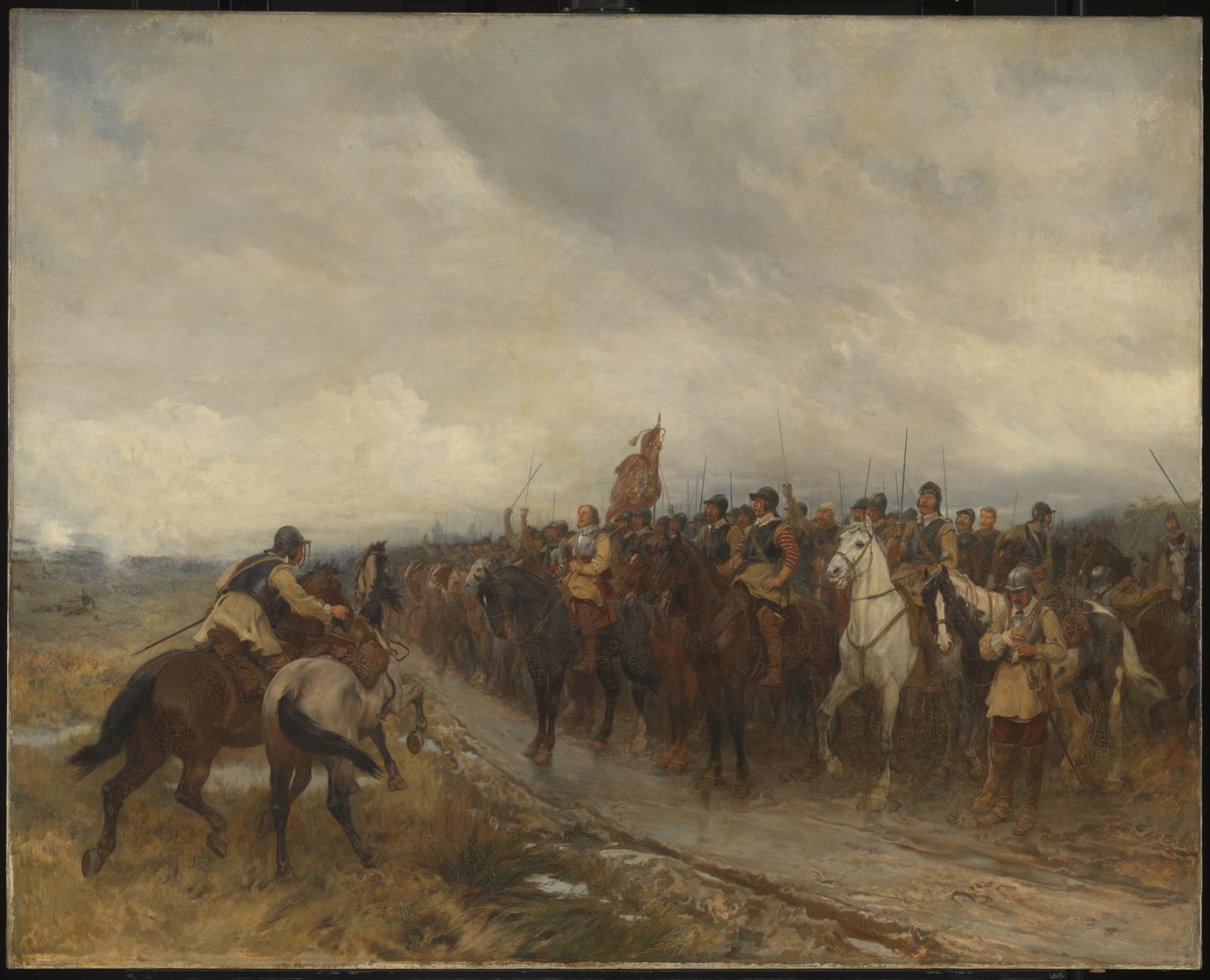
Cromwell at Dunbar 1886 Andrew Carrick Gow 1848-1920 Presented by the Trustees of the Chantrey Bequest 1886 http://www.tate.org.uk/art/work/N01588 (c/o Wikimedia Commons)

This is the first of a series of posts introducing the five-part historical fiction novel Unbowed, which will be published in November 2026. All five parts are based on true events and real people – my ancestors.

Most students of American history are familiar with the standard narrative of New England’s early settlers: the Mayflower, the Puritans, and the quest for religious freedom. But there is a darker, hidden foundation stone buried beneath the soil of early Massachusetts. It is a story born of cold rain, political betrayal, and a brutal military disaster that history has largely allowed to slip through its cracks.

It began on the stormy morning of September 3, 1650, in a muddy marshland just outside the Scottish town of Dunbar…

Continue Reading

“Freeta-“ live style was not easy

July 10, 2026
MThomas

What’s a chapter of your life you’d title “The Hard Years” — and what got you through it?

I didn’t know the term “freeta-“ (from “free arbeiter” with “arbeiter” meaning “worker” in German) until I had lived in Japan as a teaching assistant for several years. Yet it occurred to me that that was the lifestyle I had been living after undergraduate school, even during the two misguided years of my creative writing master’s degree program when I worked at a nearby mall (at a software store that told me to lie to customers about software availability).

Not working as a full time worker but at a series of temporary part-time jobs, I felt free from restraints but had little money and even less chance of anything resembling a stable work life.

When you’re 22, this doesn’t seem that bad. You think it’s okay, that your whole life is ahead of you. That you’re still finding your feet.

By 27, it’s unsettling. That’s why I made the move to Japan, to take a risk and try my hand at teaching.

What got me through the “Hard Years”?

Guinness. Probably because I simply don’t know any better. It nearly derailed me. I was a ronin, awash on the waves of life. While floating from one job to the next in Boston.

In the end, maybe it was my colleagues and students in Japan that finally got me out of my morass. After making the move here, even though on the surface it was a temporary three-year contract, I needed to help someone else. Think outside myself, outside the box. and eventually, decide to make it a permanent lifestyle.

After all, helping others really does, in the end, help yourself.

Today’s Moan-day, so it seems like time to…

April 7, 2026
MThomas

OK, so I have been pulling my hair out (what’s left of it) the past few days over trying to understand an email thread with “Draft2Digital.” (Note to self: this occurred in early 2024; evidently, forgot to post it! The first thing that goes is memory, and the second is…umm…)

Let me sum up. (If you’re not interested in a rant-n-rave about the state of the independent publishing industry, you can skip to the part where I list the URL for my new book Bringer of Light… 🙂

Continue Reading

Long time, no…

August 5, 2025
MThomas

Hi, everyone. I haven’t written a blog post in a very long time.

For various reasons.

I’ll see if I can start posting a few entries on recent science events in a few days (for starters, four astronauts finally arrived at the ISS, the first replacements following the Boeing Starliner fiasco).

But for right now, I want to follow up this short post with some analysis I got from our friend ChatGPT…

…about Adam’s Stepsons and Bringer of Light. Stay tuned!

And the $10,000 question is…

June 25, 2024
MThomas

What jobs have you had?

What jobs have I *not* had would be a better question.

Right…

  • Lawn mower (right after I got my “working papers” at age 14, along with my social security number — this is now assigned at birth in the US)
  • Pizza dough maker (seriously, that’s all I did at first)
  • Pizza maker and deli worker (same restaurant)
  • Tarred the school parking lot and roof (no idea what this job would be called)
  • McDonald’s (who hasn’t? Both opening and closing, including cleaning the deep oil fryer. Ugh.)
  • Gymnasium weight room staff
  • Gymnasium pool cleaner
  • Volleyball court setup and take down
  • Softball umpire (all four work-study jobs at college with a max number of hours per week)
  • Bookstore clerk (Barnes & Nobles)
  • Dishwasher (summer time only)
  • Short order cook (same restaurant as the dishwasher job)
  • Stock boy (stationery store for all of two days)
  • Temp worker (stuffing envelopes for three days, yawn)
  • Blockbuster clerk (out of business video rental store—anybody remember VHS tapes?)
  • Bookstore clerk (used bookstore in Ann Arbor, mostly stocking and organizing overflow in the basement, although I did help set up a comic book and gaming store annex)
  • First year composition teacher (this was a paid TA job for one semester in grad school)
  • Computer software store clerk (mall seasonal job—I got in trouble once for suggesting that a customer try another software store for a game series we didn’t carry rather than lie by saying we’d let him know when we got it; I hadn’t realized lying was company policy…)
  • Computer salesperson (my first “full time” job—I lasted two months—definitely not slick enough to work for sales commish)
  • Kinko’s (computer design department)
  • Weekly newspaper (computer layout)
  • A small H&R firm (computer design…you can probably sense a trend…)
  • Assistant language teacher (the jump to Japan)
  • Language instructor (late night after school cram school for junior high kids)
  • Assistant Professor (both part time and full time contractual)
  • Professor (it’s amazing now to see how I wound up teaching TESOL…)

This may not include some odds and ends here and there when I was in JHS and SHS. I worked a lot of summer jobs and Christmas/ New Year’s break jobs. I worked most weekends while I was a full time students, and most Friday evenings, too. I don’t recall the pay for all of them, but I remember the pizza dough job paid $3.15 an hour, and four years later McDonald’s paid a whopping $3.75 an hour.

You know, I’d be very interested to find out what jobs my colleagues have had. In college when I borrowed money to study abroad in Germany, my classmates wandered around Europe for the summer while I returned and had exactly $0 to my name and worked double-shifts. I wonder how many literature or history professors spent summer days getting burned on their arms with 400F cooking oil or getting yelled at by bankers because their document wasn’t printed fast enough…

More quotes and quotes about quotes

May 1, 2024
MThomas

Do you have a quote you live your life by or think of often?

I don’t think I “live my life” by a quote (too busy surviving), but I do think a lot about:

“Keep on keeping on.”

“Keep on trucking.”

“何とかなる (nantoka naru – “it’ll work out”)

“Das lassen sein (let it be)”

But also oddly:

“Damn the torpedoes, full steam ahead!”

Lesser leather never weathered wetter weather better…

March 23, 2024
MThomas

What is your favorite type of weather?

It depends on my mood.

I like cold weather in winter, especially on the weekend when I can take it easy and enjoy coffee properly.

I don’t mind rainy weather when I feel like being contemplative and writing.

I prefer clear sunny weather when I want to go watch a baseball game outdoors with friends and family.

I enjoy cool and dry windy weather in autumn when the falling leaves decorate the nearby temple and shrine.

What I don’t like is when the weather changes from winter in the morning to early summer by mid-afternoon, and I especially get irritated when people can’t tell the difference between weather and climate.

“You don’t need a Weatherman to know which way the wind blows…”

I’m not the “doubting one,” but…

March 9, 2024
MThomas

Daily writing prompt
What is your middle name? Does it carry any special meaning/significance?

My middle name is actually Thomas. I chose to use “M Thomas” as a pen name out of respect for my father, who taught me how to write. As a professional communications writer, he was responsible for lots of public documents for the NYS DMV, including traffic safety reports, driver manuals, press releases from the Governor, all sorts of “my boss will feel the need to edit this, so I will deliberately leave behind something for him to do so as he doesn’t screw up the entire thing” document.

I may or may not have adopted this strategy in my own professional work (I certainly adopted the attitude…)

Another reason is because I had a baby brother named Thomas. He passed away before reaching five months old when I was not quite 11. It had a major impact on me as a child (and indeed as the adult and as the father I am).

I have no sons. It bothers me that I may be the last Thomas in our family. For a while, anyway.

Introducing the Bringer of Light!

March 8, 2024
MThomas

Hello, everyone, and thank you for reading!

This is a short (~8 minute) video I made to introduce the story Bringer of Light.

I’ll be posting a couple more videos in the near future about the characters, location, and science behind the story.

Check it out, and share freely!

Blog at WordPress.com.
The EcoGalactic Gazette

Space sustainability watch, co-produced by a human and an AI agent

The Silmaril Chick

Writing Fanfiction in the worlds of Tolkien and Beyond!

Our Awesome Universe

Learning more about our place in the universe...

TechWordly

Best Tech Gadgets Advise

Universe discoveries

Writing blogs is miracle I am a writer blogger and my site mission is to give information on maximum information to audiences

Robby Robin's Journey

Reflections of an inquiring retiree ...

Stylish Home Solutions

Simple ideas to make every room feel stylish and welcoming

Fox Reviews Rock

Rock & Metal Reviews That Hit Hard

My little corner of the world

Short stories | Reflections | Poetry