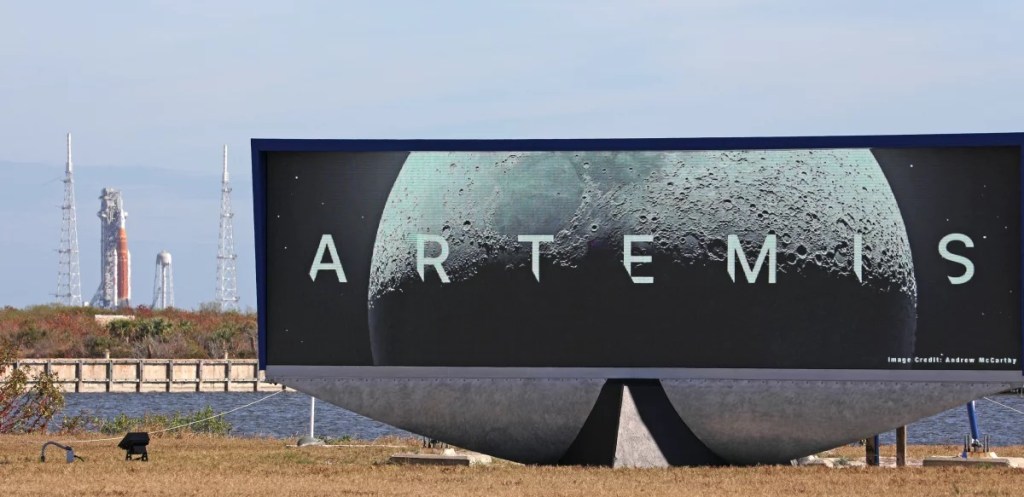
Just one day after NASA said it was eyeing a potential March 6 launch date for the Artemis II lunar mission, the space agency said Saturday that complications with the rocket could delay all launch attempts in March from the Kennedy Space Center in Florida.
(Btw, WordPress, the “quote” field used to have a separate area where you could put a link to the quote’s source. Where did that go? Nothing like helping the spread of unverified fake news…)
A contractor for Nasa urged the space agency to conduct more safety checks before the highly-anticipated first launch of its Starliner rocket – which is set to take off as soon as next week – “before something catastrophic happens”.
It was supposed to launch last week, but someone spotted a valve problem — *minutes* before the countdown procedure was about to start.
They’d better check for door plugs while they’re at it.
Boeing does not give a rat’s ass about whoever uses their products. They‘re only interest in paying dividends to stockholders. And of course paying the CEO’s ridiculously high salary.
NASA is trusting the future of space travel to people like Musk and companies like Boeing. Using taxpayer money to reward greed and incompetence.
The South Pole, where power plants are likely to be constructed (without human help…)
“The truth is that nuclear is the only option to power a moonbase,” says Simon Middleburgh from the Nuclear Futures Institute at Bangor University in Wales.
There are many words that could be used to describe WASP-76b — hellish, scorching, turbulent, chaotic, and even violent. This is a planet outside the solar system that sits so close to its star it gets hot enough to vaporize lead. So, as you can imagine, until now, “glorious” wasn’t one of those words.
This planet (located in the constellation Pisces) seems to have a rainbow effect of concentric rings…despite being so hot that iron falls from the sky.
The so-called Big Ring has a diameter of about 1.3bn light years, making it among the largest structures ever observed. At more than 9bn light years from Earth, it is too faint to see directly, but its diameter on the night sky would be equivalent to 15 full moons.
This is important because it contradicts the so-called “cosmological principle” that everything in the universe is basically evenly distributed.
Just thinking about it, though, it makes little sense to assume that galaxies are all evenly spaced. Assuming the Big Bang was a single point should not imply even spacing of anything.
FWIW the “Big Ring” is evidently more a corkscrew shape, directly aimed at us. Evidence of “cosmic strings”? Maybe.
This is not as interesting as technology that will allow us to build hotels and colonies at LaGrange points or communities on Mars, but it’s still interesting. Sorta. Maybe?
Or SLIM, if you want to actually write acronyms properly (snark).
Also, it’s JAXA, not Jaxa. And NASA and ESA, not Nasa and Esa. But I digress.
Anyways, kudos but too bad yet another space mission failed. At this point I’m wondering how on Earth NASA managed to land people on the Moon so successfully in the 1960s and 1970s without killing half of them in the process. We can barely manage to get a tiny robot rover the size of a marble to land (see the link above for the picture of the “hopper” and “shape shifting” ball…curious about the “shape shifting” bit…)
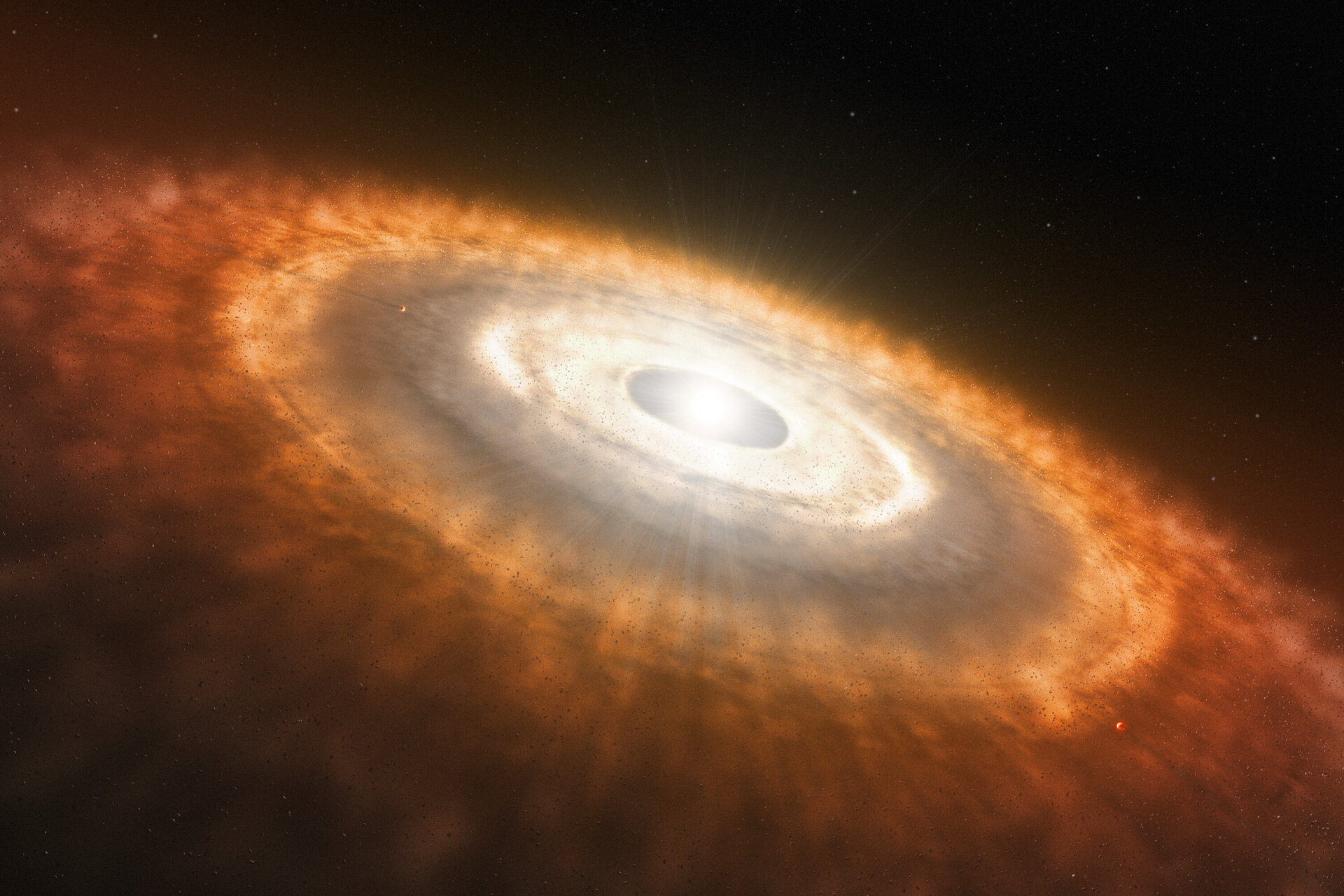
This is an artist’s impression of a young star surrounded by a protoplanetary disc in which planets are forming. An international team of astronomers have used the NASA/ESA/CSA James Webb Space Telescope to provide the first observation of water and other molecules in the inner, rocky-planet-forming regions of a disc in one of the most extreme environments in our galaxy. These results suggest that the conditions for rocky-planet formation, typically found in the discs of low-mass star-forming regions, can also occur in massive-star-forming regions and possibly a broader range of environments.
Because of its location near several massive stars in NGC6357, scientists expect XUE 1 to have been constantly exposed to a high ultraviolet radiation field throughout its life. However, in this extreme environment the team still detected a range of molecules that are the building blocks of rocky planets.
ESA image. Gateway is planned to be much smaller and more cramped than ISS (about 1/6 the size).
NASA and its international partners see Gateway as a key platform to support the agency’s Artemis moon program and to build the technology required for future deep-space missions. Although the first elements of the small space station are expected to launch before the Artemis 3 mission lifts off in 2025 or 2026, NASA previously said that those astronauts will not use Gateway to “make that mission have a higher probability of success.”
While it’s a good idea to see some planning for this, I think maybe NASA should focus on getting Artemis 1 to work properly before they go on about Artemis 3 and 4.
Taking advantage of Gateway’s orbit far away from Earth’s protective magnetic field, three instruments will study risks due to radiation from the sun and from cosmic rays. Scientists hope this knowledge can help inform future long-term missions to the moon and Mars.
Since Gateway will orbit the Moon and not the Earth, the biggest problem will be preventing astronauts (and instruments!) from getting fried by solar radiation. Scientists need to come up with materials to shield people on Gateway and the Moon, or else we’re going nowhere…
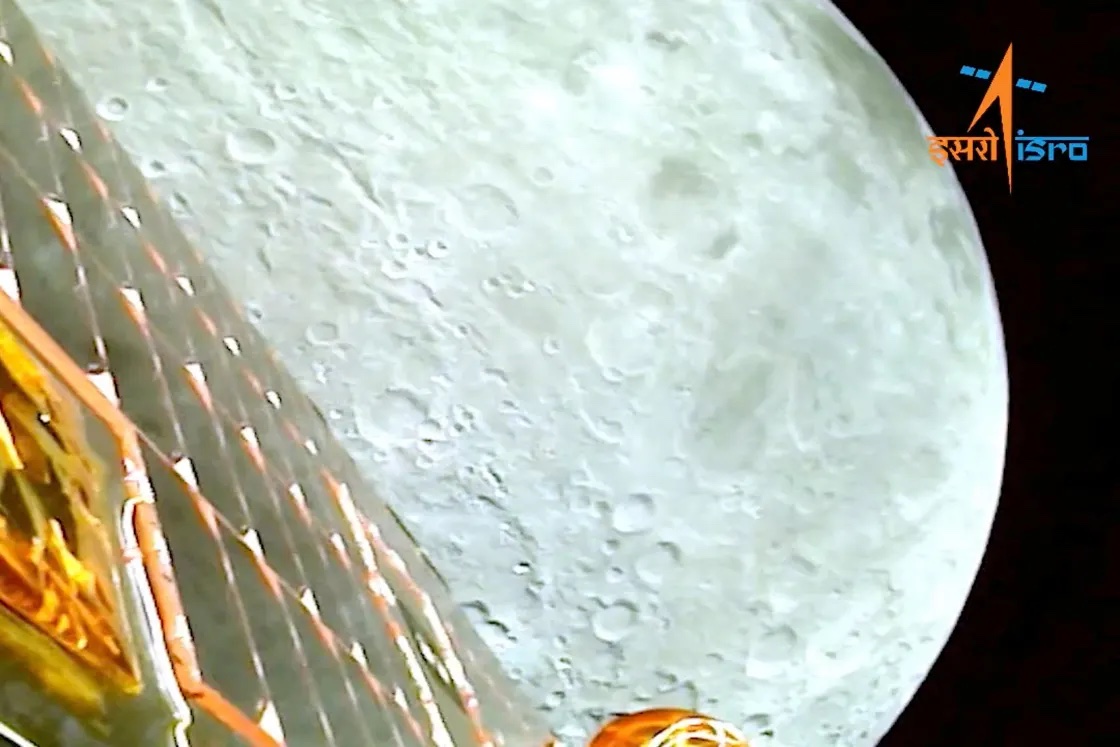
Taken just prior to landing…the “image” shown of it actually landing was not real but a simulation.
India and Russia had been locked in a race to the lunar south pole. The Luna-25 spacecraft that crashed was the first moon-landing spacecraft launched by Russia’s space agency in almost five decades. Roscosmos officials said Sunday they lost contact with the lander after it fired its engines in preparation for a descent to the surface.
It wasn’t much of a “race,” tbh. India had been planning this for years, while Russia randomly launched a craft that had virtually no chance of succeeding.
Congratulations, ISRO! You should have some company over the next couple of years. Here’s hoping that international cooperation and not competition will lead humanity to permanent settlements on the Moon. Mars, and beyond…
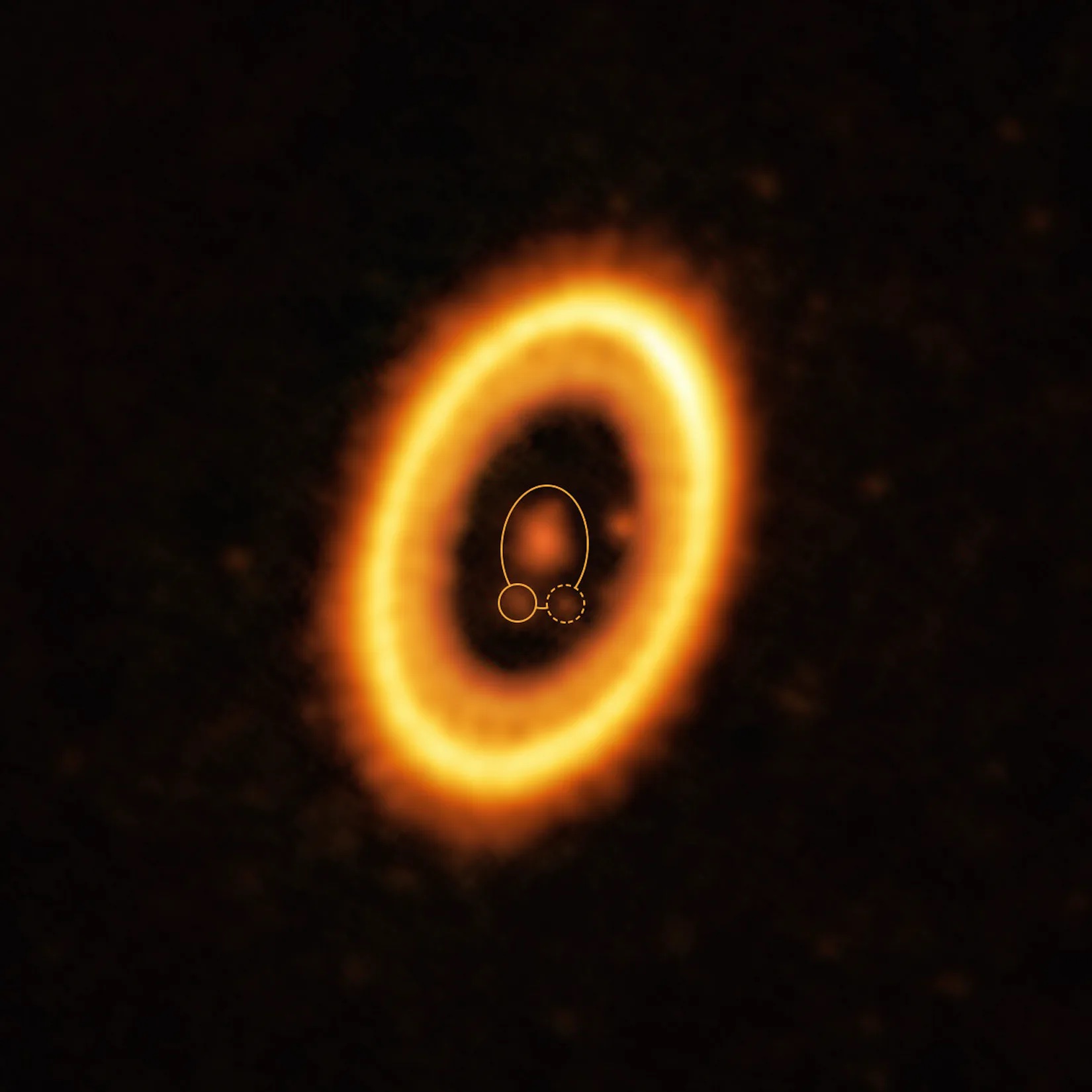
The two planets are in circles that kind of look like, er….let’s just call the whole thing a cosmic donut (the outer “halo” is the protoplanetary disc of gas and dust from which planets eventually coalesce).
We already know that more than one object can share the same orbit; Jupiter has a collection of 120,000 asteroids following its same path around the Sun, for example. Earth has one, too. But although it’s theoretically possible, astronomers have never discovered two whole planets sharing the same orbit around a star before.
Hmm…the language here is a bit misleading. The two objects are technically not both “planets.”
The article comments later on that the object in the dotted line circle is “a cloud of debris about twice the mass of our Moon trailing a bit behind the innermost gas giant” in one of its LaGrange points (where “Trojan” asteroids follow gas giants such as Jupiter and Saturn). So it’s way too early to say that “two” planets formed in the same orbit.
Still, this is the first time that astronomers have spotted two such objects this close to one another in the same orbit. Who knows if both will remain viable (the debris cloud could become partly or mostly absorbed by the gas giant with the rest either being expelled or thrust into separate orbits).
So why is this called a “cosmic unicorn”?
Apparently because although such Trojans “are allowed to exist by theory, but no one has ever detected them.”
Um. OK.
So, like, totally NOT at all like this? Kind of a bummer, really…





 M Thomas Apple Author Page