M Thomas Apple Author Page

Science fiction, actual science, history, and personal ranting about life, the universe, and everything

The Broken Valley: The Hidden German Civil War of the American Revolution

October 31, 2026
MThomas

This is the third of a series of posts introducing the five-part historical fiction novel Unbowed, which will be published in November 2026. All five parts are based on true events and real people – my ancestors. The first post described the outcome of the Battle of Dunbar in 1650 and one of its survivors, Malcolm MacCallum, ending with the Salem Witch Trials. The second post described the raid on Saratoga in 1745 and how John MacClure eventually managed to forge a new life with his family in New France prior to the Seven Years War / French and Indian War.

When we picture the American Revolution in New York, we often imagine a clear-cut battle between liberty-loving colonists and oppressive British redcoats. If we think about ethnic rivalries, we assume the local Dutch colonists were the ones leading the charge. After all, the Dutch had a historic axe to grind: a century earlier, the British military had sailed into New York harbor and seized New Netherland from their ancestors. For the majority of Dutch families in the Hudson and Mohawk valleys, the Revolution was an eager opportunity to finally throw off the British yoke.

But if you look closer at the muster rolls of Saratoga and Claverack, a much darker, internal tragedy emerges.

The deepest, most bitter fractures of the Revolutionary War didn’t happen between different ethnic groups. They happened within communities of Palatine German immigrants. These families had fled religious devastation in Europe, only to find themselves caught in a brutal, neighbor-against-neighbor civil war on the New York frontier—a conflict that tore brothers, cousins, and lifelong friends apart at the roots.

The Refugee Inheritance

The Palatine Germans arrived in New York in the early 1700s as impoverished refugees. Fleeing the scorched-earth campaigns of Louis XIV in the Rhineland, they had been rescued by Queen Anne of England, who granted them passage and settlement lands in exchange for their labor.

Because of this history, the Palatines viewed the escalating conflict of the 1770s through a completely different lens than their Dutch neighbors. To many Palatines, the British Crown wasn’t a distant tyrant; it was the imperial shield that had saved their grandparents from starvation and absolute annihilation in Europe.

When the local Rebel Committees of Safety began forcing citizens to sign the “Articles of Association”—an explicit oath of rebellion against the King—the Palatine communities fractured down the middle. To sign meant betraying the Crown that had given them refuge. To refuse meant being branded a traitor, facing imprisonment, and watching your farm be seized or burned.

The Ghost March of Claverack

In Part III of Unbowed, this agonizing choice falls squarely on Henry Simmons (originally Johann Hendrich Simon). A proud Palatine farmer, Henry refuses to sign the rebel test. As the shadow of the gallows creeps closer, he makes a desperate, dangerous decision.

In the dead of night, Henry leads twenty-seven of his unarmed Palatine neighbors on an grueling, seventy-five-mile “ghost march” through the wilderness to reach the safety of the advancing British forces.

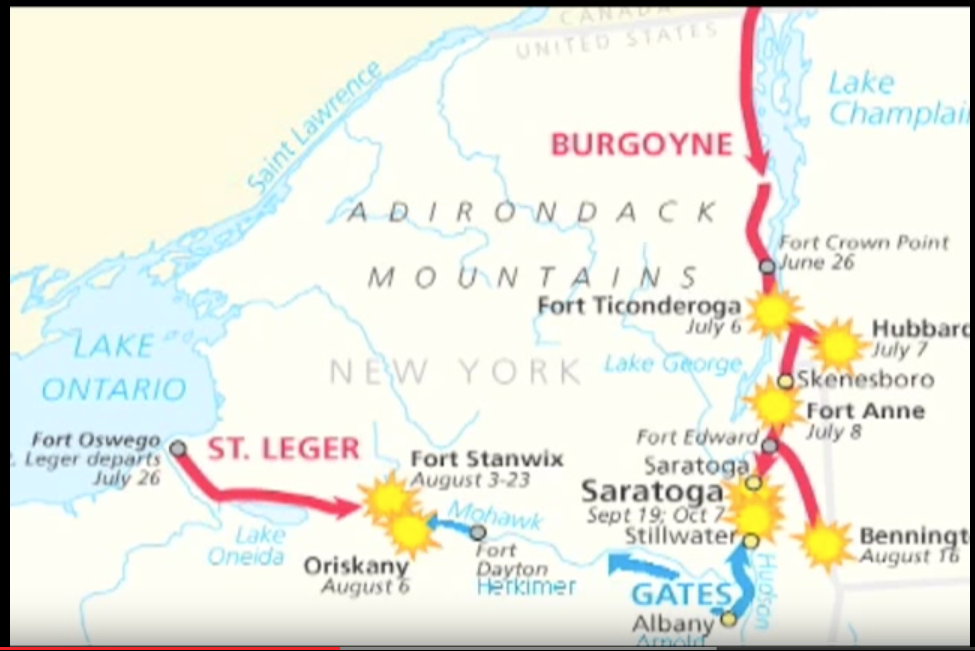
When they finally arrive at the British camps, condescending regular British officers hand them cast-off weapons and form them into provincial volunteer units. When the opposing armies finally collide at the Battle of Saratoga in 1777, the true horror of the conflict is realized: Henry’s loyalist volunteers find themselves trading deadly volleys across the fields of Freeman’s Farm with their own Palatine kin—including members of the Bohnenstiehl family, later written as Bonesteel—who had enlisted under the rebel banner in the Albany Militia.

Scorched Earth and Scattered Seeds

While the men slaughtered one another on the battlefields, the women and children bore the brunt of the home-front terror. Anna Margreda Simmons stayed behind on the family farm, navigating starvation and the constant threat of rebel reprisals. When the British military launched a scorched-earth campaign that burned Kingston and surrounding farmlands to ash, the sky turned black with the smoke of a dying world.

Following General Burgoyne’s catastrophic surrender at Saratoga, the fracture in the families became permanent. Henry was forced to lead a caravan of four hundred desperate Loyalist refugees across a frozen Lake Champlain into a bitter Canadian exile.

But his nine-year-old son David chose to stay behind in New York with his rebel uncle. In a single generation, the family’s roots were violently severed.

The Dutch colonists won their long-awaited vengeance against the British Crown, but the Bonesteels and Simmons paid the price in blood and exile.

Part III of UNBOWED resurrects this forgotten civil war, reminding us that the birth of America was not a clean ideological triumph, but a deeply human tragedy of divided loyalties and fractured bloodlines.


UNBOWED: Five Generations of Captivity, Rebellion, and Survival on the American Frontier launches on Thanksgiving Day, November 2026.

[👉 Subscribe to my blog and ensure you don’t miss the next historical preview: The French-Canadian Rebellion of Lower Canada and La Survivance!]
Shadows on the Hudson: The Forgotten Borderland Raids of Saratoga

September 17, 2026
MThomas

This is the second of a series of posts introducing the five-part historical fiction novel Unbowed, which will be published in November 2026. All five parts are based on true events and real people – my ancestors. The first post described the outcome of the Battle of Dunbar in 1650 and one of its survivors, Malcolm MacCallum.

Ask any student of early American history about “frontier captivity narratives,” and they will likely point you to the famous 1704 raid on Deerfield, Massachusetts. The story of Eunice Williams—the Puritan minister’s daughter who was captured and refused to return to English society—became a literary sensation in the 1800s.

But history is a selective editor.

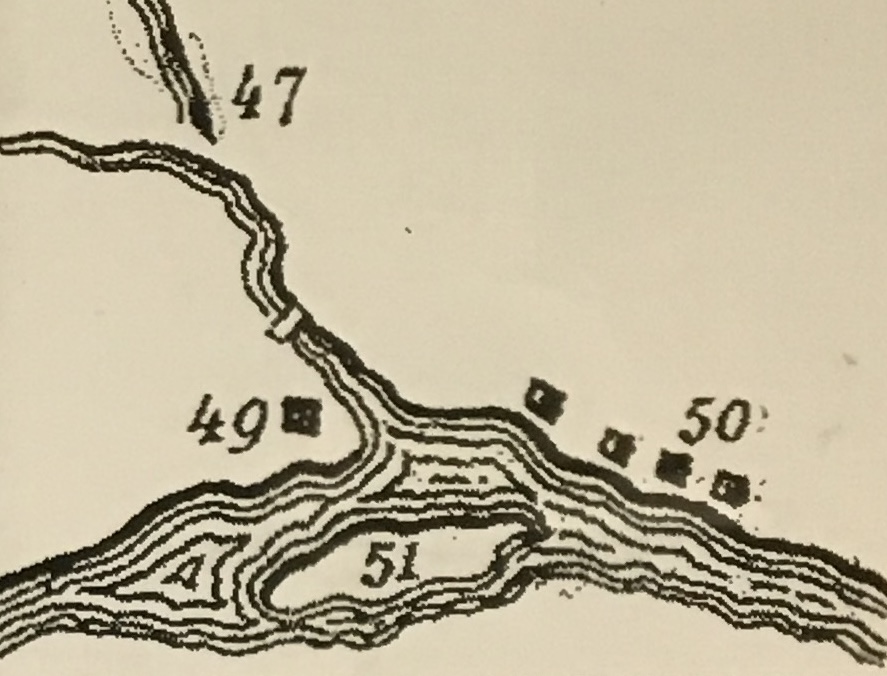
Further west, along the volatile, fluid borderlands of the Hudson River valley, a far more complex and terrifying theater of war was playing out. Outposts like Schenectady and Saratoga (the site of modern-day Schuylerville, New York) were the literal razor’s edge between the British and French empires. Yet, the brutal raids that shattered these communities, and the incredible cross-cultural stories of those who survived them, have been almost completely forgotten by the modern world.

In the mid-18th century, Saratoga wasn’t yet part of an historic battlefield—it was a vulnerable, isolated cluster of farms and mills carved out of an unforgiving wilderness. And on a freezing night in November 1745, that wilderness swallowed it whole.

Continue Reading

Artemis II, welcome home. Now let’s go again. And stay.

April 14, 2026
MThomas

“The moon really is its own unique body in the universe. When we have that perspective and we compare it to our home of the Earth, it just reminds us how much we have in common. Everything we need, the Earth provides, and that, in and of itself, is somewhat of a miracle.”

https://www.theguardian.com/science/2026/apr/10/artemis-ii-landing-return-moon-mission?CMP=Share_iOSApp_Other

Should have posted this a couple days ago, but better late than never.

Just like this mission. It’s better to delay a mission than scrub it.

And DJT should stop trying to take credit for it. He’s still trying to slash NASA’s budget to practically nothing. Get rid of him already.

More good news like this, please. No more war. Space awaits all of us.

Nuclear power on the Moon. Gee, no problem…

May 13, 2024
MThomas

The South Pole, where power plants are likely to be constructed (without human help…)

“The truth is that nuclear is the only option to power a moonbase,” says Simon Middleburgh from the Nuclear Futures Institute at Bangor University in Wales.

https://www.bbc.com/future/article/20240417-the-nuclear-reactors-that-could-power-moon-bases

So far there are two major consortiums that have plans for moon bases:

The Artemis Accords, with 36 countries (the US, Japan, South Korea, UAE, India, etc.)

The countries that don’t like the US, the UK, and Canada (China, Russia, Belarus, Venezuela, Pakistan, South Africa, Egypt, Ajerbaijan)

OK, maybe a bit of an exaggeration, granted.

But there is no doubting the political ramifications of two competing groups of astronauts (cosmonauts, taikonauts) on the Moon.

And just wait until they get to Mars.

Imagine what might happen. (I did!)

“May you live in interesting times…”

Get ready for the 2024 totality, North Americans!

April 8, 2024
MThomas

Researchers will fly rockets into the path of the eclipse, stand in zoos watching animals, send radio signals across the globe, and peer into space with massive cameras. 

And you don’t need to be a scientist to take part.

https://www.bbc.com/news/science-environment-68742516

If you’re lucky enough to have no clouds or rain, that is.

Things the eclipse affects:

  • Radio waves
  • Animal behavior
  • The birds and the bees (seriously; read about what tortoises did last time)

Things scientists can view thanks to an eclipse:

  • The solar wind (plasma on the surface of the Sun)
  • Coronal mass ejections (which interfere with satellites)
  • Dust rings around the Sun and possibly even new asteroids

The East Coast of North America, where most of my relatives live, is currently 13 hours behind me in Japan. So the event will be long over by the time I wake up.

Hope to see video of it on the morning news show tomorrow!

How to photograph a solar eclipse

March 29, 2024
MThomas

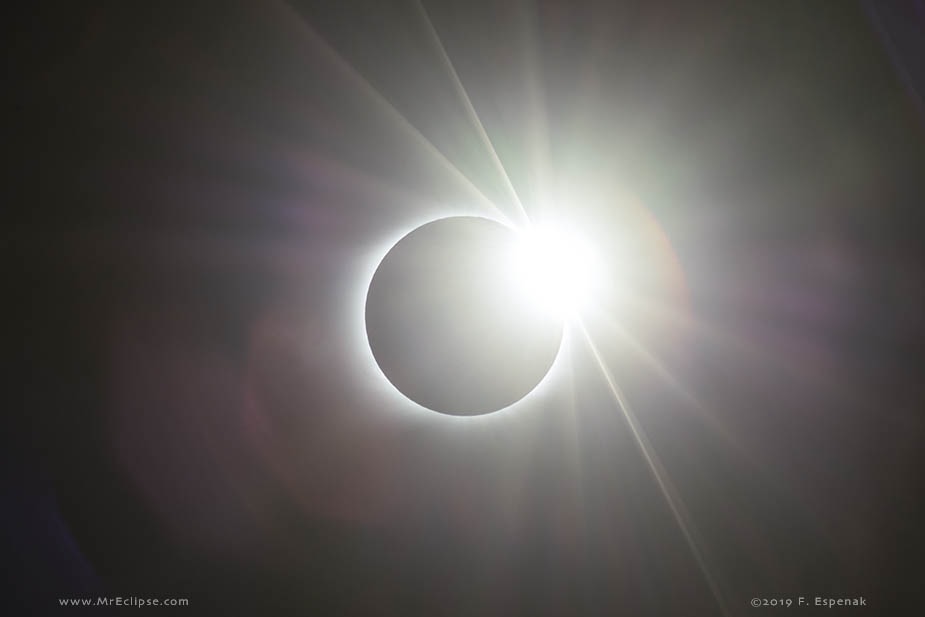
The eclipse begins as a small notch slowly appears along one edge of the Sun. During the next hour, the Moon gradually covers more and more of the Sun’s bright disk. You’ll need a Solar Filter to both view and photograph the partial phases. 

https://www.mreclipse.com/SEphoto/SEphoto.html

On April 8, 2024, there will be a total solar eclipse across parts of North America. It starts on Mexico’s Pacific coast and ends on Canada’s Atlantic coast. (So, no, it’s not just “from San Antonio to the Canadian border” as one article puts it).

I’m a little jealous of friends and family in the path. The eclipse lasts for over four minutes this time — if you’re in the area, enjoy!

And send me a photo or three if you can 😁

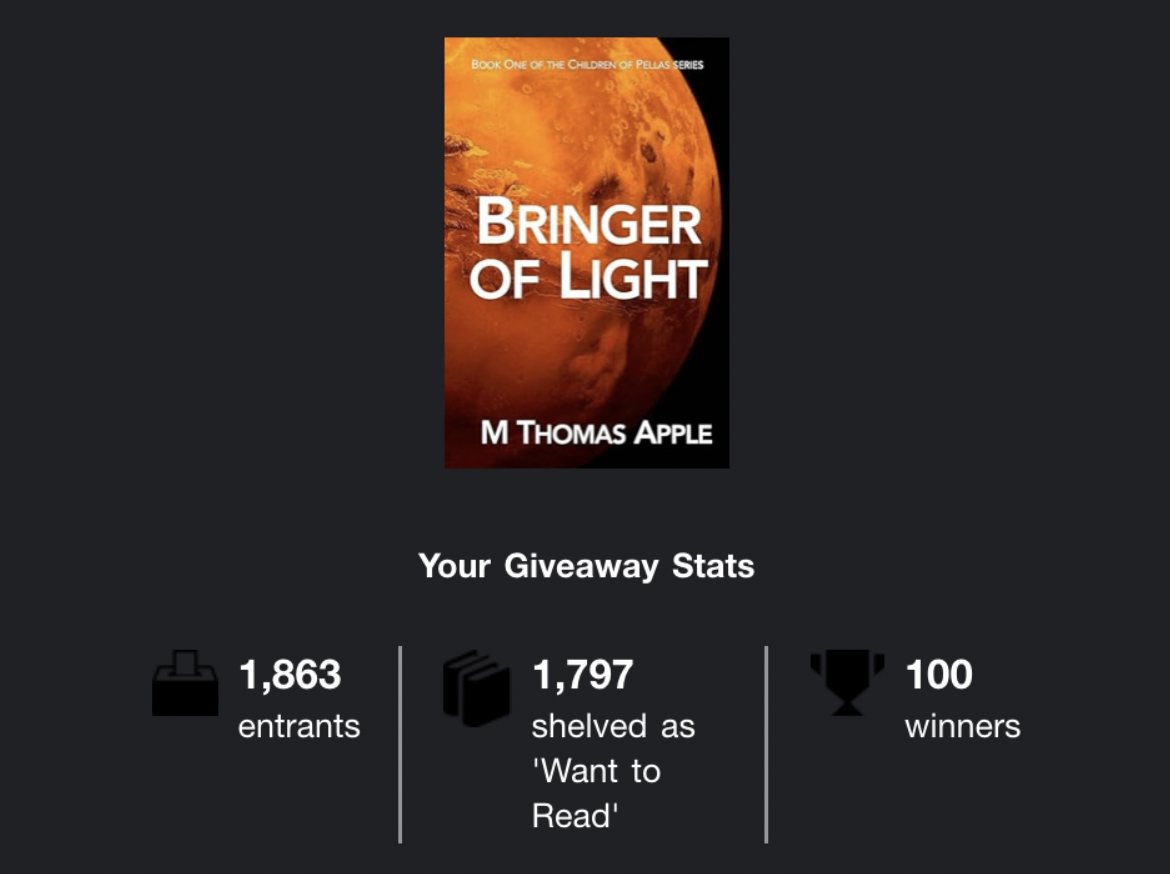
March 2024 Goodreads giveaway for Bringer of Light has ended

March 14, 2024
MThomas

Thanks to all who asked for a copy of Bringer of Light in the recent Goodreads giveaway!

Congratulations if you were a winner, and if you were not chosen by the system, take heart: there will be another giveaway in the near future. Thank you for your interest in my science fiction! I hope you enjoy reading it as much as I enjoy writing it!

Dear Diary – November 9, 2018

November 24, 2023
MThomas

[Context: my mother had just passed away, and I was remembering that both my parents’ choice in reading materials influenced my own fictional likes and dislikes.]

I guess both Mom and Dad liked Trek from its inception [in 1966]. I remembering watching the original series (in syndicated reruns of course) in the late ’70s/ We saw it in the “TV room” in my grandparents’ house….They had a color Zenith; we only had a tiny black and white on a bookcase. I remember being fascinated by the bright reds and blues (this was the point…color TV was new in the late ’60s and the sets and costumes deliberately used bright primary colors)…

Mom had all three “Star Trek Readers” I through III, by James Blish….Later I would borrow more complicated science fiction / fantasy stories from my Dad — Frank Herbert’s Dune and Robert A. Heinlein’s Stranger in a Strange Land stood out. And of course, Ray Bradbury’s Martian Chronicles, which were televised when we lived in Berne [a small village in New York west of Albany]. Once I discovered [The Chronicles of] Narnia and The Hobbit in 3rd grade, it was all over. I was a nerd for life.

And now look at the influence on pop culture. Movies, books, music, clothes, shoes, bags…the Internet and modern media. Smartphones. Tablets. Skype. Wireless devices. Bluetooth. GPS.

Nerd-dom has conquered the world. And my mom got there first. Way to go, Mom.

Winter is coming…well, not quite but

October 9, 2019
MThomas

Sorry I haven’t posted anything in a while. I know it’s been about two months. Summer was filled with fun family activities in Montreal. September was filled with trips to libraries and feeling sorry for myself. Got into a bit of a funk.

Now I’m back in Japan, back to the daily grind, and trying to find time to sort out all the stuff I mailed back from Montreal.

Rest assured, there’s lots of stuff to write about. Some of it even makes sense.

I’ll be writing a few quick posts about various cool science and space things in the upcoming days. Then maybe a couple of longish ones about weird family history. And maybe even an update on my SF novel.

Yeah. I still didn’t finish the first draft. Stuck on 70,000 words. But the end is in sight!

More later…

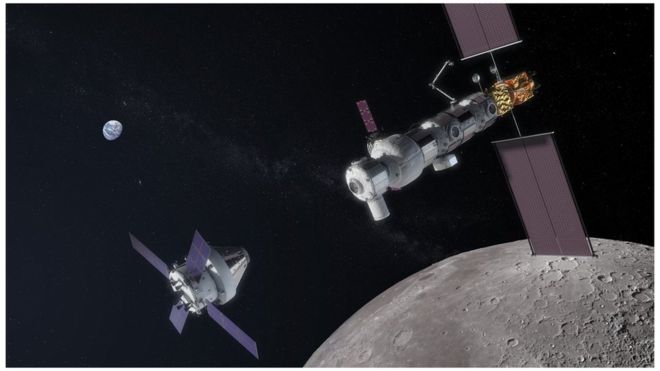
Gateway now includes Canada, eh

April 3, 2019
MThomas

_105864206_gateway_orion_approaching

Now that Trudeau has agreed to help out, if anything goes wrong we can always “Blame Canada!”

No, no, it’s a joke, alright, eh. Sorry, sorry.

www.bbc.co.uk/news/science-environment-47426798

Blog at WordPress.com.
The EcoGalactic Gazette

Space sustainability watch, co-produced by a human and an AI agent

The Silmaril Chick

Writing Fanfiction in the worlds of Tolkien and Beyond!

Our Awesome Universe

Learning more about our place in the universe...

TechWordly

Best Tech Gadgets Advise

Universe discoveries

Writing blogs is miracle I am a writer blogger and my site mission is to give information on maximum information to audiences

Robby Robin's Journey

Reflections of an inquiring retiree ...

Stylish Home Solutions

Simple ideas to make every room feel stylish and welcoming

Fox Reviews Rock

Rock & Metal Reviews That Hit Hard

My little corner of the world

Short stories | Reflections | Poetry