Images of the Orion Nebula, c/o ESA and NASA (it’s complicated…)
For the first time ever, a team of international scientists detected a carbon compound known as methyl cation (pronounced cat-eye-on), or CH3+, in d203-506. CH3+ is significant for understanding how life began on Earth — and how it might develop elsewhere.
Images of the Orion Nebula, c/o ESA and NASA (it’s complicated…)
For the first time ever, a team of international scientists detected a carbon compound known as methyl cation (pronounced cat-eye-on), or CH3+, in d203-506. CH3+ is significant for understanding how life began on Earth — and how it might develop elsewhere.
A European-built orbital satellite was launched into space on Saturday from Florida on a mission to shed new light on dark energy and dark matter, the mysterious cosmic forces scientists say account for 95% of the known universe.
Like the James Webb telescope, the Euclid will be positioned in a LaGrange point (L2, in this case), rather than in high Earth orbit.
If all goes well.
It’s interesting that the Guardian article says the telescope was “designed and built entirely by Esa,” although NASA supplied parts and its launching pad was made available and the telescope was launched using a SpaceX rocket. And ESA consists of nearly 2000 scientists from the US, Canada, and Japan as well as various European countries.
It’s a joint project. That’s how science should work in the first place.
(For more on dark matter, dark energy, gravity, and quantum mechanics, check this out.)
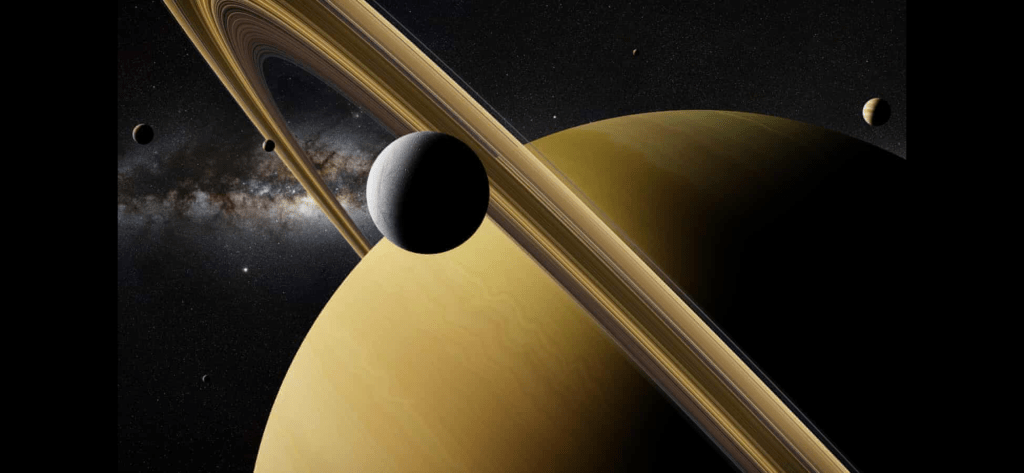
The record-breaking plume reached nearly 6,000 miles into space – covering the distance between Ireland and Japan – and poured water into the void at an estimated rate of 300 litres a second.
Note that the water jetted out into space nearly 40 times longer than the actual size of the moon (about 500 in diameter, or as the Gurdian puts it “500-mile-wide” for those who forgot the meaning of “diameter).
Enceladus is probably the best bet for life elsewhere in the solar system due to its water — and while whipping around Saturn once per day, which is likely the reason for underwater volcanos and other vents that may provide the proper chemistry for life.
Led by the European Space Agency (ESA), the mission will orbit the largest planet in the solar system and explore its icy moons, which scientists think could support living organisms.
JUICE will explore three possible ocean-bearing moons – Europa, Ganymede and Callisto. Under their icy surfaces are thought to be huge oceans of water – a crucial ingredient for life as we know it.
The “Jupiter Icy Moons Explorer” is the first time an ESA-headed project will visit another moon.
If it launches successfully, of course.
Lift off in less than seven hours from French Guiana!
Great job by Alzajeera, although “Earth is about 4.1 times the size of Europa and is believed to have a young and active surface that may vent water vapour to space via plumes and geysers.” is a bit misleading (Europa, not Earth, is believed to have…)
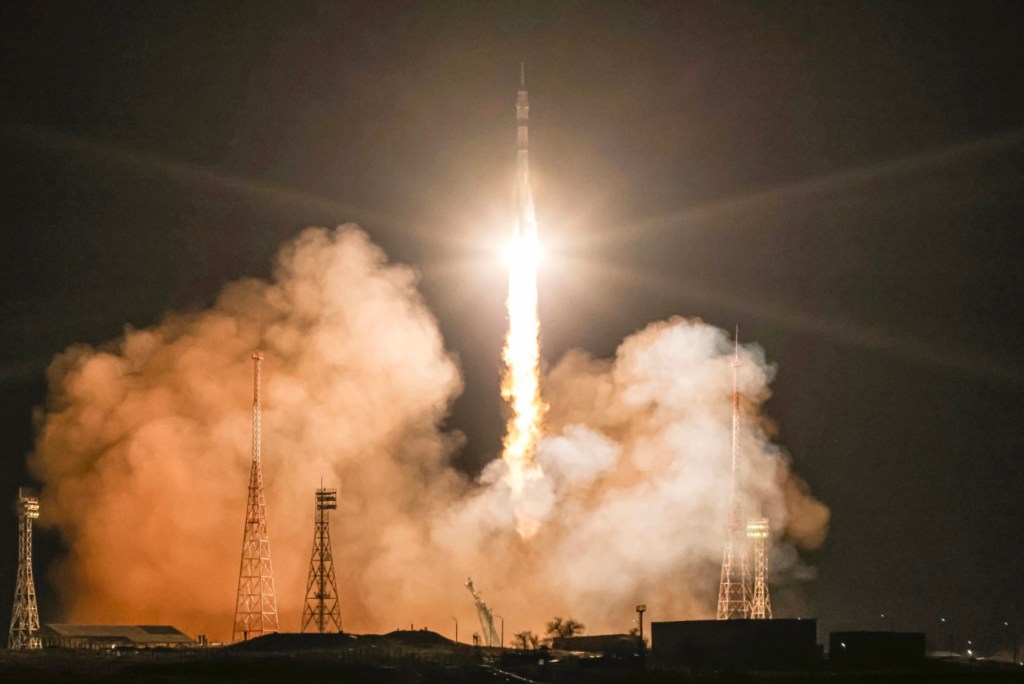
Until the new Soyuz pulls up, emergency plans call for Rubio to switch to a SpaceX crew capsule that’s docked at the space station. Prokopyev and Petelin remain assigned to their damaged Soyuz in the unlikely need for a fast getaway. Having one less person on board would keep the temperature down to a hopefully manageable level, Russian engineers concluded.
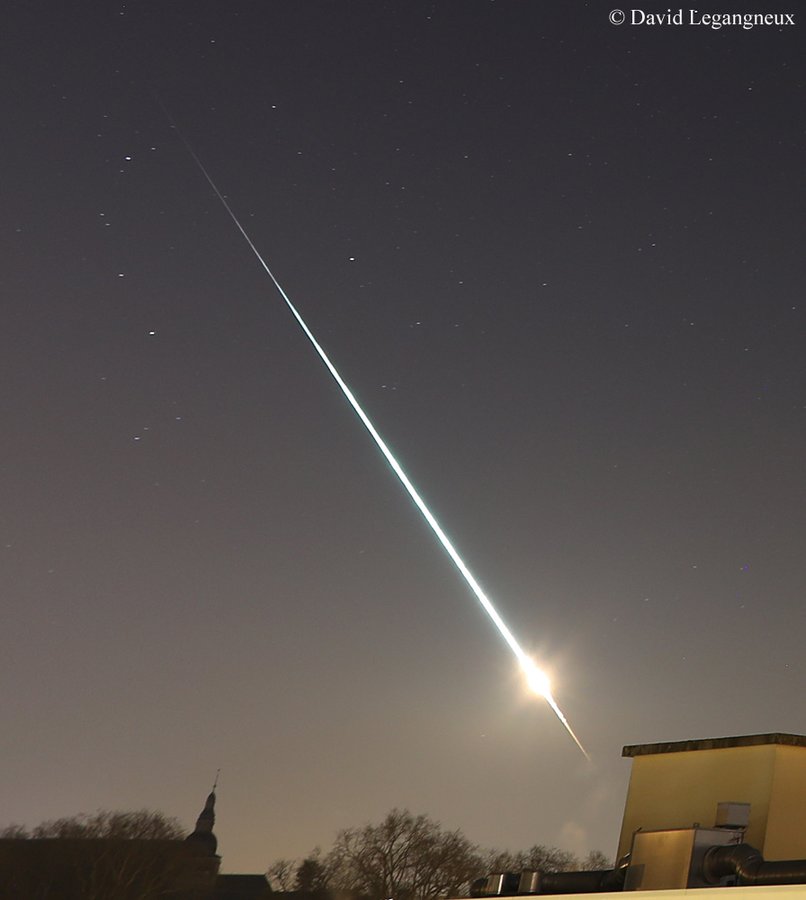
Anyway, “SAR2667” provided some cross-cultural entertainment for people living in England, France, Belgium, and the Netherlands. Lots of photos and videos online.
Interesting note from ESA: they were able to detect it and notify everyone exactly where and when it would disintegrate.
Since there are more than 30,000 of these things that orbit the Sun relatively close to Earth’s orbit, it’s a good thing we’re getting better at detecting them. Maybe we’d better up the ante on deflecting them…
Also, see this one (pay wall, Washington Post) about NASA and DARPA working on one to reach Mars much faster to reduce astronauts’ exposure to radiation.
I still think “durp” every time I see that acronym 😝
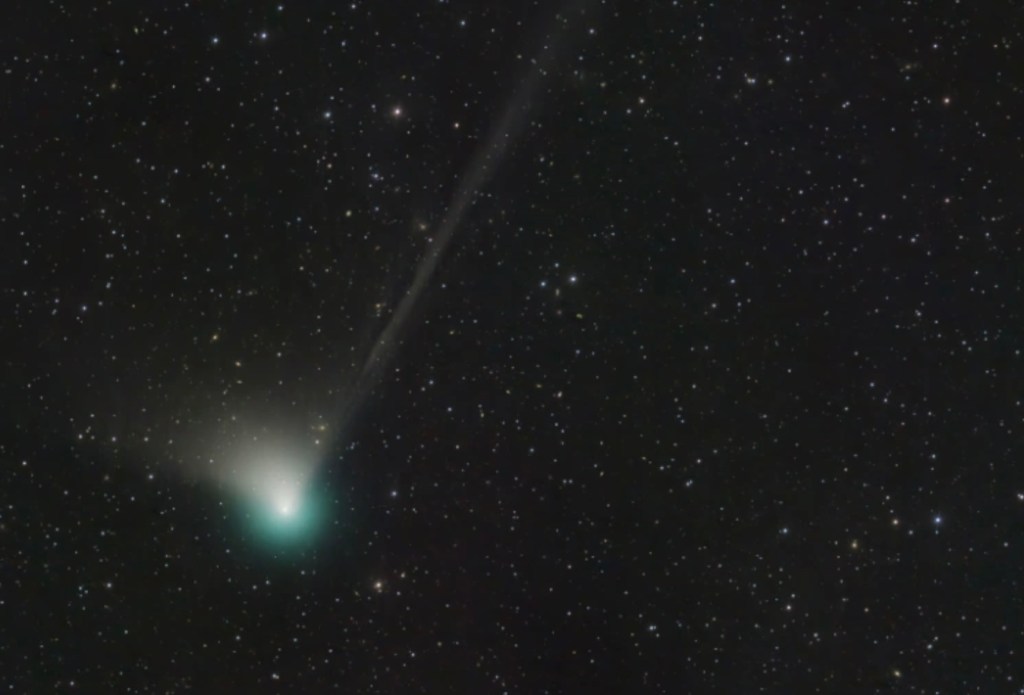
A comet from the outer solar system is set to buzz Earth on Wednesday and skywatchers have a chance to glimpse the celestial object as it journeys through our cosmic neighborhood for the first time in 50,000 years.
If by “Wednesday” you mean “Wednesday in North America. There is no “on Wednesday” worldwide, thanks.
Observers in the Northern Hemisphere should look northeast just after the Moon sets and before dawn. You should be able to see it with a good pair of binoculars.
The last time Comet C/2022 E3 (ZTF) made a visit, Homo sapiens still had Neanderthal neighbors, so this is your one and only! ☄️




 M Thomas Apple Author Page