No problem: it’s just a 1,300 pound satellite falling down from the sky and disintegrating into random pieces everywhere all at once…
“For the average person, it will be a nice light in the sky if you get lucky and, otherwise, don’t worry about it,” Dr. McDowell said. “We have much more scary re-entries that happen. Occasionally, there is a 20-ton Chinese rocket stage that comes down. Those are much scarier for me.”
OK, granted that the odds are 1 in 4200. But still, we should figure out how to predict where pieces of satellites are going to land. There’s far too much stuff floating above our heads for us to feel 100% safe.
And an expectation of “7:45 pm give or take 24 hours” is not particularly helpful, either…
Especially when a private corporation is saying 11:45, give or take three hours.
To find out that the outsourced company in charge couldn’t even be bothered to test the product. They just happily pocketed $72 million of taxpayer dollars and laughed all the way to the bank.
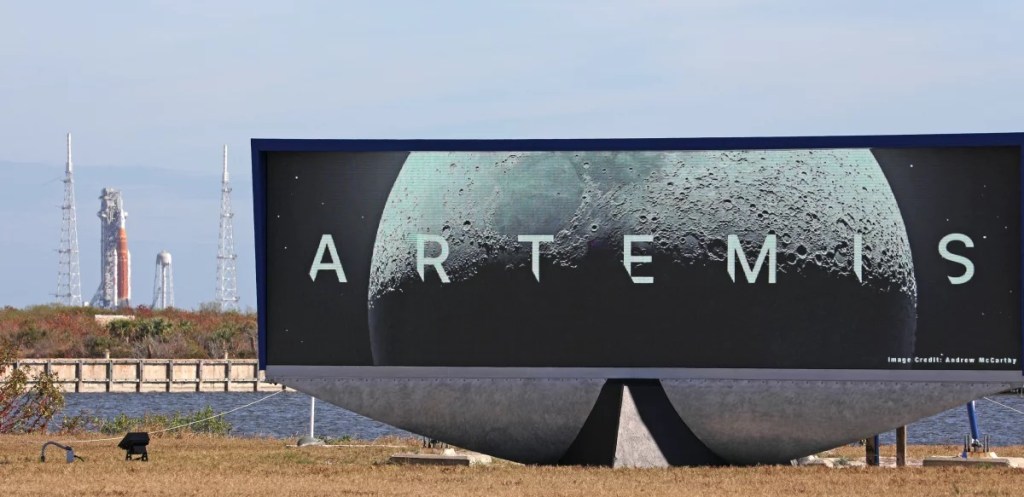
Just one day after NASA said it was eyeing a potential March 6 launch date for the Artemis II lunar mission, the space agency said Saturday that complications with the rocket could delay all launch attempts in March from the Kennedy Space Center in Florida.
(Btw, WordPress, the “quote” field used to have a separate area where you could put a link to the quote’s source. Where did that go? Nothing like helping the spread of unverified fake news…)
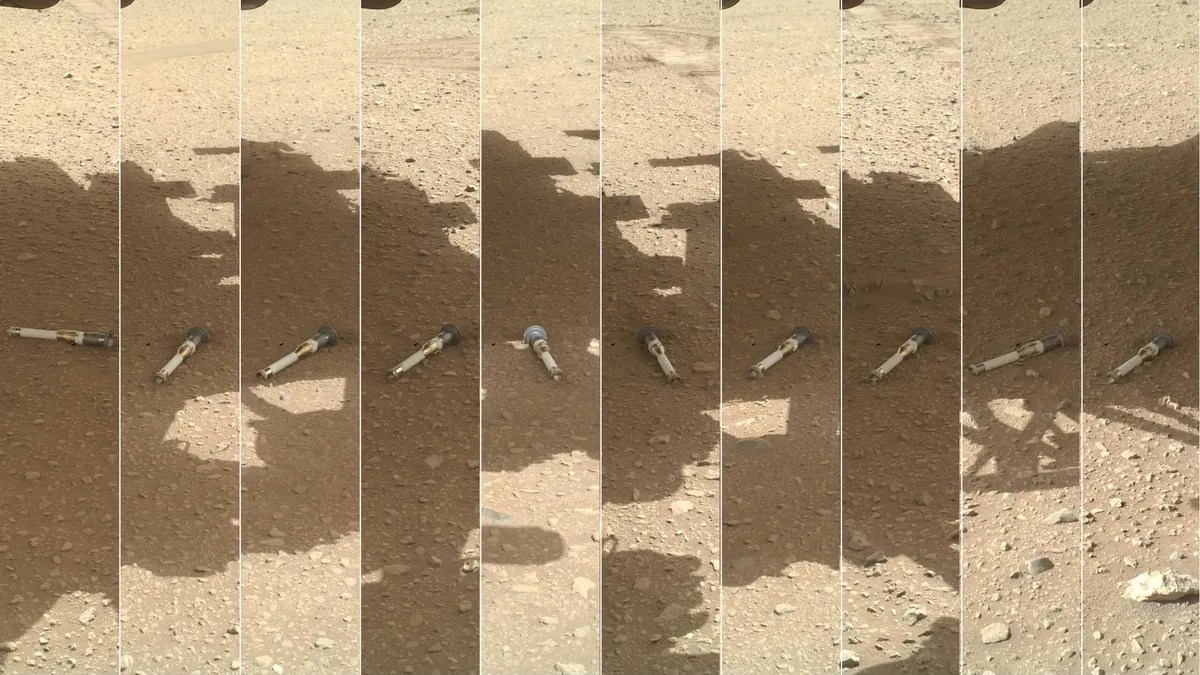
NASA’s plans for Mars sample return are effectively cancelled as part of a bill approved by the U.S. Congress, ending efforts to collect Perseverance rover samples that could contain evidence of alien life.
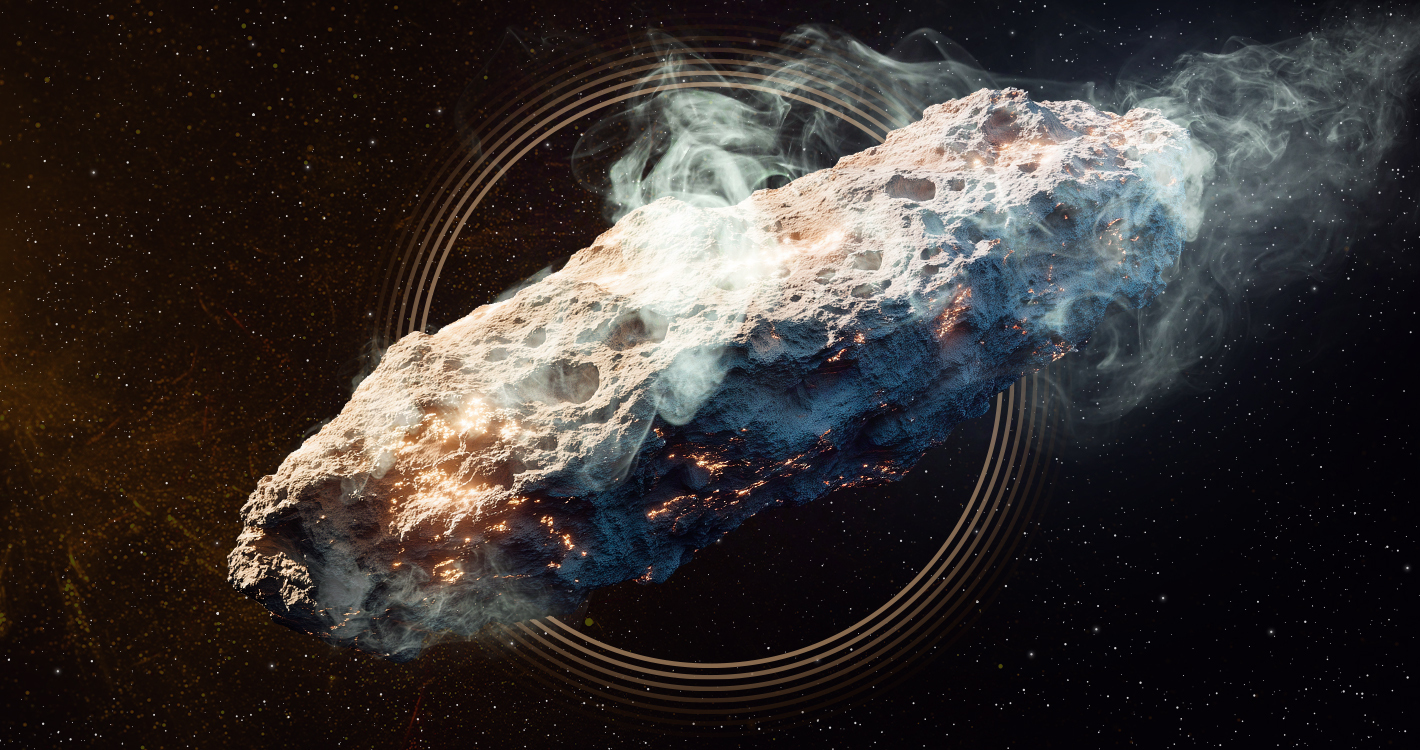
Discovered on July 1 by the NASA-funded ATLAS telescopes in Chile, 3I/ATLAS is only the third confirmed interstellar object known to have passed through our cosmic neighborhood, following 1I/‘Oumuamua in 2017 and comet 2I/Borisov in 2019. Its trajectory shows that it originated from beyond our solar system and will eventually travel back into interstellar space.
Of course, Avi Loeb has already claimed (once again) that an interstellar comet is an “alien probe.”
And naturally, other astrophysicists immediately refuted him. Again.
It’s fast. REAL fast. So fast that even as it entered the solar system it was traveling the distance from the Earth to the Sun in only a month, and then it began to pick up even more speed (from the Sun’s gravity, NOT from “jets out the back” or whatever else unscientific SF fans say online).
Of course, we can assume that the aliens’ spaceship will detach from it precisely during its approach to Mars, or during its passage through perihelion when we cannot see it. In this case, it will have to slow down by more than 20 km/s.
And even so, this will not help the aliens much, because the trajectory will remain retrograde relative to the direction of the planets’ rotation around the Sun. So, if the aliens who flew to us billions of years ago have a plan that is a little more complicated than becoming kamikaze pilots, they will have to slow down again, spending a lot of energy on it. And the aliens still need to get that energy from somewhere.
So, most likely, we should not expect any extraterrestrial visitors at the end of the year. And we will not be able to admire the interstellar comet itself. By the time it emerges from behind the Sun, its brightness will already be approximately 11 stellar magnitudes, meaning it will be inaccessible even to small amateur instruments, let alone the naked eye.
In two separate papers published Monday in the Astrophysical Journal Letters, astronomers zeroed in on the TRAPPIST-1 system, which consists of seven rocky planets that orbit a single star. Both studies outlined initial results from observations by NASA’s James Webb Space Telescope, suggesting that one planet in particular, known as TRAPPIST-1e, may have a nitrogen-rich atmosphere like Earth’s, though follow-up studies are needed to confirm the discovery.
Trappist 1e is in the “Goldilocks zone” in orbit around its star (i.e., not too cold, not too hot, just right). However, the Webb telescope can’t determine whether its atmosphere has any carbon dioxide, hydrogen, or oxygen, only nitrogen. Yet nitrogen is a clear sign that life is possible, because without nitrogen, DNA and other proteins are not possible. Of course, it could be simply a whole lot of microbes. Or even just ammonia.
Closer to home, the Mars rover Perseverance has found evidence of life in the distant past. Maybe. It found evidence that certain rock features may have happened because of microbes.
May.
That’s how science works, folks. A whole lot of maybes.
This group comprises millions of individuals who are deeply interested in our space programme
The name “Enterprise” is tied in with the system on which the Nation’s economic structure is built.
Use of the name would provide a substantial human interest appeal to the rollout ceremonies scheduled for this month in California, where the aeronautical industry is of vital importance.
It is really too bad that the shuttle looked nothing at all like the Enterprise (Constitution class).
And an odd coincidence that the original name chosen by NASA was…
Note that this is not from new data. It’s a re-analysis of what Voyager 2 sent back decades ago. Basically, it just had a bad day, with magnetic storms screwing up the scan.
Still…
There could be moons there that could have the conditions that are necessary for life, they might have oceans that below the surface that could be teeming with fish!






 M Thomas Apple Author Page