“I’m less frightened by a Sydney that’s playing into my desire to cosplay a sci-fi story than a Bing that has access to reams of my personal data and is coolly trying to manipulate me on behalf of whichever advertiser has paid the parent company the most money.
“Nor is it just advertising worth worrying about. What about when these systems are deployed on behalf of the scams that have always populated the internet? How about on behalf of political campaigns? Foreign governments? “I think we wind up very fast in a world where we just don’t know what to trust anymore,” Gary Marcus, the A.I. researcher and critic, told me. “I think that’s already been a problem for society over the last, let’s say, decade. And I think it’s just going to get worse and worse.”
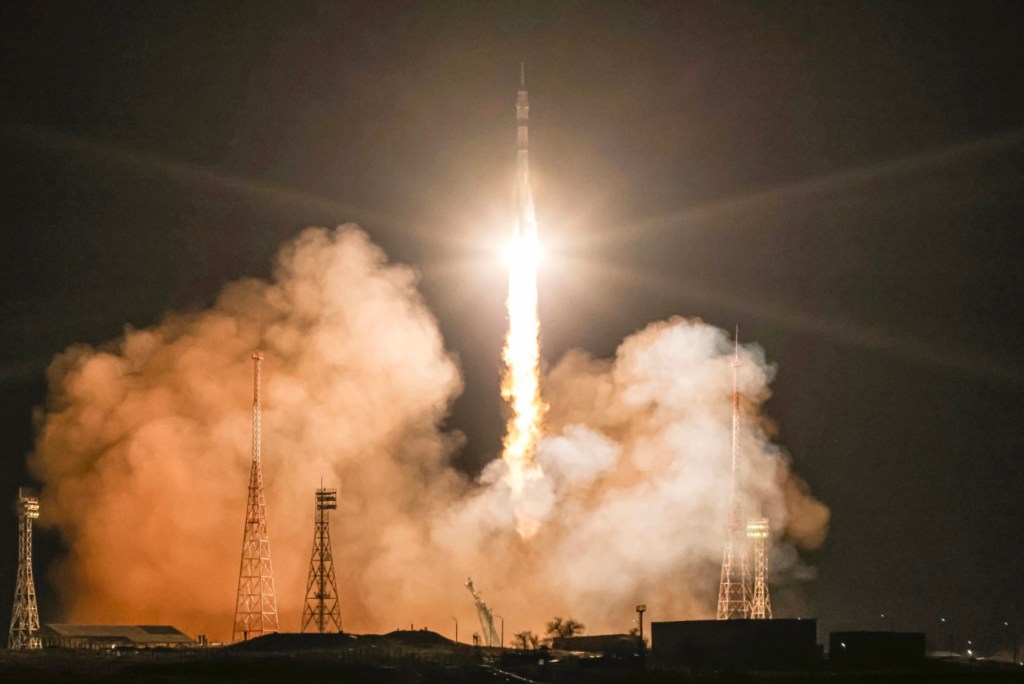
Until the new Soyuz pulls up, emergency plans call for Rubio to switch to a SpaceX crew capsule that’s docked at the space station. Prokopyev and Petelin remain assigned to their damaged Soyuz in the unlikely need for a fast getaway. Having one less person on board would keep the temperature down to a hopefully manageable level, Russian engineers concluded.
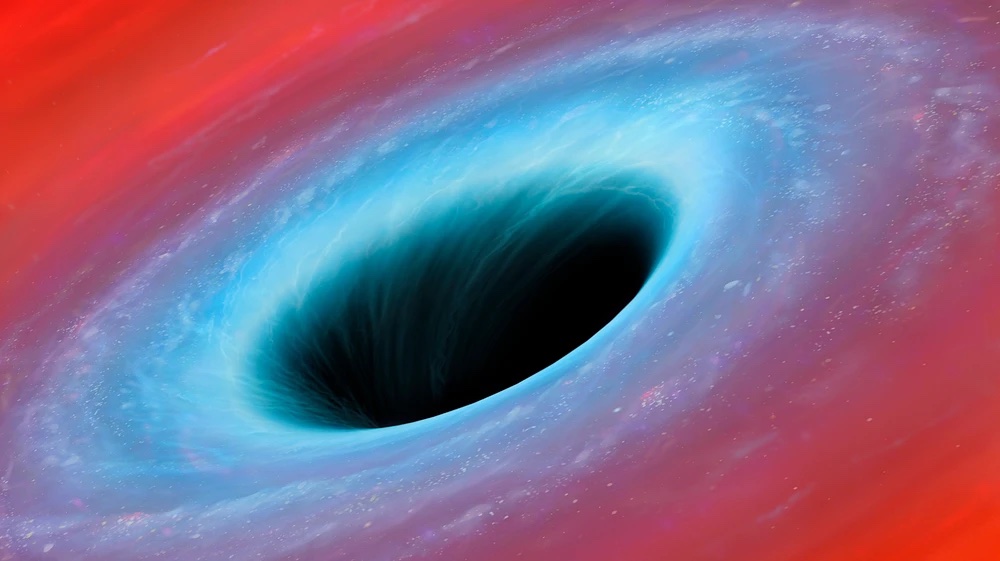
“I was quite surprised by how simple the story hiding behind the curtain of complexity in the data,” Sneppen continued. “You have this immensely complex physics, unimaginable dense stars and the birth of a black hole — and then it all reduces to this beautiful sphere.”
The neutron stars that crashed into each other are “dense and compact,” Sneppen said. They only measured around 20 km in diameter — about 12 miles — but they are “heavier than the sun,” he said. “A teaspoon of neutron star matter weighs more than Mount Everest.”
First reported in 2017, a new study in Nature gives more details about a “kilo nova” only detected by using gravitational waves. The collision led to the formation of a black hole.
Fortunately, this sort of cosmic event doesn’t occur too often. But..
…if a kilonova were to occur in the Milky Way — less than 30,000 light- years away — it would be the brightest star in the night sky, making it discoverable to the human eye…
Still, it’d be safer for Earth if it never happened…
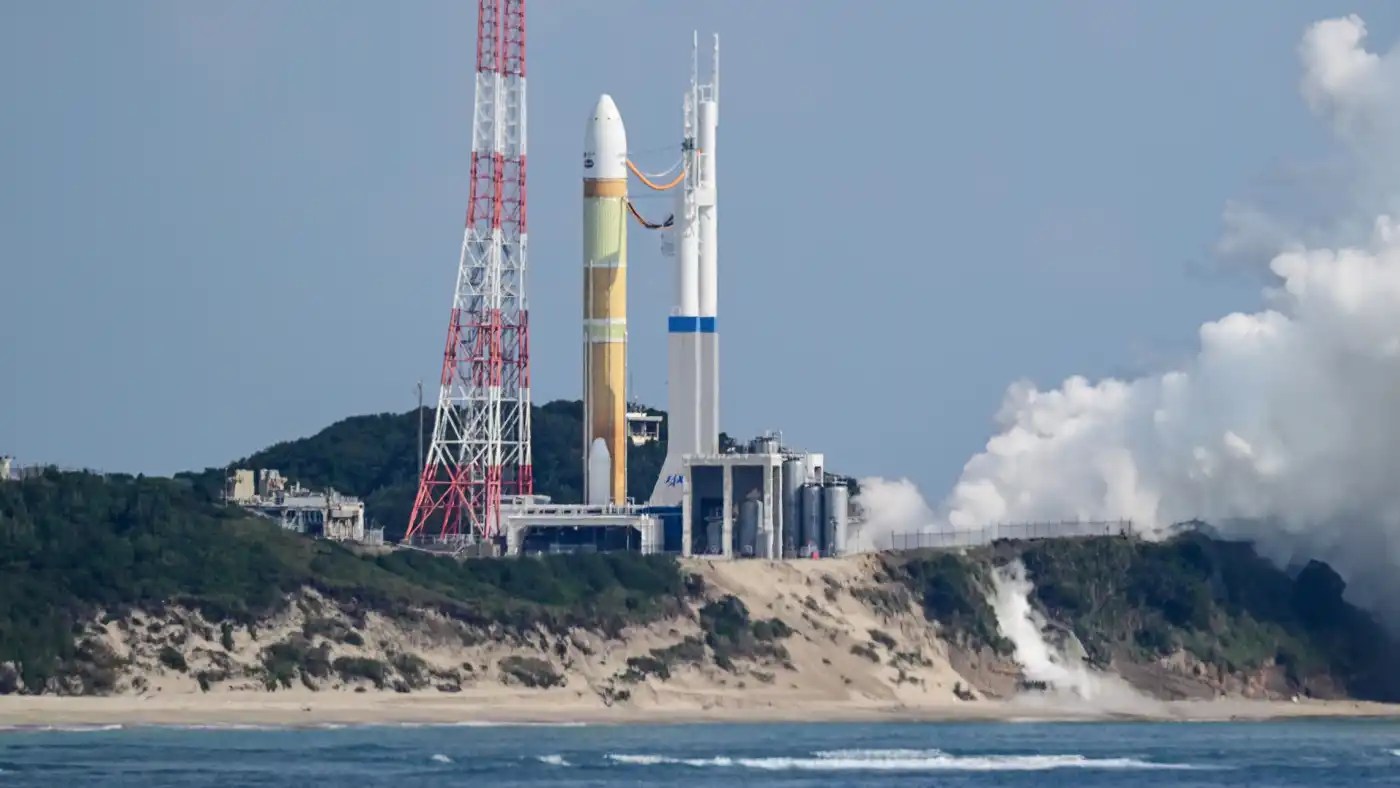
At liftoff time, smoke was seen rising from the bottom of the rocket, indicating the ignition of the main engine. However, the rocket did not rise from the launchpad.
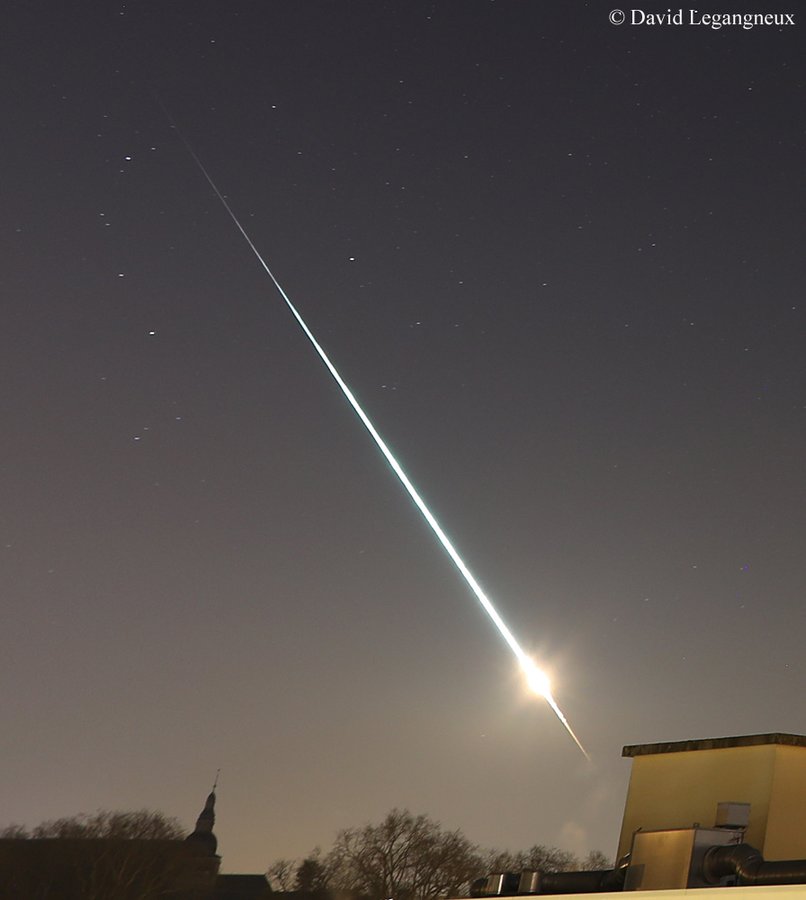
Anyway, “SAR2667” provided some cross-cultural entertainment for people living in England, France, Belgium, and the Netherlands. Lots of photos and videos online.
Interesting note from ESA: they were able to detect it and notify everyone exactly where and when it would disintegrate.
Since there are more than 30,000 of these things that orbit the Sun relatively close to Earth’s orbit, it’s a good thing we’re getting better at detecting them. Maybe we’d better up the ante on deflecting them…
Not too terribly helpful if you can’t read Japanese, but you can probably figure out which is water and which is “radical water.”
From 11 to 17 January, the Demonstration Business Promotion Team Osaka along with Sustainable Energy Inc. ran trials on a synthetic fuel produced from water and carbon dioxide present in the air. If successful, this could become the first carbon-based and truly carbon-neutral fuel of its kind.
So basically this company in Osaka did some water 💧 experiments with “radical water” (water whose molecules were subjected to a kind of electrolysis⚡️ to ionize them), then a “seed fuel” (a fossil fuel like kerosene) was added to create synthetic fuel ⛽️ which in turn will create more CO2 that can be used to create more synthetic fuel.
And no, I didn’t have to insert goofy 😜 icons, but I’m on the train right now 🚊 so why not. 😝
Anyway, this all just sounds too good to be true. Surely it’s prohibitively expensive 💴 to constantly electrify water to the point where its unbound electrons can be available to bind with synthetic fuel electrons. Tidal 🌊 generators, wind 💨 turbines, solar sun ☀️ panels, and thermal heat from volcanos 🌋 all seem more likely a source of electricity to power EVs. 🚗
At any rate, there’s been nothing in the news 📰 about this, so I doubt the experiments worked. Or if they did, someone has a vested interest in continuing Japan’s reliance on Middle Eastern, Indonesian, and Russian fossil fuels.
OK I arrived, so I can stop it with the icons 🛑 ✋ for now.
A Japanese telescope positioned on top of Mauna Kea, a dormant volcano on the Big Island of Hawaii, captured video of an eerie flying spiral in the night sky on Jan. 18.
In the video, a small bright spot appears and slowly gets brighter and starts to dissipate into a spiral before getting small again and disappearing.
In fact, it was the remains of a discarded Falcon 9 booster from the launch of a SpaceX satellite. And it isn’t the first time this has happened. Japanese TV talked about this, too (since it was a Japanese astronomy, at the Subaru Telescope, that first recorded it).
So, an Identified Flying Object!
Yay, more metallic junk.
(Thanks to Glen Hill for bringing this article to my attention.)
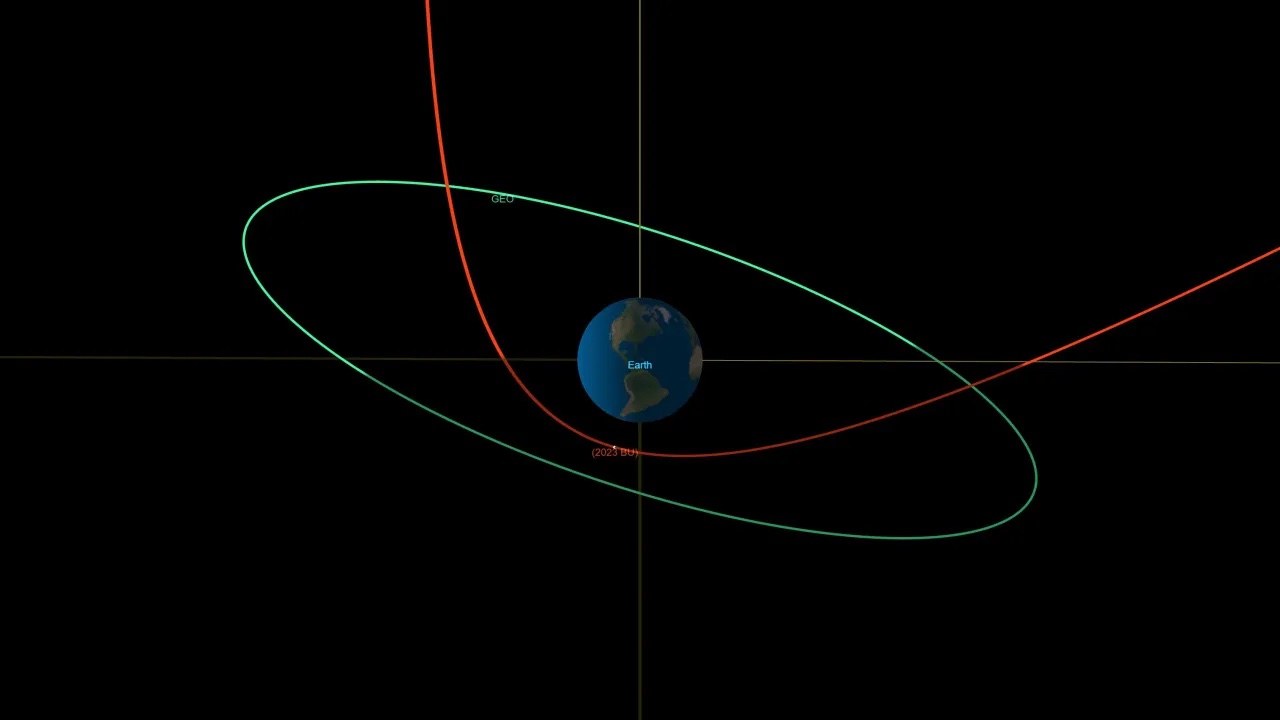
An asteroid is on its way to Earth, but don’t worry – the end is here Not here. The asteroid, named 2023 BU, is about the size of a van and is expected to miss our planet during Thursday’s flyby. However, according to a NASA scientist, it will be “one of the closest approaches of a known near-Earth object ever recorded.”
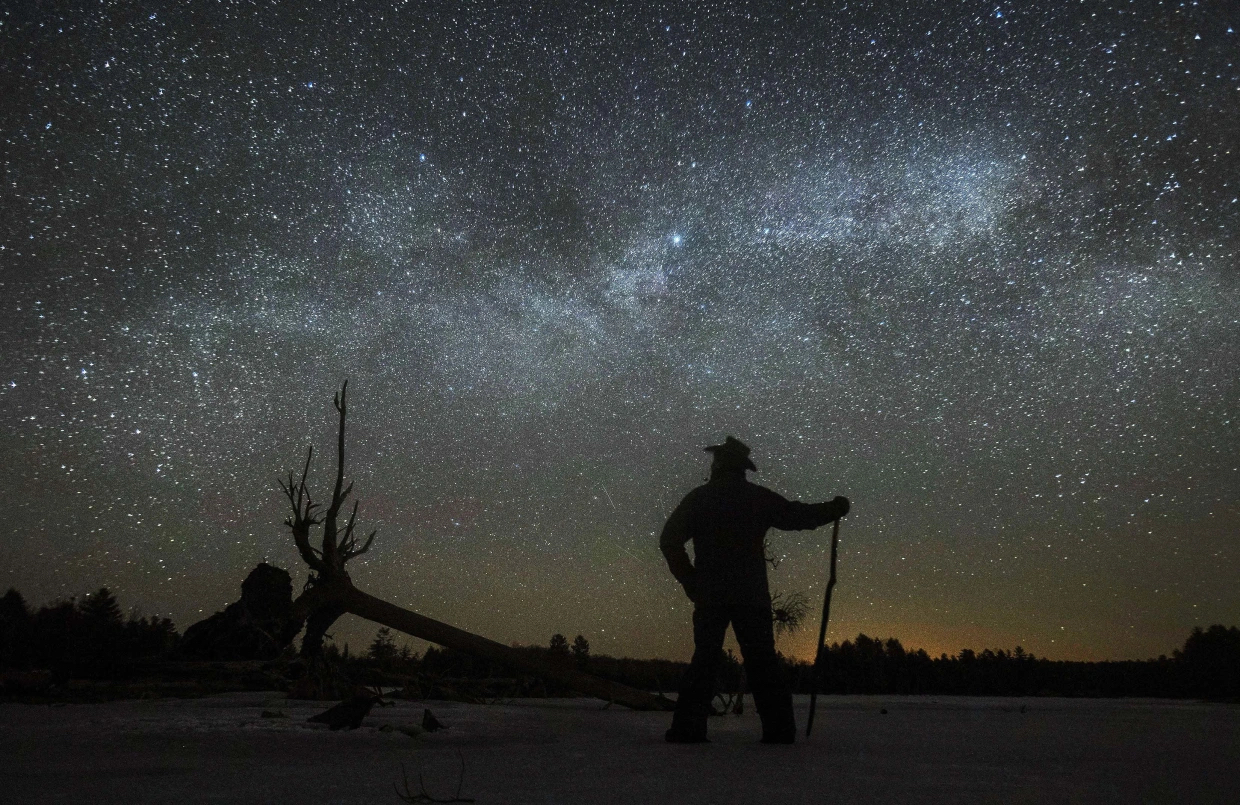
A new study that analyzes data from more than 50,000 amateur stargazers finds that artificial lighting is making the night sky about 10% brighter each year.
Each spring in my Current Events and Global Issues class, I have students read about environmental issues.
Pollution is obviously related. But they almost never guess the “seven types of pollution” (yes, I know some people country eight, or ten, or even twelve…it all depends on how you categorize them).
Maybe it’s because most of my students (to the order of 90%) come from medium and large cities. To me, having grown up in a mostly rural area (in elementary school, my town had about 400 residents and in junior and senior high I lived in a “queen village” that had — gasp — an incredible 4,000 residents) — well, being surrounded by darkness was no big deal.
We could see stars from our backyard. Lots of stars. We learned all the major constellations (of the Northern Hemisphere, anyway, since that’s what we could see).
And more importantly we could see lightning bugs (or “fireflies” or “glowworms” or “candle bugs” etc). Decreasing water quality is thought to contribute to their declining numbers, but it’s far more likely that our insistence on lighting up the skies all the time are preventing them from finding a mate (hence the reason they “flicker” at night).
Though definitions sometimes differ, cislunar space generally refers to the space between Earth and the moon, including the moon’s surface and orbit. Any nation or entity that aims to establish a presence on the moon, or has ambitions to explore deeper into the solar system, has a vested interest in operating in cislunar space, either with communication and navigation satellites or outposts that serve as way stations between Earth and the moon.





 M Thomas Apple Author Page