With just over a minute to go before liftoff, a California aerospace startup opted to stand down from launching the world’s first 3D-printed rocket on its inaugural test flight.
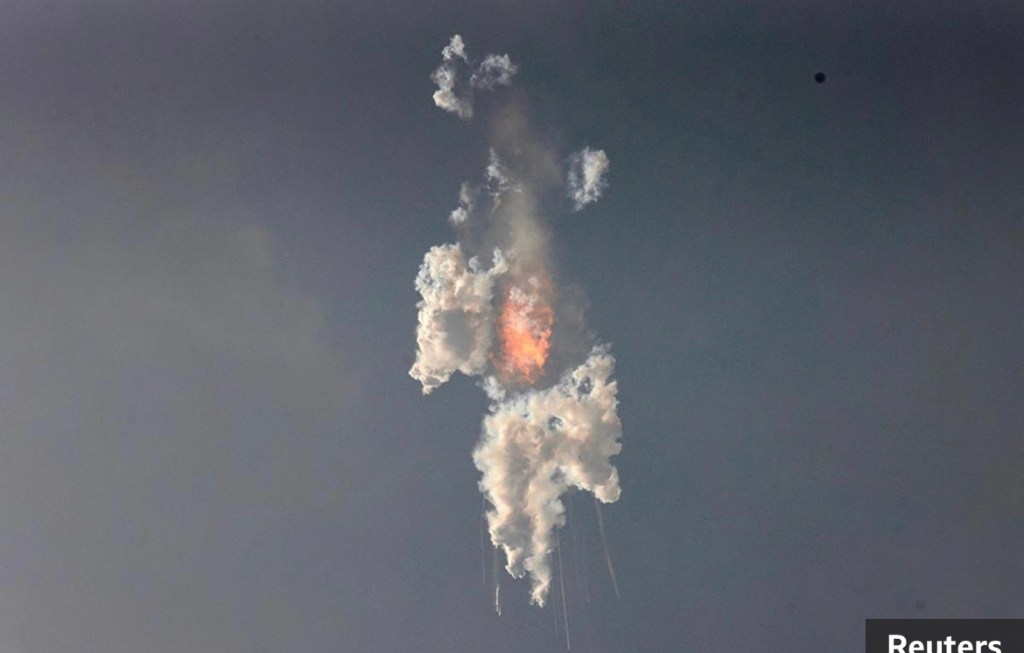
At least unlike the spectacular self-destruction of JAXA’s H3 this past Tuesday (Monday, Japan time), the team testing the California rocket wisely decided that it’s not a bright idea to stick a billion dollar satellite on an untested rocket. Repeatedly.
I’m beginning to feel that using 3D printed parts may not be the way to go with rocket engines…
For the program, the 9- to 12-year-old students designed an experiment in which epinephrine samples were placed into tiny cubes and sent to the edge of space via either a high-altitude balloon or a rocket. Once back on Earth, researchers from the John L. Holmes Mass Spectrometry Facility at the University of Ottawa tested the samples and found that only 87% contained pure epinephrine, while the other 13% had been “transformed into extremely poisonous benzoic acid derivatives,” according to a University of Ottawa statement(opens in new tab).
So…uh…why would an astronaut have this thing in space to begin with? NASA should know the full medical history of all its astronauts before even considering sending them into space.
The mysterious object’s lovely silver metallic hue stands out like a sore thumb in the surrounding, rust-colored landscape, a sulfate-bearing region of the Red Planet’s Mount Sharp.
“I’m less frightened by a Sydney that’s playing into my desire to cosplay a sci-fi story than a Bing that has access to reams of my personal data and is coolly trying to manipulate me on behalf of whichever advertiser has paid the parent company the most money.
“Nor is it just advertising worth worrying about. What about when these systems are deployed on behalf of the scams that have always populated the internet? How about on behalf of political campaigns? Foreign governments? “I think we wind up very fast in a world where we just don’t know what to trust anymore,” Gary Marcus, the A.I. researcher and critic, told me. “I think that’s already been a problem for society over the last, let’s say, decade. And I think it’s just going to get worse and worse.”
Until the new Soyuz pulls up, emergency plans call for Rubio to switch to a SpaceX crew capsule that’s docked at the space station. Prokopyev and Petelin remain assigned to their damaged Soyuz in the unlikely need for a fast getaway. Having one less person on board would keep the temperature down to a hopefully manageable level, Russian engineers concluded.
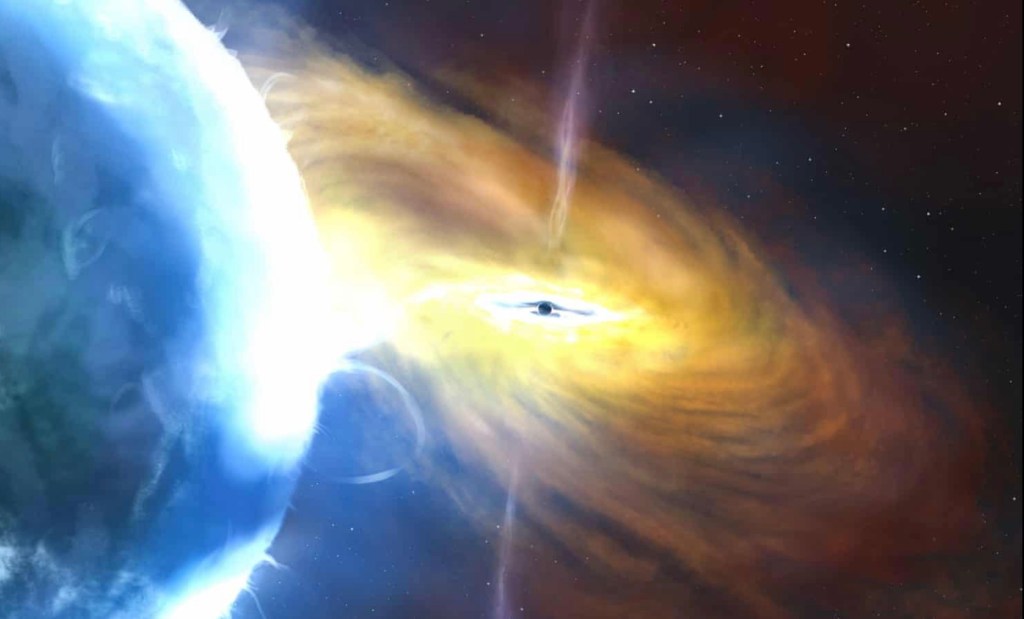
“I was quite surprised by how simple the story hiding behind the curtain of complexity in the data,” Sneppen continued. “You have this immensely complex physics, unimaginable dense stars and the birth of a black hole — and then it all reduces to this beautiful sphere.”
The neutron stars that crashed into each other are “dense and compact,” Sneppen said. They only measured around 20 km in diameter — about 12 miles — but they are “heavier than the sun,” he said. “A teaspoon of neutron star matter weighs more than Mount Everest.”
First reported in 2017, a new study in Nature gives more details about a “kilo nova” only detected by using gravitational waves. The collision led to the formation of a black hole.
Fortunately, this sort of cosmic event doesn’t occur too often. But..
…if a kilonova were to occur in the Milky Way — less than 30,000 light- years away — it would be the brightest star in the night sky, making it discoverable to the human eye…
Still, it’d be safer for Earth if it never happened…
It is this subsurface ocean, or rather its interaction with the ice shell that covers it, that a team of researchers led by the Catholic University of Louvain (UCLouvain) in Belgium hope to better understand. More specifically, they wish to understand how the ocean’s depth and the pressure exerted by the icy shell on the underground water body influence the formation of tidal motions and currents inside of it.
When I first heard of “Attack on Titan,” I was disappointed to learn that it didn’t take place actually on Titan. (The title in English is a mistranslation. It should be “Attack of the Titans” or “The Titans Attack” or even “Attacking Titans,” depending.) In any case, it’s a disgusting manga/anime with nothing to do with the icy moon of Saturn. Except for the name. And even that’s a misuse (they should have used “giant” as the storyline is very loosely based on Ymir and the frost giants of Scandinavian myth).
At liftoff time, smoke was seen rising from the bottom of the rocket, indicating the ignition of the main engine. However, the rocket did not rise from the launchpad.
Anyway, “SAR2667” provided some cross-cultural entertainment for people living in England, France, Belgium, and the Netherlands. Lots of photos and videos online.
Interesting note from ESA: they were able to detect it and notify everyone exactly where and when it would disintegrate.
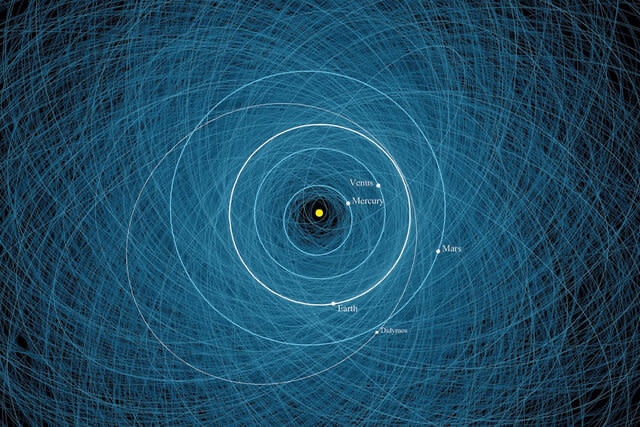
Since there are more than 30,000 of these things that orbit the Sun relatively close to Earth’s orbit, it’s a good thing we’re getting better at detecting them. Maybe we’d better up the ante on deflecting them…
Also, see this one (pay wall, Washington Post) about NASA and DARPA working on one to reach Mars much faster to reduce astronauts’ exposure to radiation.
I still think “durp” every time I see that acronym 😝