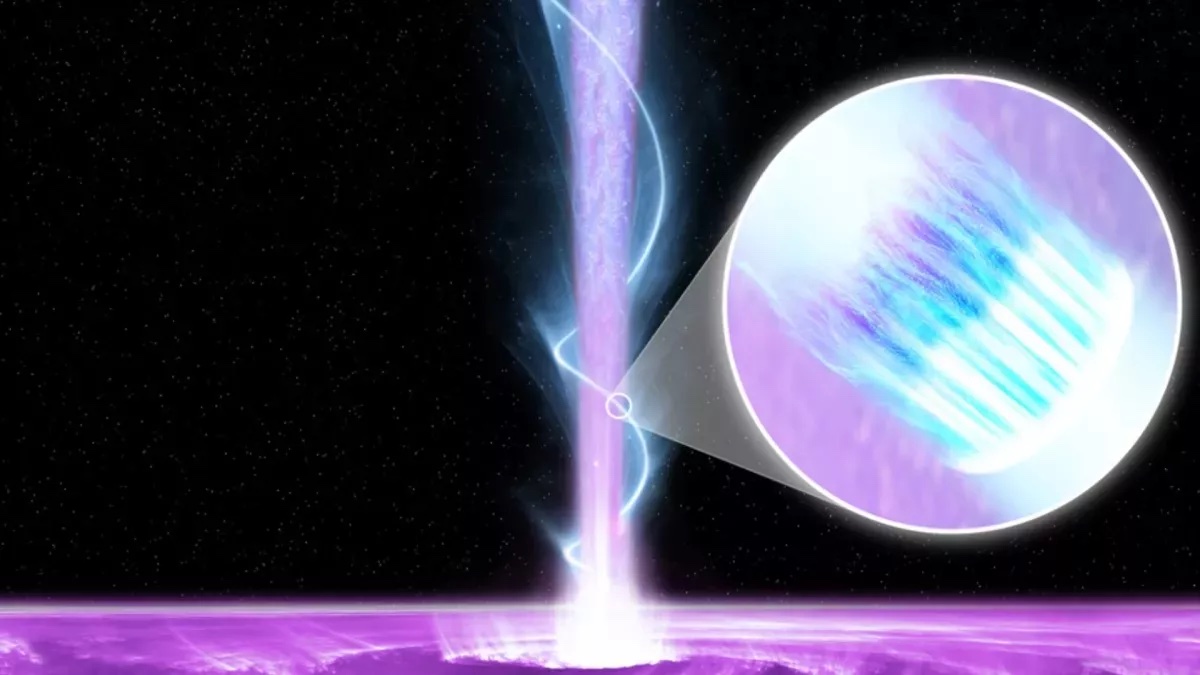
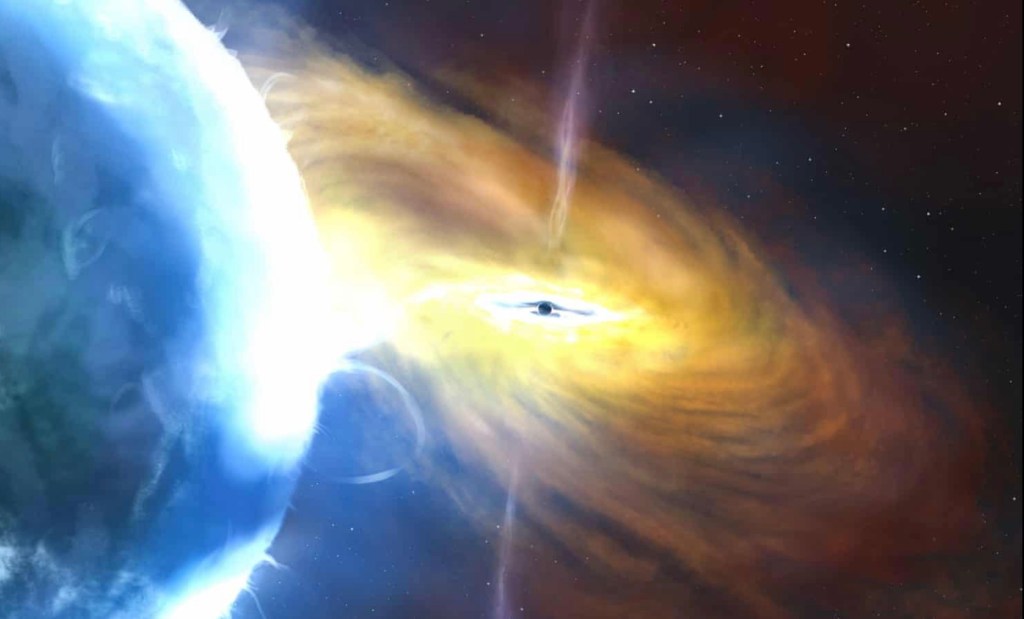
A NASA mission has observed a supermassive black hole pointing its highly energetic jet straight toward Earth. Don’t panic just yet, though. As fearsome as this cosmic event is, it’s located at a very safe distance of about 400 million light-years away.
Images of the Orion Nebula, c/o ESA and NASA (it’s complicated…)
For the first time ever, a team of international scientists detected a carbon compound known as methyl cation (pronounced cat-eye-on), or CH3+, in d203-506. CH3+ is significant for understanding how life began on Earth — and how it might develop elsewhere.
Images of the Orion Nebula, c/o ESA and NASA (it’s complicated…)
For the first time ever, a team of international scientists detected a carbon compound known as methyl cation (pronounced cat-eye-on), or CH3+, in d203-506. CH3+ is significant for understanding how life began on Earth — and how it might develop elsewhere.
A European-built orbital satellite was launched into space on Saturday from Florida on a mission to shed new light on dark energy and dark matter, the mysterious cosmic forces scientists say account for 95% of the known universe.
Like the James Webb telescope, the Euclid will be positioned in a LaGrange point (L2, in this case), rather than in high Earth orbit.
If all goes well.
It’s interesting that the Guardian article says the telescope was “designed and built entirely by Esa,” although NASA supplied parts and its launching pad was made available and the telescope was launched using a SpaceX rocket. And ESA consists of nearly 2000 scientists from the US, Canada, and Japan as well as various European countries.
It’s a joint project. That’s how science should work in the first place.
(For more on dark matter, dark energy, gravity, and quantum mechanics, check this out.)
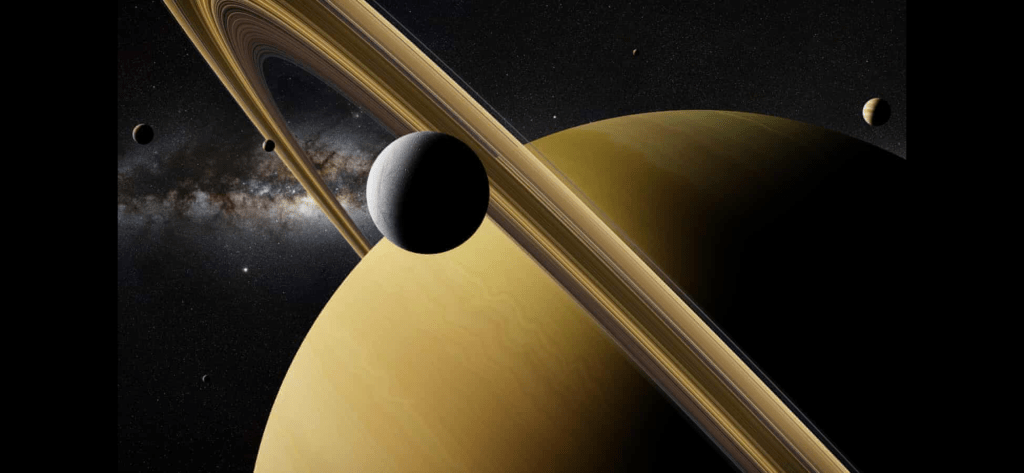
Scientists have suspected for a long time that this tiny moon of Saturn may be the best place in our solar system to look for life.
Now they have confirmed evidence of all six crucial elements necessary for life to exist (life as we know it, anyway): carbon (C), hydrogen (H), nitrogen (N), oxygen (O), phosphorus (P), and sulphur (S). If present as a phosphate, essential for DNA and RNA to exist, the discovery of phosphorus on the 310-mile-wide Enceladus may indicate life of sort sort, perhaps at a microscopic level beneath the icy surface.
One guess is that the oceans of Enceladus have at least 100 times more phosphorus than the Earth’s oceans. That would make for quite the carbonated fizzy pop. Methane has already been seen coming out out of various “ice geysers” (a.k.a. cryovolcanoes). Since methane results from rotten organic material, there logically should be something alive out there.
Now we just have to get back out there and figure out a way to find them.
The record-breaking plume reached nearly 6,000 miles into space – covering the distance between Ireland and Japan – and poured water into the void at an estimated rate of 300 litres a second.
Note that the water jetted out into space nearly 40 times longer than the actual size of the moon (about 500 in diameter, or as the Gurdian puts it “500-mile-wide” for those who forgot the meaning of “diameter).
Enceladus is probably the best bet for life elsewhere in the solar system due to its water — and while whipping around Saturn once per day, which is likely the reason for underwater volcanos and other vents that may provide the proper chemistry for life.
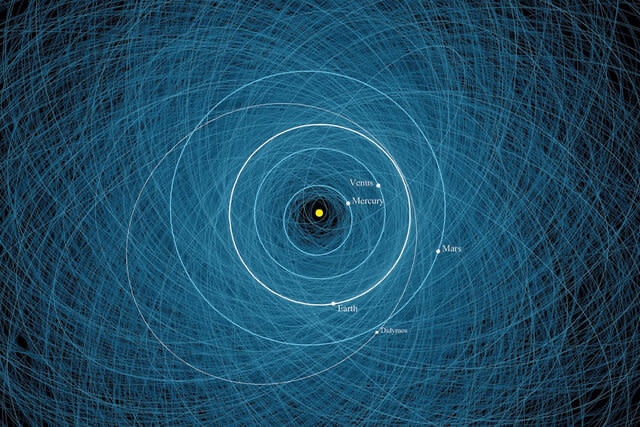
Of all the asteroids they modeled, the one with the largest risk of impact was a kilometer-wide asteroid known as 1994 PC1. Over the next thousand years, the probability that 1994 PC1 will cross within the orbit of the Moon is a paltry 0.00151%, hardly worth worrying about.
Thanks to Glen Hill over at Engagin’ Science (formerly Scientia, which apparently was far too Latin- and science-esque for search engines to handle) for bringing this (not-so Earth-shattering) info to my attention.
Sorry, folks. Hollywood was once again wrong (sigh).



 M Thomas Apple Author Page