NASA’s plans for Mars sample return are effectively cancelled as part of a bill approved by the U.S. Congress, ending efforts to collect Perseverance rover samples that could contain evidence of alien life.
In two separate papers published Monday in the Astrophysical Journal Letters, astronomers zeroed in on the TRAPPIST-1 system, which consists of seven rocky planets that orbit a single star. Both studies outlined initial results from observations by NASA’s James Webb Space Telescope, suggesting that one planet in particular, known as TRAPPIST-1e, may have a nitrogen-rich atmosphere like Earth’s, though follow-up studies are needed to confirm the discovery.
Trappist 1e is in the “Goldilocks zone” in orbit around its star (i.e., not too cold, not too hot, just right). However, the Webb telescope can’t determine whether its atmosphere has any carbon dioxide, hydrogen, or oxygen, only nitrogen. Yet nitrogen is a clear sign that life is possible, because without nitrogen, DNA and other proteins are not possible. Of course, it could be simply a whole lot of microbes. Or even just ammonia.
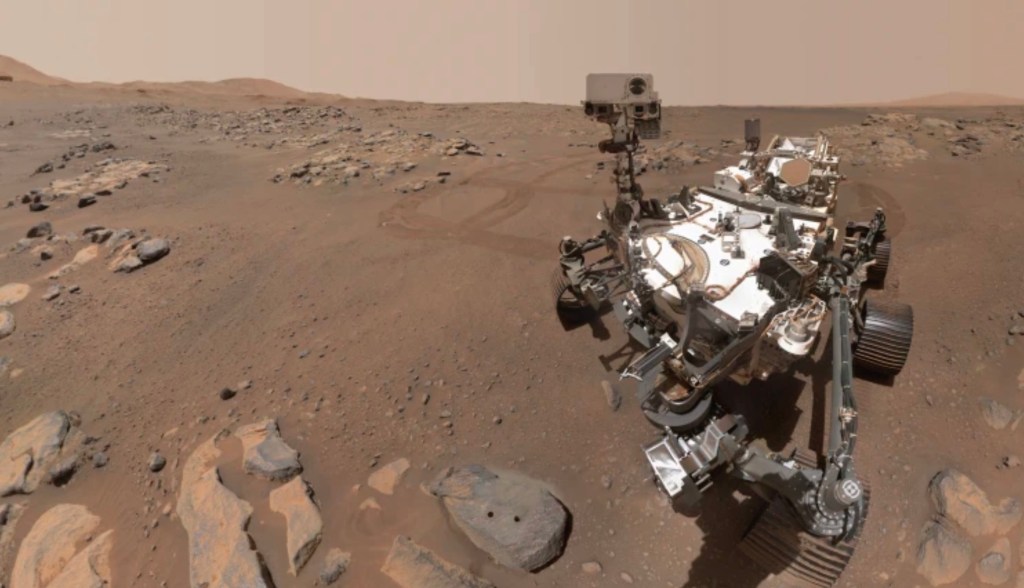
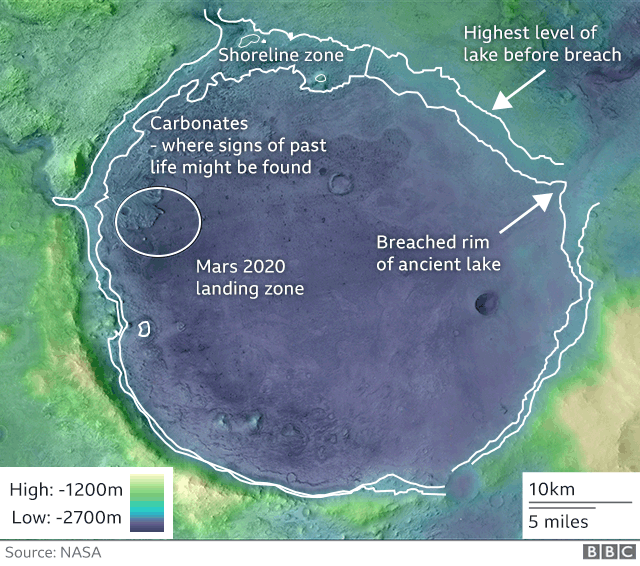
Closer to home, the Mars rover Perseverance has found evidence of life in the distant past. Maybe. It found evidence that certain rock features may have happened because of microbes.
May.
That’s how science works, folks. A whole lot of maybes.
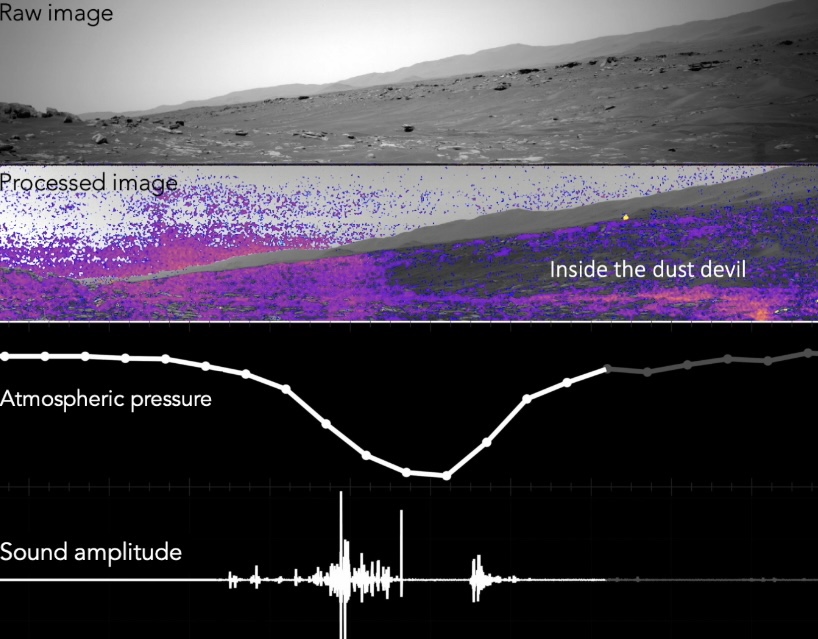
It was “definitely luck” that the dust devil appeared when it did, said the study’s lead author, who estimates there was just a 1-in-200 chance of capturing the audio.
Perseverance has been on Mars for almost two years now, and already recorded wind on Mars for the first time in February 2021.
This dust devil was recorded in late September 2021 (wonder why only now it’s being revealed?). The dust devil was “average size,” which is described as about 400 feet / 122 meters tall and 80 feet / 24 meters wide, traveling at 16 feet / 5 meters per second (≈ 11 mph / 18 mph).
UPDATE. NBC incorrectly reported in the above linked article that the dust devil was recorded by Perseverance. It was actually recorded by InSight, which has just fallen silent after four years of operation. Sigh. I should get science news directly from the source and not from unreliable “news” sites.
There are a lot of dust devils on Mars. A whole lot. Any settlement would have to be extremely prepared to deal with dust all the time, everywhere. If it ever got into equipment that regulated, say, breathable air inside habitats…
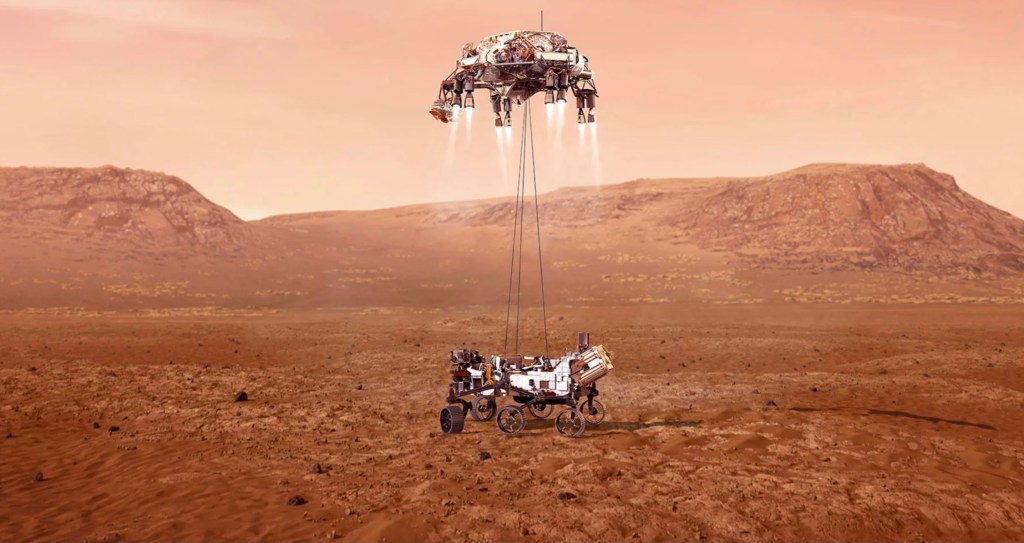
Great job, NASA! Landing on Mars is always a tricky business.
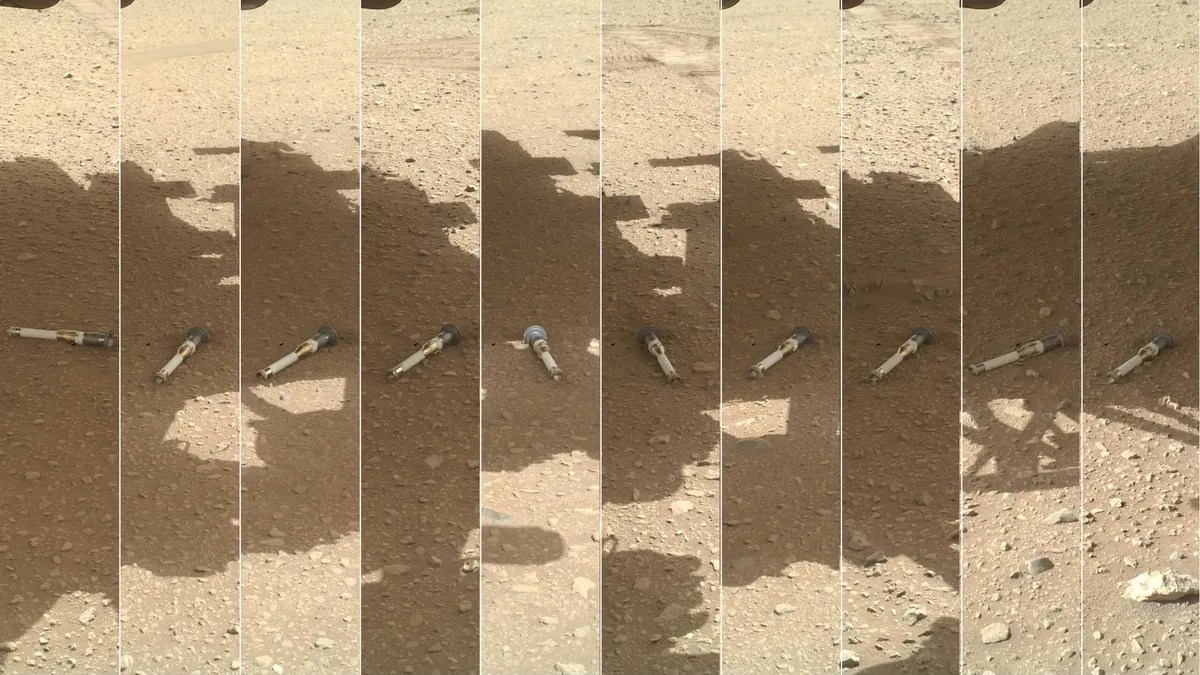
Now all Perseverance has to do is find traces of life, save it without contamination, and then wait for another rocket, another rover, and a satellite to get in orbit so the samples can be sent back to Earth.
The Airbus spacecraft will have to manoeuvre itself into a position to capture these samples that will be packaged inside a football-sized container.
After ingesting this container, the satellite must then prepare it for return to Earth.
This means not only shipping it across hundred of millions of km of space, but also putting the football inside a re-entry capsule that can be dropped into Earth’s atmosphere to land in an American desert.
This would be, indeed, a feat of engineering as well as a first in interplanetary exploration.
But I wouldn’t go so far as to call it an “interplanetary cargo ship.” Unless the intention is to maintain it as a permanent link between research locations (i.e., some kind of permanent orbitor stationed above the Jezero Crater) and research facilities on Earth (or the Moon, or the International Space Station).
Political will is needed in addition to the enormous funding. Semi-privatization, anyone?




 M Thomas Apple Author Page