If you open an early American historical ledger, you will witness a quiet, bureaucratic violence.
On the yellowed pages of parish registers, military rolls, and census tracts, the names of ordinary people undergo a strange, unsettling metamorphosis. A proud Scottish surname is flattened by an English soldier’s hurried quill. A French-Canadian patronym is chopped and mangled to fit the tongue of an Anglo-American land agent. A German-Dutch identity is phoneticized into oblivion by colonial tax collectors.
If you look into your own family history and encounter a sudden, bizarre shift in the spelling of an ancestor’s name, you aren’t looking at a simple clerical mistake.
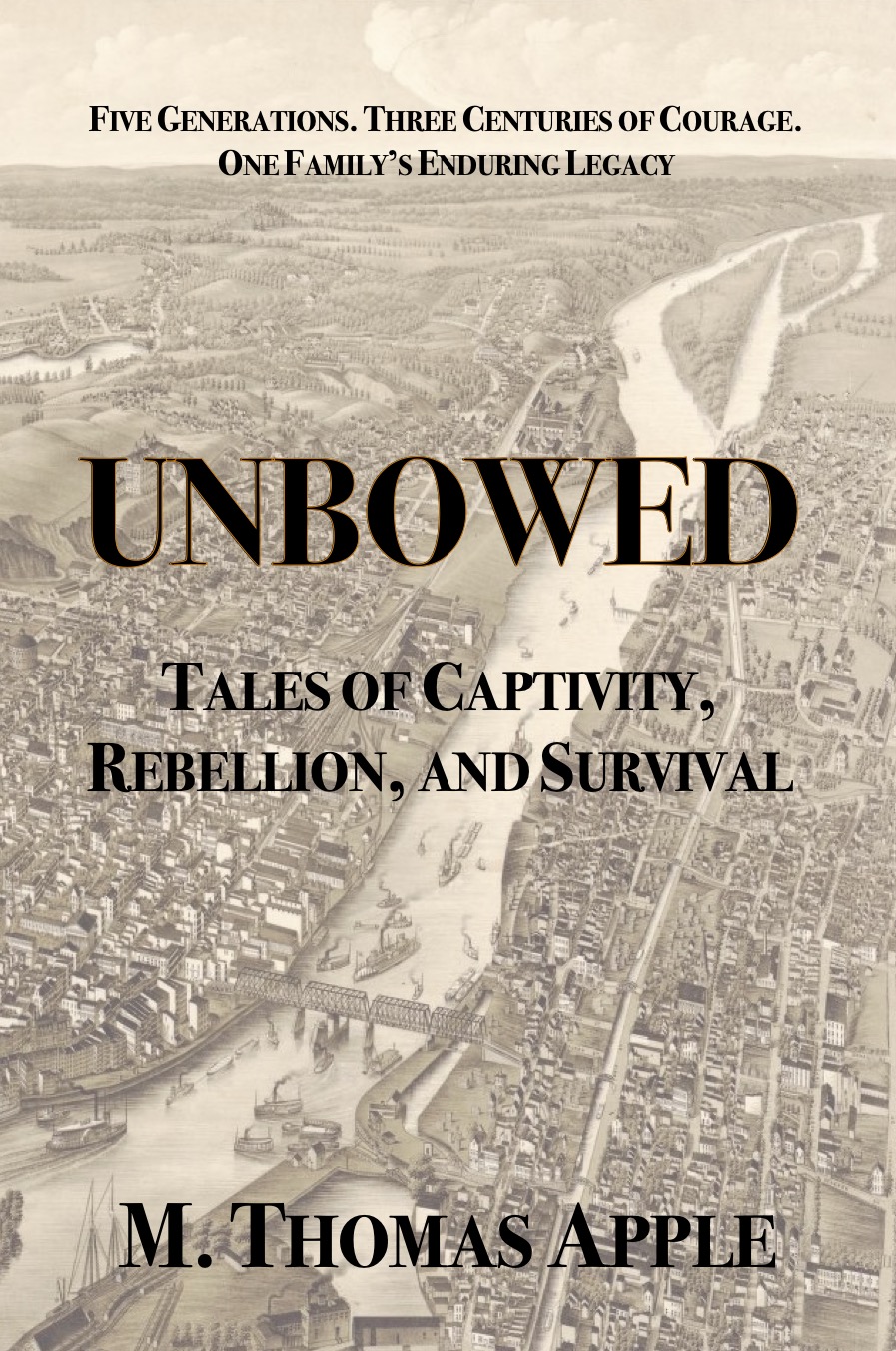
Spanning nearly three centuries of displacement, warfare, and resilience, Unbowed tracks a grand historical mosaic across five distinct cultural lines. It features ordinary people caught in the violent machinery of changing empires:
Part I: A captive Scottish soldier from the English Civil War surviving a harrowing winter crossing as an indentured asset to a rigid Puritan iron works, his family is later tested by the paranoia of the Salem Witch Trials.
Part II: A family fractured by a sudden, brutal wilderness raid in Saratoga, navigating French captivity and cultural adoption inside Mohawk longhouses.
Part III: A Palatine German community torn right down the middle by the fierce, neighbor-versus-neighbor civil conflicts of the Revolutionary War.
Part IV: A bilingual French-Canadian veteran fights for his place on a shifting border, navigating the psychological scars of Civil War combat in la survivance of Cohoes and Troy.
Part V: An immigrant Irish drayman and his literate son fighting to protect their family from a deadly, volatile ballot-box riot in a gritty, industrializing America.
At its core, this volume is about the universal war over identity. In an expanding nation, institutional erasure didn’t always arrive with a bayonet—often, it arrived with an inkwell.
Consider the real historical journey of the German name Bohnenstiehl, filtered through a Dutch-speaking Albany minister before being reformed by English officials into Bonesteel. Or an Anglo-Irish Bushell, phoneticized into Barsell or Bouschel simply because local clerks had never heard it before.
Our ancestors did not survive by remaining rigid. They allowed their names to be rewritten so that their bloodlines could continue to write themselves. They traded the spelling of their past to purchase their future.
Whether your own roots trace back to the colonial frontier or you simply love a sweeping, high-stakes historical epic, Unbowed is a tribute to the unbroken chain of ordinary people who refused to bend.
Over the next few weeks, I’ll be sharing exclusive behind-the-scenes glimpses into the real archival discoveries that inspired these stories right here on the blog.
Thank you for reading, exploring, and reclaiming these voices with me.
Which languages do you speak and how did that impact your life?
I studied French from junior high through first year undergraduate.
I can’t speak it. I tried, but my teacher (MA from Tunisia) had to use a book based on Parisien French, even though my hometown is a stone’s throw from Québéc (not Paris!).
After failing to learn how to speak French, I switched to German in second year college. Borrowed money to go to Germany for a month that summer and met long-lost relatives.
Kinda could speak German. Forgot how to do so after leaving college. Nobody to talk to (and no reason to use it).
In my MFA program, I got bored by the “creative writing workshops” (wherein my classmates enjoyed sniping each other’s works). So I took up Irish Gaelic. Borrowed money (again) to visit An Gaeltacht (Conamara) near Galway, Ireland.
Marginal fluency. For a year. Forgotten just as quickly.
Two years later, I moved to Japan. Studied Chinese characters and Japanese grammar on my own primarily, with help occasionally from a Japanese colleague where I taught and a Japanese friend I made who ran a private English cram school.
After over 26 years, by far my strongest “second” (fifth) language.
So. How has language learning affected my life?
How has it not?
I am a language teacher. I am also a failed language learner. This has made me acutely aware of how hard it is for my Japanese students of English to use English, when on a daily basis they really have no need to do so. I respect them to no end.
Learning another language is hard. It’s especially hard when there’s no real reason to do so, when there’s no one to talk to in that language.
When it’s not really a part of who you are, as a person.
I had thought that, given my ancestry, French, German, and Irish would be good to learn. Turned out that wasn’t enough. I needed a real reason.
Someone to talk to.
I am now married to the love of my life, a Japanese woman who, like me, loves learning and teaching language. We have two wonderful daughters who likewise enjoy learning language.
Because we have a reason to learn them. People.
It’s all about people. Language is people. Not translation software, not AI. People.
The Airbus spacecraft will have to manoeuvre itself into a position to capture these samples that will be packaged inside a football-sized container.
After ingesting this container, the satellite must then prepare it for return to Earth.
This means not only shipping it across hundred of millions of km of space, but also putting the football inside a re-entry capsule that can be dropped into Earth’s atmosphere to land in an American desert.
This would be, indeed, a feat of engineering as well as a first in interplanetary exploration.
But I wouldn’t go so far as to call it an “interplanetary cargo ship.” Unless the intention is to maintain it as a permanent link between research locations (i.e., some kind of permanent orbitor stationed above the Jezero Crater) and research facilities on Earth (or the Moon, or the International Space Station).
Political will is needed in addition to the enormous funding. Semi-privatization, anyone?
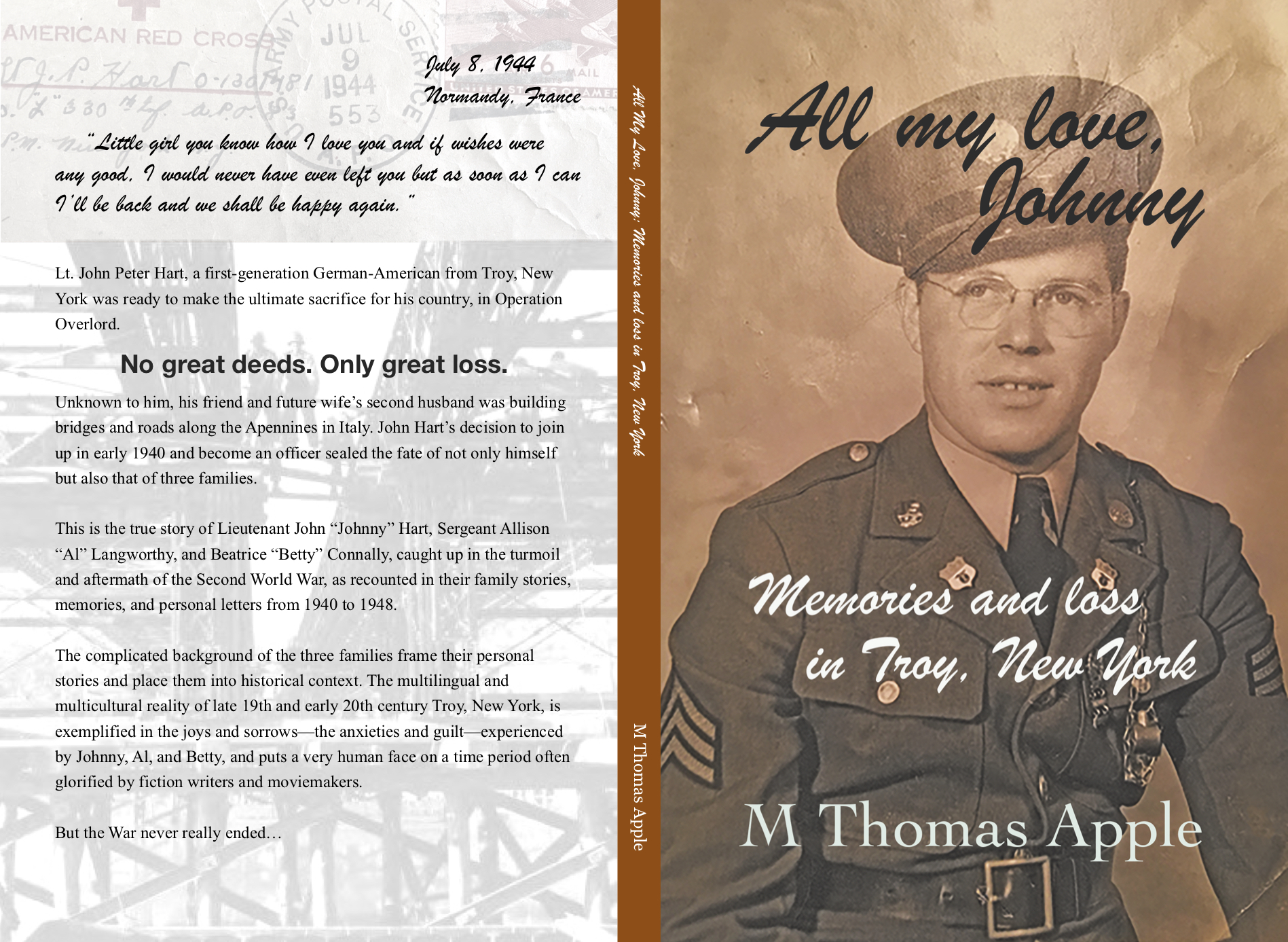
“Over sixteen million Americans served during World War II and this story offers in rich detail the story of two men in uniform and a woman they both cared about. A story of love and tragedy that is more representative of the experiences of many that served than the ones often told of generals and politicians. A story that needs to be told and remembered.”
— Dr. Rick Derrah, Professor of Social Studies, Kindai University, Osaka; former US Army E-4 Specialist
“Not only is this a touching and interesting family story, it is a great snap shot of the war and its effects, as well as Trojans and Troy history connection.”
— Don Rittner, historian, former Albany City Archaeologist and founder of the Pine Bush Historic Preservation Project
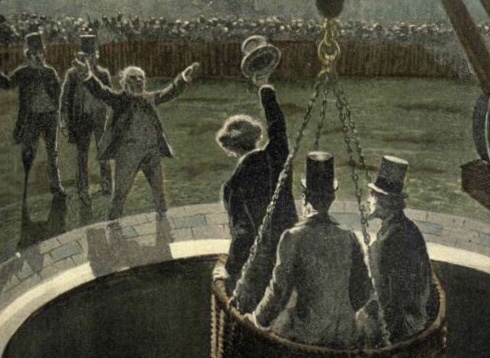
When I was a kid, I devoured books by Jules Verne, in the Classics Illustrated series vocabulary- and grammar-controlled for younger readers.
20,000 Leagues Under the Sea
Voyage to the Center of the Earth
From the Earth to the Moon
Around the World in Eighty Days
Until I was in college, I didn’t even know that he wrote them in French.
Until a few days ago, I didn’t know they were part of a 54-volume set, complete with 4,000 hand-drawn illustrations that are now available online for free.
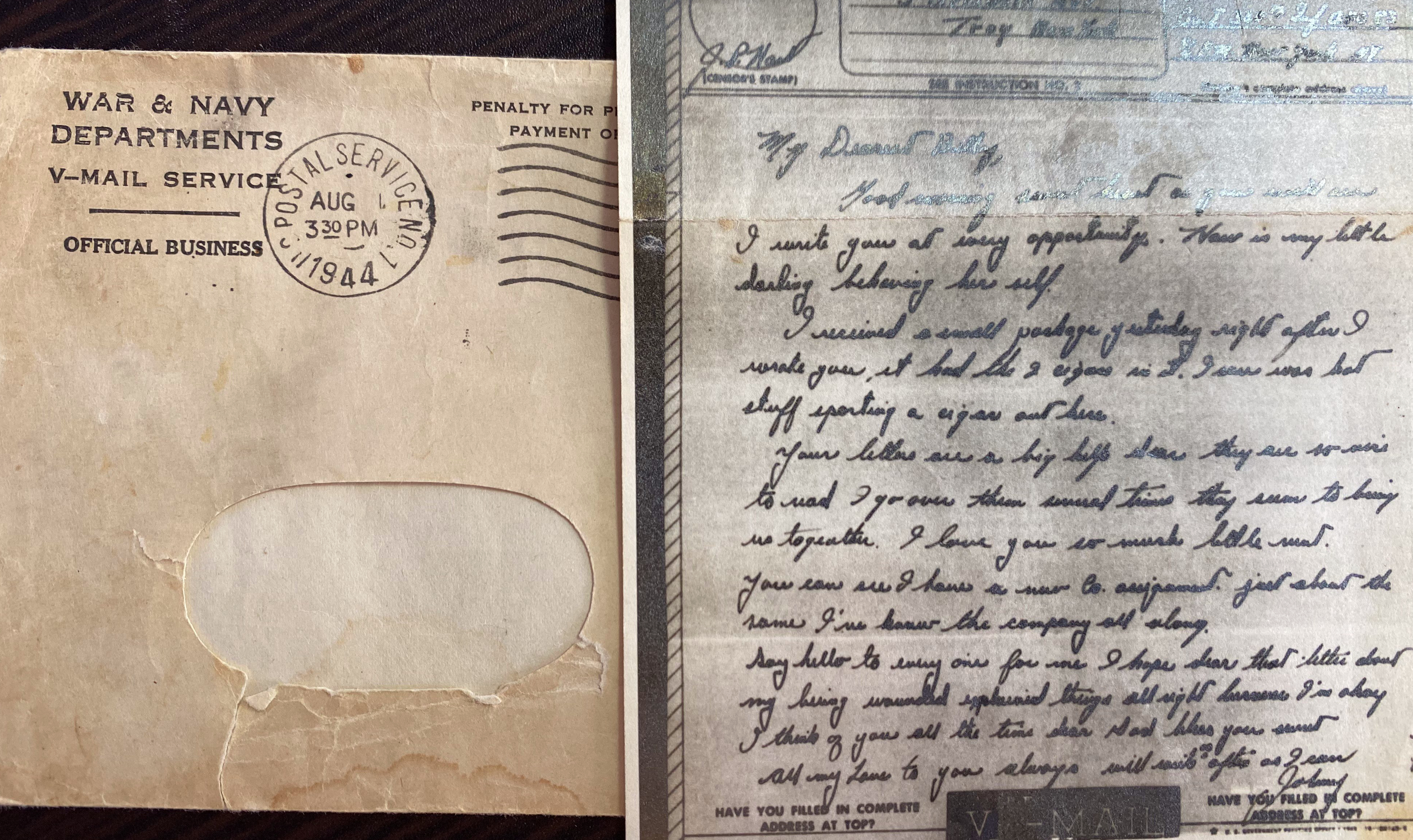
I should be finishing the SF novel I’ve been working on (and off) for the better part of four years now. Instead, I’ve found myself obsessed with letters recently found in my dearly departed mother‘s possessions…letters written from my grandmother’s first husband, John Hart, while he was in the US Army in the 1940s.
He died. This ain’t no story of heroic sacrifice or rah-rah patriotism. This is reality. Continue Reading
One of the pre-installed apps, which looks and operates as a wireless update program, automatically installs more apps without user consent, according to Malwarebytes.
And it appears to be a variant of Adups, malware previously traced to China, which transmits text, call-location and app data to a Chinese server every 72 hours.
China is so far ahead of the US in terms of hacking and spyware. And this is only the stuff that they didn’t even bother hiding…




 I should be finishing


