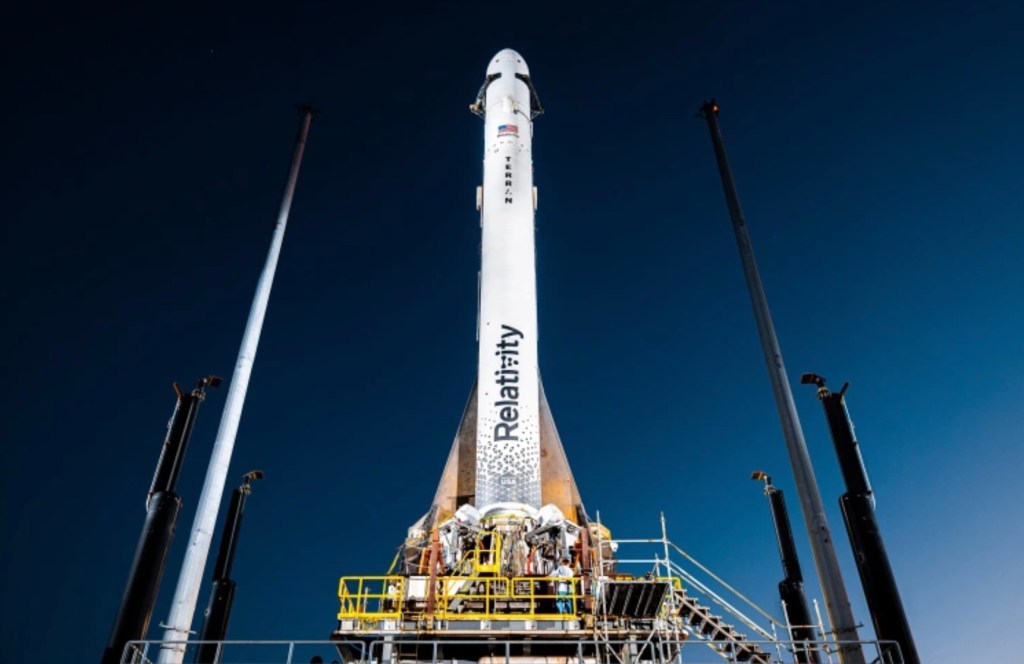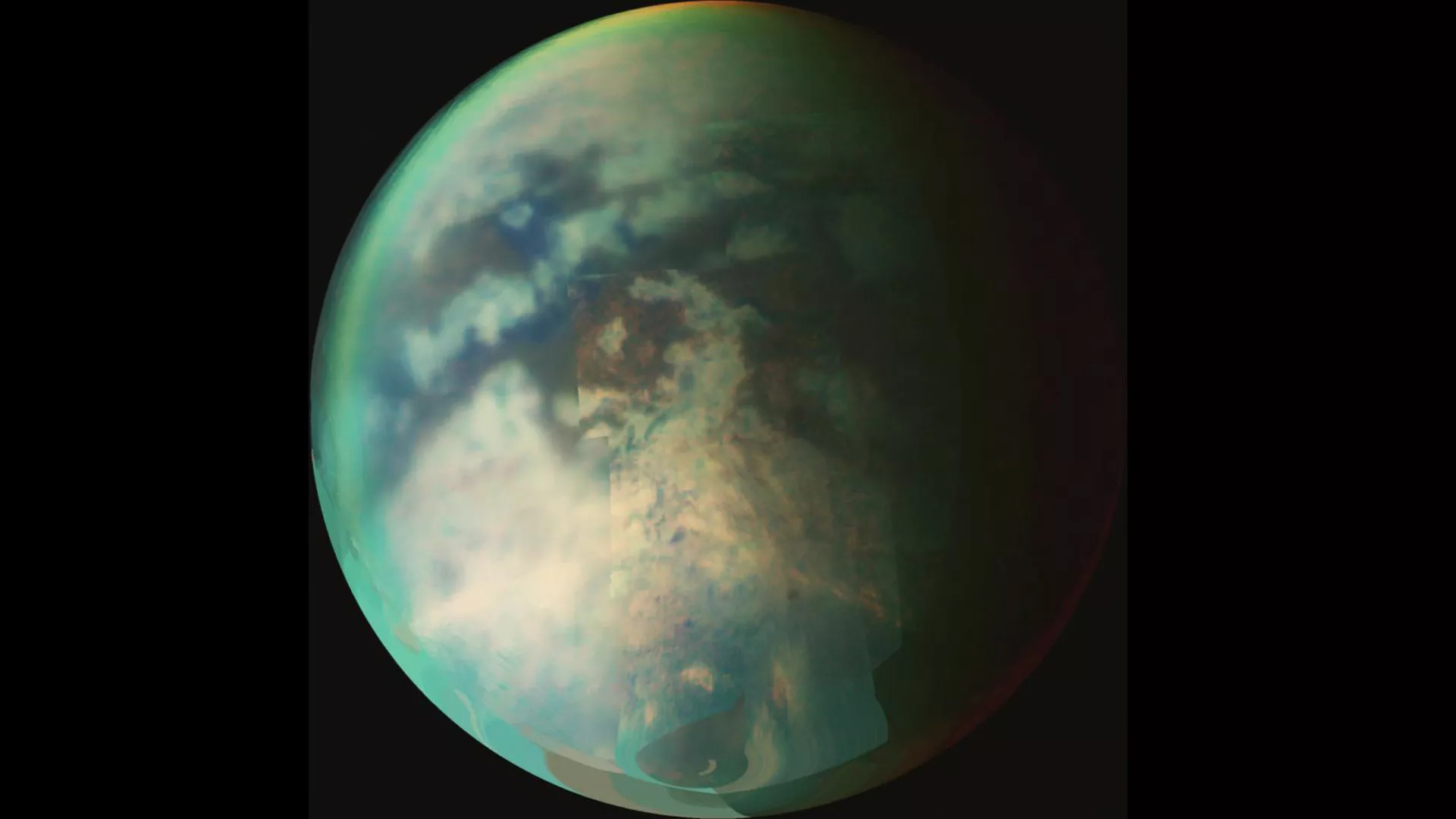
For the program, the 9- to 12-year-old students designed an experiment in which epinephrine samples were placed into tiny cubes and sent to the edge of space via either a high-altitude balloon or a rocket. Once back on Earth, researchers from the John L. Holmes Mass Spectrometry Facility at the University of Ottawa tested the samples and found that only 87% contained pure epinephrine, while the other 13% had been “transformed into extremely poisonous benzoic acid derivatives,” according to a University of Ottawa statement(opens in new tab).
So…uh…why would an astronaut have this thing in space to begin with? NASA should know the full medical history of all its astronauts before even considering sending them into space.
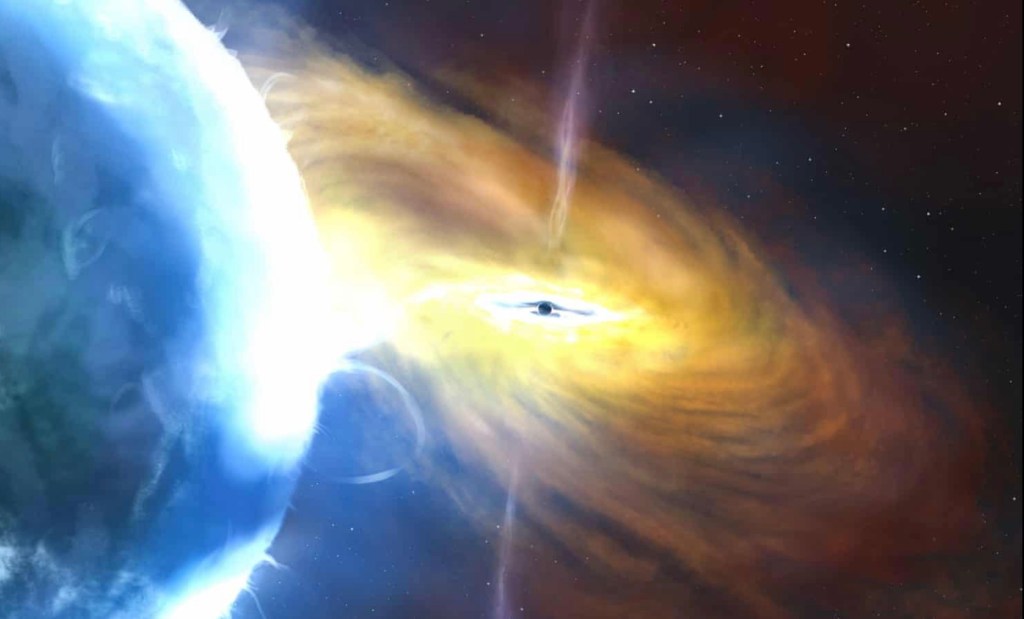
“I was quite surprised by how simple the story hiding behind the curtain of complexity in the data,” Sneppen continued. “You have this immensely complex physics, unimaginable dense stars and the birth of a black hole — and then it all reduces to this beautiful sphere.”
The neutron stars that crashed into each other are “dense and compact,” Sneppen said. They only measured around 20 km in diameter — about 12 miles — but they are “heavier than the sun,” he said. “A teaspoon of neutron star matter weighs more than Mount Everest.”
First reported in 2017, a new study in Nature gives more details about a “kilo nova” only detected by using gravitational waves. The collision led to the formation of a black hole.
Fortunately, this sort of cosmic event doesn’t occur too often. But..
…if a kilonova were to occur in the Milky Way — less than 30,000 light- years away — it would be the brightest star in the night sky, making it discoverable to the human eye…
Still, it’d be safer for Earth if it never happened…
It is this subsurface ocean, or rather its interaction with the ice shell that covers it, that a team of researchers led by the Catholic University of Louvain (UCLouvain) in Belgium hope to better understand. More specifically, they wish to understand how the ocean’s depth and the pressure exerted by the icy shell on the underground water body influence the formation of tidal motions and currents inside of it.
When I first heard of “Attack on Titan,” I was disappointed to learn that it didn’t take place actually on Titan. (The title in English is a mistranslation. It should be “Attack of the Titans” or “The Titans Attack” or even “Attacking Titans,” depending.) In any case, it’s a disgusting manga/anime with nothing to do with the icy moon of Saturn. Except for the name. And even that’s a misuse (they should have used “giant” as the storyline is very loosely based on Ymir and the frost giants of Scandinavian myth).
A Japanese telescope positioned on top of Mauna Kea, a dormant volcano on the Big Island of Hawaii, captured video of an eerie flying spiral in the night sky on Jan. 18.
In the video, a small bright spot appears and slowly gets brighter and starts to dissipate into a spiral before getting small again and disappearing.
In fact, it was the remains of a discarded Falcon 9 booster from the launch of a SpaceX satellite. And it isn’t the first time this has happened. Japanese TV talked about this, too (since it was a Japanese astronomy, at the Subaru Telescope, that first recorded it).
So, an Identified Flying Object!
Yay, more metallic junk.
(Thanks to Glen Hill for bringing this article to my attention.)
A new study that analyzes data from more than 50,000 amateur stargazers finds that artificial lighting is making the night sky about 10% brighter each year.
Each spring in my Current Events and Global Issues class, I have students read about environmental issues.
Pollution is obviously related. But they almost never guess the “seven types of pollution” (yes, I know some people country eight, or ten, or even twelve…it all depends on how you categorize them).
Maybe it’s because most of my students (to the order of 90%) come from medium and large cities. To me, having grown up in a mostly rural area (in elementary school, my town had about 400 residents and in junior and senior high I lived in a “queen village” that had — gasp — an incredible 4,000 residents) — well, being surrounded by darkness was no big deal.
We could see stars from our backyard. Lots of stars. We learned all the major constellations (of the Northern Hemisphere, anyway, since that’s what we could see).
And more importantly we could see lightning bugs (or “fireflies” or “glowworms” or “candle bugs” etc). Decreasing water quality is thought to contribute to their declining numbers, but it’s far more likely that our insistence on lighting up the skies all the time are preventing them from finding a mate (hence the reason they “flicker” at night).
Though definitions sometimes differ, cislunar space generally refers to the space between Earth and the moon, including the moon’s surface and orbit. Any nation or entity that aims to establish a presence on the moon, or has ambitions to explore deeper into the solar system, has a vested interest in operating in cislunar space, either with communication and navigation satellites or outposts that serve as way stations between Earth and the moon.
The finding demonstrates how the observatory could be used to search for potentially habitable planets in the cosmos and examine the chemical makeup of their atmospheres.
LHS 475b is 41 light years away, orbiting a red dwarf star in the Octans constellation (one of a few “modern” constellations only seen in the deep southern hemisphere).
Webb can even detect the presence of atmospheres, though given LHS475b has an orbit of two days and is a “few hundred degrees warmer than Earth,” it’s unlikely it’ll find much with this exoplanet.
Falsified space research? No problem. The “apology bow” (sha zai, 謝罪) makes it all better.
There is a reason why Japan’s newest “micro” satellite spectacularly failed to do, well, anything.
The Japan version of NASA (Japan Aerospace Exploration Agency, called “JAXA” for some reason rather than “JAEA” — maybe the founder was a fan of X-Japan?) is riddled with incompetency and sycophancy.
Much like the rest of Japan’s government, one of the most corrupt of the world’s industrialized countries thanks to its strict “senpai-kohai” hierarchy where those at the top do no work and those at the bottom have no choice but to do what those at the top say – even if it’s illegal or immoral.