M Thomas Apple Author Page

Science fiction, actual science, history, and personal ranting about life, the universe, and everything

Mars missions are paused immediately…as of 11/11?

November 24, 2023
MThomas

No more selfies for now, Curiosity…

“NASA will hold off sending commands to its Mars fleet for two weeks, from Nov. 11 to 25, while Earth and the Red Planet are on opposite sides of the sun. Called Mars solar conjunction, this phenomenon happens every two years,” NASA said in a statement

https://www.livescience.com/space/mars/nasa-is-pausing-all-mars-missions-effective-immediately-heres-why

It’s funny that Live Science just announced this three days…given that the time period in which Mars is directly behind the Sun opposite the Earth only lasts from November 11th through November 25th.

Which is, ah, tomorrow.

Thanks for the heads up, guys. Honestly…

Horned comet approaching Earth soon

October 30, 2023
MThomas

The comet has a core of dust, gas and ice surrounded by a bright cloud of gas known as a coma. Sunlight and solar radiation can heat the comet’s core, sometimes causing violent outbursts like the ones observed in July and Oct.

Herman said the comet’s temporary horns are thought to originate from these icy eruptions. The comet’s structure may be shaping how the spewed clouds of gas and ice appear from Earth, creating the appearance of horns to ground-based telescopes.

https://www.nbcnews.com/science/space/devil-comet-will-bring-horns-swooping-earth-summer-rcna121989

Apparently some astronomers likened the shape to the Millenial Falcon.

I guess they have sharper eyes, bc I don’t see that.

Anyway, Comet 12/P Pons-Brooks only comes once every 71 years, so keep your eyes open next June. It may be visible even without a telescope.

Gateway not to be used until Artemis 4

September 4, 2023
MThomas

ESA image. Gateway is planned to be much smaller and more cramped than ISS (about 1/6 the size).

NASA and its international partners see Gateway as a key platform to support the agency’s Artemis moon program and to build the technology required for future deep-space missions. Although the first elements of the small space station are expected to launch before the Artemis 3 mission lifts off in 2025 or 2026, NASA previously said that those astronauts will not use Gateway to “make that mission have a higher probability of success.”

https://www.space.com/artemis-4-first-astronauts-visit-gateway-moon-space-station

While it’s a good idea to see some planning for this, I think maybe NASA should focus on getting Artemis 1 to work properly before they go on about Artemis 3 and 4.

Taking advantage of Gateway’s orbit far away from Earth’s protective magnetic field, three instruments will study risks due to radiation from the sun and from cosmic rays. Scientists hope this knowledge can help inform future long-term missions to the moon and Mars

Since Gateway will orbit the Moon and not the Earth, the biggest problem will be preventing astronauts (and instruments!) from getting fried by solar radiation. Scientists need to come up with materials to shield people on Gateway and the Moon, or else we’re going nowhere…

(That said, regolith – soil, basically – has already been proposed and even tested: Llamas et al. (2022). “Effectiveness of Martian regolith as a radiation shield,” Planetary and Space Science, 218, 105517 https://www.sciencedirect.com/science/article/abs/pii/S0032063322001039)

Chandraan-3 rover finds…sulfur on the Moon?

September 1, 2023
MThomas

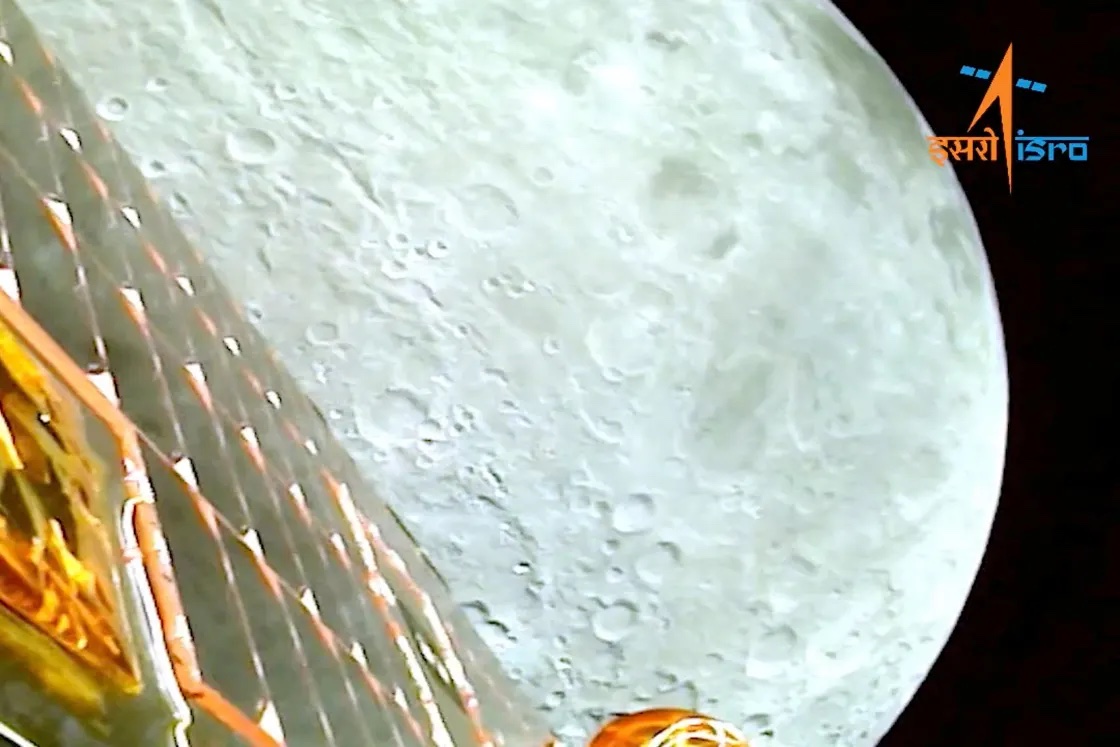
c/o ISRO

India’s Moon rover is making tracks…

One main reason for landing at the Moon’s South Pole is that the presence of water would help us build permanent settlements…

This region on the moon is an attractive place for humans to build a lasting presence due to the fact that water ice is located underfoot. Future moon-dwellers can potentially tap into that water for consumption, or even to create rocket propellant, instead of depending on water shipped from Earth.

https://www.space.com/chandrayaan-3-sulfur-surprising-composition-lunar-south-pole-soil

Another reason has now been found…iron, manganese, aluminum, titanium…and “surprisingly” sulfur. Why should they be surprised? It’s already been established that the Moon has ice, and sulfur forms every time hydrocarbon and sulfates combine. Plus sulfur obviously results from volcanic activity, and it’s likely the Moon was volcanic when it first formed. And sulfur is also produced through nuclear fusion – i.e., the Sun.

So what can we do with this knowledge?

Having a more complete chemical composition of the lunar south pole area means future travelers to — and possible inhabitants of — the region can also plan for what else they don’t need to bring from Earth. In particular, some scientists have suggested moon-dwellers could use sulfur in bits of infrastructure such as building materials, solar cells and batteries.

Hmmm…I think more studies are needed first…define “bits,” for example.

New (possibly) interstellar comet on a one-way trip…

August 24, 2023
MThomas

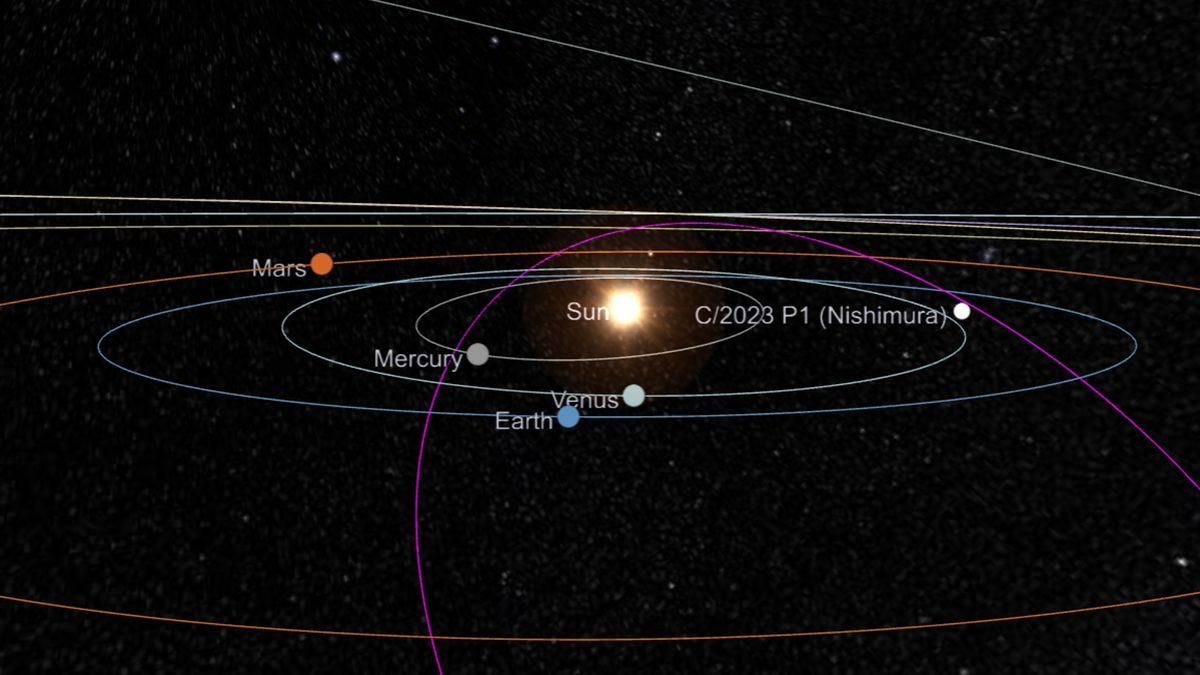
Comet Nishimura’s orbit means that this is likely its first and final trip through the inner solar system. It is possible that the comet originated outside our star system, which would make it the third known interstellar object ever detected, following ‘Oumuamua — which some astronomers speculatively suggested was an alien spacecraft — and Comet 2I/Borisov

https://www.livescience.com/space/comets/new-potentially-interstellar-comet-will-be-visible-to-the-naked-eye-next-month-before-leaving-our-solar-system-forever

Discovered just two weeks ago by an amateur Japanese astronomer (after whom the comet is now named), the comet Nishimura will approach Earth at its closest on September 13th. But it will be at its brightest about five days later as it approaches the Sun.

Its fate?

Astronomers don’t know when the possible interstellar interloper will depart the solar system. However, it is also possible that the intense force of the comet’s solar slingshot will rip its solid nucleus apart, according to NASA. 

Also, its nucleus gives off a “green glow,” which is the result of sunlight breaking apart dicarbon, or diatomic carbon. So getcher geek on, chemical lab rats!

Chandrayaan-3 successfully lands on the Moon!

August 24, 2023
MThomas

Taken just prior to landing…the “image” shown of it actually landing was not real but a simulation.

India and Russia had been locked in a race to the lunar south pole. The Luna-25 spacecraft that crashed was the first moon-landing spacecraft launched by Russia’s space agency in almost five decades. Roscosmos officials said Sunday they lost contact with the lander after it fired its engines in preparation for a descent to the surface.

https://www.nbcnews.com/news/world/india-chandrayaan-3-landing-moon-south-pole-rcna101296

It wasn’t much of a “race,” tbh. India had been planning this for years, while Russia randomly launched a craft that had virtually no chance of succeeding.

Congratulations, ISRO! You should have some company over the next couple of years. Here’s hoping that international cooperation and not competition will lead humanity to permanent settlements on the Moon. Mars, and beyond…

And another post to which I forgot to add a title…

June 30, 2023
MThomas

In a few billion years, our aging Sun will run out of hydrogen fuel in its core and begin to swell, eventually engulfing Mercury, Venus, and probably Earth itself. Known as the red giant phase, this is a normal step in a mid-sized star’s life cycle, when it swells to hundreds of times its usual size. There are plenty of red giants in the night sky, but astronomers have never caught one in the act of swallowing its planets — until now.

https://www.astronomy.com/science/star-seen-swallowing-its-planet-whole/

Pack your stuff, folks…

The photo is an artist’s depiction btw. The article describes how the astronomer discovered that star was eating its own planet.

Plume of water seen on Saturn’s moon

May 31, 2023
MThomas

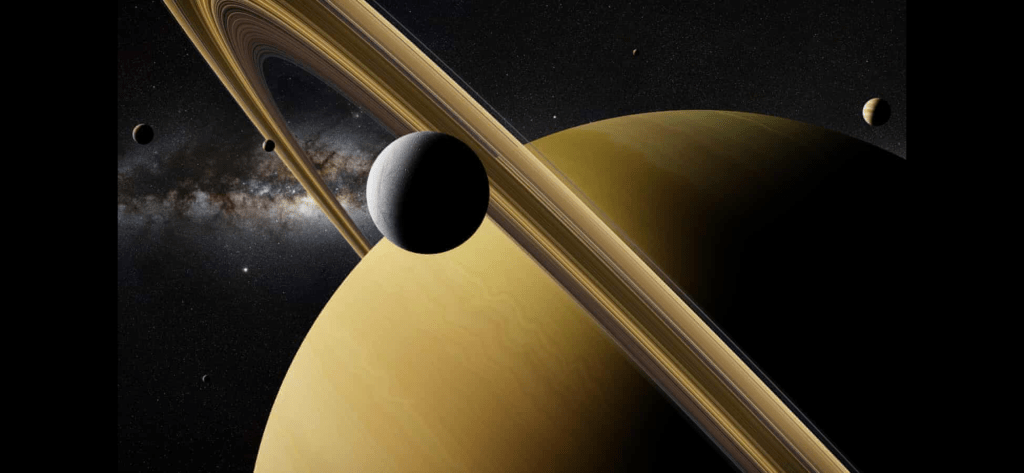
The record-breaking plume reached nearly 6,000 miles into space – covering the distance between Ireland and Japan – and poured water into the void at an estimated rate of 300 litres a second.

https://www.theguardian.com/science/2023/may/30/astronomers-see-6000-mile-water-vapour-plume-blasting-from-saturn-moon

Note that the water jetted out into space nearly 40 times longer than the actual size of the moon (about 500 in diameter, or as the Gurdian puts it “500-mile-wide” for those who forgot the meaning of “diameter).

Enceladus is probably the best bet for life elsewhere in the solar system due to its water — and while whipping around Saturn once per day, which is likely the reason for underwater volcanos and other vents that may provide the proper chemistry for life.

Also the perfect place to trick an inexperienced asteroid hunter crew…

Betelgeuse! Betelgeuse! Betel…

May 26, 2023
MThomas

Betelgeuse, the closest red giant to Earth, has long been understood to move between brighter and dimmer in 400-day cycles. But from late 2019 to early 2020, it underwent what astrophysicists called “the great dimming”, as a dust cloud obscured our view of the star.

Now, it is glowing at 150% of its normal brightness, and is cycling between brighter and dimmer at 200-day intervals – twice as fast as usual…It is currently the seventh brightest star in the night sky – up three places from its usual tenth brightest.

https://www.theguardian.com/science/2023/may/26/its-new-territory’s-why-is-betelgeuse-is-glowing-so-brightly-and-behaving-so-strangely?

Betelgeuse is the closet red giant Star to our solar system, one of the shoulders of the Greek constellation of Orion.

The cultural information in the linked article was actually more interesting than the phenomenon observed. For instance, the fact that an Aboriginal people in Australia saw it long before the Greeks did was something I didn’t know.

(Although ancient humans in what is now Germany apparently carved an image of it around 32,000 years ago…)

And that the Greek name comes originally from the Arabic “bat al-jawzāʾ” meaning “giant’s shoulder.”

And all three cultures saw the star as connected with fire held by a giant hunter of some sort.

And so have ancient Babylonians, Egyptians, and probably everyone else, too. We just can’t help personifying even the stars.

The kicker?

When it does eventually explode, it could – over the course of a week – grow so bright that it will be visible during daylight, and cast shadows at night.

Now that’s something I’d like to be around to see. Hmm. If only I could manage to live for another 10- to 100,000 years…

Cancel your asteroid insurance – for the next thousand years

May 22, 2023
MThomas

Does anybody remember Spirographs?

Of all the asteroids they modeled, the one with the largest risk of impact was a kilometer-wide asteroid known as 1994 PC1. Over the next thousand years, the probability that 1994 PC1 will cross within the orbit of the Moon is a paltry 0.00151%, hardly worth worrying about.

https://www.yahoo.com/entertainment/cancel-asteroid-insurance-earth-declared-150002866.html

Thanks to Glen Hill over at Engagin’ Science (formerly Scientia, which apparently was far too Latin- and science-esque for search engines to handle) for bringing this (not-so Earth-shattering) info to my attention.

Sorry, folks. Hollywood was once again wrong (sigh).

😂

Blog at WordPress.com.
The Silmaril Chick

Writing Fanfiction in the worlds of Tolkien and Beyond!

Our Awesome Universe

Learning more about our place in the universe...

TechWordly

Best Tech Gadgets Advise

Universe discoveries

Writing blogs is miracle I am a writer blogger and my site mission is to give information on maximum information to audiences

Robby Robin's Journey

Reflections of an inquiring retiree ...

Stylish Home Solutions

Simple ideas to make every room feel stylish and welcoming

Fox Reviews Rock

Rock & Metal Reviews That Hit Hard

My little corner of the world

Short stories | Reflections | Poetry

DimmaJo Blog

Read. Reflect. Grow