
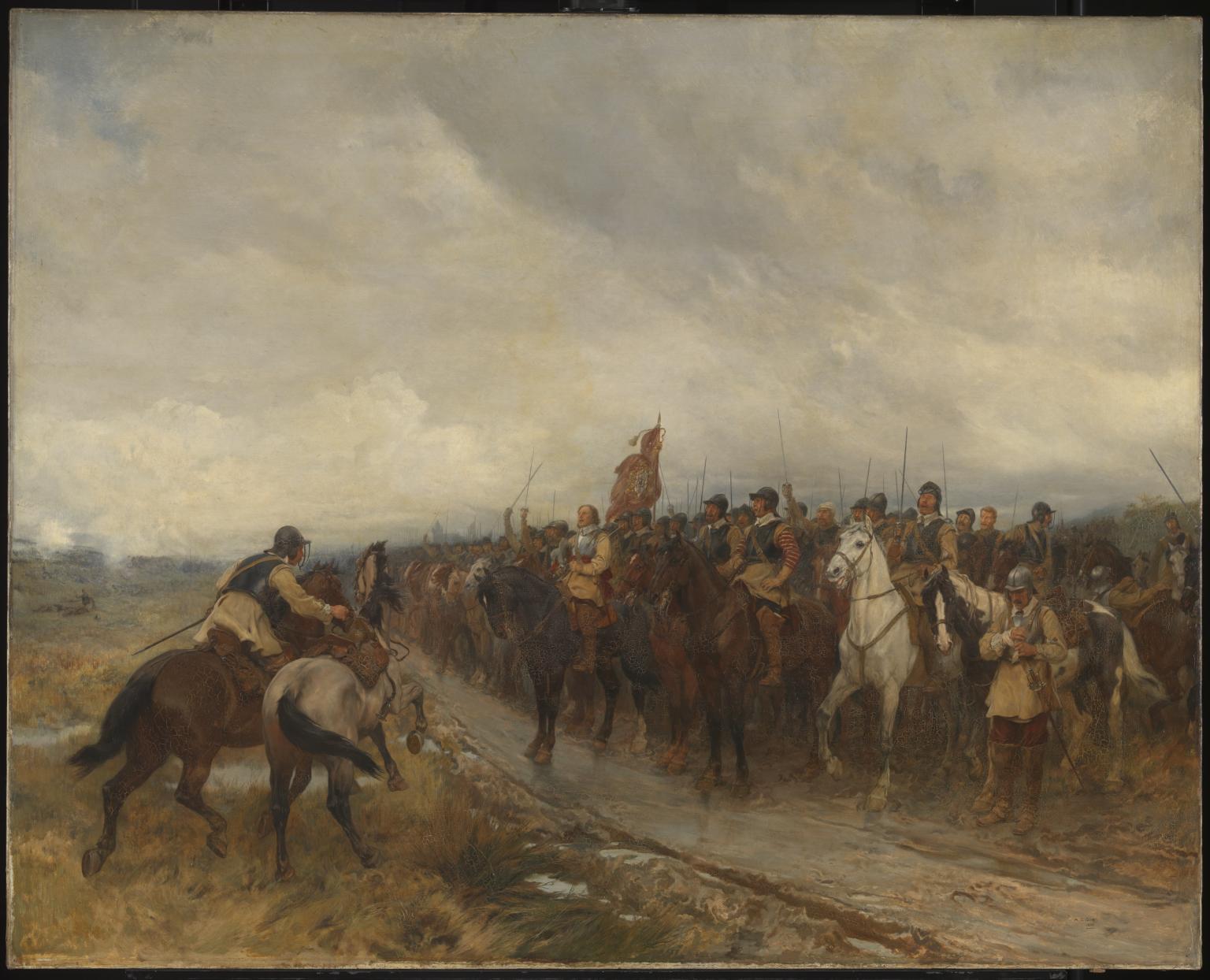
This is the first of a series of posts introducing the five-part historical fiction novel Unbowed, which will be published in November 2026. All five parts are based on true events and real people – my ancestors.
Most students of American history are familiar with the standard narrative of New England’s early settlers: the Mayflower, the Puritans, and the quest for religious freedom. But there is a darker, hidden foundation stone buried beneath the soil of early Massachusetts. It is a story born of cold rain, political betrayal, and a brutal military disaster that history has largely allowed to slip through its cracks.
It began on the stormy morning of September 3, 1650, in a muddy marshland just outside the Scottish town of Dunbar…
The Meat-Grinder of Oliver Cromwell
To English speakers, the English Civil War is often framed as a domestic ideological clash between King and Parliament. But for the Scots, it was a fight for the survival of their sovereign identity. At Dunbar, a massive but exhausted Scottish Covenanter army clashed with Oliver Cromwell’s highly disciplined, fanatical New Model Army.
The result was a swift, catastrophic slaughter. In less than two hours, the Scottish lines shattered. Over 3,000 Scottish soldiers were cut down where they stood.
But for the 10,000 survivors who surrendered, the true nightmare was only just beginning. What followed was an act of unimaginable, systematic cruelty that remains a stain on British history—and a memory that the English-speaking world quickly tried to erase.
The Death March to Durham
Cromwell had no intention of feeding or housing ten thousand prisoners of war. He selected roughly 5,000 of the youngest, fittest men—including an eighteen-year-old Gaelic speaker named Maol Choluim (later recorded by English clerks as Malcolm MacCallum)—and forced them onto a brutal, ninety-mile death march south to Durham.
They marched for eight days without food. Starving, dehydrated, and suffering from acute dysentery, men dropped dead by the dozens along the muddy English roads. Those who stumbled or fell behind due to exhaustion were summarily executed by the roadside or left to die in the ditches.
When the surviving prisoners finally reached Durham Cathedral—which Cromwell had converted into a makeshift dungeon—they were locked inside without heat, bedding, or medical care. Driven mad by starvation, the prisoners resorted to eating rats, weeds, and, in the darkest corners of the cathedral, the flesh of their dead comrades. By the time winter set in, more than 1,600 Scottish soldiers had perished inside the cathedral walls, their bodies thrown into mass, unmarked graves.
Exiled in Chains: The Unity Crossing
For Cromwell, the surviving Scots were no longer just enemies—they were valuable corporate commodities. To empty his prisons and turning a profit, he ordered the remaining survivors to be sold into forced labor and shipped across the Atlantic.
In the dead of winter, Malcolm and approximately 150 other broken, hollowed-out survivors were packed into the damp hold of the ship Unity. For weeks, they endured a harrowing, disease-ridden Atlantic crossing, battered by freezing gales and completely isolated from the world they knew.
When the Unity finally dropped anchor in the icy waters of Massachusetts Bay, the survivors were not greeted as immigrants. They were marched directly into the wilderness of Lynn, Massachusetts, and delivered as indentured corporate assets to the roaring, hazardous casting floors of the Saugus Iron Works.
Why We Must Remember
The English-speaking records quickly did what they always do to the conquered: they flattened them. Maol Choluim’s name was aggressively anglicized by Puritan overseers who couldn’t, or wouldn’t, pronounce his native Gaelic tongue, rendering him as Mackum, Macom, Callum—a dozen more variations in the early colony ledgers. His past was stripped away, his suffering institutionalized, and his identity rewritten.
But history could not break his spirit.
Part I of UNBOWED begins in the immediate, visceral aftermath of this forgotten tragedy. It tracks how a young man who survived the mud of Dunbar and the death march of Durham managed to forge a life, a family, and an unyielding legacy from the literal sparks of a Puritan iron furnace—only for his daughter and grandchildren to face a different kind of fanatical madness decades later in Salem.
The Scots may remember Dunbar, but it is time for the rest of the world to look into the archive, read between the mangled lines, and remember the unbroken chain of resilience that truly built the American frontier.
[👉 Follow or subscribe to this blog for updates and read the next historical archive preview!]


Pingback: Shadows on the Hudson: The Forgotten Borderland Raids of Saratoga | M Thomas Apple Author Page