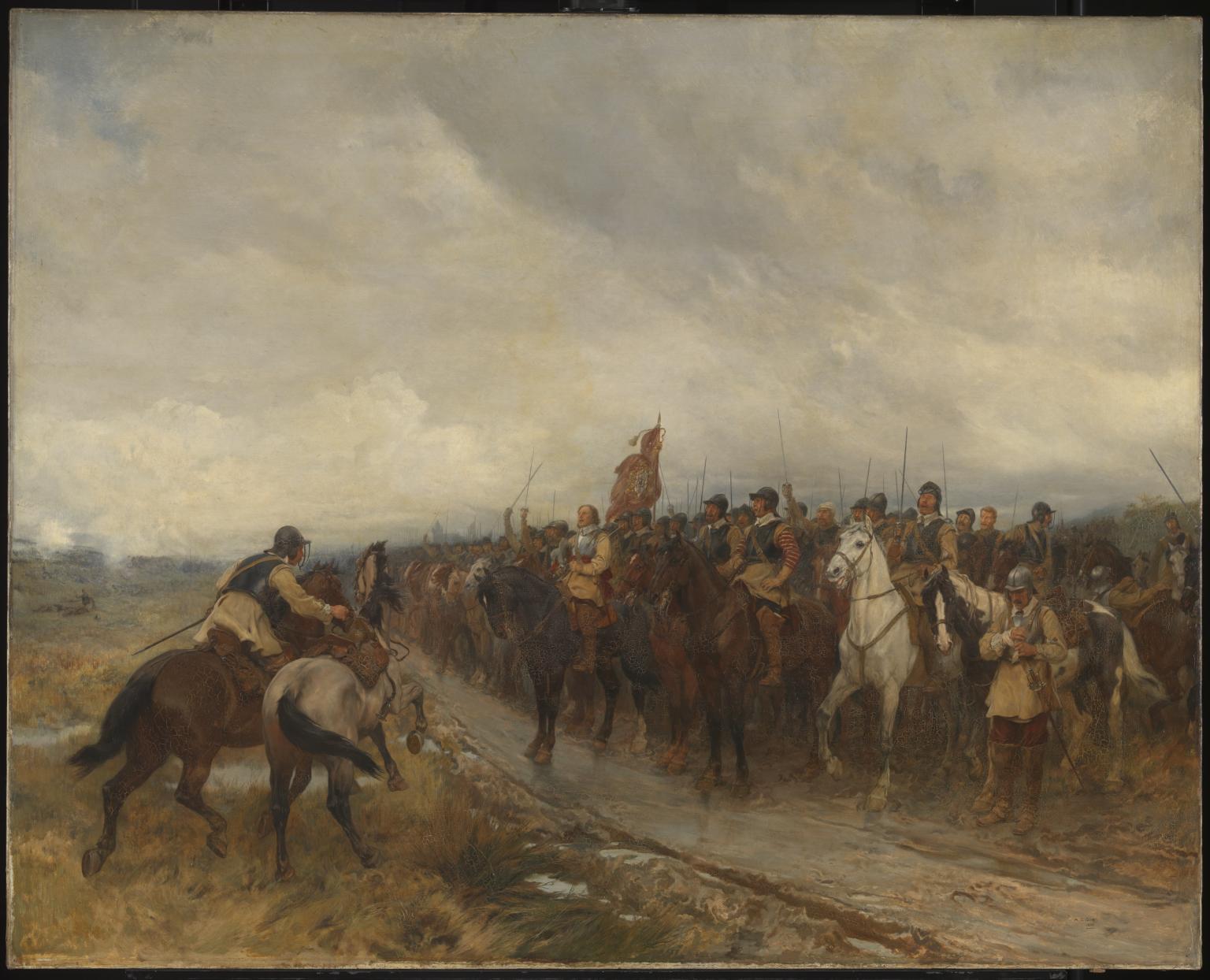
Cromwell at Dunbar 1886 Andrew Carrick Gow 1848-1920 Presented by the Trustees of the Chantrey Bequest 1886 http://www.tate.org.uk/art/work/N01588 (c/o Wikimedia Commons)
Most students of American history are familiar with the standard narrative of New England’s early settlers: the Mayflower, the Puritans, and the quest for religious freedom. But there is a darker, hidden foundation stone buried beneath the soil of early Massachusetts. It is a story born of cold rain, political betrayal, and a brutal military disaster that history has largely allowed to slip through its cracks.
It began on the stormy morning of September 3, 1650, in a muddy marshland just outside the Scottish town of Dunbar…
Nineteen years ago, my wife and I went to Hiroshima by high-speed ferry boat, on our way back from visiting her parents in Kyushu. Her father’s family comes from Hiroshima (although her father was actually born in Dairen/Dalian (大連), China) and her uncle and his family still live about an hour’s drive north of the city.
(Update from 2020: We visited Hiroshima with the kids for the first time last January, for New year’s 2023.)
Adam’s Stepsons takes the core questions of Blade Runner and distills them into a tight, character-driven drama. It lacks the sweeping visuals of Villeneuve or the noir cityscape of Scott — but it delivers something arguably more intimate:
A quiet horror — and quiet triumph — in the collapse of identity, where the artificial doesn’t just mimic life…
It replaces it.
Over the weekend (my first with no student work to grade — finally! — since April), I decided to ask our “old” friend ChatGPT if it could analyze my sci-fi novella Adam’s Stepsons. Really, I was just curious what it would say.
It said…a LOT.
It correctly interpreted the title (something that many readers apparently didn’t get). It correctly identified the main themes as part of a “post-humanism” sub-genre of science fiction. And once I gave it three short excerpts (from the near the end of the story), it gave a frighteningly accurate thematic and symbolic analysis of the entire novella…just from three short excerpts of a total of about six pages.
I won’t copy all it gave me (you all can go try on your own and see what it says!). But let me share what the program thought were key themes:
The story of the last 20 years of pop culture is, in many ways, the Victory Of The Nerd: Comic book films, gaming adaptations, the general adoption of deeply nerdy genre trappings like time loop stories, superheroes, and more, all making billions of dollars at the box office as geek obsessions infiltrate the body mainstream.
How NOT to look at their smartphone while zombie walking on a train platform or stairs.
Smartphones should be programmed to send tiny electrical shocks into your hand when you walk while reading them. Put the thing in your pocket until you clear the field.
I have arachnophobia in the first place and can’t even stand those little spiders that jump all around.
I came in the house once after working in the garden and realized a spider had gotten stuck in my hair (probably from weeding under the tomato plants).
Both Russian and Ukrainian forces are integrating traditional weapons with AI, satellite imaging and communications, as well as smart and loitering munitions, according to a May report from the Special Competitive Studies Project, a non-partisan U.S. panel of experts. The battlefield is now a patchwork of deep trenches and bunkers where troops have been “forced to go underground or huddle in cellars to survive,” the report said.
I found it interesting that many people online were commenting about Iain M Bank’s take on AI (for an in-depth analysis of his Culture series check this out on Blood Knife) and how he “predicted” all this.
Uh. You know, I’m not sure whether Banks wrote much about integrating traditional weapons with AI (since I haven’t read his series). But I do know that PK Dick wrote a short story called “Second Variety” about trench warfare and AI robots making more versions of themselves and taking over the world.
Right. So I quit Facebrat a couple years ago after I got fed up with the self-righteous, arrogant attitude of its founder Mark Zuckerberg and its blatant stealing and selling of personal information of its users.
And also because I was wasting hours and hours each week reading meaningless Facebark posts on my smartphone (so I deleted the app, which I strongly recommend you all do to prevent the company from tracking your location, then selling that info to the spam industry…although you’re probably going to be tracked via BlueTooth anyway if you keep it on).
But after my mother passed away, and while I was still away from family, friends, and colleagues and living in Montréal, I couldn’t take the isolation.
And also a teacher’s group based at the McGill University (William Shatner’s alma mater!) named BILD asked me to join a FB Group.
So I rejoined and vowed to avoid posting anything about religion and politics, and to focus on the things that matter – food, family, and occasional humorous events.
Until I foolishly wrote a casual comment on my brother’s post:
I started writing stories when I was in 5th grade. Our teacher gave us a list of vocabulary each week — about 10 to 12 words, I think — and said we had two choices: 1) write down all their definitions along with a sample sentence, or 2) work them into a short story to show that we understood the meaning of the words.
I chose the 2nd option. In fact, I was the only one who did out of a class of about 25.
The thing is, the teacher wanted us to read them at the front of the room.
Man, that was not something I was looking forward to. But somehow I managed.
I wrote nothing but detective stories, all in the first person. At some point, I borrowed my mother’s old manual typewriter (originally my grandfather’s, from the 1950s) and typed them all out. I still have most of them.
But my peak as an elementary school age creative writer came part-way 6th grade, when I attempted to write my first horror story.