This is the second of a series of posts introducing the five-part historical fiction novel Unbowed, which will be published in November 2026. All five parts are based on true events and real people – my ancestors.The first post described the outcome of the Battle of Dunbar in 1650 and one of its survivors, Malcolm MacCallum.
Ask any student of early American history about “frontier captivity narratives,” and they will likely point you to the famous 1704 raid on Deerfield, Massachusetts. The story of Eunice Williams—the Puritan minister’s daughter who was captured and refused to return to English society—became a literary sensation in the 1800s.
But history is a selective editor.
Further west, along the volatile, fluid borderlands of the Hudson River valley, a far more complex and terrifying theater of war was playing out. Outposts like Schenectady and Saratoga (the site of modern-day Schuylerville, New York) were the literal razor’s edge between the British and French empires. Yet, the brutal raids that shattered these communities, and the incredible cross-cultural stories of those who survived them, have been almost completely forgotten by the modern world.
In the mid-18th century, Saratoga wasn’t yet part of an historic battlefield—it was a vulnerable, isolated cluster of farms and mills carved out of an unforgiving wilderness. And on a freezing night in November 1745, that wilderness swallowed it whole.
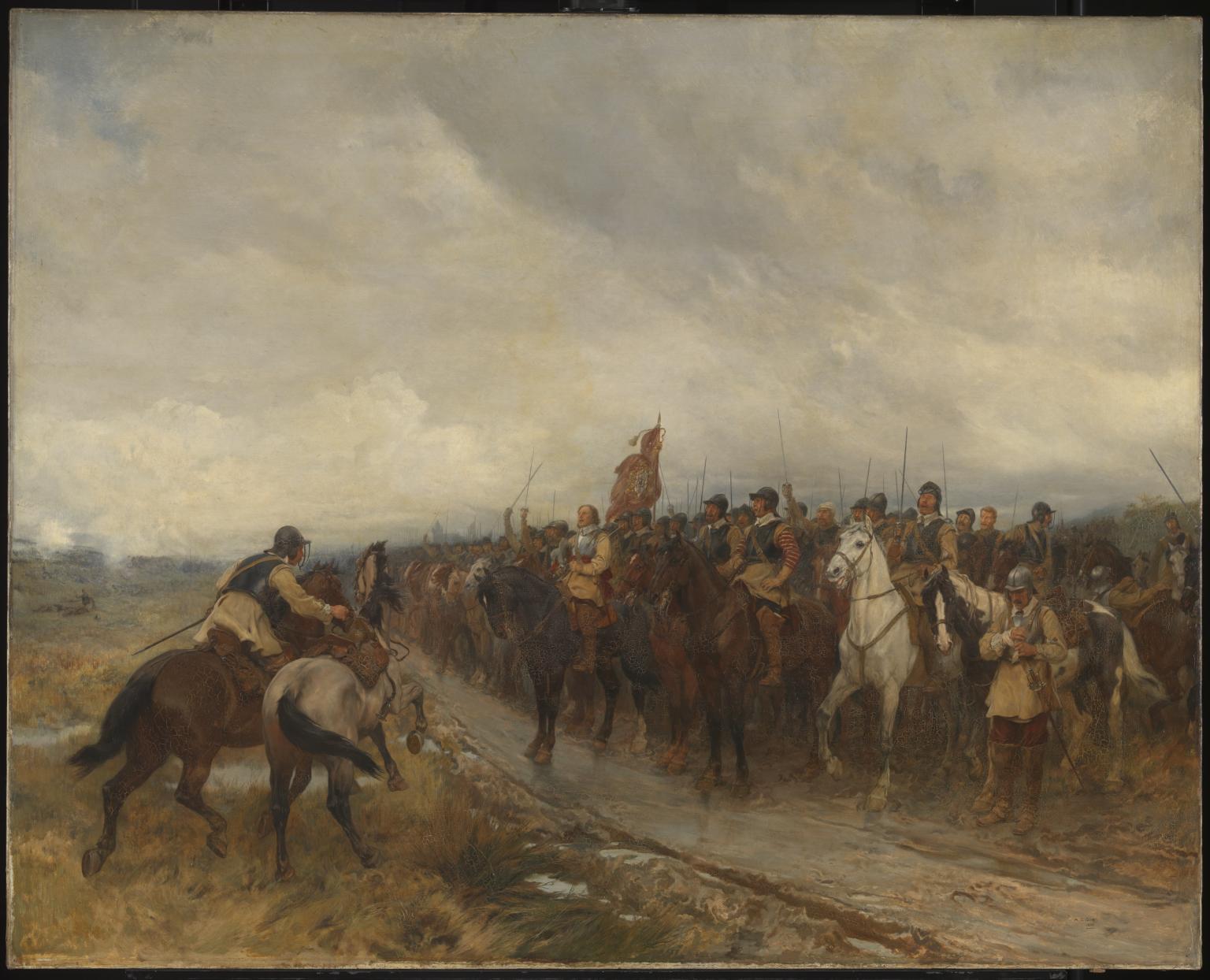
Cromwell at Dunbar 1886 Andrew Carrick Gow 1848-1920 Presented by the Trustees of the Chantrey Bequest 1886 http://www.tate.org.uk/art/work/N01588 (c/o Wikimedia Commons)
This is the first of a series of posts introducing the five-part historical fiction novel Unbowed, which will be published in November 2026. All five parts are based on true events and real people – my ancestors.
Most students of American history are familiar with the standard narrative of New England’s early settlers: the Mayflower, the Puritans, and the quest for religious freedom. But there is a darker, hidden foundation stone buried beneath the soil of early Massachusetts. It is a story born of cold rain, political betrayal, and a brutal military disaster that history has largely allowed to slip through its cracks.
It began on the stormy morning of September 3, 1650, in a muddy marshland just outside the Scottish town of Dunbar…
If you open an early American historical ledger, you will witness a quiet, bureaucratic violence.
On the yellowed pages of parish registers, military rolls, and census tracts, the names of ordinary people undergo a strange, unsettling metamorphosis. A proud Scottish surname is flattened by an English soldier’s hurried quill. A French-Canadian patronym is chopped and mangled to fit the tongue of an Anglo-American land agent. A German-Dutch identity is phoneticized into oblivion by colonial tax collectors.
If you look into your own family history and encounter a sudden, bizarre shift in the spelling of an ancestor’s name, you aren’t looking at a simple clerical mistake.
Spanning nearly three centuries of displacement, warfare, and resilience, Unbowed tracks a grand historical mosaic across five distinct cultural lines. It features ordinary people caught in the violent machinery of changing empires:
Part I: A captive Scottish soldier from the English Civil War surviving a harrowing winter crossing as an indentured asset to a rigid Puritan iron works, his family is later tested by the paranoia of the Salem Witch Trials.
Part II: A family fractured by a sudden, brutal wilderness raid in Saratoga, navigating French captivity and cultural adoption inside Mohawk longhouses.
Part III: A Palatine German community torn right down the middle by the fierce, neighbor-versus-neighbor civil conflicts of the Revolutionary War.
Part IV: A bilingual French-Canadian veteran fights for his place on a shifting border, navigating the psychological scars of Civil War combat in la survivance of Cohoes and Troy.
Part V: An immigrant Irish drayman and his literate son fighting to protect their family from a deadly, volatile ballot-box riot in a gritty, industrializing America.
At its core, this volume is about the universal war over identity. In an expanding nation, institutional erasure didn’t always arrive with a bayonet—often, it arrived with an inkwell.
Consider the real historical journey of the German name Bohnenstiehl, filtered through a Dutch-speaking Albany minister before being reformed by English officials into Bonesteel. Or an Anglo-Irish Bushell, phoneticized into Barsell or Bouschel simply because local clerks had never heard it before.
Our ancestors did not survive by remaining rigid. They allowed their names to be rewritten so that their bloodlines could continue to write themselves. They traded the spelling of their past to purchase their future.
Whether your own roots trace back to the colonial frontier or you simply love a sweeping, high-stakes historical epic, Unbowed is a tribute to the unbroken chain of ordinary people who refused to bend.
Over the next few weeks, I’ll be sharing exclusive behind-the-scenes glimpses into the real archival discoveries that inspired these stories right here on the blog.
Thank you for reading, exploring, and reclaiming these voices with me.
It’s been several months since I last posted…too much work and no play!
Until this past Sunday. Whew.
After a morning lecture about ancient Japanese myths and “deliberately forgotten” kings (maybe), I was grateful to be able to take a quick power nap…
…so that the family could go up a nearby mountain and watch the Geminid meteor shower. (By “mountain,” I mean about 640m/2100ft.)
After a brief lecture/quiz by a staff member at our local culture center, we stayed outside, lying flat on the ground, for over an hour. And, yes, it was cold, despite the sleeping bag and thermal underwear. I saw three shooting stars. Not nearly as many as I’d hoped.
After we got home and took evening baths, the kids went out on our second-floor balcony and found out that the night view was even better at home than on top of a mountain! At least they knew what to look for, thanks to the culture center event.
And by “meteor,” I mean the size of grains of rice. Look to the eastern sky, just a bit to the northwest of Orion, to find the Twins (Castor and Pollux in Greco-Roman mythology).
For more on the origins of the Geminids, check out the JAXA mission to Phaeton, the parent body asteroid. It’s DESTINY!
When you are younger you get blamed for crimes you never committed. And when you’re older you begin to get credit for virtues you never possessed. It evens itself out.
My middle name is actually Thomas. I chose to use “M Thomas” as a pen name out of respect for my father, who taught me how to write. As a professional communications writer, he was responsible for lots of public documents for the NYS DMV, including traffic safety reports, driver manuals, press releases from the Governor, all sorts of “my boss will feel the need to edit this, so I will deliberately leave behind something for him to do so as he doesn’t screw up the entire thing” document.
I may or may not have adopted this strategy in my own professional work (I certainly adopted the attitude…)
Another reason is because I had a baby brother named Thomas. He passed away before reaching five months old when I was not quite 11. It had a major impact on me as a child (and indeed as the adult and as the father I am).
I have no sons. It bothers me that I may be the last Thomas in our family. For a while, anyway.
What is one question you hate to be asked? Explain.
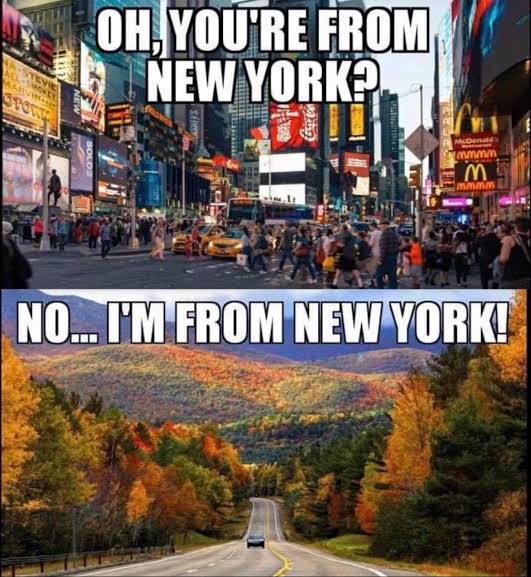
“Where are you from?”
I never understood why this question might rankle some people…until I moved to Japan.
I’ve been in Japan since 1999. “Where are you from?” was one of the first questions people asked me at the time, when I was teaching in junior and senior high schools.