The scientists hope to learn about the asteroid’s surface composition and how fast it rotates, he said. Those observations could help researchers figure out its origin, which in turn could shed light on other asteroids, including ones that could be dangerous to Earth.
This is of course not the first “mini-moon” to have been discovered. These are wandering asteroids that get trapped briefly by Earth’s gravity well before being flung back into space.
Read the article for more information about the “school-bus sized” 2024PT5!
The Perseids get their name because the shooting stars appear to stream from a point in the sky where the constellation of Perseus is located…The constellation rises in the northeast, but meteors should be visible all over the sky if conditions are clear.
The best time to watch is after midnight in the northern hemisphere. The meteors are actually debris leftover from the Swift-Tuttle comet, discovered in the early 1860s.
The annual celestial event started this past Sunday and lasts for about two months, but the peak this year is around August 12th.
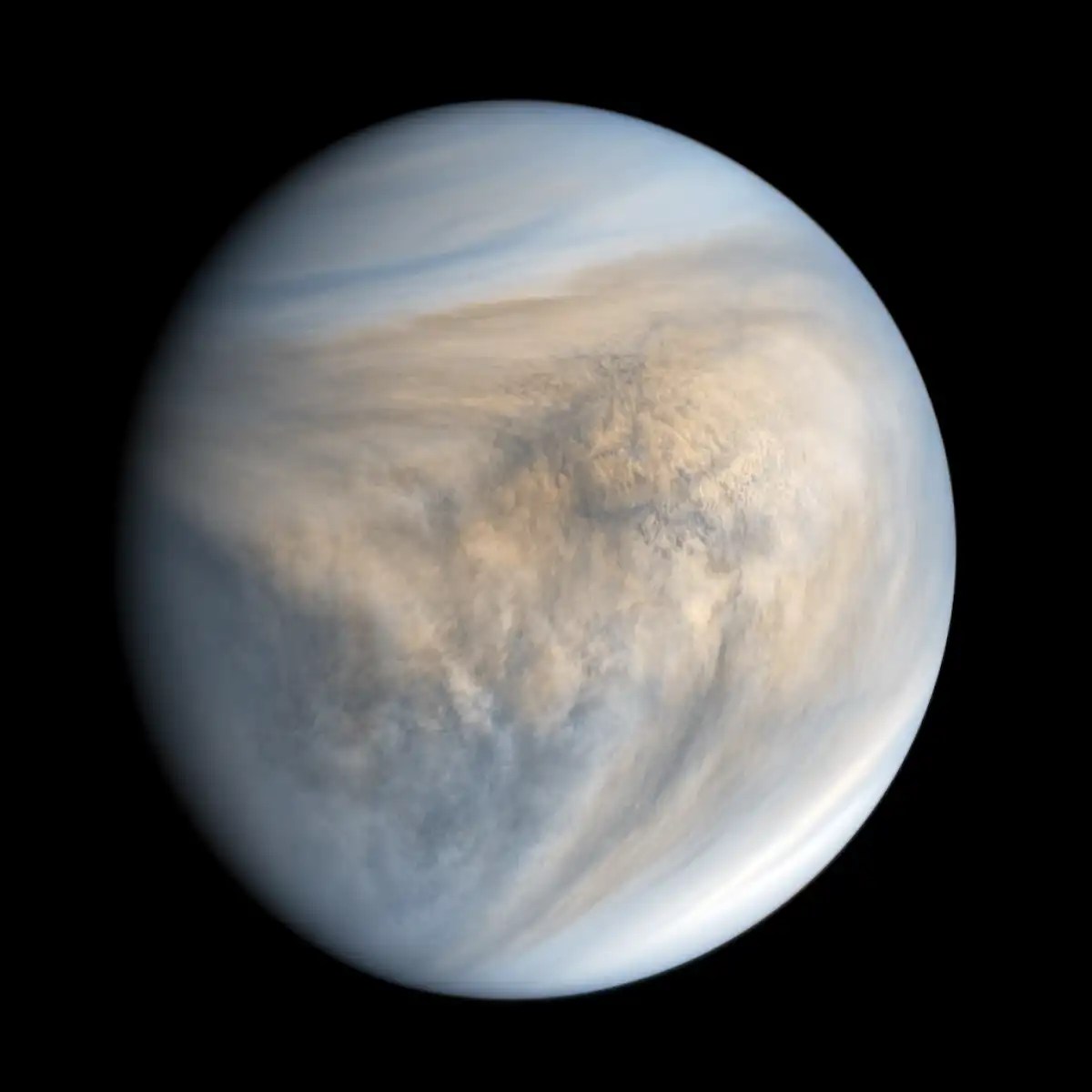
Over time, that water has nearly all been lost. Figuring out how, when and why Venus lost its water helps planetary scientists like me understand what makes a planet habitable — or what can make a habitable planet transform into an uninhabitable world.
The process in which Venus lost most of its water is called “hydrodynamic escape.” When Venus got too hot, the hydrogen in its atmosphere left. (The linked article explains this using a metaphor of having too many blankets on your bed.)
However, Venus is still losing hydrogen, even though there is too little of it for hydrodynamic escape to work. So, logically, there must be another process at work: “HCO⁺ dissociative recombination,” in which individually positively charged atoms of hydrogen, carbon, and oxygen in the atmosphere react with negatively charged electrons. The process was first examined on Mars, and based on a reexamination of results from previous missions (Pioneer Venus 1 and Pioneer Venus 2), the same research group thinks it’s time to try it on Venus…perhaps a first step to seeing whether Venus had life at some point.
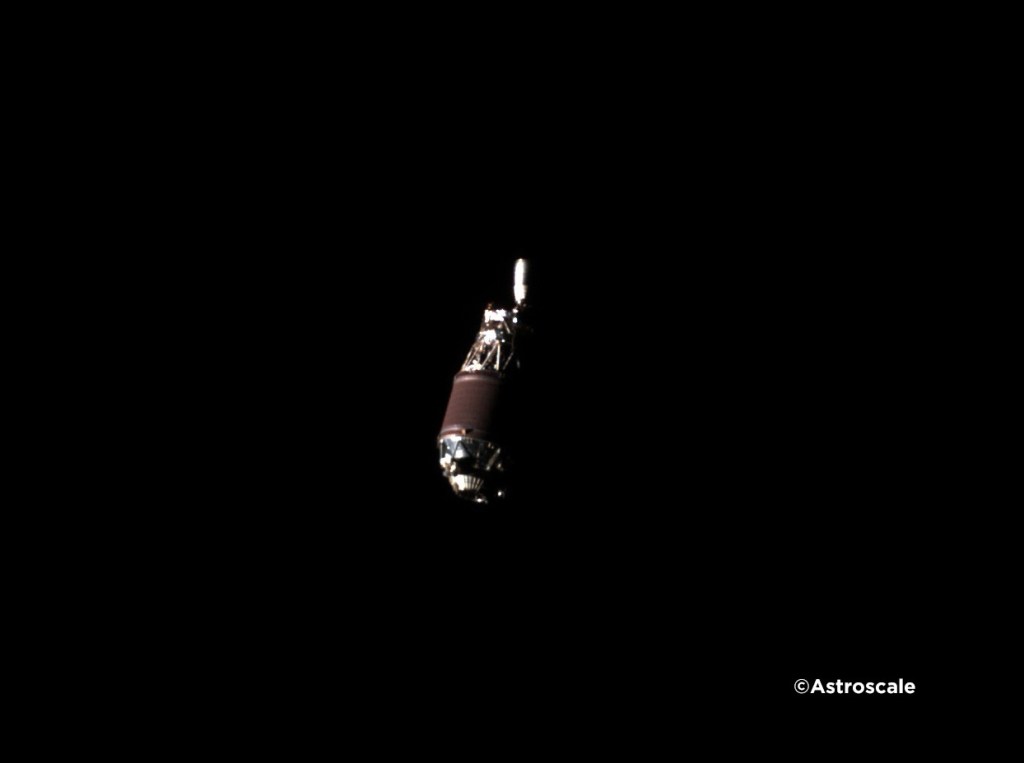
Japanese space company Astroscale Holdings Inc has unveiled what it calls the world’s first publicly released close-up image taken of space debris, hailing it as progress toward understanding the challenges posed by trash orbiting Earth.
NASA says it is once again able to get meaningful information back from the Voyager 1 probe, after months of troubleshooting a glitch that had this venerable spacecraft sending home messages that made no sense.
There are many words that could be used to describe WASP-76b — hellish, scorching, turbulent, chaotic, and even violent. This is a planet outside the solar system that sits so close to its star it gets hot enough to vaporize lead. So, as you can imagine, until now, “glorious” wasn’t one of those words.
This planet (located in the constellation Pisces) seems to have a rainbow effect of concentric rings…despite being so hot that iron falls from the sky.
Researchers will fly rockets into the path of the eclipse, stand in zoos watching animals, send radio signals across the globe, and peer into space with massive cameras.
And you don’t need to be a scientist to take part.
If you’re lucky enough to have no clouds or rain, that is.
Things the eclipse affects:
Radio waves
Animal behavior
The birds and the bees (seriously; read about what tortoises did last time)
Things scientists can view thanks to an eclipse:
The solar wind (plasma on the surface of the Sun)
Coronal mass ejections (which interfere with satellites)
Dust rings around the Sun and possibly even new asteroids
The East Coast of North America, where most of my relatives live, is currently 13 hours behind me in Japan. So the event will be long over by the time I wake up.
Hope to see video of it on the morning news show tomorrow!
The eclipse begins as a small notch slowly appears along one edge of the Sun. During the next hour, the Moon gradually covers more and more of the Sun’s bright disk. You’ll need a Solar Filter to both view and photograph the partial phases.
On April 8, 2024, there will be a total solar eclipse across parts of North America. It starts on Mexico’s Pacific coast and ends on Canada’s Atlantic coast. (So, no, it’s not just “from San Antonio to the Canadian border” as one article puts it).
I’m a little jealous of friends and family in the path. The eclipse lasts for over four minutes this time — if you’re in the area, enjoy!
This time I figured out how to import the slides directly into mmHmm, and I managed to update my MacOS to Sonoma, which allowed me to use my USB mic (yay). But I also called Ceres a “moon” at some point (it’s not a Moon but a dwarf planet in the asteroid belt near Mars). Oops. Not enough time to edit that bit out or record it again, so just word to the wise! Always fact-check videos, folks. Enjoy!
The asteroids in question are Iris (124 miles / 200 km in diameter) and Massalia (84 miles / 135 km). Both are in the asteroid belt between Mars and Jupiter. Iris is about the size of the US state of Maryland, while Massalia is roughly the size of Connecticut.
Note that the same observatory also found water on the Moon, about a “12-ounce bottle” worth. Not nearly enough for a settlement, but where there’s surface water (albeit trapped in soil on the surface), there’s likely to be more underneath.