M Thomas Apple Author Page

Science fiction, actual science, history, and personal ranting about life, the universe, and everything

Chandrayaan-3 to the Moon!

July 19, 2023
MThomas

I love the helpful explanation about the scale…

“If we want to develop the Moon as an outpost, a gateway to deep space, then we need to carry out many more explorations to see what sort of habitat would we be able to build there with the locally-available material and how will we carry supplies to our people there,” Mr Annadurai says.

https://www.bbc.com/news/world-asia-india-66185565

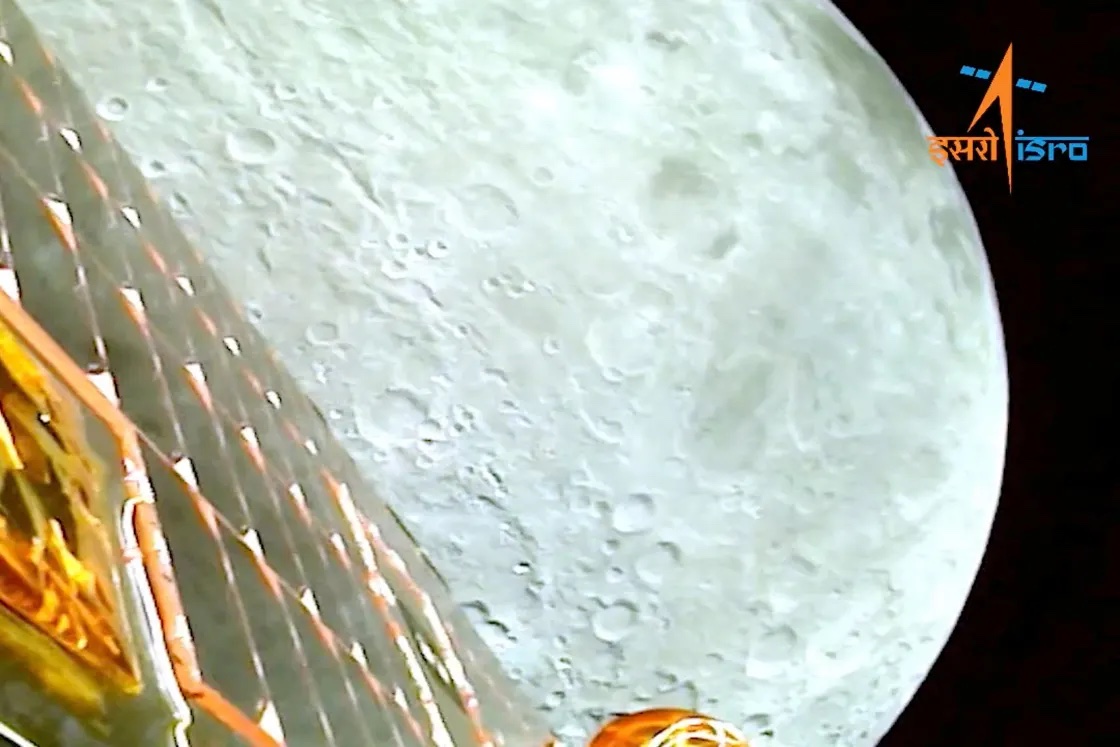
Chandrayaan-1 was India’s first successful Moon launch in 2008 — it deliberately crashed in order to measure the amount of water at the South Pole.

Chandrayaan-2 was only partly successful, as it did put an orbiter around the Moon, but the rover crashed. (The orbiter is still there, sending back information on a regular basis.)

Now, Chandrayaan-3 aims to finally land a rover and do some research exploring.

Let’s hope they can get it to land safely this time…

Another James Webb discovery: UV actually helps life

July 3, 2023
MThomas

Images of the Orion Nebula, c/o ESA and NASA (it’s complicated…)

For the first time ever, a team of international scientists detected a carbon compound known as methyl cation (pronounced cat-eye-on), or CH3+, in d203-506. CH3+ is significant for understanding how life began on Earth — and how it might develop elsewhere.

https://www.astronomy.com/science/jwst-spots-a-molecule-vital-to-life-in-protoplanetary-disk/

Ultraviolet radiation (UV) is known for destroying complex carbon-based molecules. But could it also provide the energy for them to exist?

Another James Webb discovery: UV actually helps life

July 3, 2023
MThomas

Images of the Orion Nebula, c/o ESA and NASA (it’s complicated…)

For the first time ever, a team of international scientists detected a carbon compound known as methyl cation (pronounced cat-eye-on), or CH3+, in d203-506. CH3+ is significant for understanding how life began on Earth — and how it might develop elsewhere.

https://www.astronomy.com/science/jwst-spots-a-molecule-vital-to-life-in-protoplanetary-disk/

Ultraviolet radiation (UV) is known for destroying complex carbon-based molecules. But could it also provide the energy for them to exist?

In search of dark energy and dark matter

July 3, 2023
MThomas

A European-built orbital satellite was launched into space on Saturday from Florida on a mission to shed new light on dark energy and dark matter, the mysterious cosmic forces scientists say account for 95% of the known universe.

https://www.theguardian.com/science/2023/jul/01/euclid-telescope-lifts-off-in-search-of-the-secrets-of-dark-universe

Like the James Webb telescope, the Euclid will be positioned in a LaGrange point (L2, in this case), rather than in high Earth orbit.

If all goes well.

It’s interesting that the Guardian article says the telescope was “designed and built entirely by Esa,” although NASA supplied parts and its launching pad was made available and the telescope was launched using a SpaceX rocket. And ESA consists of nearly 2000 scientists from the US, Canada, and Japan as well as various European countries.

It’s a joint project. That’s how science should work in the first place.

(For more on dark matter, dark energy, gravity, and quantum mechanics, check this out.)

Phosphorus on Enceladus boosts chances for life?

July 2, 2023
MThomas

According to legend, the ancient giant Enceladus vents sulfur from his tomb. According to data, Saturn’s tiny moon Enceladus vents more than that.

https://www.astronomy.com/science/phosphate-find-on-enceladus-boosts-chances-for-life/

Scientists have suspected for a long time that this tiny moon of Saturn may be the best place in our solar system to look for life.

Now they have confirmed evidence of all six crucial elements necessary for life to exist (life as we know it, anyway): carbon (C), hydrogen (H), nitrogen (N), oxygen (O), phosphorus (P), and sulphur (S). If present as a phosphate, essential for DNA and RNA to exist, the discovery of phosphorus on the 310-mile-wide Enceladus may indicate life of sort sort, perhaps at a microscopic level beneath the icy surface.

One guess is that the oceans of Enceladus have at least 100 times more phosphorus than the Earth’s oceans. That would make for quite the carbonated fizzy pop. Methane has already been seen coming out out of various “ice geysers” (a.k.a. cryovolcanoes). Since methane results from rotten organic material, there logically should be something alive out there.

Now we just have to get back out there and figure out a way to find them.

Chemical traces reveal first-generation stars

June 16, 2023
MThomas

The link below includes a night sky in Montana, which makes little sense when the researchers were in Beijing and Honolulu…

“The first-generation star we observed has the potential to become the oldest star we have ever seen,” said Alexander Heger, a professor in the school of physics and astronomy at Monash University in Australia who was part of the research team. “It probably had only lived for 2 1/2 million years and then exploded.”

https://www.nbcnews.com/science/space/chemical-traces-offer-evidence-universes-earliest-stars-rcna88790

Oh, and it also was discovered to be 260 times the size of our own Sun…just as theorized.

More importantly, this involved scientists from three different countries (China, Japan, and Australia), sharing information and working together for science.

Imagine if that spirit of cooperation could be extended into other domains…

Subaru, how about you?

Why Mars Shivers: The Explanation Behind Marsquakes

May 31, 2023
MThomas

The post Why Mars Shivers: The Explanation Behind Marsquakes first appeared May 30, 2023 on Science Recent – Your Daily Science Source.The human …

Why Mars Shivers: The Explanation Behind Marsquakes

Something else for future potential Mars settlements to consider….

Plume of water seen on Saturn’s moon

May 31, 2023
MThomas

The record-breaking plume reached nearly 6,000 miles into space – covering the distance between Ireland and Japan – and poured water into the void at an estimated rate of 300 litres a second.

https://www.theguardian.com/science/2023/may/30/astronomers-see-6000-mile-water-vapour-plume-blasting-from-saturn-moon

Note that the water jetted out into space nearly 40 times longer than the actual size of the moon (about 500 in diameter, or as the Gurdian puts it “500-mile-wide” for those who forgot the meaning of “diameter).

Enceladus is probably the best bet for life elsewhere in the solar system due to its water — and while whipping around Saturn once per day, which is likely the reason for underwater volcanos and other vents that may provide the proper chemistry for life.

Also the perfect place to trick an inexperienced asteroid hunter crew…

Betelgeuse! Betelgeuse! Betel…

May 26, 2023
MThomas

Betelgeuse, the closest red giant to Earth, has long been understood to move between brighter and dimmer in 400-day cycles. But from late 2019 to early 2020, it underwent what astrophysicists called “the great dimming”, as a dust cloud obscured our view of the star.

Now, it is glowing at 150% of its normal brightness, and is cycling between brighter and dimmer at 200-day intervals – twice as fast as usual…It is currently the seventh brightest star in the night sky – up three places from its usual tenth brightest.

https://www.theguardian.com/science/2023/may/26/its-new-territory’s-why-is-betelgeuse-is-glowing-so-brightly-and-behaving-so-strangely?

Betelgeuse is the closet red giant Star to our solar system, one of the shoulders of the Greek constellation of Orion.

The cultural information in the linked article was actually more interesting than the phenomenon observed. For instance, the fact that an Aboriginal people in Australia saw it long before the Greeks did was something I didn’t know.

(Although ancient humans in what is now Germany apparently carved an image of it around 32,000 years ago…)

And that the Greek name comes originally from the Arabic “bat al-jawzāʾ” meaning “giant’s shoulder.”

And all three cultures saw the star as connected with fire held by a giant hunter of some sort.

And so have ancient Babylonians, Egyptians, and probably everyone else, too. We just can’t help personifying even the stars.

The kicker?

When it does eventually explode, it could – over the course of a week – grow so bright that it will be visible during daylight, and cast shadows at night.

Now that’s something I’d like to be around to see. Hmm. If only I could manage to live for another 10- to 100,000 years…

Cancel your asteroid insurance – for the next thousand years

May 22, 2023
MThomas

Does anybody remember Spirographs?

Of all the asteroids they modeled, the one with the largest risk of impact was a kilometer-wide asteroid known as 1994 PC1. Over the next thousand years, the probability that 1994 PC1 will cross within the orbit of the Moon is a paltry 0.00151%, hardly worth worrying about.

https://www.yahoo.com/entertainment/cancel-asteroid-insurance-earth-declared-150002866.html

Thanks to Glen Hill over at Engagin’ Science (formerly Scientia, which apparently was far too Latin- and science-esque for search engines to handle) for bringing this (not-so Earth-shattering) info to my attention.

Sorry, folks. Hollywood was once again wrong (sigh).

😂

Blog at WordPress.com.
The Silmaril Chick

Writing Fanfiction in the worlds of Tolkien and Beyond!

Our Awesome Universe

Learning more about our place in the universe...

TechWordly

Best Tech Gadgets Advise

Weird Science Marvel Comics

Marvel Comics Reviews, Previews and News

Universe discoveries

Writing blogs is miracle I am a writer blogger and my site mission is to give information on maximum information to audiences

Robby Robin's Journey

Reflections of an inquiring retiree ...

Fox Reviews Rock

Rock & Metal Reviews That Hit Hard

My little corner of the world

Short stories | Reflections | Poetry

DimmaJo Blog

Read | Reflect | Grow