Half of a dilithium crystal? (It’s a new type of crystal called “Chang’esite” (after the ancient Chinese moon goddess).
I should be posting another chapter from Bringer of Light, but I don’t feel like writing that right now, what with a humongoid typhoon slowing churning its way here.
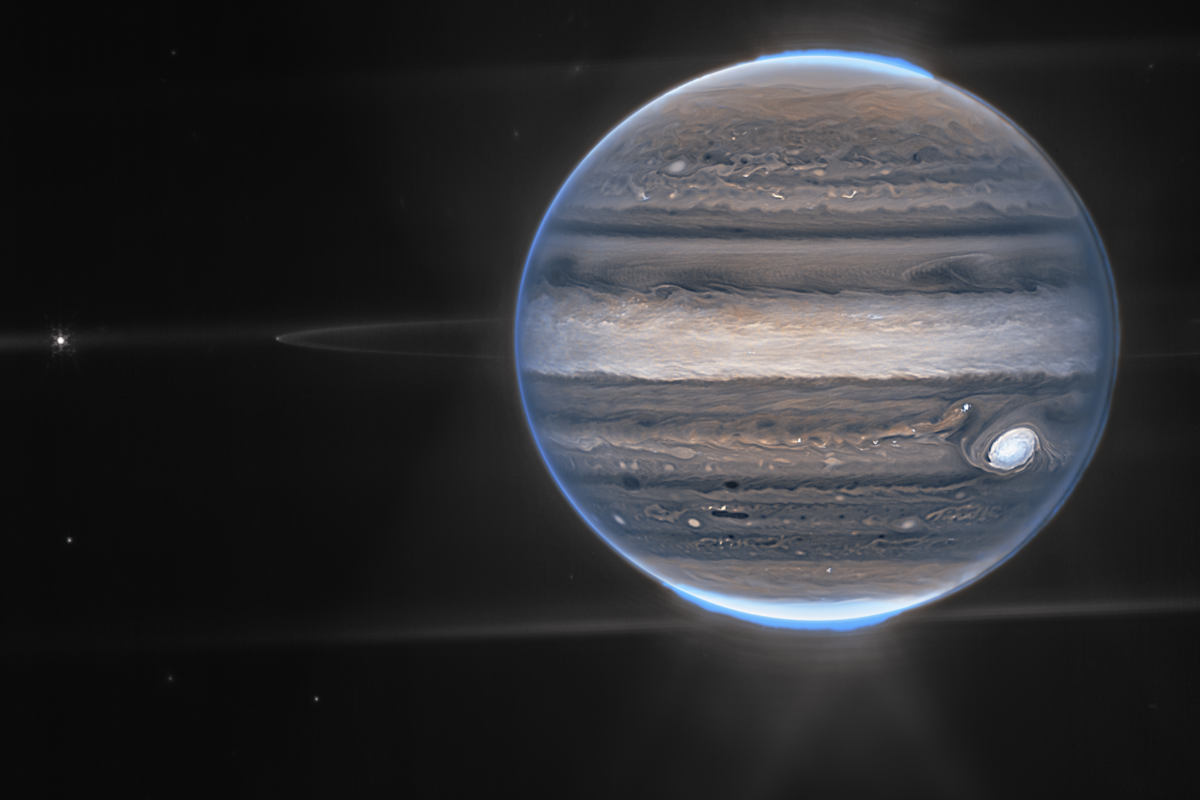
Courtesy NASA. Note that the blue, white, green, yellow, and orange colors are artificial, only added to make features revealed by infrared stand out for human eyes. You can see the planet’s rings, aurora, and two “tiny” moons (at left; they’re not really that tiny!).
“We’ve never seen Jupiter like this. It’s all quite incredible,” said planetary astronomer Imke de Pater, of the University of California, Berkeley, who helped lead the observations.
“We hadn’t really expected it to be this good, to be honest,” she added in a statement.
The above is supposed to be in “quote” format, but WP really messed up this feature when they switched to so-called “block” mode (which I can’t stand).
Anyway, the image is fairly spectacular, from the new James Webb Space Telescope which is positioned 1 million miles away from Earth (i.e., in the second LaGrange point, or L2).
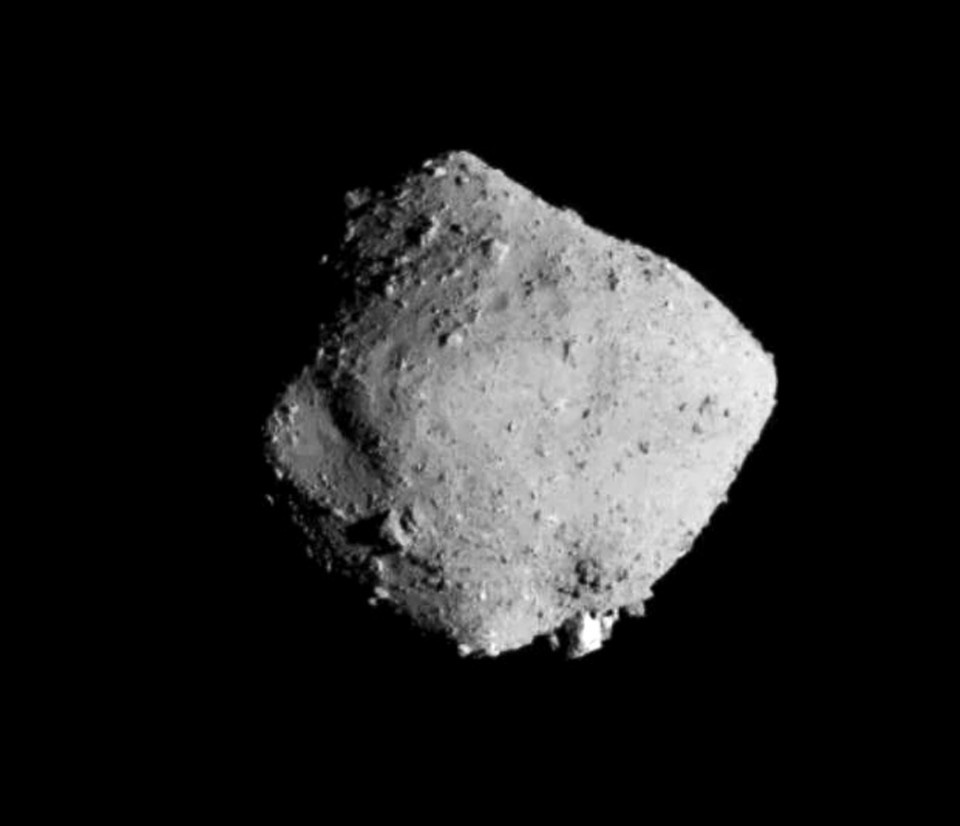
More than 20 types of amino acids have been detected in samples Japan’s Hayabusa2 space probe brought to Earth from an asteroid in late 2020, a government official said Monday, showing for the first time the organic compounds exist on asteroids in space.
This lends support to the hypothesis that life on Earth was brought to it during the Late Heavy Bombardment period – in which meteors brought not just water but the building blocks of life…
Now imagine if someone were to find an asteroid with addition proteins NOT found on Earth… (i.e., my novel’s scientific premise…)
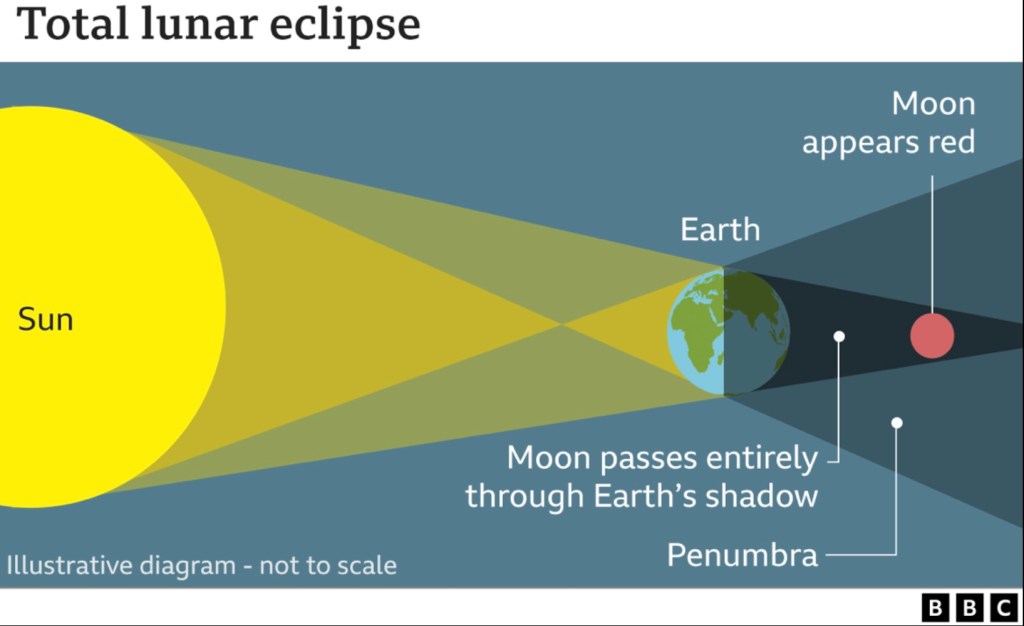
I love the “illustrative diagram” note for people who might complain this is not scientifically accurate due to scale.
…if you are lucky enough to live Western Europe, parts of northwestern Africa, and some of the Americans…
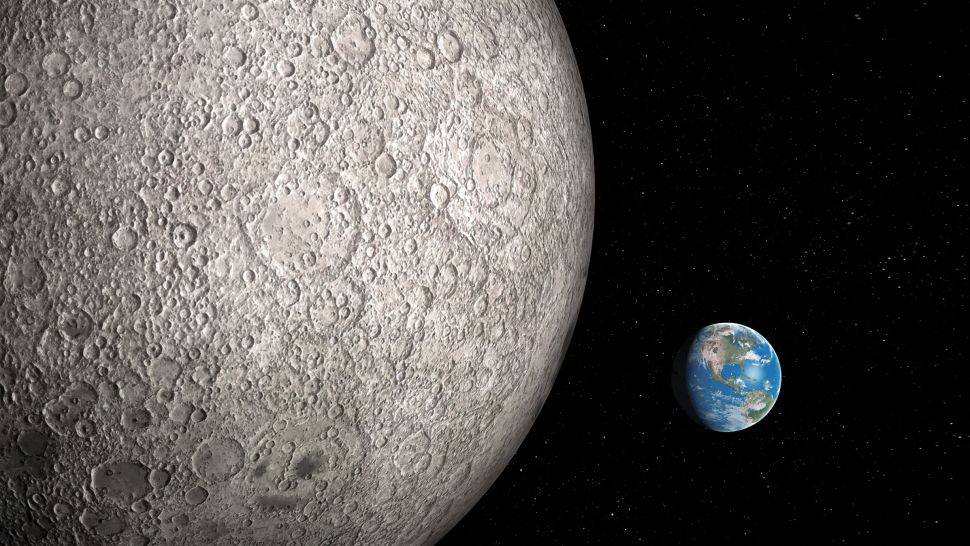
As for why the Moon appears red…
“You’ll actually be seeing every sunrise and every sunset occurring around the Earth at once. All of that light will be projected on to the Moon.” (Dr Gregory Brown, Royal Observatory
And if you happened to be standing on the Moon at the time, you’d see a blood ring encircling the Earth in front of you (ah, assuming you were not on the other side of the Moon).
Come on. Somebody has got to figure out how to get a picture of that.
“Perhaps most intriguing among the documents are the several dozen Defense Intelligence Reference Documents (DIRDs), which discuss the viability of various “advanced technolog[ies].” This collection includes reports on “traversable wormholes, stargates, and negative energy,” “high-frequency gravitational wave communications,” “warp drive, dark energy, and the manipulation of extra dimensions,” and many other topics that will sound familiar to fans of science fiction.”
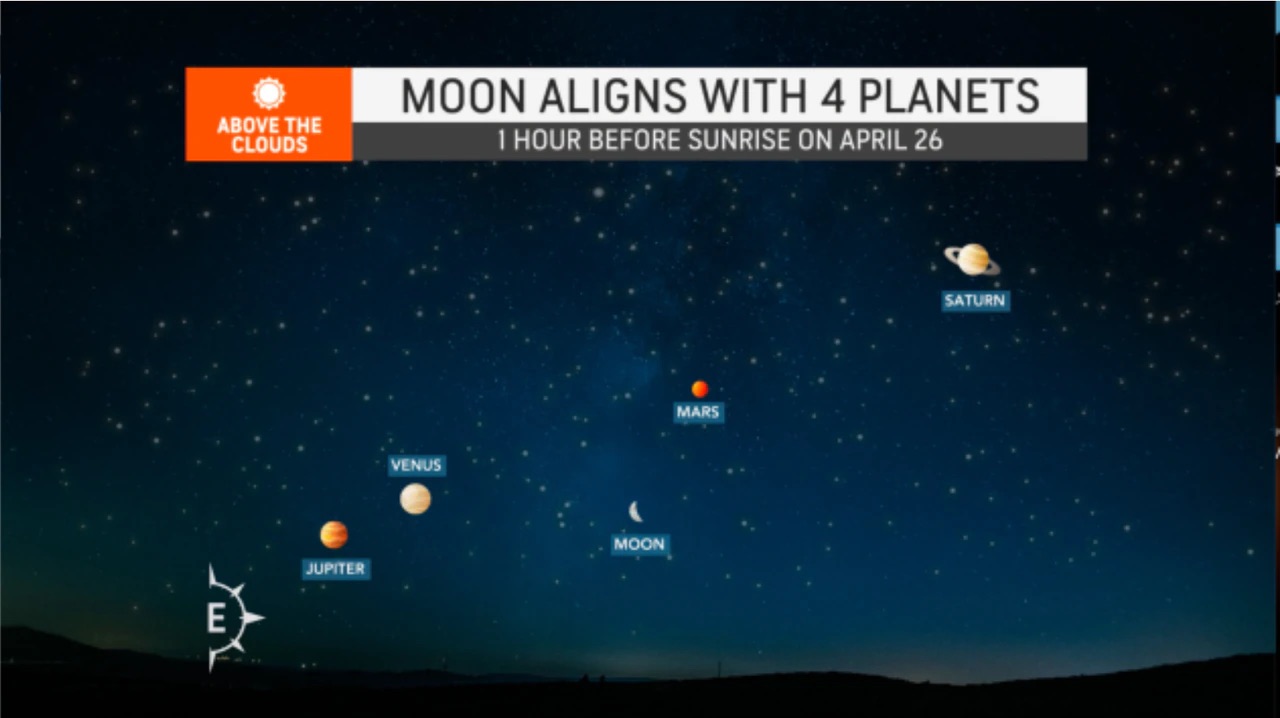
(Note: You won’t be able to see the planets actually looking like these photoshopped images…unless you happen to have a really powerful telescope in your backyard.)
Not sure why I first got this info from a site based in New Jersey. The info about what time of day and in what part of the sky is only relevant to people living in the NJ_NYC area.
Still, it’s an interesting phenomenon that occurs once every few years…
2005. 2016. 2020. And 2022. Not exactly a regular pattern, it seems.
And, no, there is no “spiritual significance” to a planetary alignment. It’s an illusion, an imaginary lining up of the solar system that doesn’t affect you personally. Sorry.
But it’s still fun to watch. Er, if you enjoy getting up before dawn (I don’t).
According to nj.com, “The planetary parade of sorts will occur when Jupiter, Venus, Mars and Saturn all appear to be lined up in a row above the horizon during the pre-dawn hours — starting Saturday morning, April 23. The alignment will also be visible during the next few mornings, and April’s crescent moon will soon join the parade, according to experts from LiveScience and AccuWeather.”
Yeah, lots of web sites are covering this. At least the one I linked above doesn’t have automated videos, flashing ad gifs, and other random pop-ups that drain your smartphone battery.
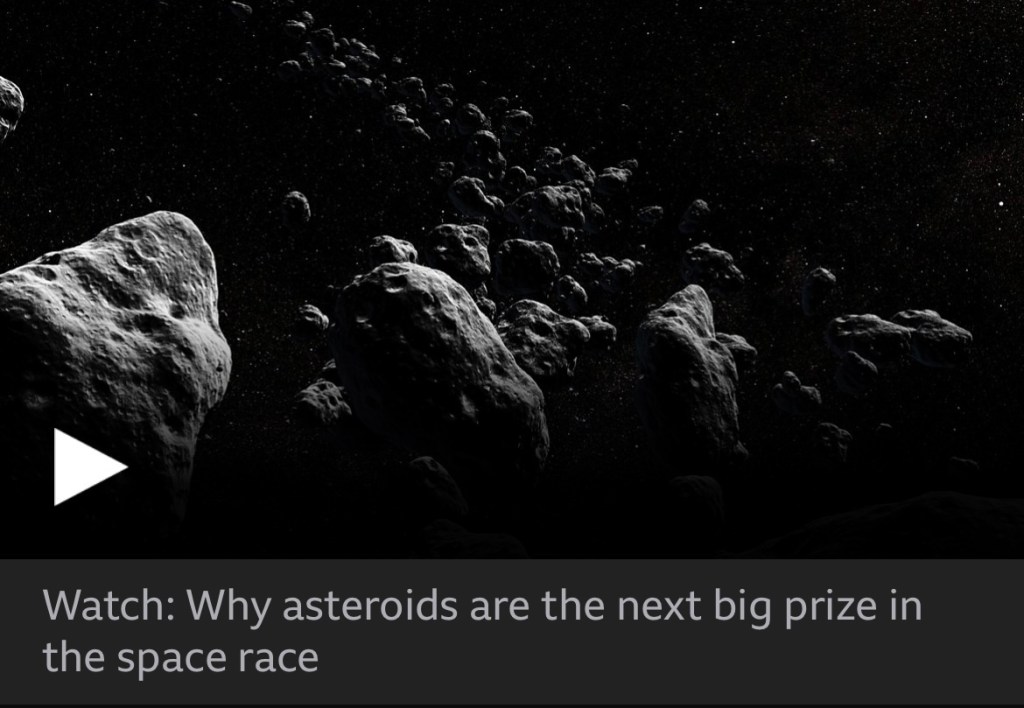
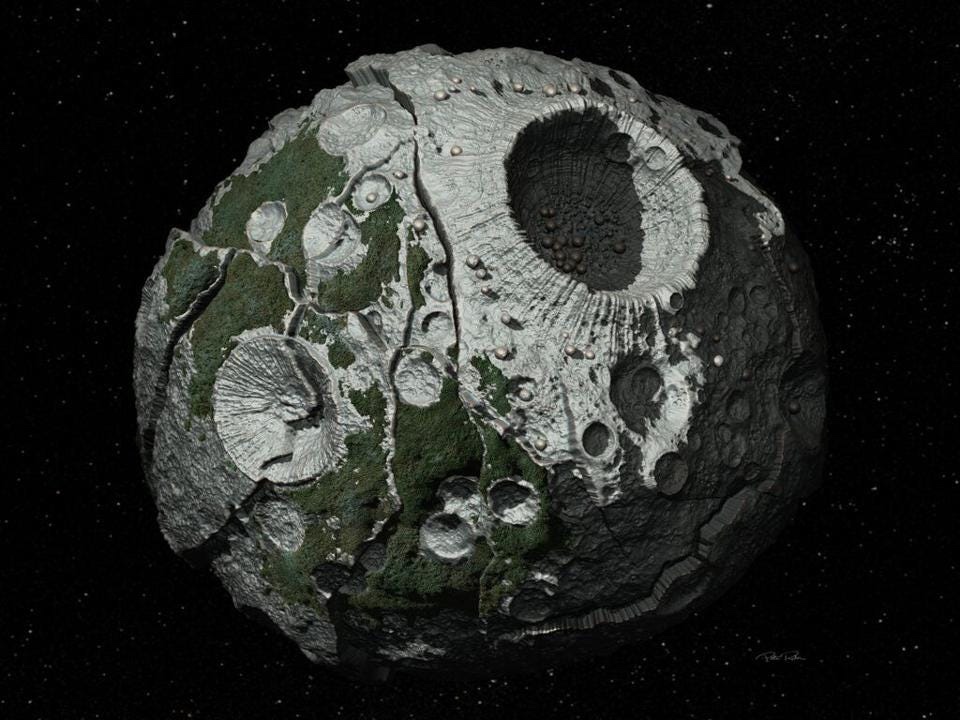
Psyche is an asteroid that was probably once the heart of a planet in the early system, one that didn’t survive the violent process of planet formation.
Yep — that “worth more than the global economy” rock in space.
But we’ll have to wait a few years to find out if it’s “less metal and more hard rock” — the Psyche Mission rockets off in August 2022 and the probe won’t arrive for four more years.



 M Thomas Apple Author Page