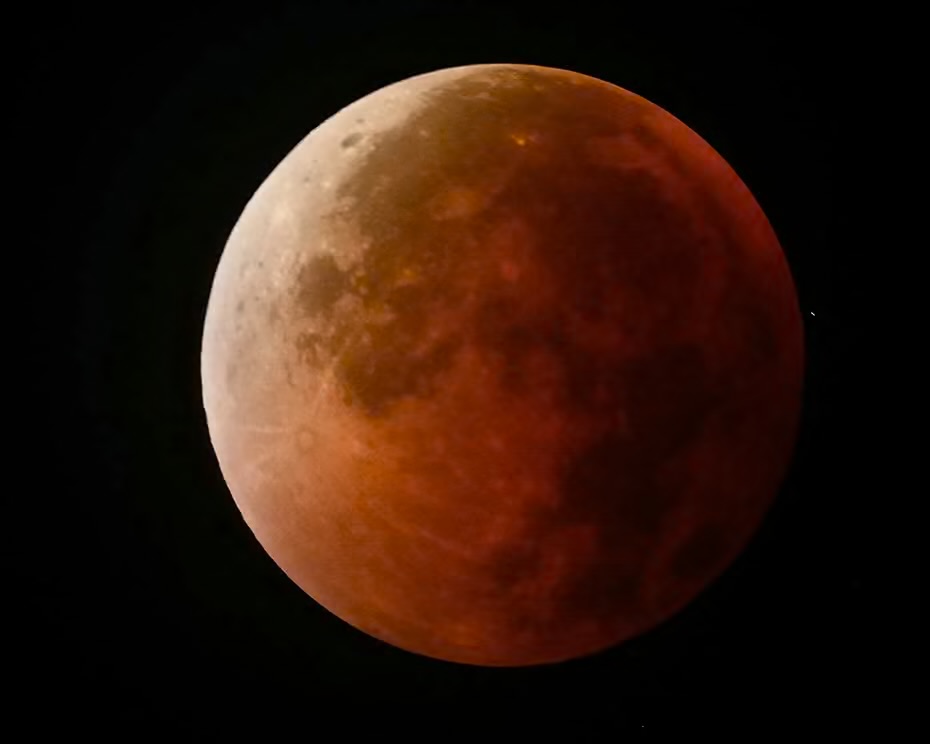
Lunar eclipse, tonight from 6:30 to 11:00…
Except it still raining here in Japan, and we’ll see nothing.
Rats.
At least we’ll visit JAXA tomorrow…

March 3, 2026
Lunar eclipse, tonight from 6:30 to 11:00…
Except it still raining here in Japan, and we’ll see nothing.
Rats.
At least we’ll visit JAXA tomorrow…
February 17, 2026
December 15, 2025
It’s been several months since I last posted…too much work and no play!
Until this past Sunday. Whew.
After a morning lecture about ancient Japanese myths and “deliberately forgotten” kings (maybe), I was grateful to be able to take a quick power nap…
…so that the family could go up a nearby mountain and watch the Geminid meteor shower. (By “mountain,” I mean about 640m/2100ft.)
After a brief lecture/quiz by a staff member at our local culture center, we stayed outside, lying flat on the ground, for over an hour. And, yes, it was cold, despite the sleeping bag and thermal underwear. I saw three shooting stars. Not nearly as many as I’d hoped.
After we got home and took evening baths, the kids went out on our second-floor balcony and found out that the night view was even better at home than on top of a mountain! At least they knew what to look for, thanks to the culture center event.
Although the peak is Sunday night between midnight and 2 a.m., the meteors are still visible to some degree the rest of this week.
And by “meteor,” I mean the size of grains of rice. Look to the eastern sky, just a bit to the northwest of Orion, to find the Twins (Castor and Pollux in Greco-Roman mythology).
For more on the origins of the Geminids, check out the JAXA mission to Phaeton, the parent body asteroid. It’s DESTINY!
November 12, 2024

The Taurids meteor showers get their name because the shooting stars appear to stream from a point in the sky where the Taurus constellation is located. Taurid meteors can be seen from pretty much anywhere on the planet except the South Pole.
I waited too long to post this! The meteor shower peaked last week, but might still be visible. The Orionids ended already (they appeared to fall from, you guessed it, the constellation of Orion, while the Taurids came from Taurus.
If you can’t see them, not to worry: the Leonids are on their way from next week (falling from, right again, Leo).
Very imaginative, these names. At least it makes them easier to spot. ☄️
April 11, 2024

There are many words that could be used to describe WASP-76b — hellish, scorching, turbulent, chaotic, and even violent. This is a planet outside the solar system that sits so close to its star it gets hot enough to vaporize lead. So, as you can imagine, until now, “glorious” wasn’t one of those words.
https://www.space.com/hellish-exoplanet-rainbow-glory-effect-cheops
This planet (located in the constellation Pisces) seems to have a rainbow effect of concentric rings…despite being so hot that iron falls from the sky.
March 29, 2024
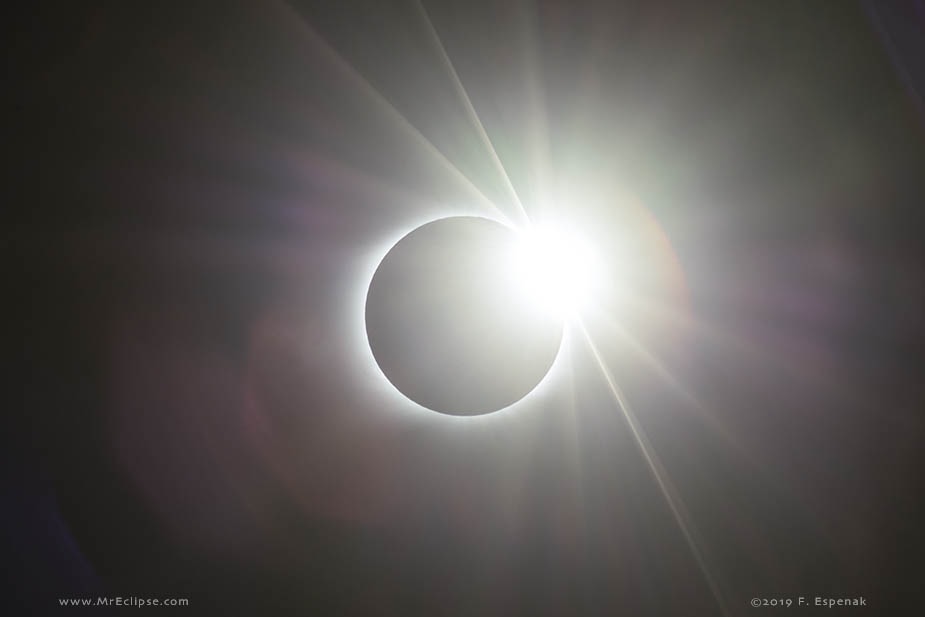
The eclipse begins as a small notch slowly appears along one edge of the Sun. During the next hour, the Moon gradually covers more and more of the Sun’s bright disk. You’ll need a Solar Filter to both view and photograph the partial phases.
https://www.mreclipse.com/SEphoto/SEphoto.html
On April 8, 2024, there will be a total solar eclipse across parts of North America. It starts on Mexico’s Pacific coast and ends on Canada’s Atlantic coast. (So, no, it’s not just “from San Antonio to the Canadian border” as one article puts it).
I’m a little jealous of friends and family in the path. The eclipse lasts for over four minutes this time — if you’re in the area, enjoy!

And send me a photo or three if you can 😁
February 28, 2024

So, astronomers need to know both mass and diameter to determine whether a planet is truly similar enough to ours to host some form of Earth-like life. If the planet has a low mass and a large radius, it is likely like a so-called mini-Neptune with a gassy atmosphere and little rock. If it has a higher mass but a smaller radius, it’s probably a rocky planet like ours.
The possibility that TOI-715 b is rocky “would be exciting because that supports it being more of a habitable planet versus some sort of other world,” says Moran.
https://www.astronomy.com/science/recently-discovered-super-earth-might-be-habitable/
TOI-715 orbits a red dwarf star around 137 light years away, so we won’t be getting there any time soon. But after finding this planet last year, astronomers also are trying to confirm the existence of another smaller, closer to Earth-sized planet in the habitable zone (i.e., in an orbit that permits liquid water necessary for life to evolve).
And the name of the possibly new “sibling” planet?
“TIC 271971130.02”
Uh. We gotta come up with cooler names, folks.
For starters, they orbit a dwarf star.

February 14, 2024

A study published this weekend in the journal Monthly Notices of the Royal Astronomical Societyproposes that the oldest star in the Milky Way is a faint white dwarf that is about 10.7 billion years old and shining roughly 90 light years away from Earth.
https://www.popsci.com/science/the-milky-ways-oldest-star-is-a-white-hot-pyre-of-dead-planets/?fbclid=IwAR3smMe_OryfOHbM03X9HZIz9CcFu85LCsmGiNe5vaBh-7678xtPO4VOuxY
The Milky Way is old. Like, really, really old. One of the oldest galaxies.
This is probably what will eventually happen to our solar system. That’s right, everything will turn to rubble and get sucked into the dying Sun.
So, given all that, there’s only one thing for it…

December 3, 2023
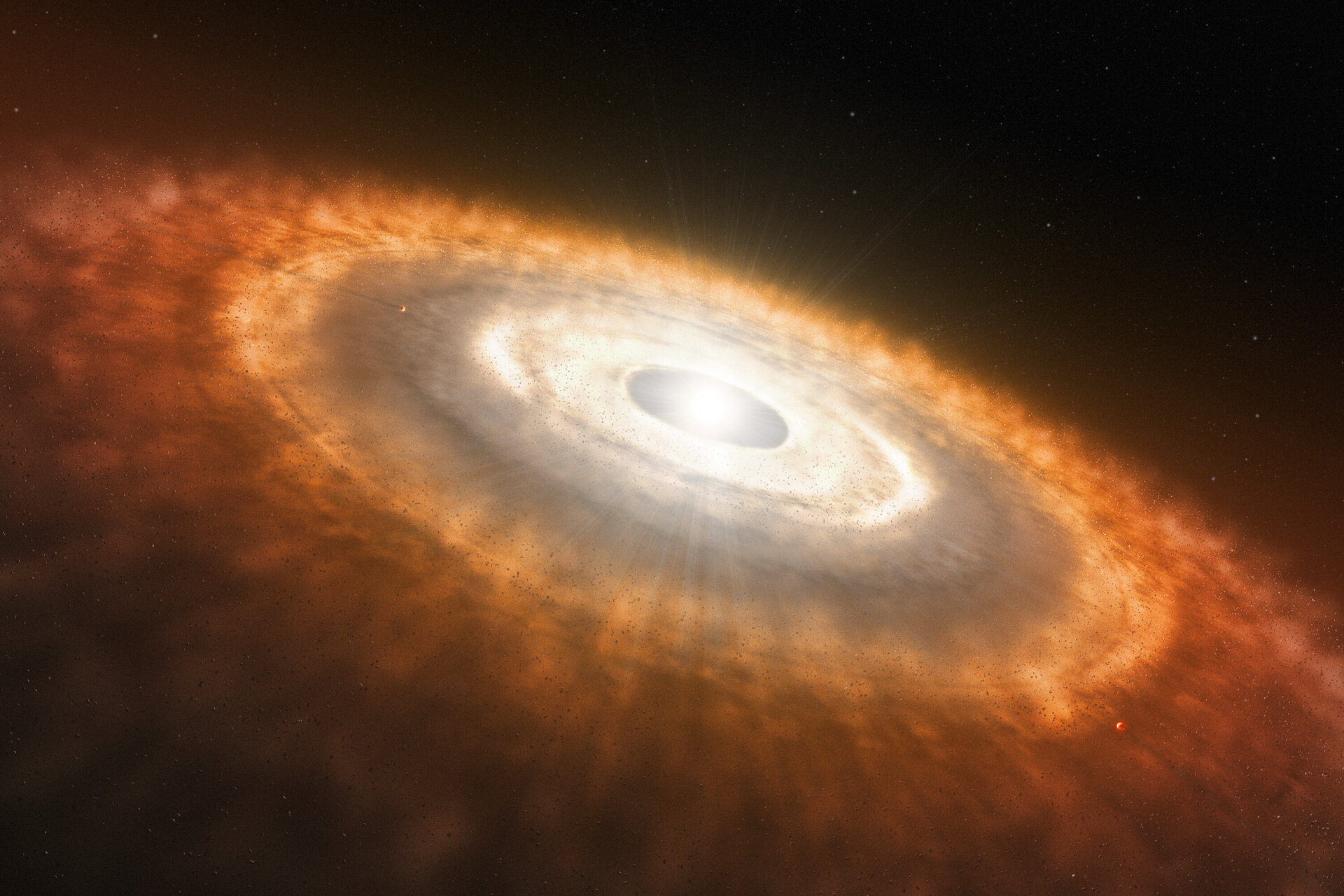
Because of its location near several massive stars in NGC6357, scientists expect XUE 1 to have been constantly exposed to a high ultraviolet radiation field throughout its life. However, in this extreme environment the team still detected a range of molecules that are the building blocks of rocky planets.
https://www.esa.int/Science_Exploration/Space_Science/Webb/Webb_study_reveals_rocky_planets_can_form_in_extreme_environments
In essence, this expands the possibility of finding many more rocky planets than were previous thought to be exist.
Lots of “gas giants” and a few “super Earths” have been found so far. But Webb is just getting started…
August 24, 2023
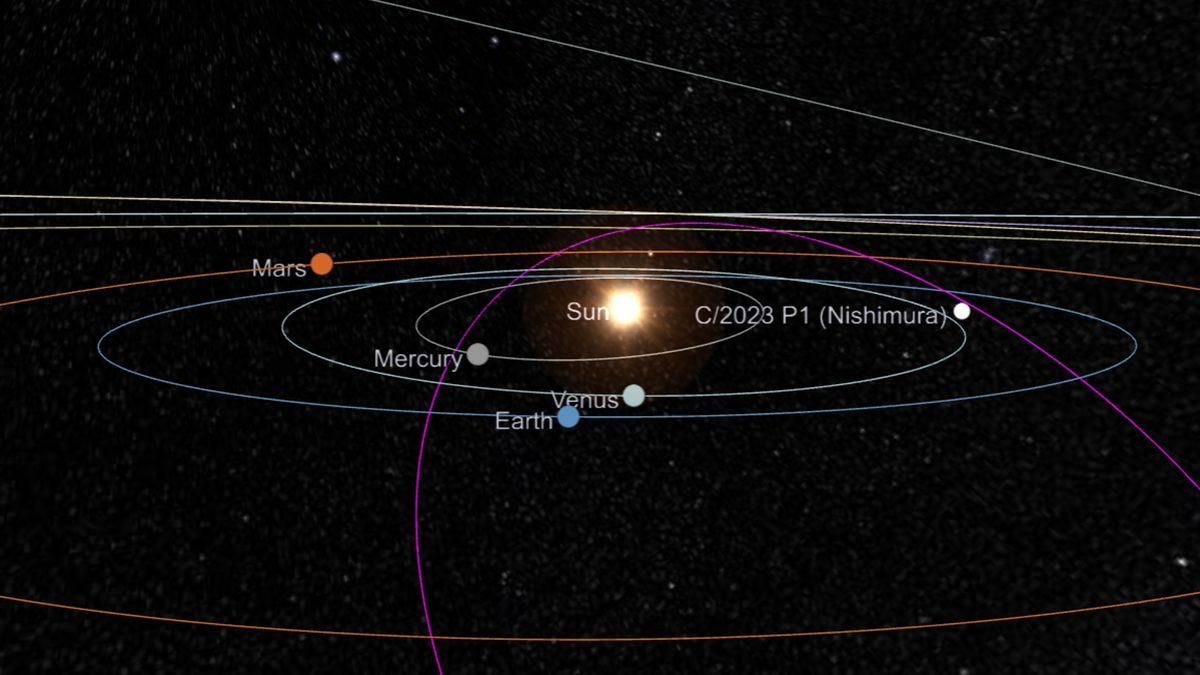
Comet Nishimura’s orbit means that this is likely its first and final trip through the inner solar system. It is possible that the comet originated outside our star system, which would make it the third known interstellar object ever detected, following ‘Oumuamua — which some astronomers speculatively suggested was an alien spacecraft — and Comet 2I/Borisov.
https://www.livescience.com/space/comets/new-potentially-interstellar-comet-will-be-visible-to-the-naked-eye-next-month-before-leaving-our-solar-system-forever
Discovered just two weeks ago by an amateur Japanese astronomer (after whom the comet is now named), the comet Nishimura will approach Earth at its closest on September 13th. But it will be at its brightest about five days later as it approaches the Sun.
Its fate?
Astronomers don’t know when the possible interstellar interloper will depart the solar system. However, it is also possible that the intense force of the comet’s solar slingshot will rip its solid nucleus apart, according to NASA.
Also, its nucleus gives off a “green glow,” which is the result of sunlight breaking apart dicarbon, or diatomic carbon. So getcher geek on, chemical lab rats!

Writing Fanfiction in the worlds of Tolkien and Beyond!
Learning more about our place in the universe...
Best Tech Gadgets Advise
Marvel Comics Reviews, Previews and News
Writing blogs is miracle I am a writer blogger and my site mission is to give information on maximum information to audiences
Reflections of an inquiring retiree ...
Simple ideas to make every room feel stylish and welcoming
Rock & Metal Reviews That Hit Hard
Short stories | Reflections | Poetry
Read. Reflect. Grow

 M Thomas Apple Author Page