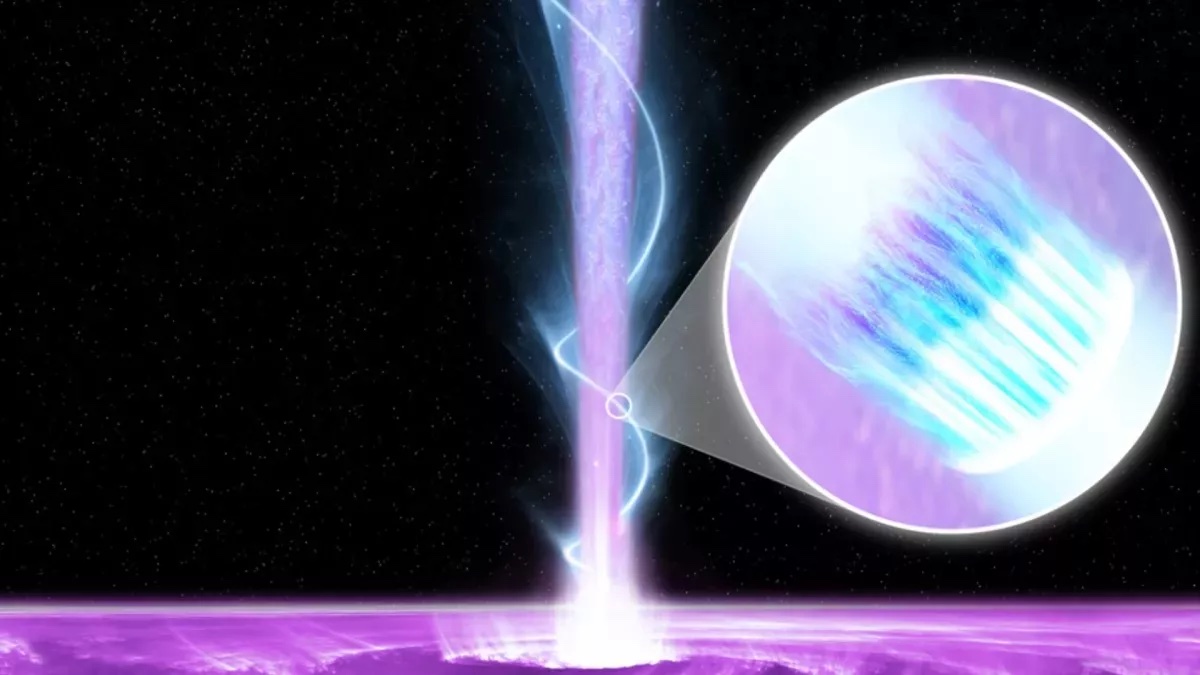
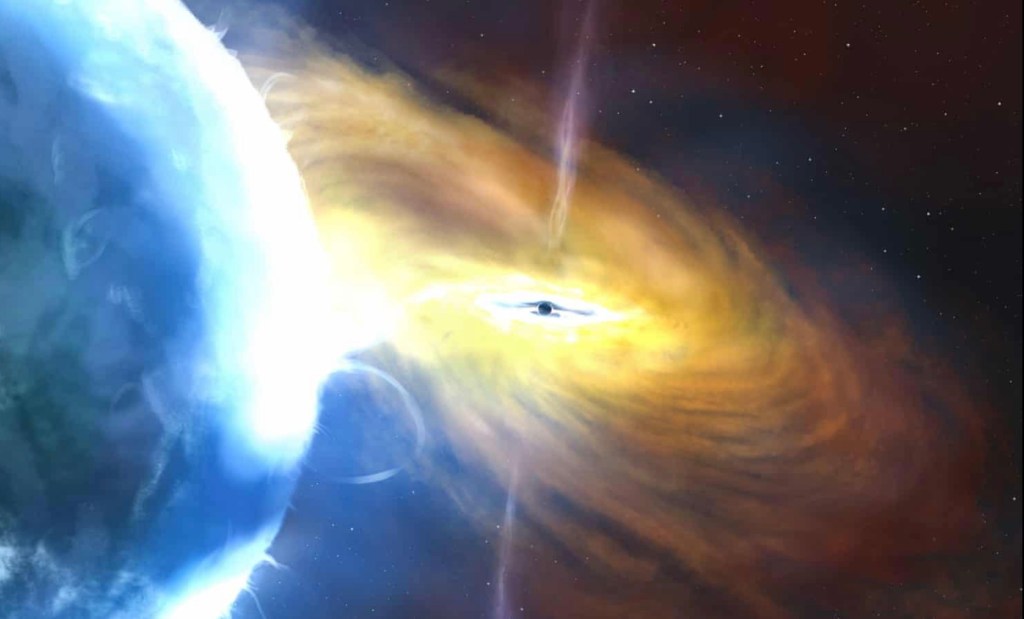
A NASA mission has observed a supermassive black hole pointing its highly energetic jet straight toward Earth. Don’t panic just yet, though. As fearsome as this cosmic event is, it’s located at a very safe distance of about 400 million light-years away.
Superconductors are materials that allow electrical current to flow with no resistance, a property that would revolutionize power grids where energy is lost in transmission as well as advance fields such as computing chips, where electrical resistance acts as a speed limit.
The hallmark of science is replicability. I.e., can two independent teams of researchers, using similar means, methods, and materials in completely different settings, replicate the findings of the original team?
So…
Researchers from at least three Chinese universities have in recent days said they produced versions of LK-99 with varying results. One team from the Huazhong University of Science and Technology posted a video purporting to show the material levitating over a magnet, which is important because true superconductors can float over a magnet in any orientation, without spinning like a compass.
But…
…another team, from Qufu Normal University, said they did not observe zero resistance, one of required characteristics of a superconductor. A third, from the Southeast University in the eastern Chinese city of Nanjing, said they measured zero resistance, but only at a temperature of 110 Kelvin (-163 degree Celsius).
And…
The possible bad news for LK-99 is that the superconducting field is full of materials that hold promise at first but fall apart under scrutiny. Researchers even have a handy name for them — unidentified superconducting objects.
A.k.a “USOs.” As the linked article points out, plenty of smart, hardworking researchers have claimed to have found a “superconductor,” but then their claims simply fall apart under scrutiny.
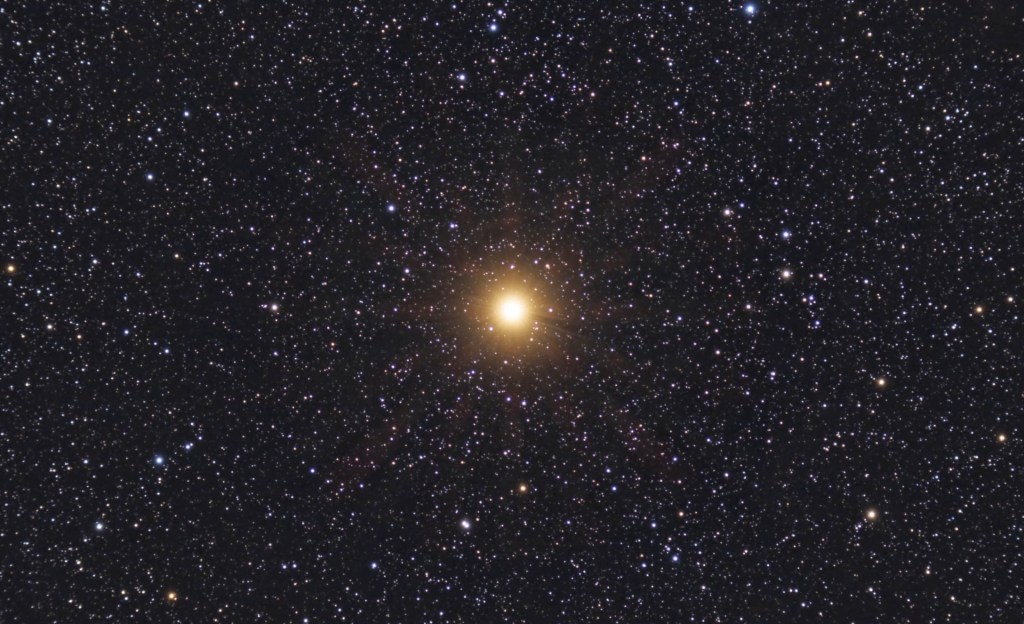
Betelgeuse, the closest red giant to Earth, has long been understood to move between brighter and dimmer in 400-day cycles. But from late 2019 to early 2020, it underwent what astrophysicists called “the great dimming”, as a dust cloud obscured our view of the star.
Now, it is glowing at 150% of its normal brightness, and is cycling between brighter and dimmer at 200-day intervals – twice as fast as usual…It is currently the seventh brightest star in the night sky – up three places from its usual tenth brightest.
Betelgeuse is the closet red giant Star to our solar system, one of the shoulders of the Greek constellation of Orion.
The cultural information in the linked article was actually more interesting than the phenomenon observed. For instance, the fact that an Aboriginal people in Australia saw it long before the Greeks did was something I didn’t know.
And that the Greek name comes originally from the Arabic “bat al-jawzāʾ” meaning “giant’s shoulder.”
And all three cultures saw the star as connected with fire held by a giant hunter of some sort.
And so have ancient Babylonians, Egyptians, and probably everyone else, too. We just can’t help personifying even the stars.
The kicker?
When it does eventually explode, it could – over the course of a week – grow so bright that it will be visible during daylight, and cast shadows at night.
Now that’s something I’d like to be around to see. Hmm. If only I could manage to live for another 10- to 100,000 years…
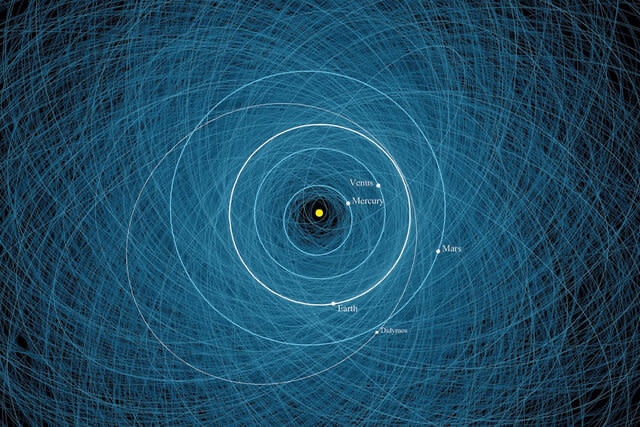
Of all the asteroids they modeled, the one with the largest risk of impact was a kilometer-wide asteroid known as 1994 PC1. Over the next thousand years, the probability that 1994 PC1 will cross within the orbit of the Moon is a paltry 0.00151%, hardly worth worrying about.
Thanks to Glen Hill over at Engagin’ Science (formerly Scientia, which apparently was far too Latin- and science-esque for search engines to handle) for bringing this (not-so Earth-shattering) info to my attention.
Sorry, folks. Hollywood was once again wrong (sigh).
The word has just come in that a fellow traveler has set up his own blog about science.
It’s called Science.
(In Latin, Scientia.)
Glen is a good friend of mine, and not only is he a good scientist, he’s also a good writer. His avowed goal is to raise science literacy and share his love of science with the world.
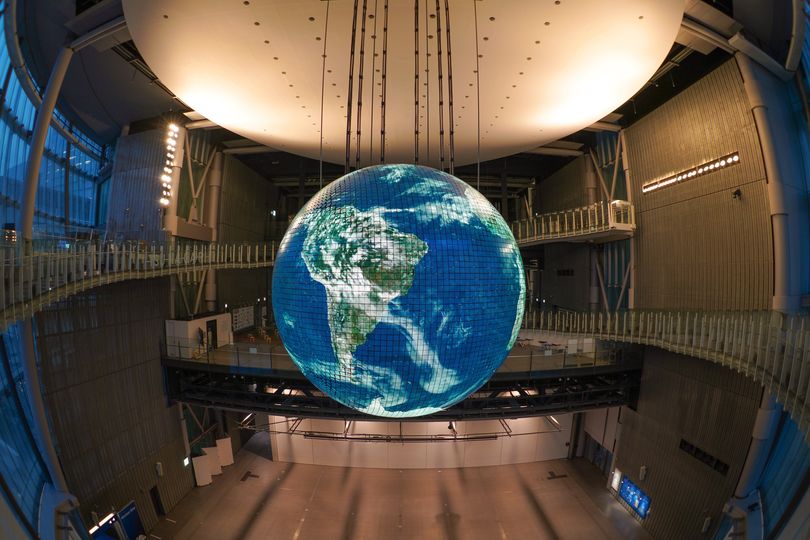
We may even steal posts from each other from time to time. Or photos (like the one above ⬆️🌏).
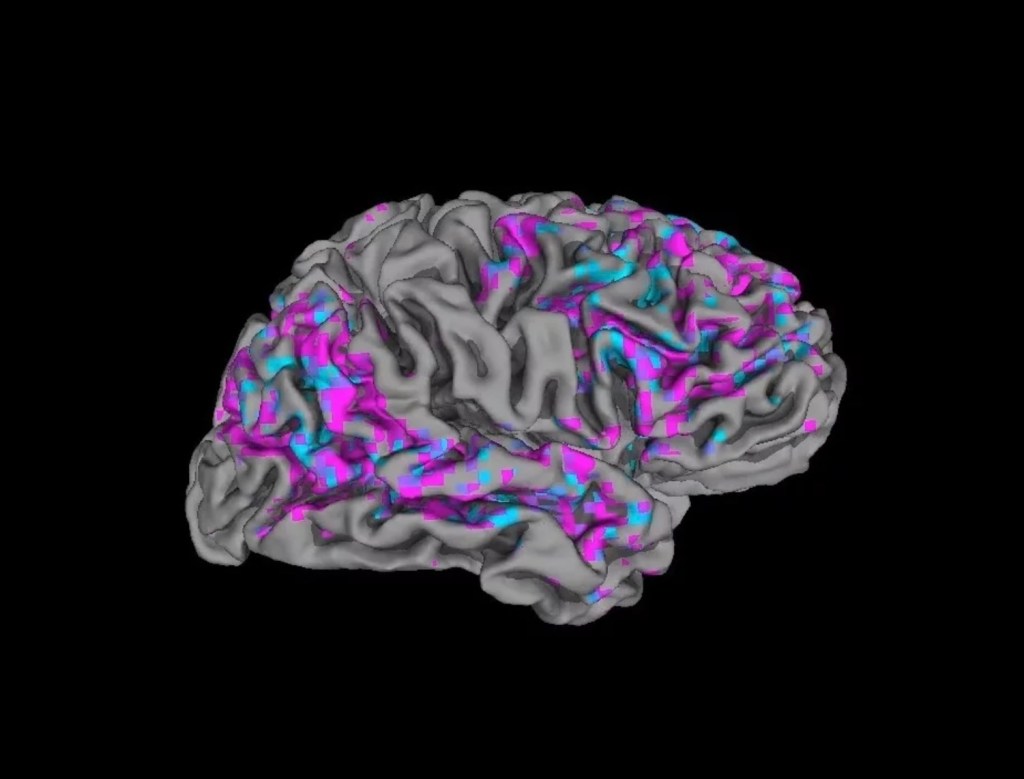
While not perfect, this is some seriously scary stuff.
FWIW the researchers themselves did recognize this…
Although it’s nowhere near being able to decode spontaneous thoughts in the real world, the advance raises concerns that, with improvement, the technology might mimic some type of mind reading. “Our thought when we actually had this working was, ‘Oh my God, this is kind of terrifying,’” Huth recalls.
Participants have to consent to being “read,” and there are ways to prevent the software from figuring out even the “gist” of what they were thinking.
Still, imagine if some nefarious criminal group (or governmental agency, if there is a difference) decided to force someone to consent to have their thoughts read.
Long distance.
Permanently.
It’s getting harder and harder to distinguish scifi from reality.
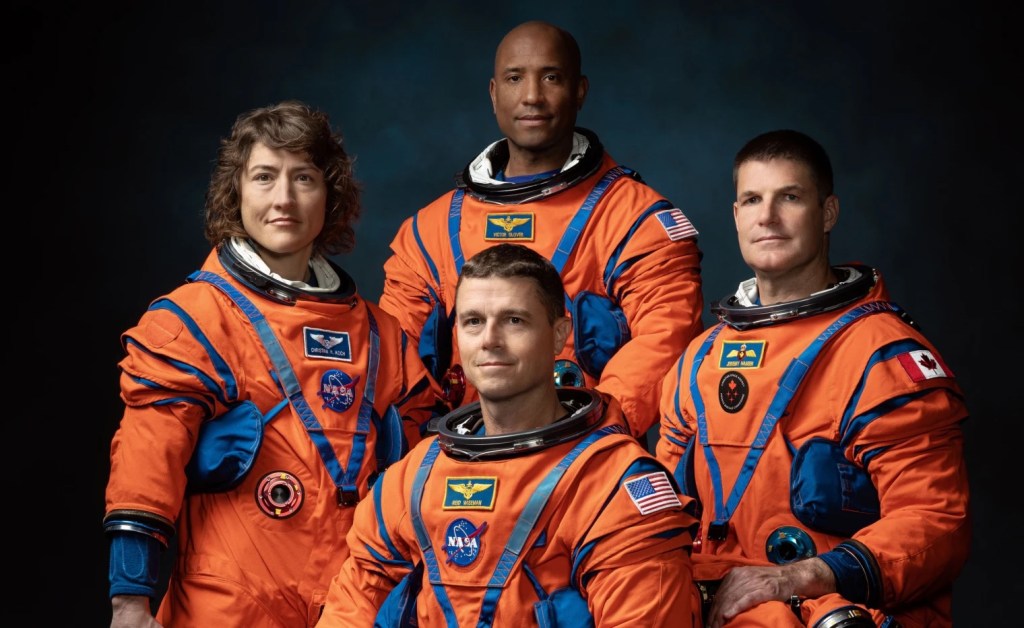
The astronauts will be the first humans to fly in the vicinity of the moon in more than 50 years. They will also be the first to launch aboard NASA’s next-generation megarocket and Orion space capsule. The crew will not land on the moon but will swing around the celestial body, testing the performance of the Orion spacecraft, before returning to Earth.
Mercury is a planet that just doesn’t make sense. It’s incredibly small yet hosts a relatively massive core. Mercury is so strange that astronomers have not been able to explain its properties with simulations of the solar system’s formation. But now, researchers have found an important clue, and Mercury’s weirdness appears to be the fault of the giant planets.
Basically, Mercury is nearly as dense as the Earth despite being less than 6% the size. This is due to the gas giants in our solar system yanking material (“planetesimals” and protoplanets) and ejecting it from the solar system, leaving Mercury with very little material left to form itself.