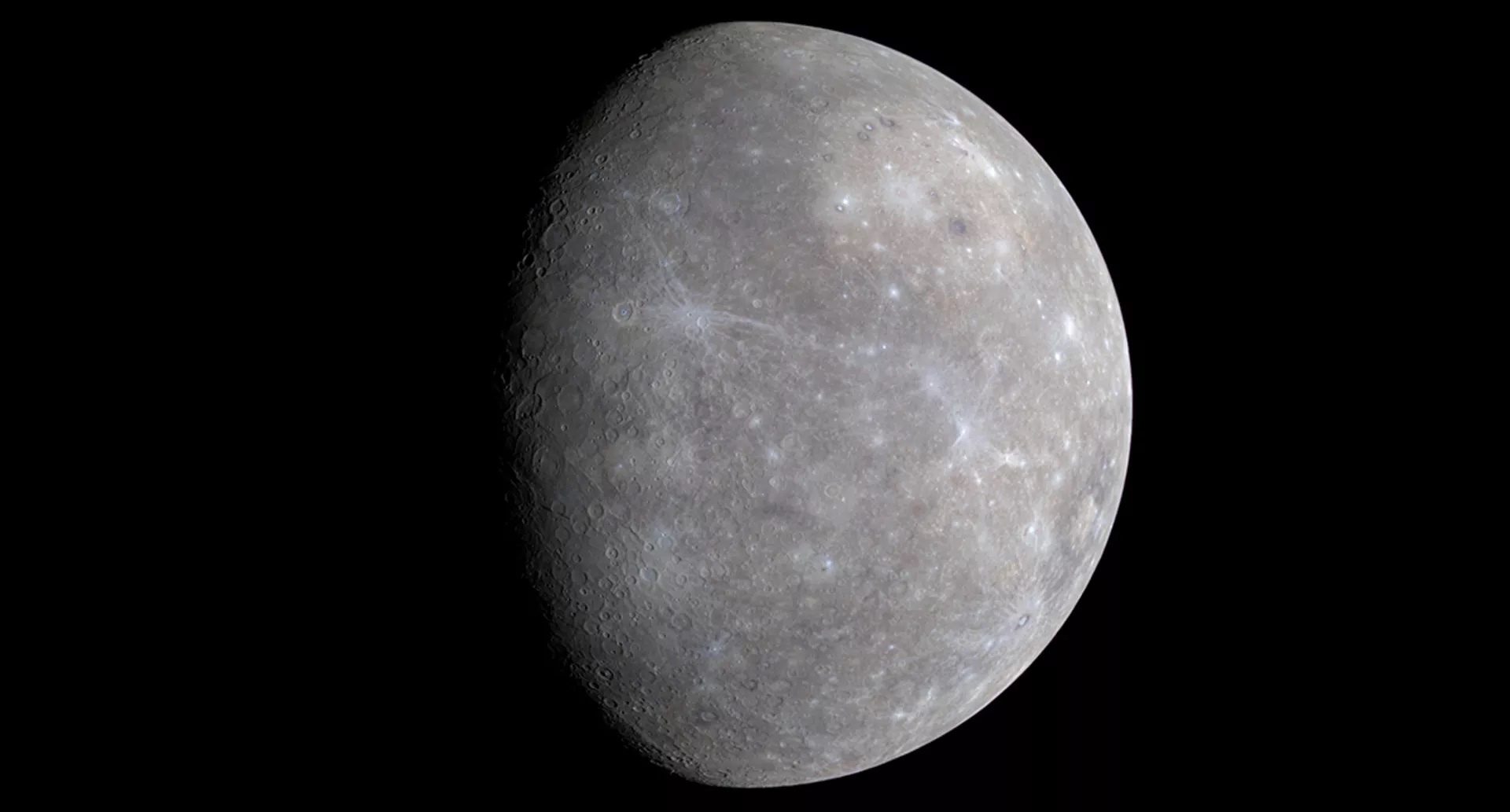
Mercury is a planet that just doesn’t make sense. It’s incredibly small yet hosts a relatively massive core. Mercury is so strange that astronomers have not been able to explain its properties with simulations of the solar system’s formation. But now, researchers have found an important clue, and Mercury’s weirdness appears to be the fault of the giant planets.
Basically, Mercury is nearly as dense as the Earth despite being less than 6% the size. This is due to the gas giants in our solar system yanking material (“planetesimals” and protoplanets) and ejecting it from the solar system, leaving Mercury with very little material left to form itself.
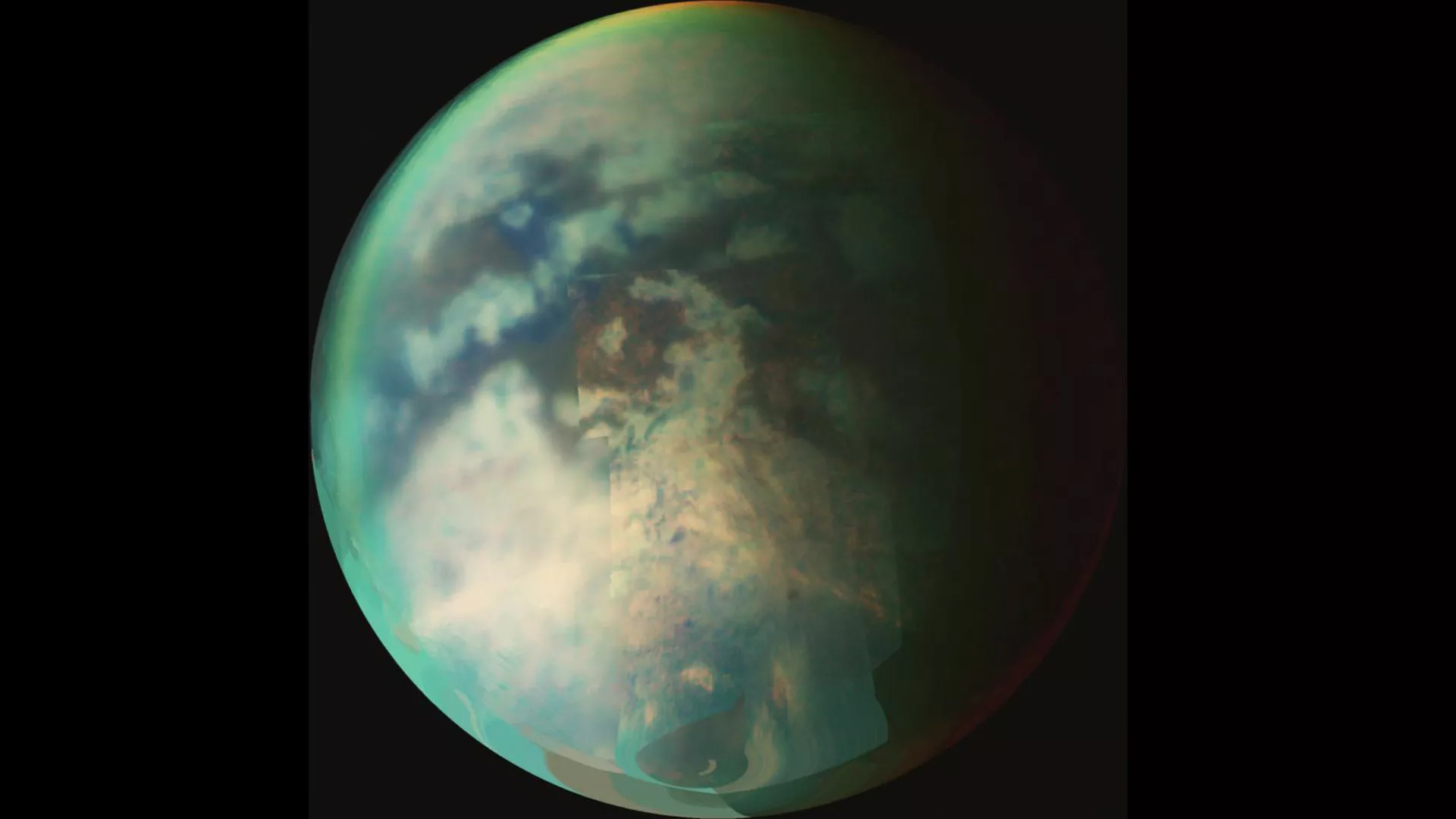
It is this subsurface ocean, or rather its interaction with the ice shell that covers it, that a team of researchers led by the Catholic University of Louvain (UCLouvain) in Belgium hope to better understand. More specifically, they wish to understand how the ocean’s depth and the pressure exerted by the icy shell on the underground water body influence the formation of tidal motions and currents inside of it.
When I first heard of “Attack on Titan,” I was disappointed to learn that it didn’t take place actually on Titan. (The title in English is a mistranslation. It should be “Attack of the Titans” or “The Titans Attack” or even “Attacking Titans,” depending.) In any case, it’s a disgusting manga/anime with nothing to do with the icy moon of Saturn. Except for the name. And even that’s a misuse (they should have used “giant” as the storyline is very loosely based on Ymir and the frost giants of Scandinavian myth).
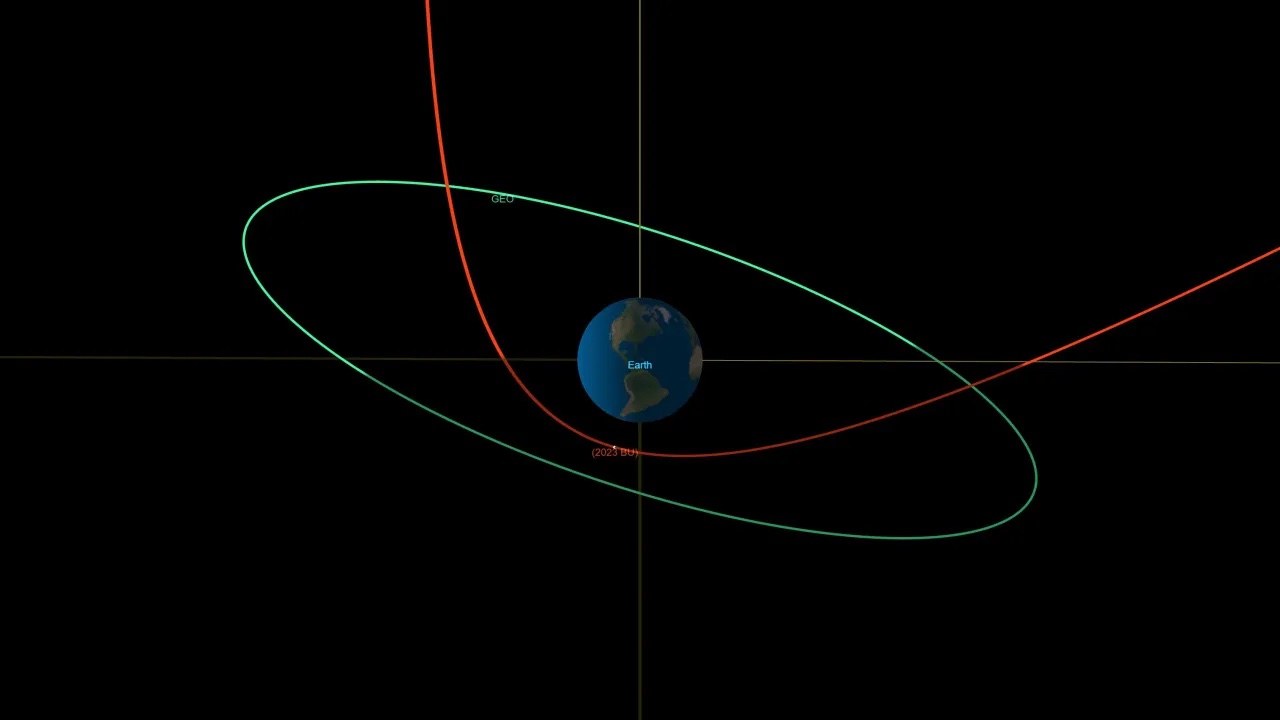
An asteroid is on its way to Earth, but don’t worry – the end is here Not here. The asteroid, named 2023 BU, is about the size of a van and is expected to miss our planet during Thursday’s flyby. However, according to a NASA scientist, it will be “one of the closest approaches of a known near-Earth object ever recorded.”
Since the Hayabusa2 returned with the sample from the Ryugu asteroid in December 2020, several important discoveries have been made – most notably analyzes confirming the presence of substances thought to be the building blocks of life on the asteroid, such as liquid water and organics fabrics.
Hayabusa-2 took several years to land on Ryugu (literally “Dragon Palace”), pound out just over 5 grams of asteroid material, and bring it back to Earth (landing in Australia in late 2020).
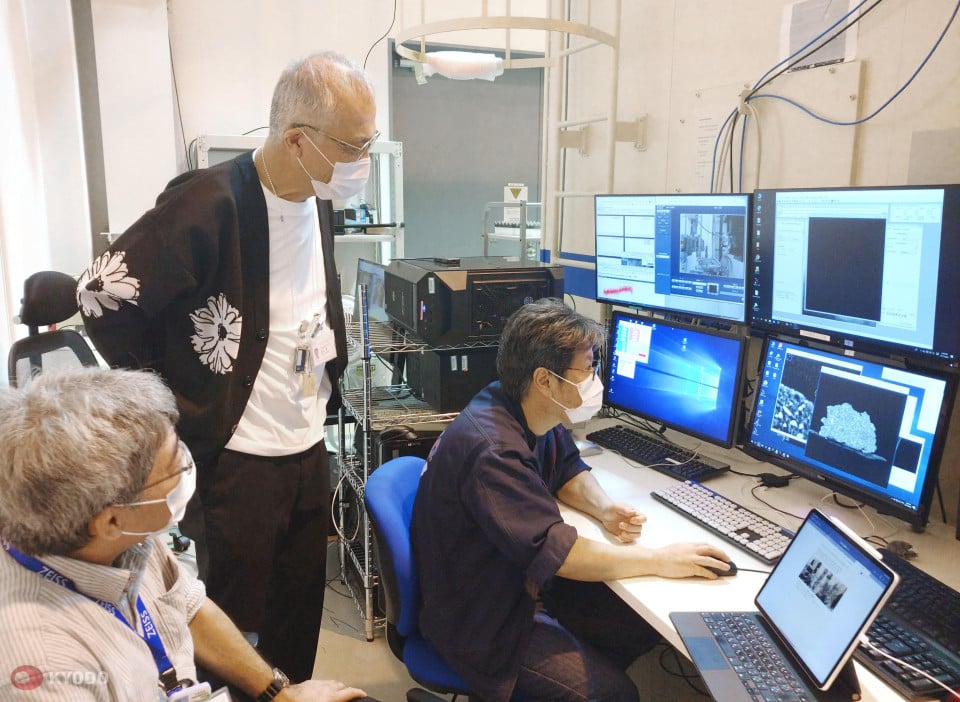
NASA scientists have confirmed not just frozen water but liquid — inside crystals called pyrrhotites. JAXA scientists (pictured above with Prof Tsuchiyama of Ritsumeikan University, my main employer!) continue to check the density of the samples.
The water is similar to the carbon dioxide-laden water of hot springs. The research teams have already discovered over 20 amino acids, the basic protein building blocks of carbon-based life.
Another theory called “panspermia” proposes that a key mineral (boron) missing on early Earth came in an asteroid from Mars. ☄️ Hmm. Did Mars produce asteroids? Or more like asteroids hit Mars and broke off lots of tiny fragments? That somehow survived the journey to Earth?
Seems a little unlikely. But there is now evidence that at least some proteins came from space rocks.
So, sorry, Ridley. This isn’t how it happened. Cool movie, though.
Though definitions sometimes differ, cislunar space generally refers to the space between Earth and the moon, including the moon’s surface and orbit. Any nation or entity that aims to establish a presence on the moon, or has ambitions to explore deeper into the solar system, has a vested interest in operating in cislunar space, either with communication and navigation satellites or outposts that serve as way stations between Earth and the moon.
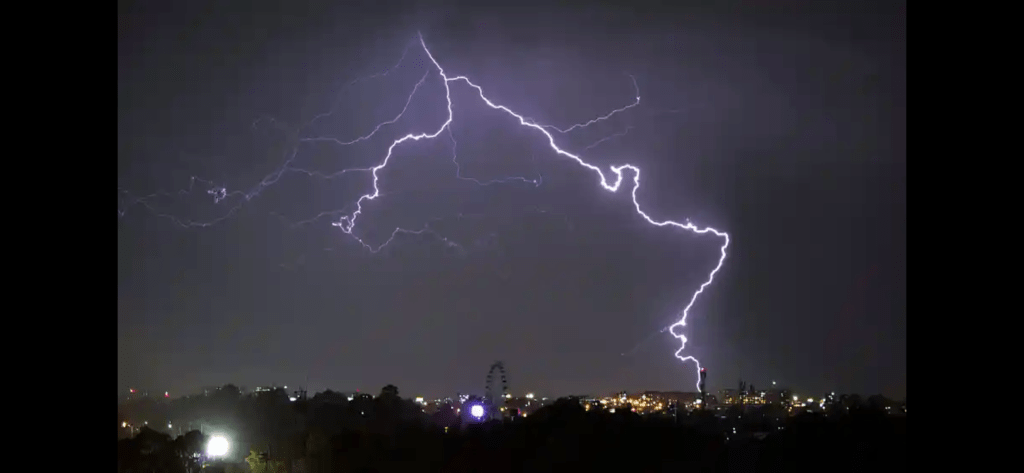
The feat, which involved firing powerful laser pulses at thunderclouds over several months last year, paves the way for laser-based lightning protection systems at airports, launchpads and tall buildings.
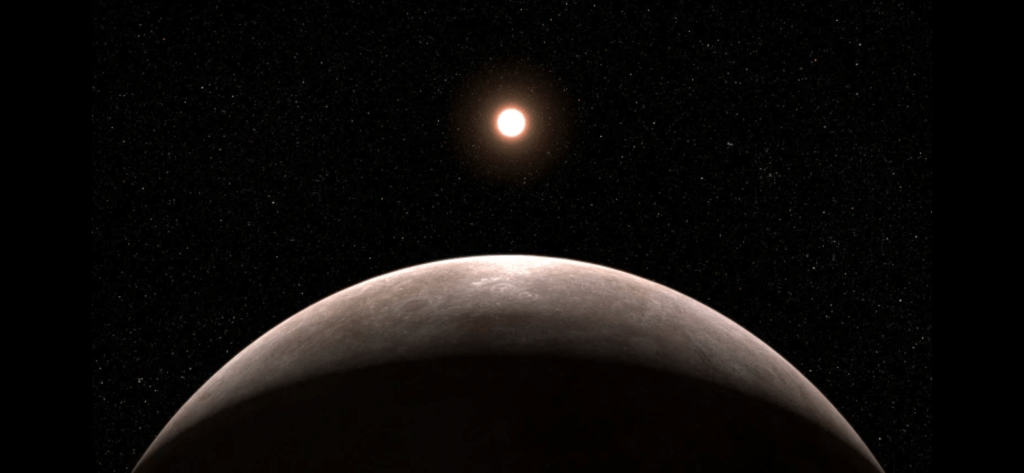
The finding demonstrates how the observatory could be used to search for potentially habitable planets in the cosmos and examine the chemical makeup of their atmospheres.
LHS 475b is 41 light years away, orbiting a red dwarf star in the Octans constellation (one of a few “modern” constellations only seen in the deep southern hemisphere).
Webb can even detect the presence of atmospheres, though given LHS475b has an orbit of two days and is a “few hundred degrees warmer than Earth,” it’s unlikely it’ll find much with this exoplanet.
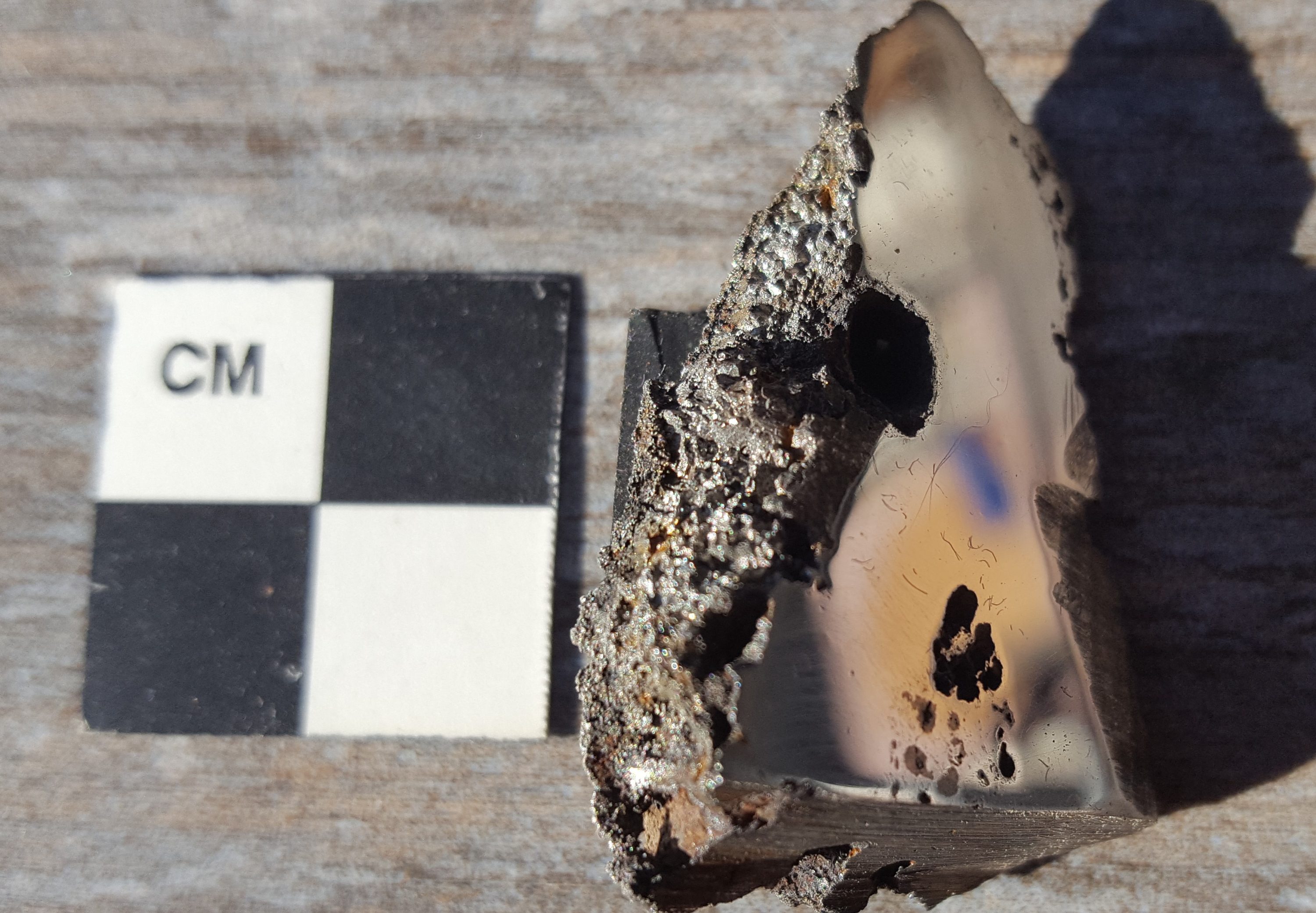
Canadian researchers said the rock was found in rural Somalia two years ago, but locals believe it is much older.
They call the stone Nightfall, and say it is documented in poems, songs and dances that stretch back five generations. It is used today to sharpen knives.
The “new” rock is apparently a meteorite that fell to Earth at least 100 years ago (or more, depending on how you define a “generation”). The two newly-identified minerals are being called “elaliite” (after El Ali, Somalia) and “elkinstantonite” (after NASA planetary evolutionary expert Lindy Elkins-Tanton).
And there’s still one more as-yet-unidentified mineral in the 70-gram rock fragment at the U of Alberta (the original is about 15 tons, and is reported to be the 9th largest such meteorite to have survived entering the Earth’s atmosphere). These three minerals evidently do not exist naturally on Earth. Makes you wonder how many other such minerals are still floating around in space.
And of course, how they might be used to make incredibly strong yet flexible spacecraft materials. (FWIW NASA was already talking about “new” materials such as carbon nanotubes and self-healing piezoelectronic “skins” some twenty years ago…)
Now, maybe it’s just me, but I have a feeling that a 15-ton rock falling into the desert would have raised all sorts of hell. At least locally. Nothing like a 143,000 ton rock, of course. Is there really no record of this thing falling out of the sky? Maybe it’s time to talk to non-European communities and to take their oral legends a bit more seriously.





 M Thomas Apple Author Page