Hazardous asteroid!? Call out Bruce Willis!

No worries. “Close to Earth” in this is 1.25 million miles. But it’s a great chance to find out more about the early solar system.

March 22, 2021
Hazardous asteroid!? Call out Bruce Willis!
No worries. “Close to Earth” in this is 1.25 million miles. But it’s a great chance to find out more about the early solar system.
October 30, 2020

Even more intriguing, the asteroid’s metal is worth an estimated $10,000 quadrillion (that’s 15 more zeroes), more than the entire economy of Earth.
https://www.usatoday.com/story/news/nation/2020/10/29/metal-asteroid-psyche-nasa-hubble-images/6069223002/
Leave it to USA Today—the paragon of journalistic integrity and unvarnished truth reporting—to grossly exaggerate “value.”
Imagine if someone dumped several hundred thousand tons of nickel and iron on the market?
It would immediately make nickel and iron worthless. Simple supply and demand. So it’s not monetary value that is important.
How do we create vehicles and domiciles for a space-faring future while avoiding the exorbitant cost of getting them into space in the first place? It’s the cost and weight of rocket fuel that’s the issue.
Solution: Build everything in space. No need to bring anything back to Earth.
Not needed now. Maybe someday.
October 21, 2020
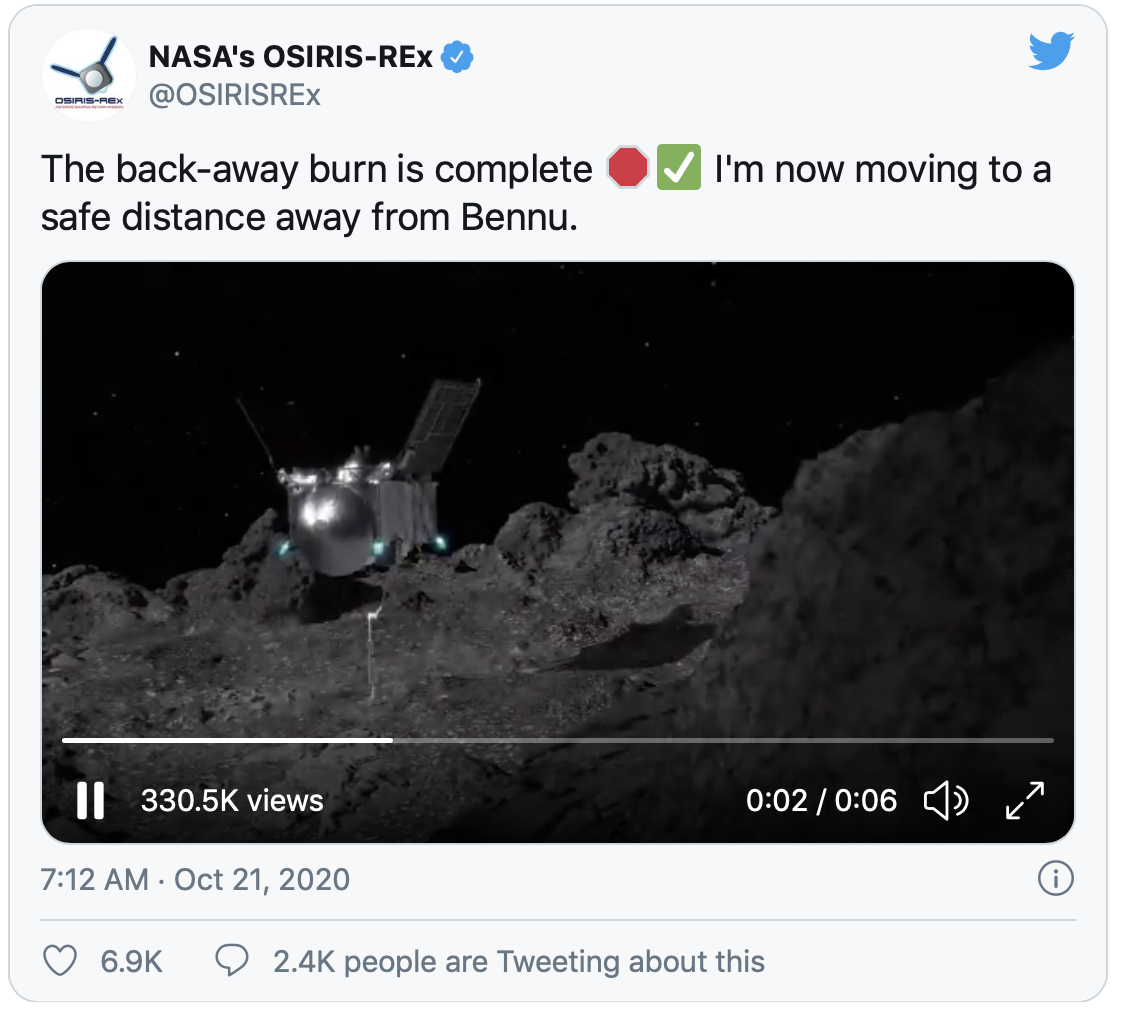
“The spacecraft did everything it was supposed to do.”
https://www.theguardian.com/science/2020/oct/21/nasa-osiris-rex-spacecraft-lands-on-asteroid-bennu-in-mission-to-collect-dust
Um. OK. That’s some confidence in your own project you got there, dude.
Now all we have to do is wait a couple of weeks to find out if it actually grabbed anything!
October 20, 2020
Researchers understand it to be what they call a carbonaceous asteroid, meaning its rocks still retain a lot of the chemistry that was present when the Sun and the planets came into being more than 4.5 billion years ago. Hence the desire to bring some of its material home for analysis in sophisticated Earth laboratories.
https://www.bbc.com/news/science-environment-54592163
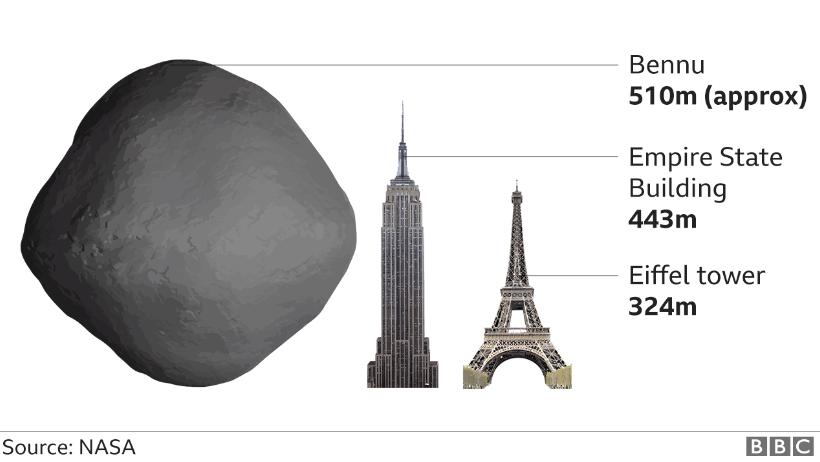
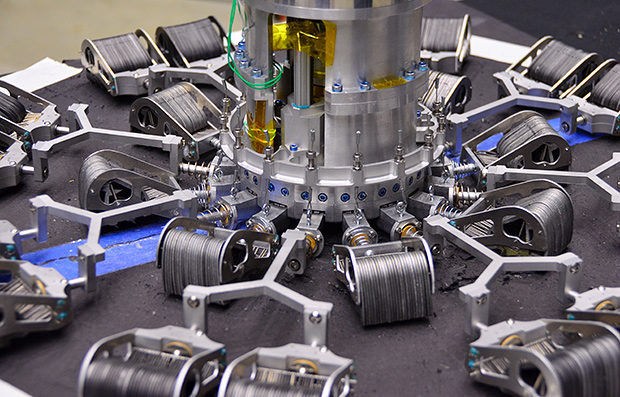
If it’s a spinning top, I don’t see how showing it in comparison to the Eiffel Tower will help us understand how big it is…
Then again, usually media compare things like this to a football field (US) or a football pitch (UK). Or they say things like “as long as [insert type of moving vehicle here] end to end.”
Honestly, just say “510 m3” and leave it at that. All we care about is what the probe will do: Vacuum up and bring back at least 60g of materials from the beginning of the solar system.
Now how about THAT, Hayabusa-2?
October 15, 2020
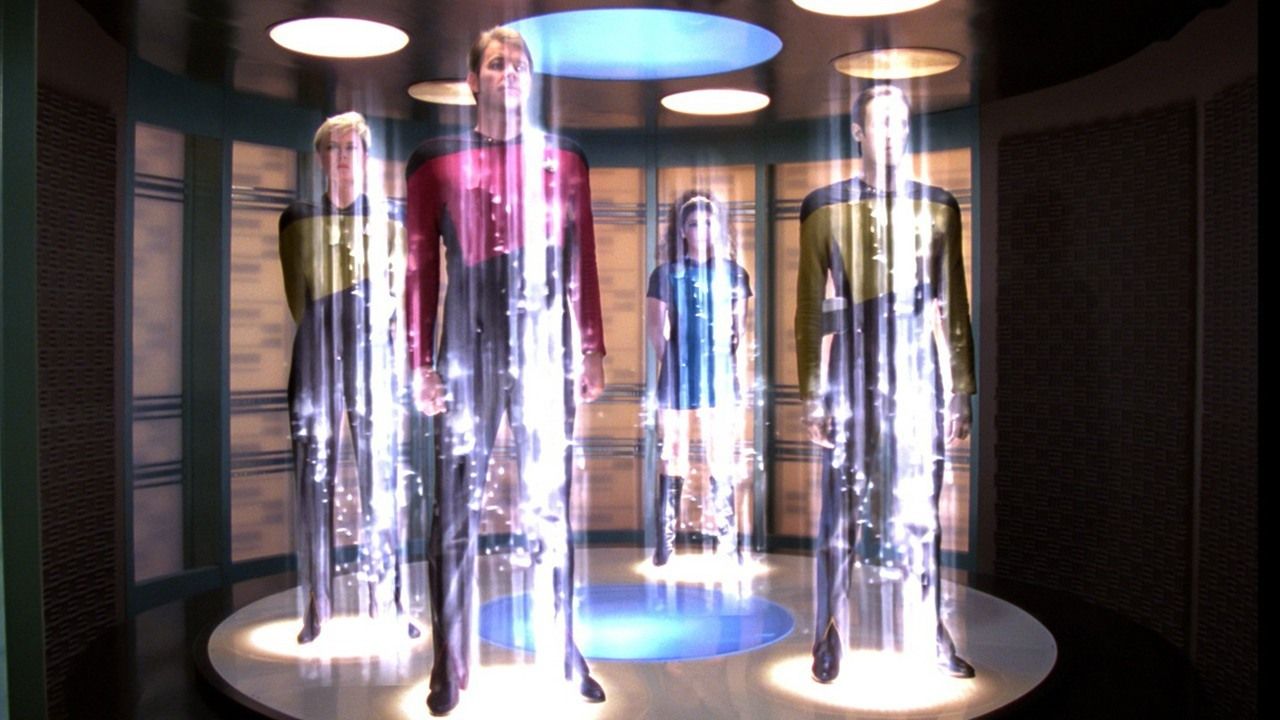
Some would argue that having one’s “molecules scrambled,” as Dr. McCoy would put it, is actually the surest way to die. Sure, after you’ve been taken apart by the transporter, you’re put back together somewhere else, good as new. But is it still you on the other side, or is it a copy? If the latter, does that mean the transporter is a suicide box?
https://arstechnica.com/gaming/2017/09/is-beaming-down-in-star-trek-a-death-sentence/
An old article (2017, whose impetus was the imminent release of ST: Discovery) but a good one.
Is the copy of you, you? Or is it a brand new person with the same memories? Would it have ANY memories? Would it have the same consciousness? (Or ANY consciousness?)
Of course, you can always stick to the “David Brin Theory” of teleportation: “Some dude in the future will figure this all out.”
Lazy writers!
(This is why, in my novel, I stick to quantum teleportation of inanimate objects only. That includes quantum communication relays, chunks of asteroids…miniature nuclear bombs…you know, “realistic” things like that.)
And, yes, quantum teleportation is real. Just very, very tiny. For now.
August 29, 2020
twitter.com/theplanetaryguy/status/1298728036305719298
Well, now you know. 🤖
August 2, 2020

The Airbus spacecraft will have to manoeuvre itself into a position to capture these samples that will be packaged inside a football-sized container.
After ingesting this container, the satellite must then prepare it for return to Earth.
This means not only shipping it across hundred of millions of km of space, but also putting the football inside a re-entry capsule that can be dropped into Earth’s atmosphere to land in an American desert.
This would be, indeed, a feat of engineering as well as a first in interplanetary exploration.
But I wouldn’t go so far as to call it an “interplanetary cargo ship.” Unless the intention is to maintain it as a permanent link between research locations (i.e., some kind of permanent orbitor stationed above the Jezero Crater) and research facilities on Earth (or the Moon, or the International Space Station).
Political will is needed in addition to the enormous funding. Semi-privatization, anyone?
https://www.bbc.com/news/science-environment-53575353
July 4, 2020
“I thought a person living (in the condo) above knocked down a shelf,” wrote one Twitter user, while another said, “I thought my child sleeping on the second floor fell out of bed.”
Granted, the embedded video is only understandable to those who speak Japanese, but even if you don’t, the footage is still cool.
(The sound people heard was likely the result of a small meteorite — about 1 meter wide — breaking the sound barrier as it disintegrated.)
https://japantoday.com/category/national/shooting-star-seems-to-have-exploded-above-tokyo?
June 30, 2020
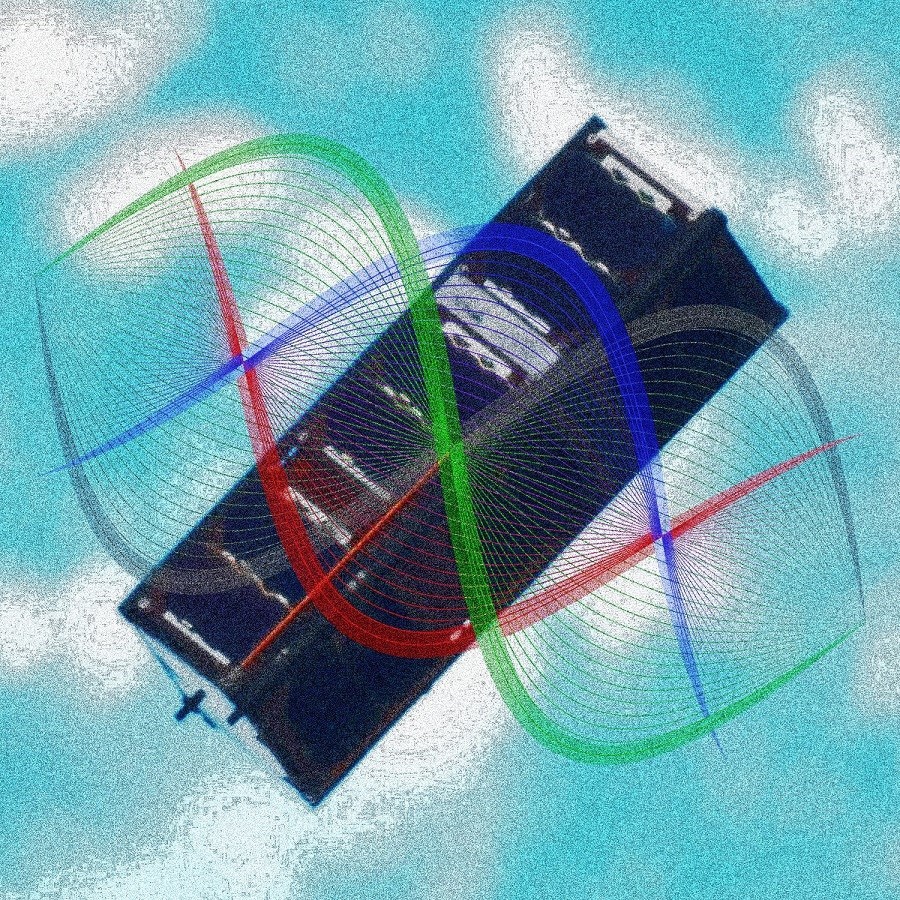
“In the future, our system could be part of a global quantum network transmitting quantum signals to receivers on Earth or on other spacecraft,” says Aitor Villar, lead author of the study. “These signals could be used to implement any type of quantum communications application, from quantum key distribution for extremely secure data transmission to quantum teleportation, where information is transferred by replicating the state of a quantum system from a distance.”
OK, OK, so it’s not the first time quantum entanglement has been demonstrated. But it sure is the smallest. Only 20 cm by 10 cm!
Now we only need a few thousand of these things and a way of somehow making tangled photons actually carry encrypted messages…
(Sorry, thinking of the SF novel I should have published by now…still figuring out the last two chapters!)
See more at New Atlas (note: I seriously doubt the CubeSat actually looks like that picture when it’s doing its thing).
June 17, 2020

The researchers looked at Phobos, which loses height as it interacts with Martian gravity over time. Eventually, its orbit will be too low and Mars will essentially rip it into pieces that form a ring around the planet. It’s estimated that this will happen within 50 million years.
So say goodbye to fear, but dread may stick around a while longer…
https://amp.cnn.com/cnn/2020/06/03/world/mars-rings-moons-scn/index.html
Writing Fanfiction in the worlds of Tolkien and Beyond!
Learning more about our place in the universe...
Best Tech Gadgets Advise
Marvel Comics Reviews, Previews and News
Writing blogs is miracle I am a writer blogger and my site mission is to give information on maximum information to audiences
Reflections of an inquiring retiree ...
Simple ideas to make every room feel stylish and welcoming
Rock & Metal Reviews That Hit Hard
Short stories | Reflections | Poetry
Read. Reflect. Grow
 M Thomas Apple Author Page