To find out that the outsourced company in charge couldn’t even be bothered to test the product. They just happily pocketed $72 million of taxpayer dollars and laughed all the way to the bank.
It’s been several months since I last posted…too much work and no play!
Until this past Sunday. Whew.
After a morning lecture about ancient Japanese myths and “deliberately forgotten” kings (maybe), I was grateful to be able to take a quick power nap…
…so that the family could go up a nearby mountain and watch the Geminid meteor shower. (By “mountain,” I mean about 640m/2100ft.)
After a brief lecture/quiz by a staff member at our local culture center, we stayed outside, lying flat on the ground, for over an hour. And, yes, it was cold, despite the sleeping bag and thermal underwear. I saw three shooting stars. Not nearly as many as I’d hoped.
After we got home and took evening baths, the kids went out on our second-floor balcony and found out that the night view was even better at home than on top of a mountain! At least they knew what to look for, thanks to the culture center event.
And by “meteor,” I mean the size of grains of rice. Look to the eastern sky, just a bit to the northwest of Orion, to find the Twins (Castor and Pollux in Greco-Roman mythology).
For more on the origins of the Geminids, check out the JAXA mission to Phaeton, the parent body asteroid. It’s DESTINY!
In two separate papers published Monday in the Astrophysical Journal Letters, astronomers zeroed in on the TRAPPIST-1 system, which consists of seven rocky planets that orbit a single star. Both studies outlined initial results from observations by NASA’s James Webb Space Telescope, suggesting that one planet in particular, known as TRAPPIST-1e, may have a nitrogen-rich atmosphere like Earth’s, though follow-up studies are needed to confirm the discovery.
Trappist 1e is in the “Goldilocks zone” in orbit around its star (i.e., not too cold, not too hot, just right). However, the Webb telescope can’t determine whether its atmosphere has any carbon dioxide, hydrogen, or oxygen, only nitrogen. Yet nitrogen is a clear sign that life is possible, because without nitrogen, DNA and other proteins are not possible. Of course, it could be simply a whole lot of microbes. Or even just ammonia.
Closer to home, the Mars rover Perseverance has found evidence of life in the distant past. Maybe. It found evidence that certain rock features may have happened because of microbes.
May.
That’s how science works, folks. A whole lot of maybes.
Note that this is not from new data. It’s a re-analysis of what Voyager 2 sent back decades ago. Basically, it just had a bad day, with magnetic storms screwing up the scan.
Still…
There could be moons there that could have the conditions that are necessary for life, they might have oceans that below the surface that could be teeming with fish!
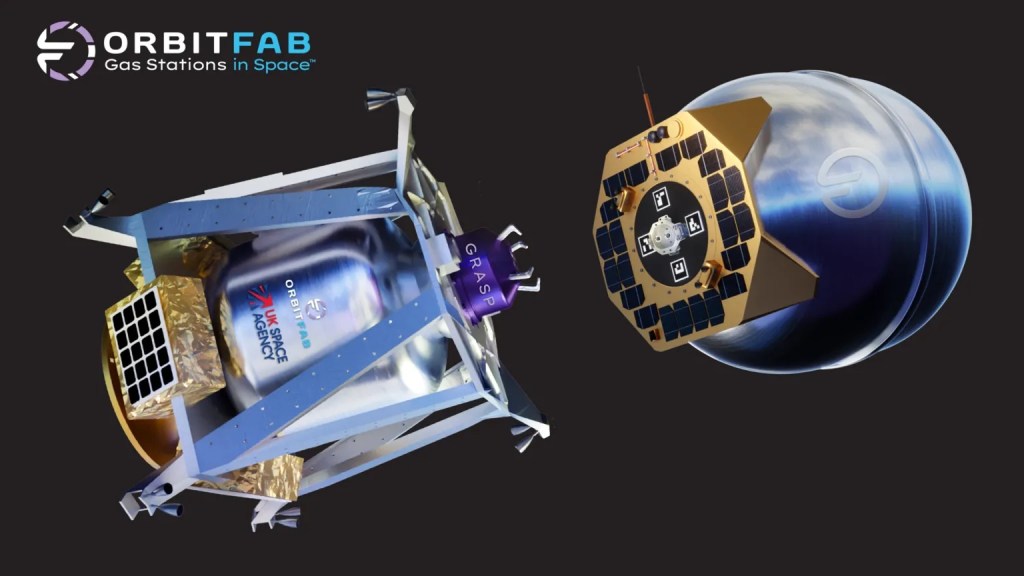
Jas Tiruvuru, business development manager for Orbit Fab in the UK and Europe, said the company was aiming to successfully demonstrate the technology in space by 2027.
“This will essentially be the first ever satellite to satellite refuelling demonstration funded here in the UK,” she said.
“Once we’ve proven that we can refuel to two spacecrafts we’ll be able to unlock a huge market potential.”
You know, maybe it’s just me, but I think 2027 may be a little optimistic. Just like the figure given in the article for how much the satellite sector will be worth in the future.
Aren’t there too many satellites already?
I’d like to see how this would help us colonize the solar system.
Actually, I’d like to see how they plan to get fuel up there in the first place.
Maybe my novel’s idea of using certain moons of Jupiter or Saturn as giant space gas pumps might help? 🪐
The Taurids meteor showers get their name because the shooting stars appear to stream from a point in the sky where the Taurus constellation is located. Taurid meteors can be seen from pretty much anywhere on the planet except the South Pole.
I waited too long to post this! The meteor shower peaked last week, but might still be visible. The Orionids ended already (they appeared to fall from, you guessed it, the constellation of Orion, while the Taurids came from Taurus.
If you can’t see them, not to worry: the Leonids are on their way from next week (falling from, right again, Leo).
Very imaginative, these names. At least it makes them easier to spot. ☄️
The scientists hope to learn about the asteroid’s surface composition and how fast it rotates, he said. Those observations could help researchers figure out its origin, which in turn could shed light on other asteroids, including ones that could be dangerous to Earth.
This is of course not the first “mini-moon” to have been discovered. These are wandering asteroids that get trapped briefly by Earth’s gravity well before being flung back into space.
Read the article for more information about the “school-bus sized” 2024PT5!





 M Thomas Apple Author Page