The link below includes a night sky in Montana, which makes little sense when the researchers were in Beijing and Honolulu…
“The first-generation star we observed has the potential to become the oldest star we have ever seen,” said Alexander Heger, a professor in the school of physics and astronomy at Monash University in Australia who was part of the research team. “It probably had only lived for 2 1/2 million years and then exploded.”
Oh, and it also was discovered to be 260 times the size of our own Sun…just as theorized.
More importantly, this involved scientists from three different countries (China, Japan, and Australia), sharing information and working together for science.
Imagine if that spirit of cooperation could be extended into other domains…
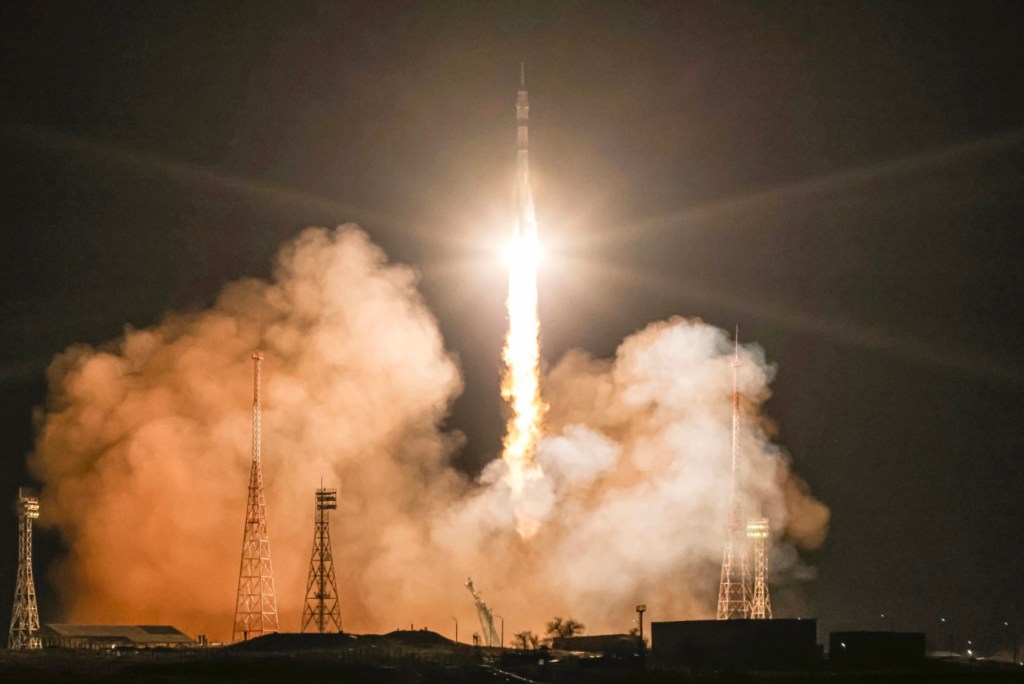
Until the new Soyuz pulls up, emergency plans call for Rubio to switch to a SpaceX crew capsule that’s docked at the space station. Prokopyev and Petelin remain assigned to their damaged Soyuz in the unlikely need for a fast getaway. Having one less person on board would keep the temperature down to a hopefully manageable level, Russian engineers concluded.
Though definitions sometimes differ, cislunar space generally refers to the space between Earth and the moon, including the moon’s surface and orbit. Any nation or entity that aims to establish a presence on the moon, or has ambitions to explore deeper into the solar system, has a vested interest in operating in cislunar space, either with communication and navigation satellites or outposts that serve as way stations between Earth and the moon.
Half of a dilithium crystal? (It’s a new type of crystal called “Chang’esite” (after the ancient Chinese moon goddess).
I should be posting another chapter from Bringer of Light, but I don’t feel like writing that right now, what with a humongoid typhoon slowing churning its way here.
China’s plan calls for setting up a permanently occupied base and a fleet of interplanetary craft. Probably it’s a good idea to first see whether it can meet its goal of landing people on Mars in 2033.
Of course, China is “willing to join hands with our counterparts and partners all over the world,” but it’s unlikely NASA, JAXA, ESA, and the UAE and other countries not named Russia will “cooperate.”
The next space race is here. Just wait until multinats actually decide asteroid mining is worth the risk and expense.
The inclusion of an ion propulsion system in a long-running, Earth-orbiting space station will give researchers a chance to test out the tech while astronauts are still close to home — and if it works as hoped, it could one day ferry explorers to Mars and even more distant destinations.
“When they did that design, they should have stopped and thought, ‘you know, that’s going to leave a big chunk of debris in orbit, we should change the design of the engine’,” McDowell says. “But they didn’t. This is real negligence.”
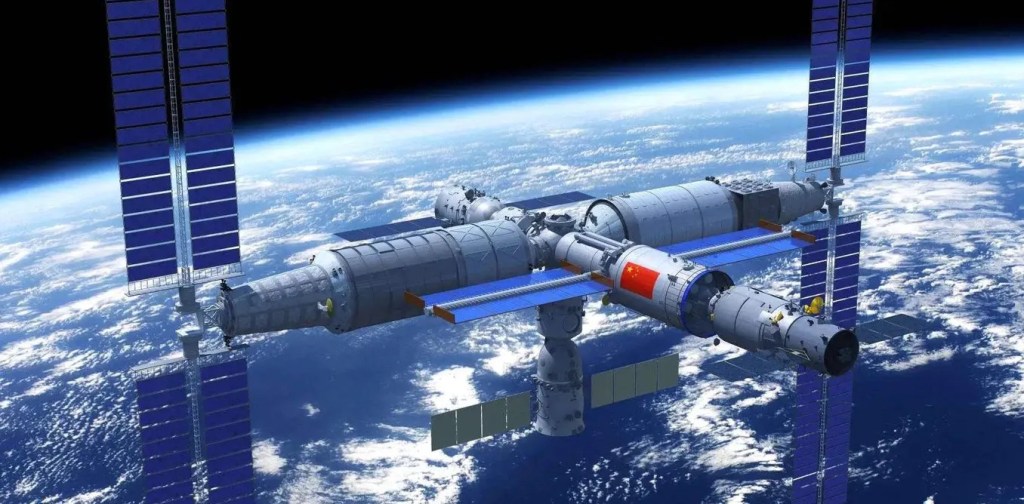
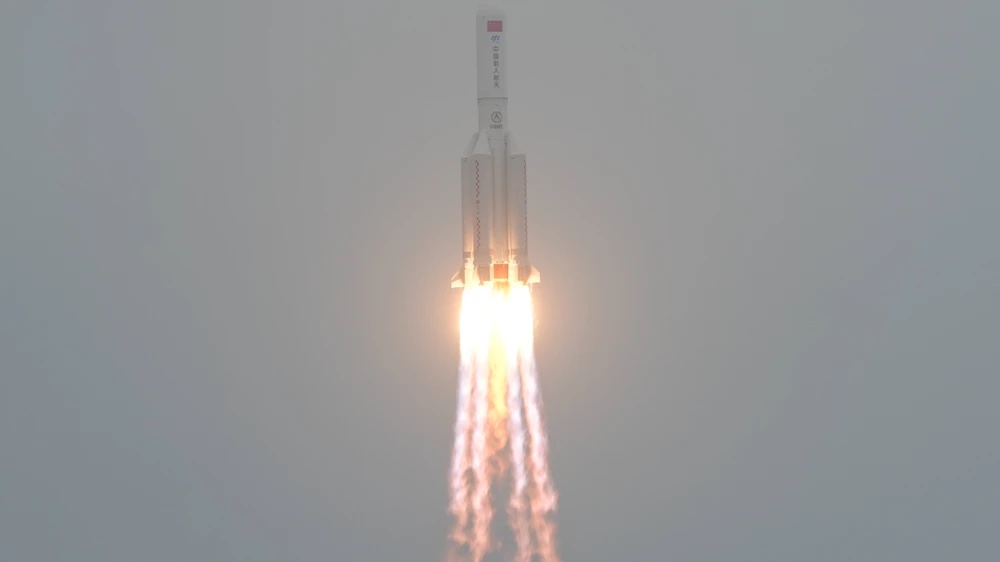
Four years ago, China’s first space station landed in the Pacific Ocean between Australia and Chile, after an uncontrolled reentry. China didn’t care.
Last year, pieces from a Long March 5B rocket landed in Cote d’Ivoire. They damaged buildings in two villages. China didn’t care.
This launch of the same rocket design could land anywhere from New York to New Zealand, covering a wide range of habitation. China doesn’t care.
On the other hand, once somebody in their government reads about the criticism by the scientific community, they’ll petulantly whine that this often happened in the 1960s, so that makes it OK for them to ignore rocket safety designs known for the past 30 years.
Maybe it’s technology they haven’t yet stolen from other countries.
As the self-acknowledged center of the known universe, the Middle Kingdom only cares what others think of it. Like a spoiled child that thinks it knows everything but fears it does not, China only reacts to its own mistakes by lashing out at others and disclaiming responsibility.
If you want to be respected as a superpower, you need to learn how to respect other countries and stop dumping your trash on them. Respect is not given, it is earned. China has done little to earn any respect by the scientific community.
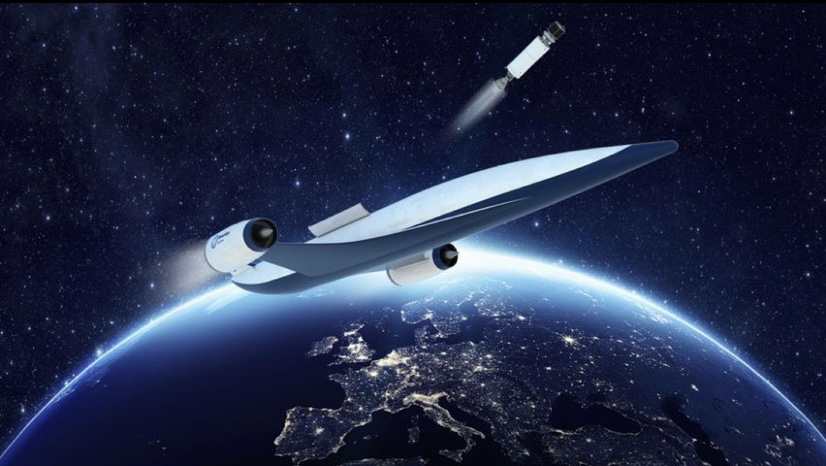
NASA ended the US’s interest in spaceplanes when it scrapped the shuttle fleet a decade ago.
But other space agencies and private companies in other countries are very much in the game. ESA, India, even the UK.
And, of course…
Whichever future the spaceplane does have, it will involve China. “We know very little about the launch [of China’s experimental spaceplane],” says Deville. “But it shows that China is serious about developing its spaceplane concepts.”
It’s a small step. It applies only to companies that are working with NASA; it pertains only to U.S. lunar landing sites; it implements outdated and untested recommendations to protect historic lunar sites implemented by NASA in 2011. However, it offers significant breakthroughs. It is the first legislation from any nation to recognize an off-Earth site as having “outstanding universal value” to humanity, language taken from the unanimously ratified World Heritage Convention.
The author believes this shows that “nonpartisan” desire to journey to space and preserve human heritage.
Hmm.
Well, I do agree with the assessment that it’s only a matter of time before the Moon is occupied by multiple political entities (China, India, Russia, the US, ESA…) and probably even a few private enterprises as well. Will the private company-sponsored missions agree to abide by a US law?





 M Thomas Apple Author Page