One main reason for landing at the Moon’s South Pole is that the presence of water would help us build permanent settlements…
This region on the moon is an attractive place for humans to build a lasting presence due to the fact that water ice is located underfoot. Future moon-dwellers can potentially tap into that water for consumption, or even to create rocket propellant, instead of depending on water shipped from Earth.
Another reason has now been found…iron, manganese, aluminum, titanium…and “surprisingly” sulfur. Why should they be surprised? It’s already been established that the Moon has ice, and sulfur forms every time hydrocarbon and sulfates combine. Plus sulfur obviously results from volcanic activity, and it’s likely the Moon was volcanic when it first formed. And sulfur is also produced through nuclear fusion – i.e., the Sun.
So what can we do with this knowledge?
Having a more complete chemical composition of the lunar south pole area means future travelers to — and possible inhabitants of — the region can also plan for what else they don’t need to bring from Earth. In particular, some scientists have suggested moon-dwellers could use sulfur in bits of infrastructure such as building materials, solar cells and batteries.
Hmmm…I think more studies are needed first…define “bits,” for example.
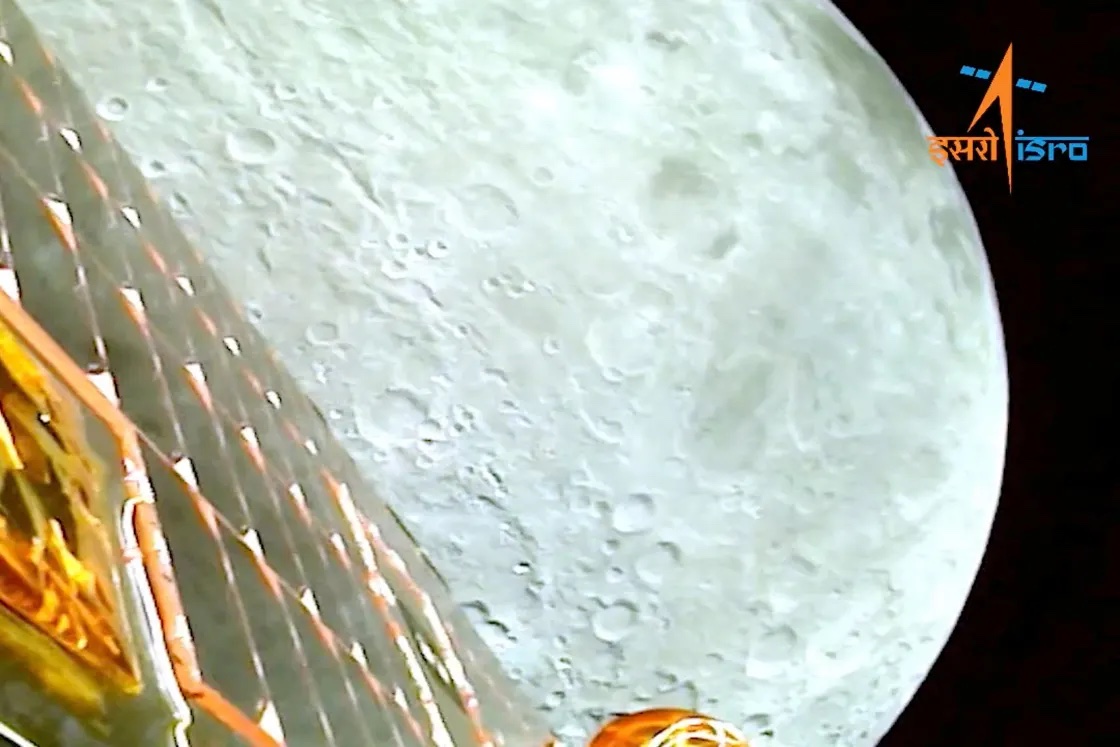
Taken just prior to landing…the “image” shown of it actually landing was not real but a simulation.
India and Russia had been locked in a race to the lunar south pole. The Luna-25 spacecraft that crashed was the first moon-landing spacecraft launched by Russia’s space agency in almost five decades. Roscosmos officials said Sunday they lost contact with the lander after it fired its engines in preparation for a descent to the surface.
It wasn’t much of a “race,” tbh. India had been planning this for years, while Russia randomly launched a craft that had virtually no chance of succeeding.
Congratulations, ISRO! You should have some company over the next couple of years. Here’s hoping that international cooperation and not competition will lead humanity to permanent settlements on the Moon. Mars, and beyond…
“If we want to develop the Moon as an outpost, a gateway to deep space, then we need to carry out many more explorations to see what sort of habitat would we be able to build there with the locally-available material and how will we carry supplies to our people there,” Mr Annadurai says.
Chandrayaan-1 was India’s first successful Moon launch in 2008 — it deliberately crashed in order to measure the amount of water at the South Pole.
Chandrayaan-2 was only partly successful, as it did put an orbiter around the Moon, but the rover crashed. (The orbiter is still there, sending back information on a regular basis.)
Now, Chandrayaan-3 aims to finally land a rover and do some research exploring.
Let’s hope they can get it to land safely this time…
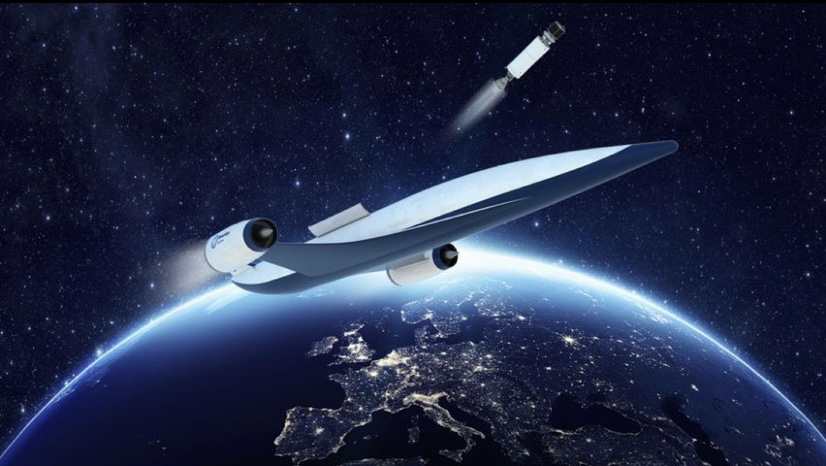
NASA ended the US’s interest in spaceplanes when it scrapped the shuttle fleet a decade ago.
But other space agencies and private companies in other countries are very much in the game. ESA, India, even the UK.
And, of course…
Whichever future the spaceplane does have, it will involve China. “We know very little about the launch [of China’s experimental spaceplane],” says Deville. “But it shows that China is serious about developing its spaceplane concepts.”
It’s a small step. It applies only to companies that are working with NASA; it pertains only to U.S. lunar landing sites; it implements outdated and untested recommendations to protect historic lunar sites implemented by NASA in 2011. However, it offers significant breakthroughs. It is the first legislation from any nation to recognize an off-Earth site as having “outstanding universal value” to humanity, language taken from the unanimously ratified World Heritage Convention.
The author believes this shows that “nonpartisan” desire to journey to space and preserve human heritage.
Hmm.
Well, I do agree with the assessment that it’s only a matter of time before the Moon is occupied by multiple political entities (China, India, Russia, the US, ESA…) and probably even a few private enterprises as well. Will the private company-sponsored missions agree to abide by a US law?




 M Thomas Apple Author Page