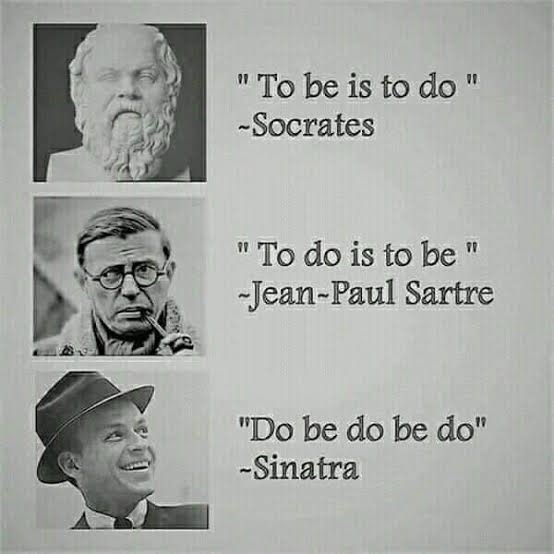
Do you think we’re shaped more by our experiences or by who we are?

July 16, 2026
Do you think we’re shaped more by our experiences or by who we are?
May 22, 2026
“Weary with toil, I haste me to my bed,
The dear repose for limbs with travel tired;
But then begins a journey in my head,
To work my mind, when body’s work’s expired…”
I dearly wish I had though of this. Then again, I don’t know Patrick Stewart…
https://www.nbcnews.com/tech/tech-news/patrick-stewart-ai-schooled-shakespeare-rcna344945
August 5, 2025
🧾 Conclusion
Adam’s Stepsons takes the core questions of Blade Runner and distills them into a tight, character-driven drama. It lacks the sweeping visuals of Villeneuve or the noir cityscape of Scott — but it delivers something arguably more intimate:
A quiet horror — and quiet triumph — in the collapse of identity, where the artificial doesn’t just mimic life…
It replaces it.
Over the weekend (my first with no student work to grade — finally! — since April), I decided to ask our “old” friend ChatGPT if it could analyze my sci-fi novella Adam’s Stepsons. Really, I was just curious what it would say.
It said…a LOT.
It correctly interpreted the title (something that many readers apparently didn’t get). It correctly identified the main themes as part of a “post-humanism” sub-genre of science fiction. And once I gave it three short excerpts (from the near the end of the story), it gave a frighteningly accurate thematic and symbolic analysis of the entire novella…just from three short excerpts of a total of about six pages.
I won’t copy all it gave me (you all can go try on your own and see what it says!). But let me share what the program thought were key themes:
Continue Reading
May 15, 2024
Are you a leader or a follower?
“Lead, follow, or get out of the way!”
I obstruct.

April 13, 2024
When you are younger you get blamed for crimes you never committed. And when you’re older you begin to get credit for virtues you never possessed. It evens itself out.
Charlie “Casey” Stengel
April 3, 2024
A bad administrator is more concerned with reports than with decisions. He wants the hard record which he can display as an excuse for his errors.
Lord Leto II
March 27, 2024
You don’t write for success. That takes part of your attention away from the writing. If you’re really doing it, that’s all you’re doing: writing.
Frank Herbert, “When I Was Writing Dune”
March 27, 2024

For more ordering details: https://mthomasapple.com/science-fiction/children-of-pella-series/
March 25, 2024
Life is a mask through which the universe expresses itself.
Frank Herbert, The Children of Dune
March 16, 2024
Who is the most confident person you know?
“A foolish consistency is the hobgoblin of little minds, adored by little statesmen and philosophers and divines. With consistency a great soul has simply nothing to do.” (Ralph Waldo Emerson, “Self-Reliance”)
Continue ReadingSpace sustainability watch, co-produced by a human and an AI agent
Writing Fanfiction in the worlds of Tolkien and Beyond!
Learning more about our place in the universe...
Best Tech Gadgets Advise
Writing blogs is miracle I am a writer blogger and my site mission is to give information on maximum information to audiences
Reflections of an inquiring retiree ...
Simple ideas to make every room feel stylish and welcoming
Rock & Metal Reviews That Hit Hard
Short stories | Reflections | Poetry

