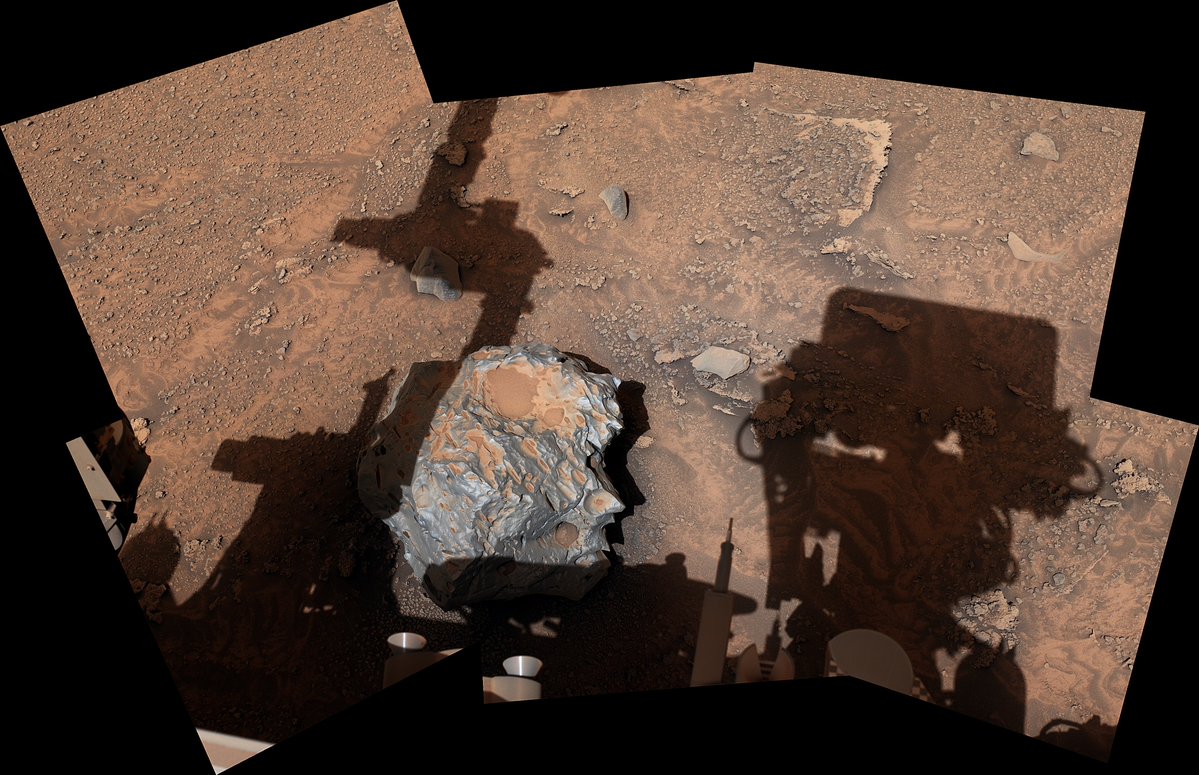
The mysterious object’s lovely silver metallic hue stands out like a sore thumb in the surrounding, rust-colored landscape, a sulfate-bearing region of the Red Planet’s Mount Sharp.
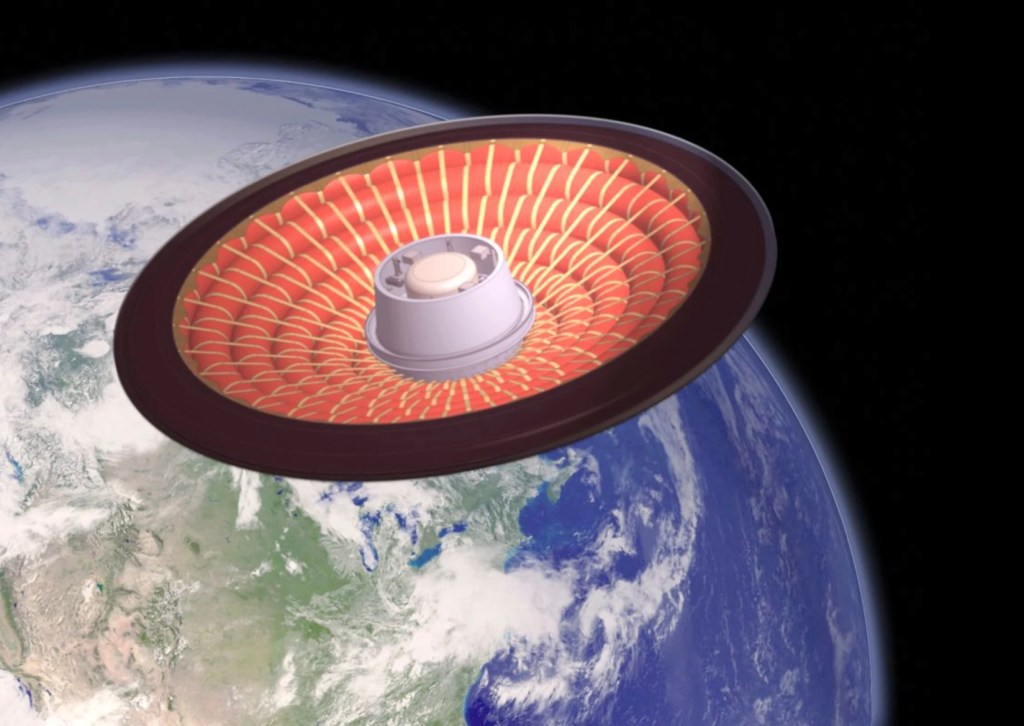
Also, see this one (pay wall, Washington Post) about NASA and DARPA working on one to reach Mars much faster to reduce astronauts’ exposure to radiation.
I still think “durp” every time I see that acronym 😝
Since the Hayabusa2 returned with the sample from the Ryugu asteroid in December 2020, several important discoveries have been made – most notably analyzes confirming the presence of substances thought to be the building blocks of life on the asteroid, such as liquid water and organics fabrics.
Hayabusa-2 took several years to land on Ryugu (literally “Dragon Palace”), pound out just over 5 grams of asteroid material, and bring it back to Earth (landing in Australia in late 2020).
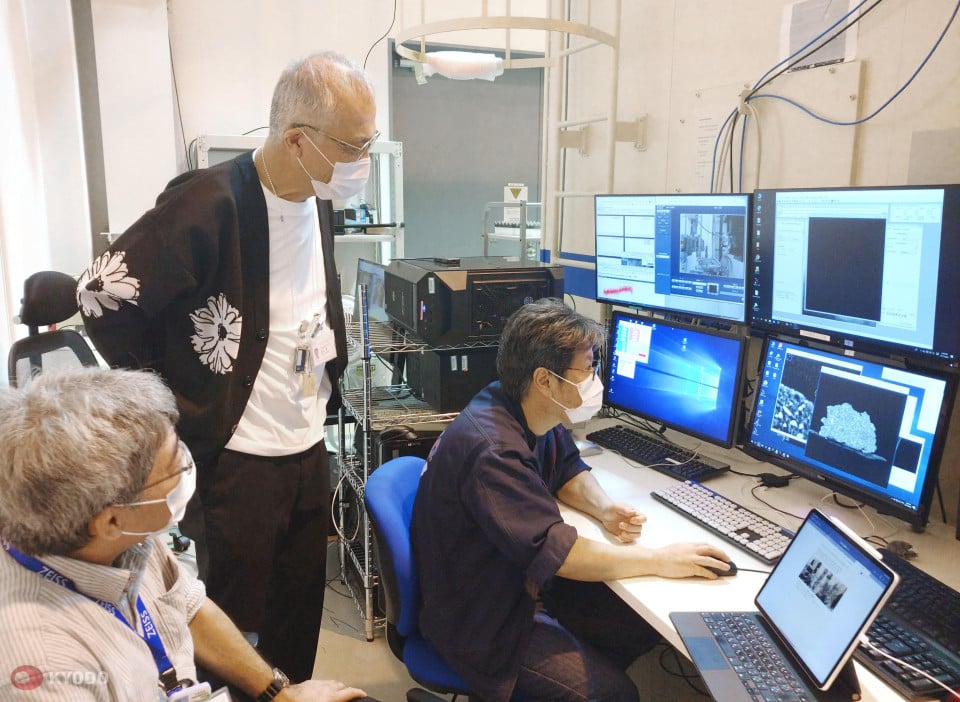
NASA scientists have confirmed not just frozen water but liquid — inside crystals called pyrrhotites. JAXA scientists (pictured above with Prof Tsuchiyama of Ritsumeikan University, my main employer!) continue to check the density of the samples.
The water is similar to the carbon dioxide-laden water of hot springs. The research teams have already discovered over 20 amino acids, the basic protein building blocks of carbon-based life.
Another theory called “panspermia” proposes that a key mineral (boron) missing on early Earth came in an asteroid from Mars. ☄️ Hmm. Did Mars produce asteroids? Or more like asteroids hit Mars and broke off lots of tiny fragments? That somehow survived the journey to Earth?
Seems a little unlikely. But there is now evidence that at least some proteins came from space rocks.
So, sorry, Ridley. This isn’t how it happened. Cool movie, though.
Though definitions sometimes differ, cislunar space generally refers to the space between Earth and the moon, including the moon’s surface and orbit. Any nation or entity that aims to establish a presence on the moon, or has ambitions to explore deeper into the solar system, has a vested interest in operating in cislunar space, either with communication and navigation satellites or outposts that serve as way stations between Earth and the moon.
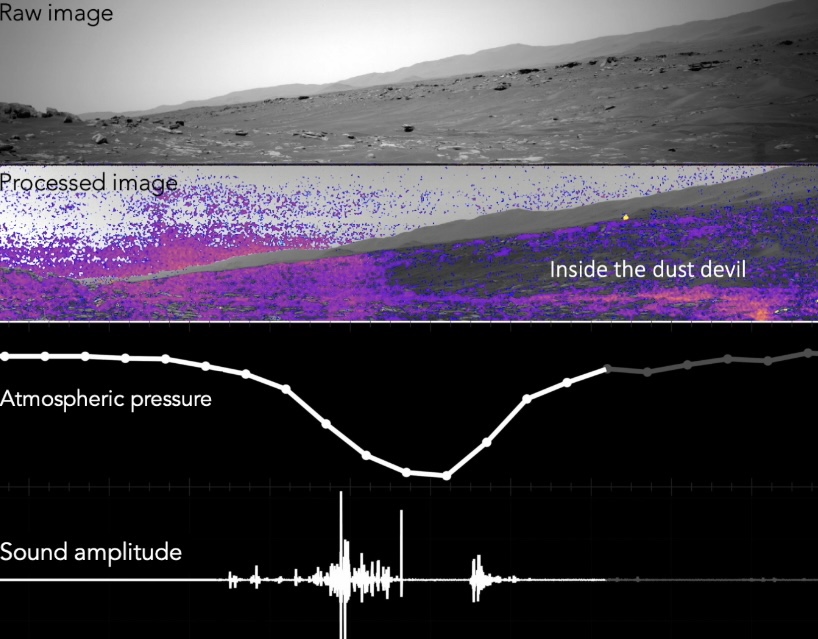
It was “definitely luck” that the dust devil appeared when it did, said the study’s lead author, who estimates there was just a 1-in-200 chance of capturing the audio.
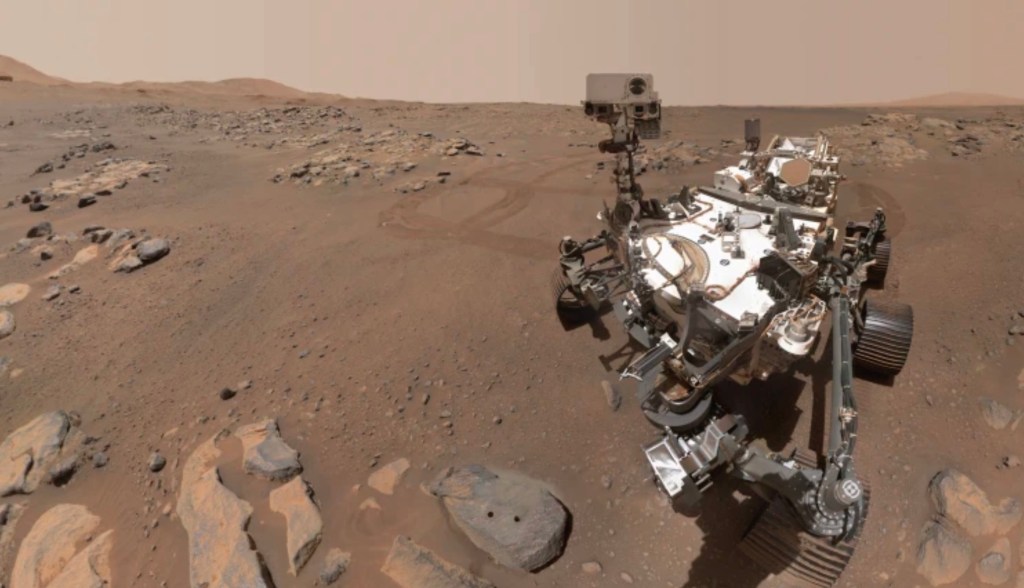
Perseverance has been on Mars for almost two years now, and already recorded wind on Mars for the first time in February 2021.
This dust devil was recorded in late September 2021 (wonder why only now it’s being revealed?). The dust devil was “average size,” which is described as about 400 feet / 122 meters tall and 80 feet / 24 meters wide, traveling at 16 feet / 5 meters per second (≈ 11 mph / 18 mph).
UPDATE. NBC incorrectly reported in the above linked article that the dust devil was recorded by Perseverance. It was actually recorded by InSight, which has just fallen silent after four years of operation. Sigh. I should get science news directly from the source and not from unreliable “news” sites.
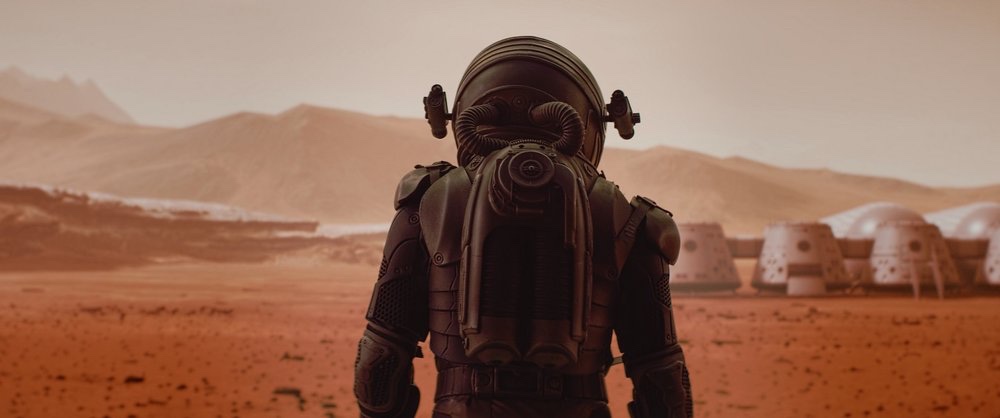
There are a lot of dust devils on Mars. A whole lot. Any settlement would have to be extremely prepared to deal with dust all the time, everywhere. If it ever got into equipment that regulated, say, breathable air inside habitats…
First of all, stop calling it “the golden asteroid.” That’s confusing people (the headline of the article linked below even uses the phrase “gold mine.” Come on, lazy journalists.)
If 16 Psyche is worth mining, when could such operations proceed? Citigroup thinks that space mining, including from the moon and asteroids, will be a $100 billion-per-year business by 2040. Launch costs will continue to decrease and experience in operating in space will continue to expand until such a business makes economic sense.
Well, how heavy do you think the materials to make buildings and ships in outer space are?
If we’re serious about putting people on the Moon and Mars, then it makes much more sense to set up robotic mining factories and assemble everything in space.
All this needs is a little incentive…like a new space race…
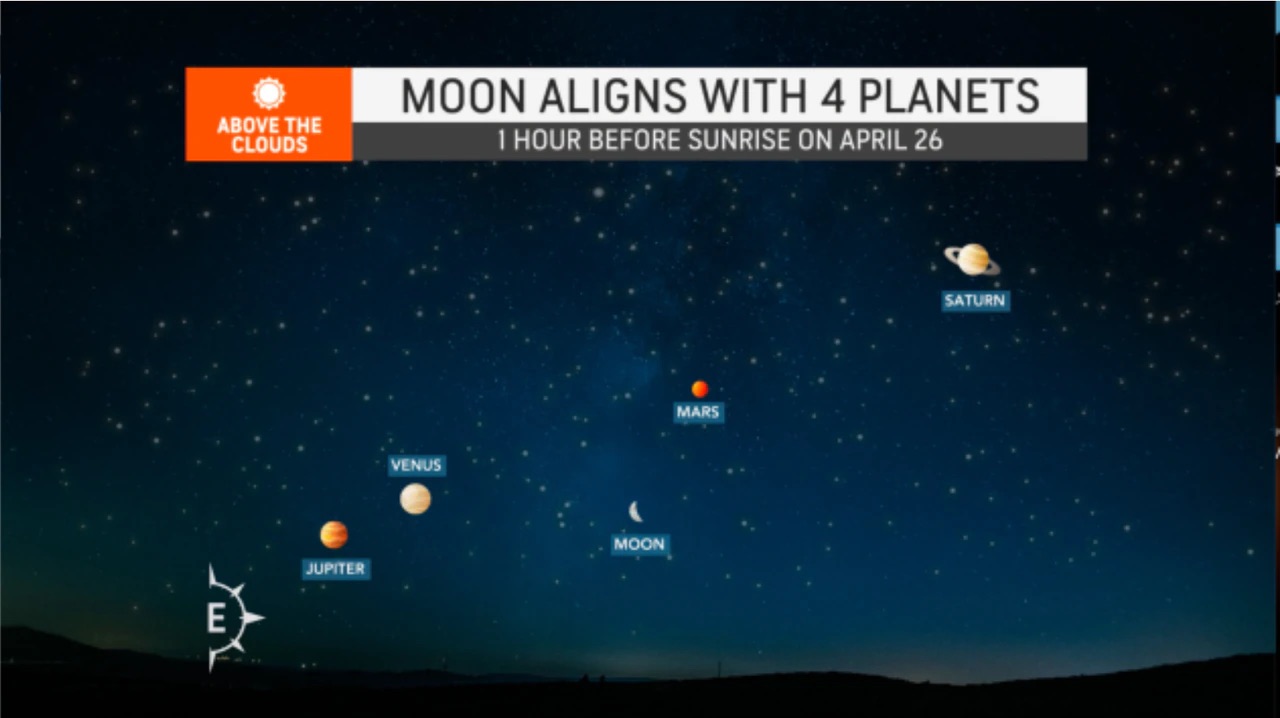
(Note: You won’t be able to see the planets actually looking like these photoshopped images…unless you happen to have a really powerful telescope in your backyard.)
Not sure why I first got this info from a site based in New Jersey. The info about what time of day and in what part of the sky is only relevant to people living in the NJ_NYC area.
Still, it’s an interesting phenomenon that occurs once every few years…
2005. 2016. 2020. And 2022. Not exactly a regular pattern, it seems.
And, no, there is no “spiritual significance” to a planetary alignment. It’s an illusion, an imaginary lining up of the solar system that doesn’t affect you personally. Sorry.
But it’s still fun to watch. Er, if you enjoy getting up before dawn (I don’t).
According to nj.com, “The planetary parade of sorts will occur when Jupiter, Venus, Mars and Saturn all appear to be lined up in a row above the horizon during the pre-dawn hours — starting Saturday morning, April 23. The alignment will also be visible during the next few mornings, and April’s crescent moon will soon join the parade, according to experts from LiveScience and AccuWeather.”
Yeah, lots of web sites are covering this. At least the one I linked above doesn’t have automated videos, flashing ad gifs, and other random pop-ups that drain your smartphone battery.
In short, the algae will use sunlight to transform CO2 into sugars that are then enhanced by bio-engineered E.coli into 2,3-butanediol. Interestingly, 2,3-BDO is not entirely conceptual as it currently exists and is mainly used to produce rubber components. It has just never been thought of as fuel before.