M Thomas Apple Author Page

Science fiction, actual science, history, and personal ranting about life, the universe, and everything

Starliner to Earth: “We have a problem…”

June 17, 2024
MThomas

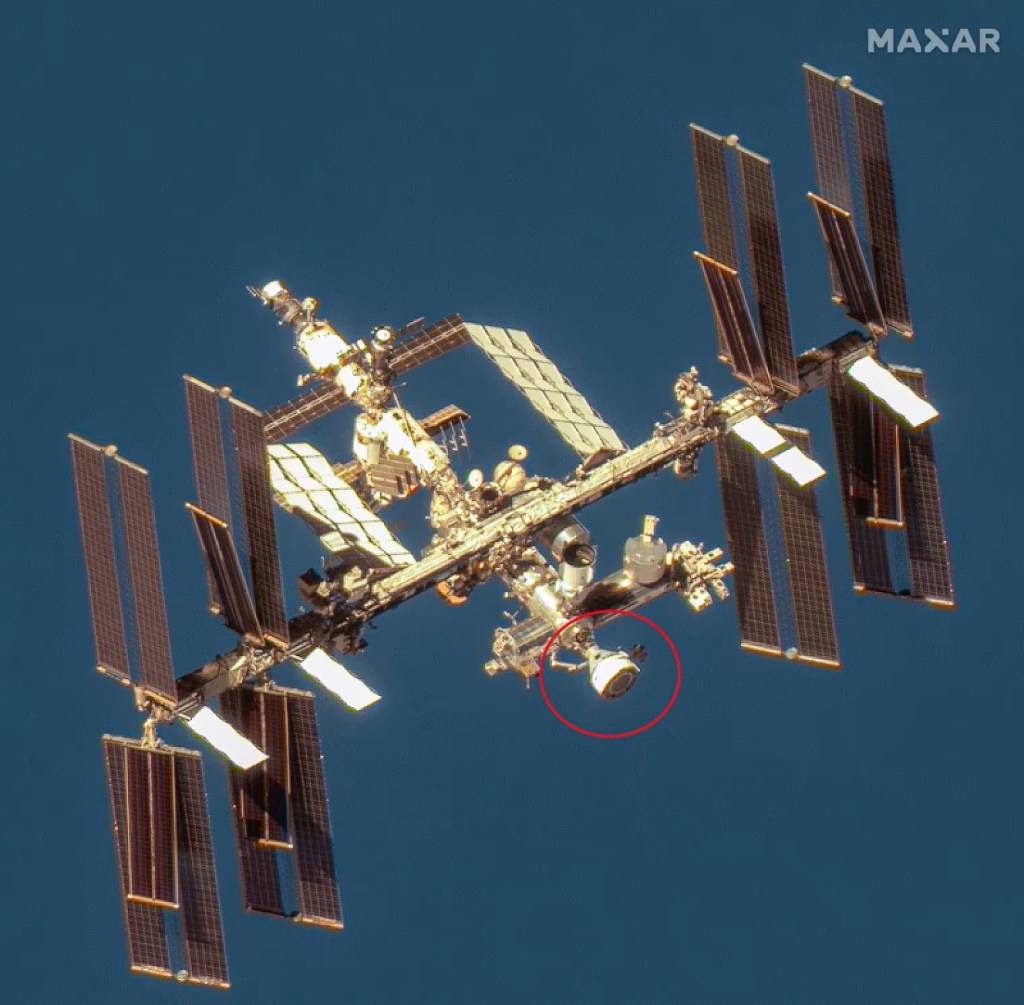
Starliner, the Boeing spacecraft whose launch was delayed by a helium leak, has now developed four additional helium leaks after docking successfully with the ISS.

They had to delay the docking due to a little problem with thrusters…

Five of the 28 thrusters were not operating but, after troubleshooting, Boeing recovered four of Starliner’s malfunctioning jets and NASA allowed the spacecraft to dock.

https://www.nbcnews.com/business/business-news/boeing-nasa-delay-starliner-astronaut-return-june-22-rcna157259

So their return to Earth has been delayed so that they can run some more tests.

I sure hope they have built some redundancies to this system. Remember, this is Boeing. QC is not exactly high on their priorities list…

Boeing Starliner delayed. They should delay again.

May 15, 2024
MThomas

A contractor for Nasa urged the space agency to conduct more safety checks before the highly-anticipated first launch of its Starliner rocket – which is set to take off as soon as next week – “before something catastrophic happens”.

https://www.independent.co.uk/tech/nasa-contractor-boeing-starliner-launch-b2542947.html

It was supposed to launch last week, but someone spotted a valve problem — *minutes* before the countdown procedure was about to start.

They’d better check for door plugs while they’re at it.

Boeing does not give a rat’s ass about whoever uses their products. They‘re only interest in paying dividends to stockholders. And of course paying the CEO’s ridiculously high salary.

NASA is trusting the future of space travel to people like Musk and companies like Boeing. Using taxpayer money to reward greed and incompetence.

We can do better than this.

Nuclear power on the Moon. Gee, no problem…

May 13, 2024
MThomas

The South Pole, where power plants are likely to be constructed (without human help…)

“The truth is that nuclear is the only option to power a moonbase,” says Simon Middleburgh from the Nuclear Futures Institute at Bangor University in Wales.

https://www.bbc.com/future/article/20240417-the-nuclear-reactors-that-could-power-moon-bases

So far there are two major consortiums that have plans for moon bases:

The Artemis Accords, with 36 countries (the US, Japan, South Korea, UAE, India, etc.)

The countries that don’t like the US, the UK, and Canada (China, Russia, Belarus, Venezuela, Pakistan, South Africa, Egypt, Ajerbaijan)

OK, maybe a bit of an exaggeration, granted.

But there is no doubting the political ramifications of two competing groups of astronauts (cosmonauts, taikonauts) on the Moon.

And just wait until they get to Mars.

Imagine what might happen. (I did!)

“May you live in interesting times…”

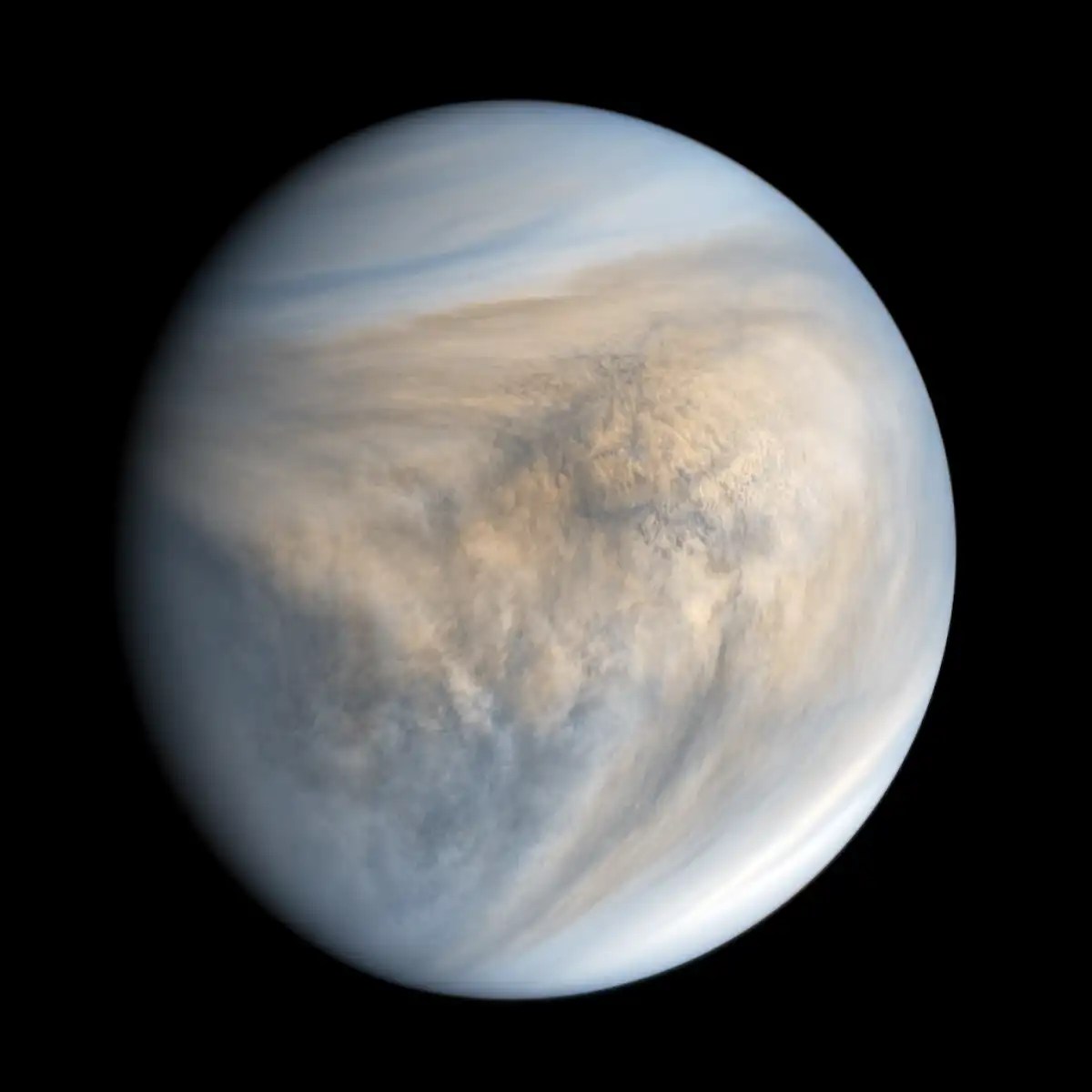
Venus used to have as much water as Earth. What happened?

May 7, 2024
MThomas

Over time, that water has nearly all been lost. Figuring out how, when and why Venus lost its water helps planetary scientists like me understand what makes a planet habitable — or what can make a habitable planet transform into an uninhabitable world.

https://theconversation.com/venus-is-losing-water-faster-than-previously-thought-heres-what-that-could-mean-for-the-early-planets-habitability-229342

The process in which Venus lost most of its water is called “hydrodynamic escape.” When Venus got too hot, the hydrogen in its atmosphere left. (The linked article explains this using a metaphor of having too many blankets on your bed.)

However, Venus is still losing hydrogen, even though there is too little of it for hydrodynamic escape to work. So, logically, there must be another process at work: “HCO⁺ dissociative recombination,” in which individually positively charged atoms of hydrogen, carbon, and oxygen in the atmosphere react with negatively charged electrons. The process was first examined on Mars, and based on a reexamination of results from previous missions (Pioneer Venus 1 and Pioneer Venus 2), the same research group thinks it’s time to try it on Venus…perhaps a first step to seeing whether Venus had life at some point.

Can you say “Catch-22” in space?

April 30, 2024
MThomas

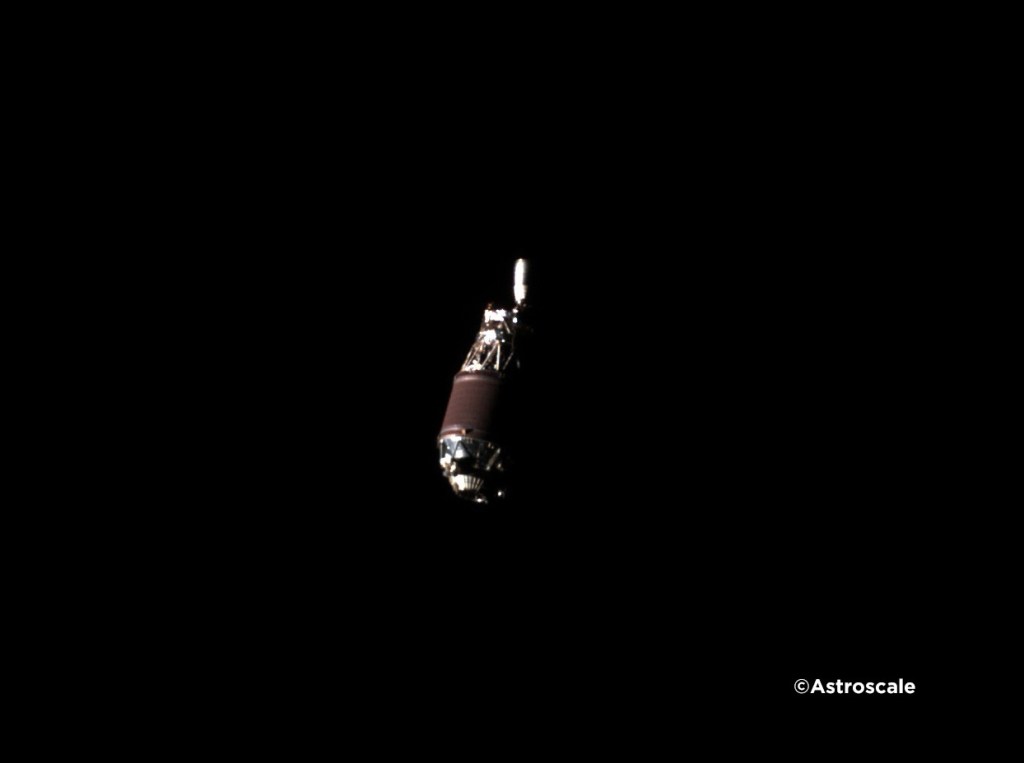
Japanese space company Astroscale Holdings Inc has unveiled what it calls the world’s first publicly released close-up image taken of space debris, hailing it as progress toward understanding the challenges posed by trash orbiting Earth.

https://japantoday.com/category/tech/update1-japan-startup-reveals-world%27s-first-close-up-space-debris-image?

Hmm.🤔 what will happen to the rocket and the satellite that took this picture?

Well, hello, Voyager 1! The venerable spacecraft is once again making sense

April 23, 2024
MThomas

NASA says it is once again able to get meaningful information back from the Voyager 1 probe, after months of troubleshooting a glitch that had this venerable spacecraft sending home messages that made no sense.

https://www.npr.org/2024/04/23/1246392066/nasa-voyager-1-spacecraft-talks-back

Hmm. Just a short while ago, Voyager’s days were numbered.

I guess these things were built to last… (also built when NASA got a lot more funding…)

Get ready for the 2024 totality, North Americans!

April 8, 2024
MThomas

Researchers will fly rockets into the path of the eclipse, stand in zoos watching animals, send radio signals across the globe, and peer into space with massive cameras. 

And you don’t need to be a scientist to take part.

https://www.bbc.com/news/science-environment-68742516

If you’re lucky enough to have no clouds or rain, that is.

Things the eclipse affects:

  • Radio waves
  • Animal behavior
  • The birds and the bees (seriously; read about what tortoises did last time)

Things scientists can view thanks to an eclipse:

  • The solar wind (plasma on the surface of the Sun)
  • Coronal mass ejections (which interfere with satellites)
  • Dust rings around the Sun and possibly even new asteroids

The East Coast of North America, where most of my relatives live, is currently 13 hours behind me in Japan. So the event will be long over by the time I wake up.

Hope to see video of it on the morning news show tomorrow!

How to photograph a solar eclipse

March 29, 2024
MThomas

The eclipse begins as a small notch slowly appears along one edge of the Sun. During the next hour, the Moon gradually covers more and more of the Sun’s bright disk. You’ll need a Solar Filter to both view and photograph the partial phases. 

https://www.mreclipse.com/SEphoto/SEphoto.html

On April 8, 2024, there will be a total solar eclipse across parts of North America. It starts on Mexico’s Pacific coast and ends on Canada’s Atlantic coast. (So, no, it’s not just “from San Antonio to the Canadian border” as one article puts it).

I’m a little jealous of friends and family in the path. The eclipse lasts for over four minutes this time — if you’re in the area, enjoy!

And send me a photo or three if you can 😁

Water molecules detected on the surface of an asteroid in space for the first time

March 13, 2024
MThomas

Water molecules have been detected in asteroid samples returned to Earth, but this marks the first time that the molecules have been discovered on the surface of an asteroid in space. The team studied four silicate-rich asteroids using data from the now-retired Stratospheric Observatory for Infrared Astronomy(SOFIA). 

https://www.popsci.com/science/water-asteroid-space/

The asteroids in question are Iris (124 miles / 200 km in diameter) and Massalia (84 miles / 135 km). Both are in the asteroid belt between Mars and Jupiter. Iris is about the size of the US state of Maryland, while Massalia is roughly the size of Connecticut.

Note that the same observatory also found water on the Moon, about a “12-ounce bottle” worth. Not nearly enough for a settlement, but where there’s surface water (albeit trapped in soil on the surface), there’s likely to be more underneath.

(See also https://www.swri.org/press-release/swri-scientists-identify-water-molecules-asteroids-the-first-time — the PopSci linked article above essentially plagiarised almost its entire text. Bad scientist, bad.)

Original article here: Arrendono et al. (2024) Detection of molecular H20 on nominally anhydrous asteroids. Planet. Sci. J. 5. 37 doi 10.3847/PSJ/ad18b8 – good luck trying to read it!

Yet another “super-Earth” – maybe with a sibling?

February 28, 2024
MThomas

So, astronomers need to know both mass and diameter to determine whether a planet is truly similar enough to ours to host some form of Earth-like life. If the planet has a low mass and a large radius, it is likely like a so-called mini-Neptune with a gassy atmosphere and little rock. If it has a higher mass but a smaller radius, it’s probably a rocky planet like ours.

The possibility that TOI-715 b is rocky “would be exciting because that supports it being more of a habitable planet versus some sort of other world,” says Moran.

https://www.astronomy.com/science/recently-discovered-super-earth-might-be-habitable/

TOI-715 orbits a red dwarf star around 137 light years away, so we won’t be getting there any time soon. But after finding this planet last year, astronomers also are trying to confirm the existence of another smaller, closer to Earth-sized planet in the habitable zone (i.e., in an orbit that permits liquid water necessary for life to evolve).

And the name of the possibly new “sibling” planet?

“TIC 271971130.02”

Uh. We gotta come up with cooler names, folks.

For starters, they orbit a dwarf star.

Blog at WordPress.com.
The Silmaril Chick

Writing Fanfiction in the worlds of Tolkien and Beyond!

Our Awesome Universe

Learning more about our place in the universe...

TechWordly

Best Tech Gadgets Advise

Weird Science Marvel Comics

Marvel Comics Reviews, Previews and News

Universe discoveries

Writing blogs is miracle I am a writer blogger and my site mission is to give information on maximum information to audiences

Robby Robin's Journey

Reflections of an inquiring retiree ...

Fox Reviews Rock

Rock & Metal Reviews That Hit Hard

My little corner of the world

Short stories | Reflections | Poetry

DimmaJo Blog

Read | Reflect | Grow