Do you remember life before the internet?

May as well ask if the writer can identify all the ancient objects in this photo…

May 30, 2023
Do you remember life before the internet?
May as well ask if the writer can identify all the ancient objects in this photo…
May 22, 2023
Have you ever broken a bone?
Depends on how you define “broken.”
I got two bone spurs, separated by two years, thanks to playing baseball in junior high school. Both were fingers on my left hand.
The first time was my left thumb first joint. The second time was my left hand ring finger second joint.
Both times, our local health clinic doctor put a metal splint on the finger, wrapped it in flexible bandage and sealed it off with a tiny metal clip.
And of course I stupidly went on playing baseball, because at age 15 guys think they are completely indestructible.
My ring finger stuck out when I batted. I’m lucky I didn’t get hit by a pitch in the hand (I did get hit on the knee, but that’s a whole ‘nother story).
Also, it inspired my baseball novel. So there was a silver lining!
May 5, 2023
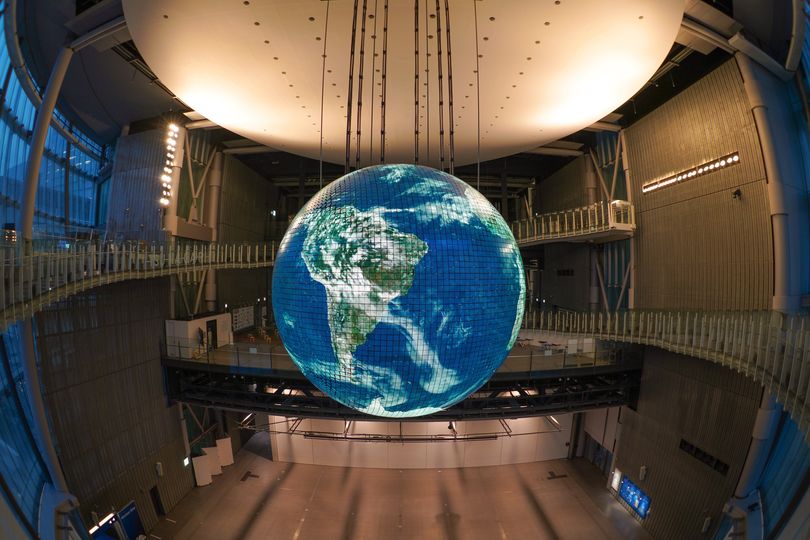
The word has just come in that a fellow traveler has set up his own blog about science.
It’s called Science.
(In Latin, Scientia.)
Glen is a good friend of mine, and not only is he a good scientist, he’s also a good writer. His avowed goal is to raise science literacy and share his love of science with the world.
We may even steal posts from each other from time to time. Or photos (like the one above ⬆️🌏).
Check it out: https://scientiameansscience.blogspot.com
April 14, 2023
Describe something you learned in high school.
I learned in high school how much I wanted to graduate and never come back.
April 12, 2023
Seriously. I don’t blog about exercise.
Huh?
That said, I do tai chi.
So there. 😆
December 26, 2022

Happy holidays, everyone!
Best wishes for the 2023 New Year. See you on the other side!
December 17, 2022
I’ve been testing ChatGPT over the last couple of days. (If you don’t know what this chatbot is, here’s a good NYT article about ChatGPT and others currently in development.)
The avowed purpose of ChatGPT is to create an AI that can create believable dialogues. It does this by scouring the web for data it uses to respond to simple prompts.
By “simple,” I mean sometimes “horribly complicated,” of course. And sometimes a little ridiculous.

As has been pointed out, chatbots only generate texts based on what they have been fed, i.e., “garbage in / garbage out.” So if you push the programs hard enough, they will generate racist, sexist, homophobic etc awful stuff — because unfortunately that kind of sick and twisted garbage is still out there, somewhere online in a troll’s paradise.
So far, I have asked the program to:
OK, and the verdict is:
Continue Reading
December 15, 2022
“Find my ebooks and a wide collection of great indie titles as part of the Smashwords 2022 End of Year Sale! Check out https://smashwords.com/shelves/promos before the end of the month and follow @smashwords for more promos like this! #SmashwordsEOYSale #ebook #sale #books2read #indiebooks”
(I swiped this from the Smashwords promo site as a “generic blurb.” But what else, really, do I need to write?
All my ebooks on Smashwords are “50%” off! That means the books that are listed as $0.99 are actually free, since they don’t do $0.49.
And don’t forget that all proceeds from Destiny in the Future are donated to fight cancer.
Gift an ebook to friends and family!
December 13, 2022
[ChatGPT] could teach his daughter math, science and English, not to mention a few other important lessons. Chief among them: Do not believe everything you are told.
https://www.nytimes.com/2022/12/10/technology/ai-chat-bot-chatgpt.html
They’re all the rage online. Type in a request for a description how two historical people who never actually met would respond to each other had they actually met, and the program will oblige.
They’ll cause all sorts of rage online, too, once the peddlers of incessant false news and innuendo realize what a bonanza they’ve stumbled upon.
You want an image of an event that never really happened?
No problem. A program can generate one for you. We can even call it “art,” for what that’s worth.
No, BIG problem, especially when it convinces the gullible that it DID happen.
2023 will tell 2020 and 2022 to hold its coffee.
Just what we all wanted, right?
Still, chatbots are not (repeat, NOT) true AI. Sorry, Google engineer who watched too much Ghost in the Shell. Chatbots repeat our very human bias. Repeatedly.
As in, there are way too many racist, sexist, xenophobic, homophobic, and transphobic comments online. Full stop.
At a minor level, as a writing instructor, a student telling a chatbot to write a 600-word comparison-contrast essay is the least of my worries.
For starters, the damn things are probably scouring the Internet right now and “learning” from text on web pages like…uh…this one…
😱
December 5, 2022
Just saw someone on my morning commuter train wearing a fluffy beige coat with a single word in all capital letters, stretching across the back from left elbow to right elbow:
EXPLOIT
Yeah. That’s what happened, alright.
Writing Fanfiction in the worlds of Tolkien and Beyond!
Learning more about our place in the universe...
Best Tech Gadgets Advise
Marvel Comics Reviews, Previews and News
Writing blogs is miracle I am a writer blogger and my site mission is to give information on maximum information to audiences
Reflections of an inquiring retiree ...
Simple ideas to make every room feel stylish and welcoming
Rock & Metal Reviews That Hit Hard
Short stories | Reflections | Poetry
Read. Reflect. Grow
 M Thomas Apple Author Page