…there has been a serious erosion of the tradition of skeptical inquiry, of vigorous challenging of government leaders, of public exposure of what the government is actually doing, rather than mere pomp and rhetoric. And it is in this area—skeptical scrutiny, public exposure—where the largest strides, in my opinion, are needed.
More than 20 types of amino acids have been detected in samples Japan’s Hayabusa2 space probe brought to Earth from an asteroid in late 2020, a government official said Monday, showing for the first time the organic compounds exist on asteroids in space.
This lends support to the hypothesis that life on Earth was brought to it during the Late Heavy Bombardment period – in which meteors brought not just water but the building blocks of life…
Now imagine if someone were to find an asteroid with addition proteins NOT found on Earth… (i.e., my novel’s scientific premise…)
<It has become more and more difficult to share images and quotes from websites that apparently refuse to allow WordPress to share content, so I am borderline “ef it” at this point.”>
This used to be a gif, but apparently I’m not allowed to download it as such, and even as a “webp” (whatever the hell that is) I had to convert it to a jpg just to upload it.
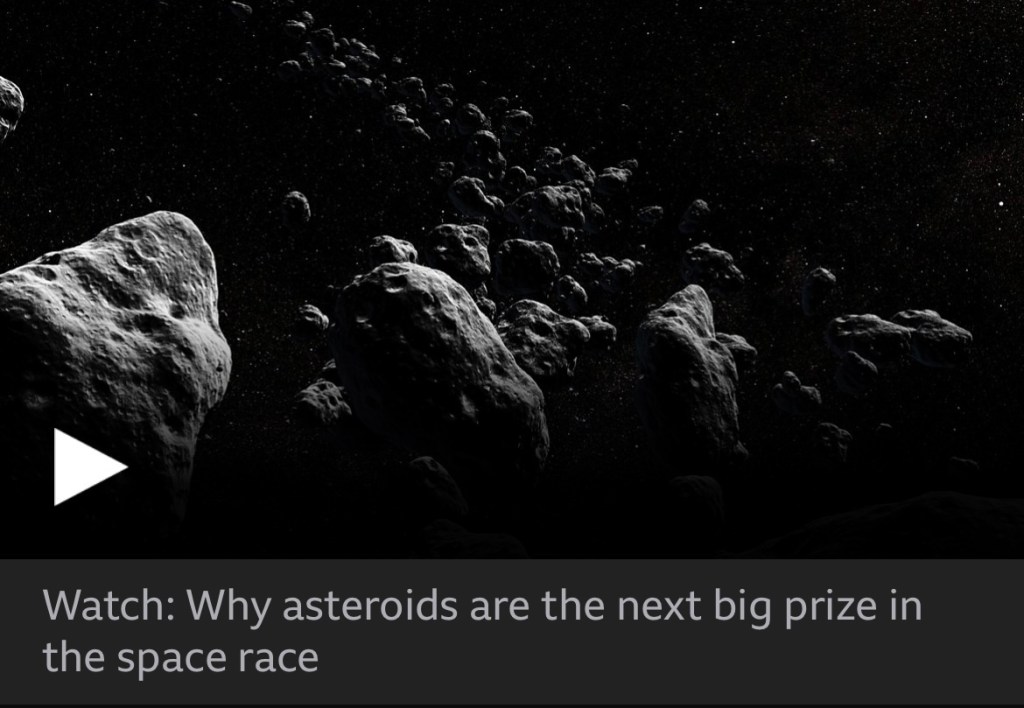
More than 100 previously unknown asteroids have been detected using a new tool that can comb through huge existing archives of data to search for potentially dangerous space rocks.
The above is *supposed* to be a “quotation” format from WordPress, which increasingly seems to want me to do all my posting from a smartphone *which ain’t gonna happen.*
Math to the rescue. No need for more scenes like this… (come on, you cried, admit it…)
Well, looks like once again I got way behind schedule on my science fiction posts.
And my science posts.
And basically any of my posts.
Sorry.
The school year in Japan ends in March and then starts up again little more than three weeks later in April. And with two elementary school age kids (one soon to be middle school aged!) things were quite hectic.
And during the “break” (more like a breather than a real break) they always had friends over, or wanted to do something that required attention.
Anyway, I should be able to start regular posting in a few days once I figure out how to do more than two things at once. Apologies to you all for the “break” in the action!
“China is investigating how to build ultra-large spacecraft that are up to 0.6 mile (1 kilometer) long. But how feasible is the idea, and what would be the use of such a massive spacecraft?“
The original title of the Live Science post linked above is “China wants to build…” but this is incorrect. The National Natural Science Foundation of China is proposing a feasibility study. This is not the same thing as “China wants to build a kilometer-long ship.”
Likely the study will find out that it’s just too expensive and not worth it in terms of effort, resources, and maintenance costs. But it may show the benefits of setting up a base on the Moon and then sending materials there to be 3D-printed for future exploration or human colonies elsewhere.
Sending up a ginormous ship from Earth is foolhardy. Figuring out how to build stuff in space is much smarter.