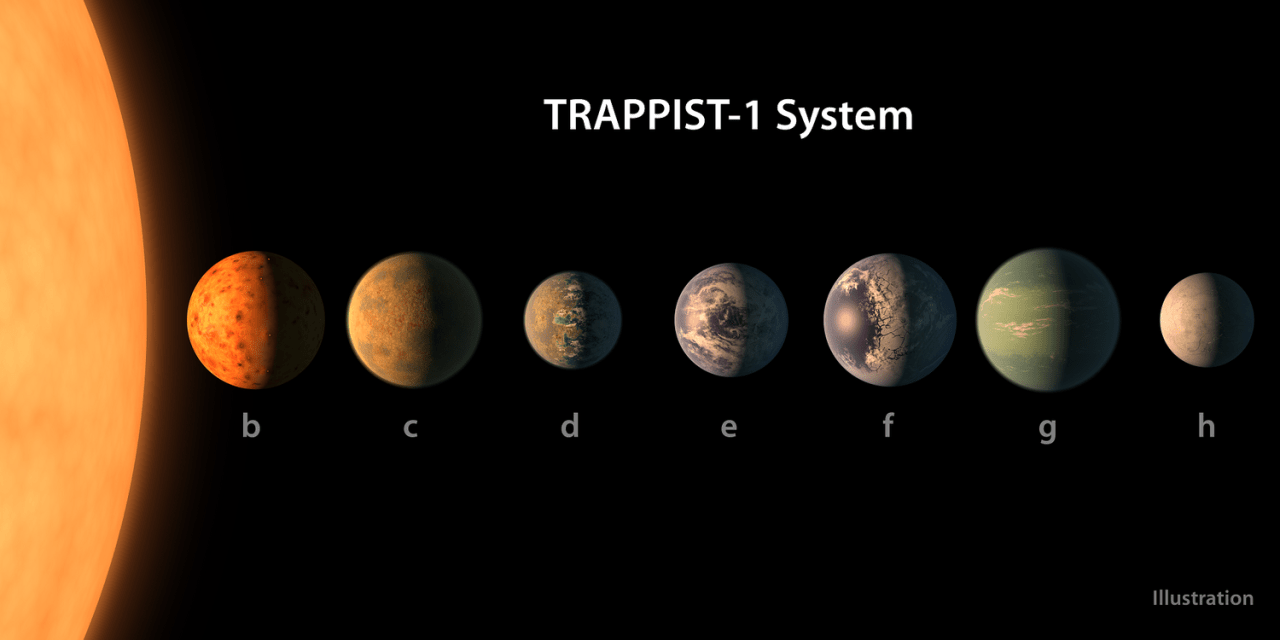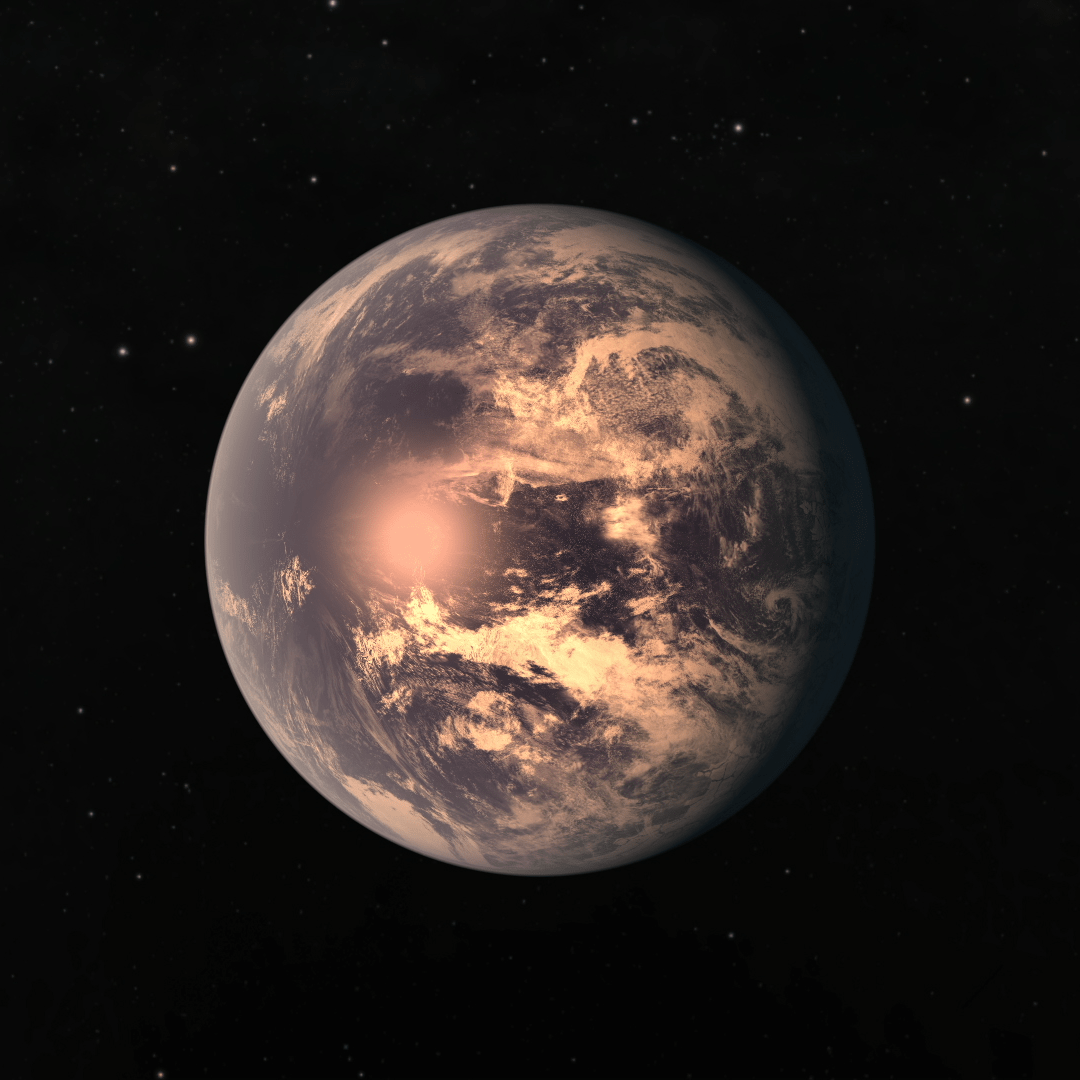
In February of 2017, a team of European astronomers announced the discovery
of a seven-planet system orbiting the nearby star TRAPPIST-1. Aside from
the fact that all seven planets were rocky, there was the added bonus of
three of them orbiting within TRAPPIST-1’s habitable zone. Since that time,
multiple studies have been conducted to determine whether or not any of
these planets could be habitable.
What’s up with the boring names?
I propose we call them Liesl, Friedrich, Louisa, Kurt, Brigitta, Marta, and Gretl. The most habitable is Kurt, because he’s so magnetic.
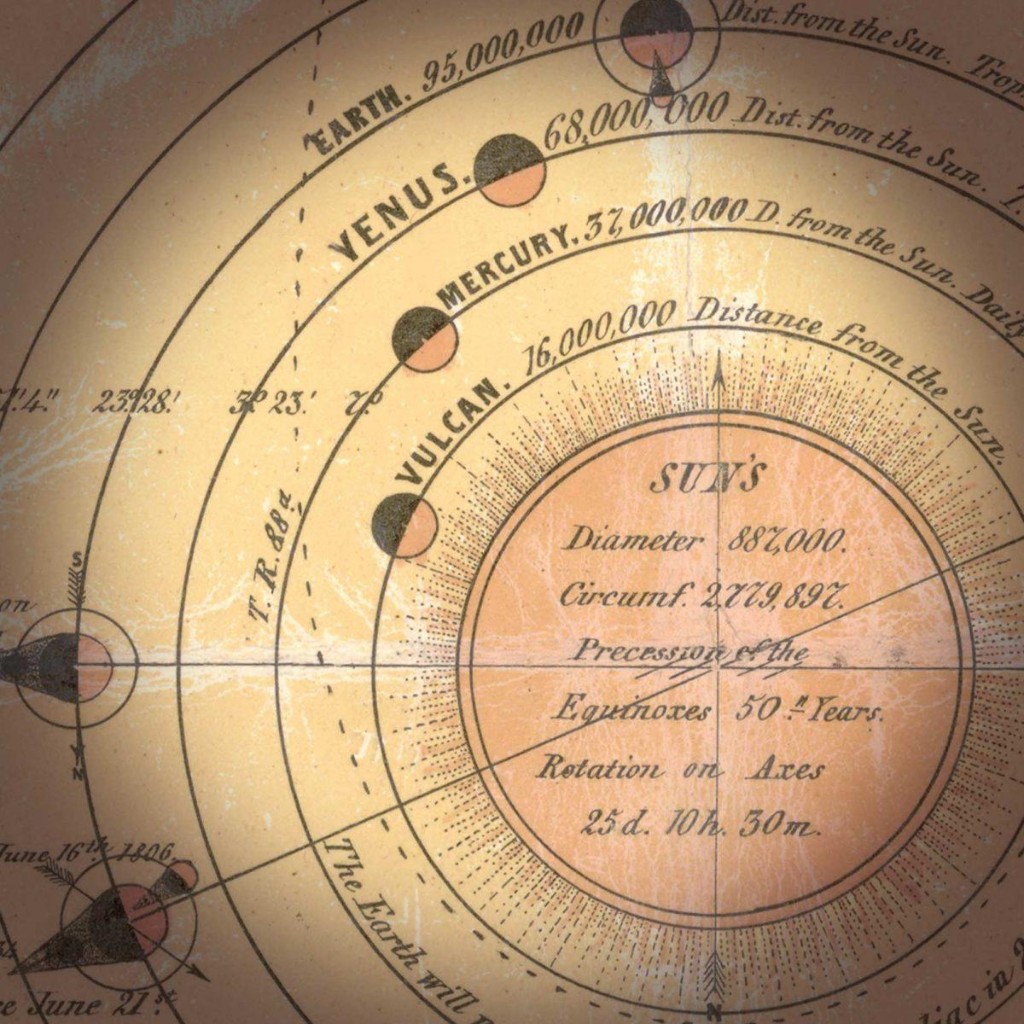
As a kid I remember reading about “Vulcan,” which people used to think existed between Mercury and the Sun but always orbited on the opposite side.
Completely fictional, of course.
But…
Vulcan made a comeback as the fictional home of Spock in Star Trek. It was said by Star Trek creator Gene Roddenberry to be orbiting around 40 Eridani (also called HD 26965), a triple star system in the constellation of Eridanus “the river” in the southern hemisphere just 16 light years distant. In September 2018, astronomers at the University of Florida in Gainesville found a “super-Earth” exoplanet orbiting exactly where Vulcan was said to be.
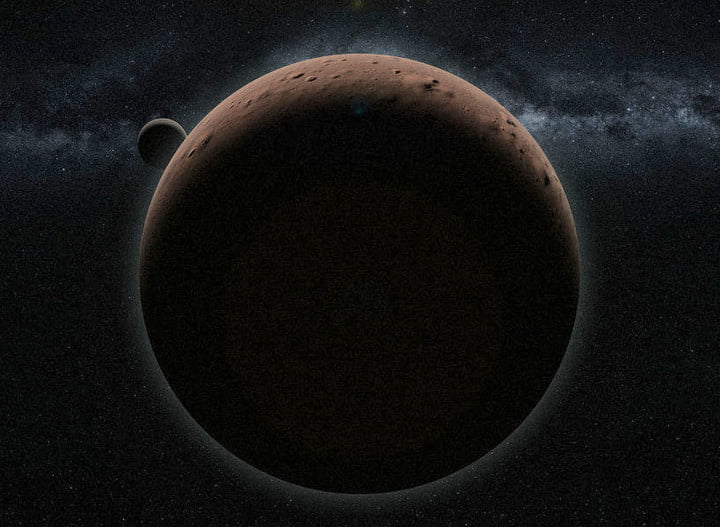
The three choices fit IAU naming regulations and are associated with mythological creatures and figures that reflect aspects of 2007 OR10’s physical properties, which include rock, water ice, possibly methane ice, and a surface that’s red in color.
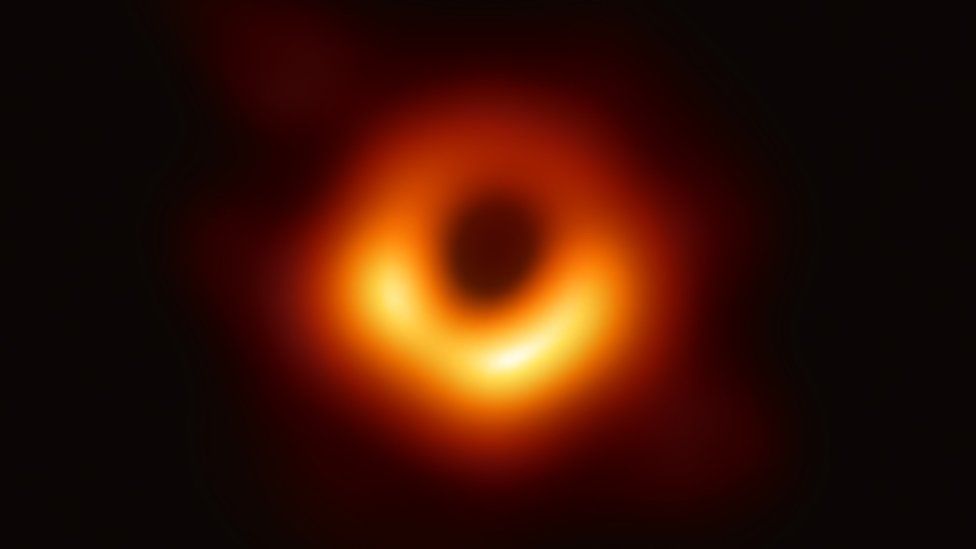
“What we see is larger than the size of our entire Solar System,” he said.
“It has a mass 6.5 billion times that of the Sun. And it is one of the heaviest black holes that we think exists. It is an absolute monster, the heavyweight champion of black holes in the Universe.”
So this demonstrates two things.
One – Einstein was right (when wasn’t he, at this point).
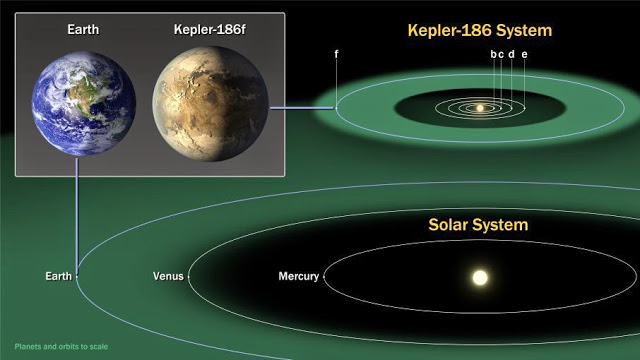
Welp, it’s official. NASA announced they have confirmed another “Earth” (really, an “Earth-like planet” simply means it has enough water and is in the right orbit from its star to hypothetically support life).
Too bad it’s 500 light years away, which currently would take us a mere 70,000 years to reach.
[A]n obvious obstacle to identifying our neighbors is the tendency to limit our imagination to what we already know. But this should not necessarily remain the case in the future.
Frankly, I think it’s high time that somebody invent the warp drive so that the Vulcans will finally notice us.
In their presentation, the researchers jokingly compared the planet to Hoth – the icy planet made famous in one of the “Star Wars” movies, when Luke Skywalker’s steed (a fictional lizard species called a Tauntaun) dies and he must stay warm by burrowing into its intestines.
Yay, science. And only six light years away!
Which, since Alpha Centauri at four light years away only takes 137,000 years to get to, would only take…er…just a few ten thousand more years…Hmm…
A new paper suggests that the so-called “Planet Nine” – thought responsible for the screwy orbits of Trans-Neptune objects – might actually be a really big disc.
Um. Yeah. Okay.
How about we actually focus on technology that will allow us to construct spaceships so we can go out that far in person to find out? Theoretical astrophysics is all fine and dandy, but how does this help our species expand out into space?
He described the concept as a “stainless-steel sandwich” that can “bleed water…fuel” through tiny holes on its surface to keep it cool as it enters the Martian atmosphere at breakneck speeds.
Not sure, but I don’t think there are a lot of people who want to travel to Mars inside a sandwich…