M Thomas Apple Author Page

Science fiction, actual science, history, and personal ranting about life, the universe, and everything

Life on Trappist 1e?

September 12, 2025
MThomas

In two separate papers published Monday in the Astrophysical Journal Letters, astronomers zeroed in on the TRAPPIST-1 system, which consists of seven rocky planets that orbit a single star. Both studies outlined initial results from observations by NASA’s James Webb Space Telescope, suggesting that one planet in particular, known as TRAPPIST-1e, may have a nitrogen-rich atmosphere like Earth’s, though follow-up studies are needed to confirm the discovery.

https://www.nbcnews.com/science/space/trappist1e-atmosphere-extraterrestrial-life-planet-earth-conditions-rcna229839

Trappist 1e is in the “Goldilocks zone” in orbit around its star (i.e., not too cold, not too hot, just right). However, the Webb telescope can’t determine whether its atmosphere has any carbon dioxide, hydrogen, or oxygen, only nitrogen. Yet nitrogen is a clear sign that life is possible, because without nitrogen, DNA and other proteins are not possible. Of course, it could be simply a whole lot of microbes. Or even just ammonia.

Closer to home, the Mars rover Perseverance has found evidence of life in the distant past. Maybe. It found evidence that certain rock features may have happened because of microbes.

May.

That’s how science works, folks. A whole lot of maybes.

(I still think we need more catchy names for the Trappists. I mean, come on.
Plume of water seen on Saturn’s moon

May 31, 2023
MThomas

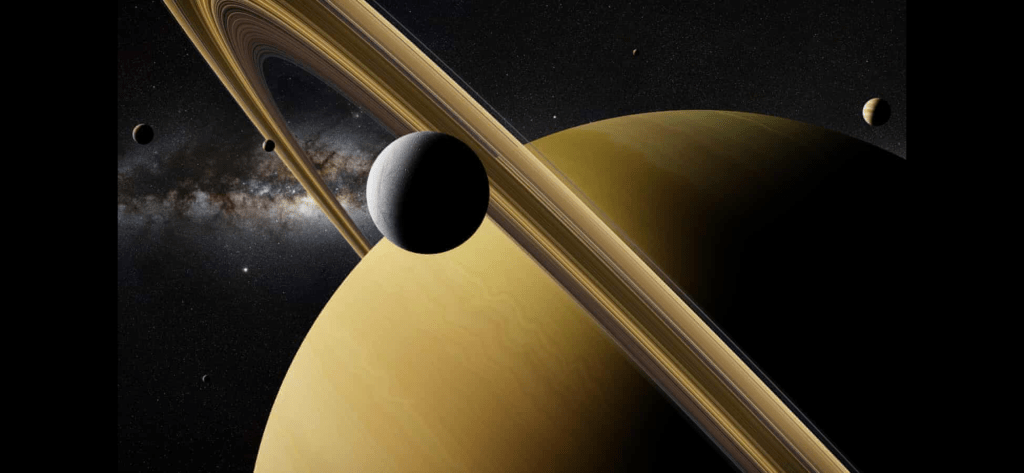
The record-breaking plume reached nearly 6,000 miles into space – covering the distance between Ireland and Japan – and poured water into the void at an estimated rate of 300 litres a second.

https://www.theguardian.com/science/2023/may/30/astronomers-see-6000-mile-water-vapour-plume-blasting-from-saturn-moon

Note that the water jetted out into space nearly 40 times longer than the actual size of the moon (about 500 in diameter, or as the Gurdian puts it “500-mile-wide” for those who forgot the meaning of “diameter).

Enceladus is probably the best bet for life elsewhere in the solar system due to its water — and while whipping around Saturn once per day, which is likely the reason for underwater volcanos and other vents that may provide the proper chemistry for life.

Also the perfect place to trick an inexperienced asteroid hunter crew…

Webb finds rocky Earth-sized planet

January 13, 2023
MThomas

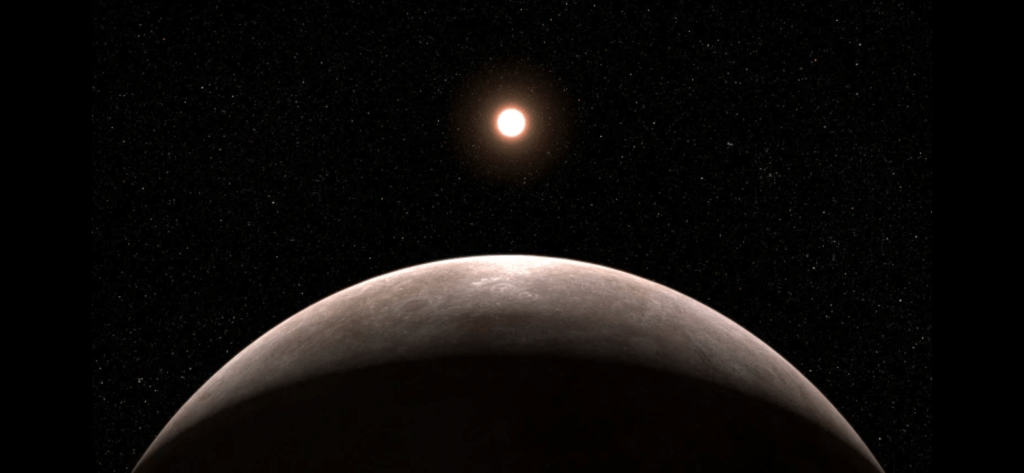
The finding demonstrates how the observatory could be used to search for potentially habitable planets in the cosmos and examine the chemical makeup of their atmospheres.

https://www.nbcnews.com/science/space/james-webb-telescope-finds-first-exoplanet-rcna65374

LHS 475b is 41 light years away, orbiting a red dwarf star in the Octans constellation (one of a few “modern” constellations only seen in the deep southern hemisphere).

Webb can even detect the presence of atmospheres, though given LHS475b has an orbit of two days and is a “few hundred degrees warmer than Earth,” it’s unlikely it’ll find much with this exoplanet.

Still, it’s a first. The first of many, I hope.

Spectacular image of Jupiter’s auroras and moons

August 23, 2022
MThomas

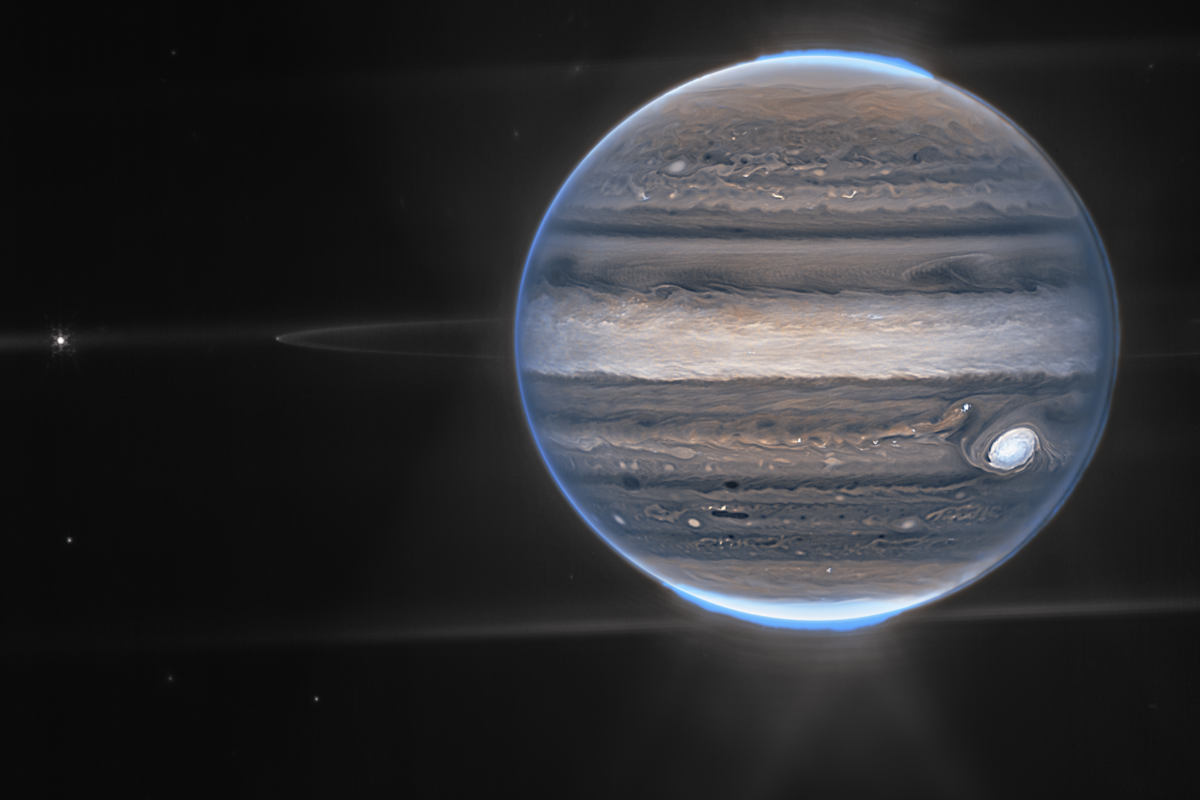
Courtesy NASA. Note that the blue, white, green, yellow, and orange colors are artificial, only added to make features revealed by infrared stand out for human eyes. You can see the planet’s rings, aurora, and two “tiny” moons (at left; they’re not really that tiny!).

“We’ve never seen Jupiter like this. It’s all quite incredible,” said planetary astronomer Imke de Pater, of the University of California, Berkeley, who helped lead the observations.

“We hadn’t really expected it to be this good, to be honest,” she added in a statement.

https://www.pbs.org/newshour/science/james-webb-space-telescope-shows-jupiters-auroras-tiny-moons

The above is supposed to be in “quote” format, but WP really messed up this feature when they switched to so-called “block” mode (which I can’t stand).

Anyway, the image is fairly spectacular, from the new James Webb Space Telescope which is positioned 1 million miles away from Earth (i.e., in the second LaGrange point, or L2).

Another month, another missed Bringer of Light post…

July 18, 2022
MThomas

Yeah. So I missed another installment in my series.

Shoot.

Things are just ridiculously spiraling out of control at work. I hope to start posting more regularly again in a week or so.

In the meantime, check out more images from the Webb space telescope compared to Hubble. They’re pretty awe-inspiring.

World’s largest space telescope has liftoff

December 26, 2021
MThomas

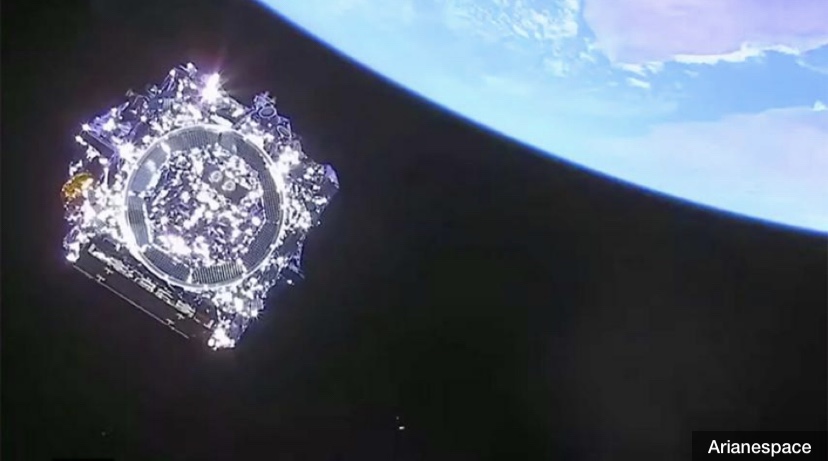
The James Webb Space Telescope – Hubble’s successor – has successfully lifted off.

Now starts the “two weeks of terror” as it gets into position and unfolds. Fingers crossed! 🤞

https://www.bbc.com/news/science-environment-59782057

Blog at WordPress.com.
The Silmaril Chick

Writing Fanfiction in the worlds of Tolkien and Beyond!

Our Awesome Universe

Learning more about our place in the universe...

TechWordly

Best Tech Gadgets Advise

Weird Science Marvel Comics

Marvel Comics Reviews, Previews and News

Universe discoveries

Writing blogs is miracle I am a writer blogger and my site mission is to give information on maximum information to audiences

Robby Robin's Journey

Reflections of an inquiring retiree ...

Fox Reviews Rock

Rock & Metal Reviews That Hit Hard

My little corner of the world

Short stories | Reflections | Poetry

DimmaJo Blog

Read | Reflect | Grow