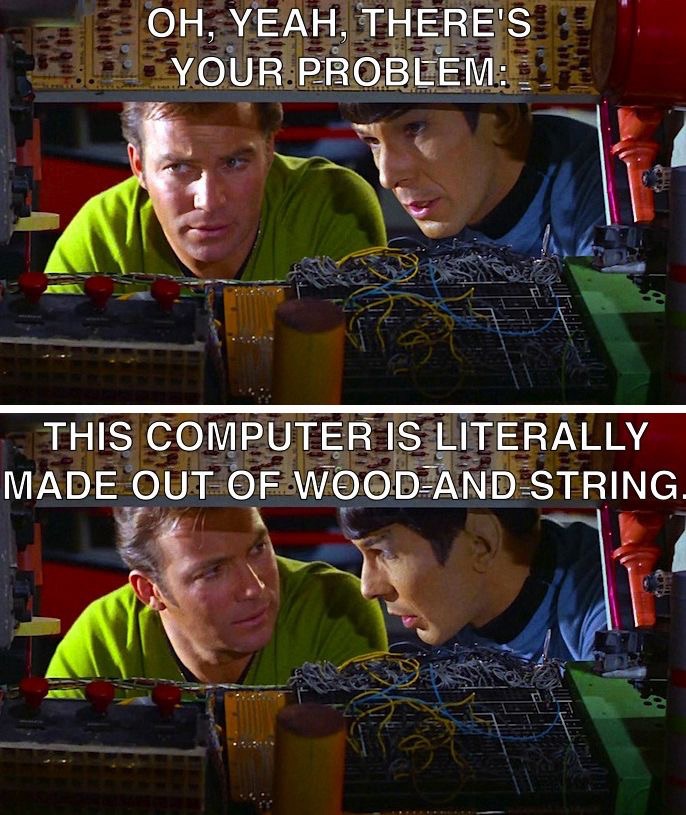
The researchers argue that “if” trees could be planted on Mars…
OK, just stop right there. I’m pretty sure Mars will struggle to support even grass, let alone trees.
And the argument that, due to a lack of oxygen, flammable wooden structures in space would not be in danger strikes me as a bit ludicrous…surely there would be oxygen inside the wooden structures?
And, you know, I do think I’ve seen this before some where…nah…
The scientists hope to learn about the asteroid’s surface composition and how fast it rotates, he said. Those observations could help researchers figure out its origin, which in turn could shed light on other asteroids, including ones that could be dangerous to Earth.
This is of course not the first “mini-moon” to have been discovered. These are wandering asteroids that get trapped briefly by Earth’s gravity well before being flung back into space.
Read the article for more information about the “school-bus sized” 2024PT5!
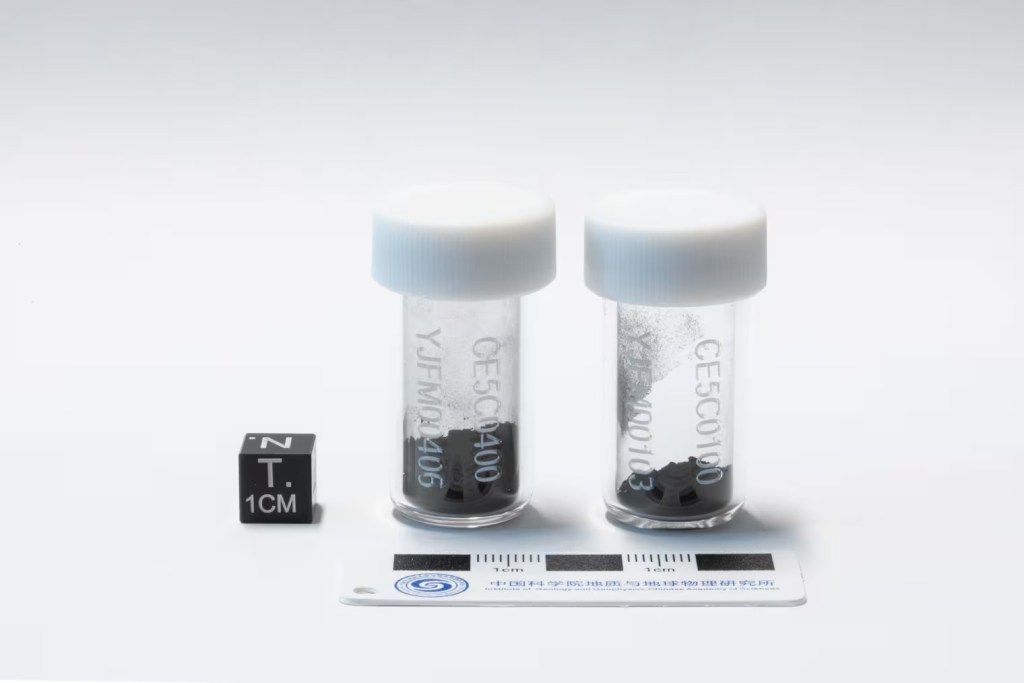
Using the new method, one metric tonne of lunar soil will be able to produce about 51 to 76 kilograms of water, equivalent to more than a hundred 500-millileter bottles of water, or the daily drinking water consumption of 50 people, the state broadcaster said.
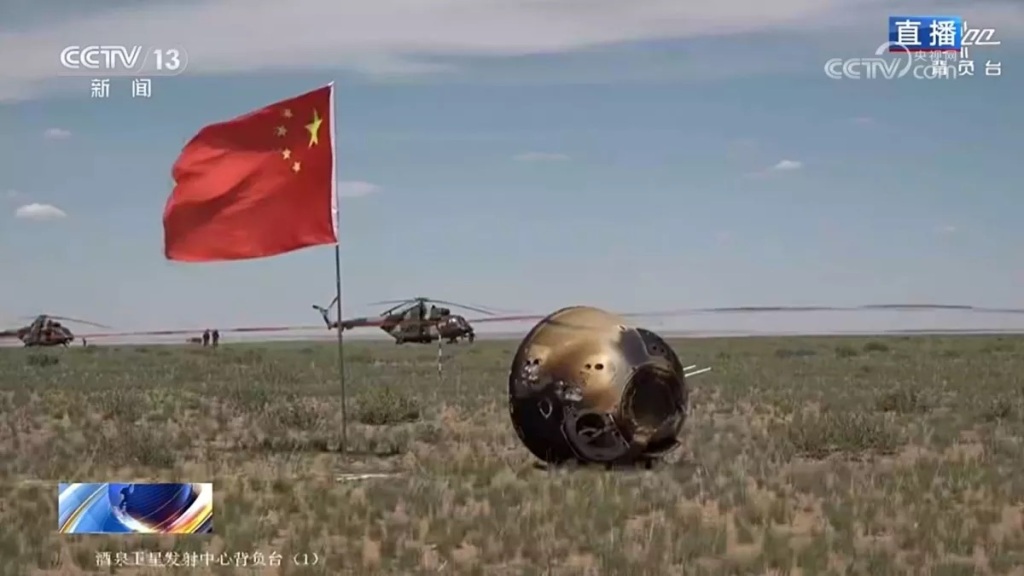
The soil was from the 2020 expedition, which was the first in 44 years to bring back soil from the Moon.
Considering all of NASA’s problems, it looks like China will have a moon base years before the US does…and probably in prime resource locations as well.
And don’t forget that the hydrogen in the soil can also be used for rocket fuel. It would be a lot easier to launch ships to Mars and beyond without having to deal with Earth’s gravity…
But China has also offered to share at least some of its new moon samples with American researchers, and NASA is allowing the U.S. scientists to submit proposals.
This is a welcome change of heart. International politics need not prevent international space exploration.
On the other hand…
China is not planning a mere short-term, flags-and-footprints presence on the Moon. Their ambition is more like Nasa’s Artemis than it is Apollo. China plans to launch two separate missions to the south pole of the Moon around 2026 and 2028 – including testing using lunar soil to 3D print bricks – as precursors to a lunar base.
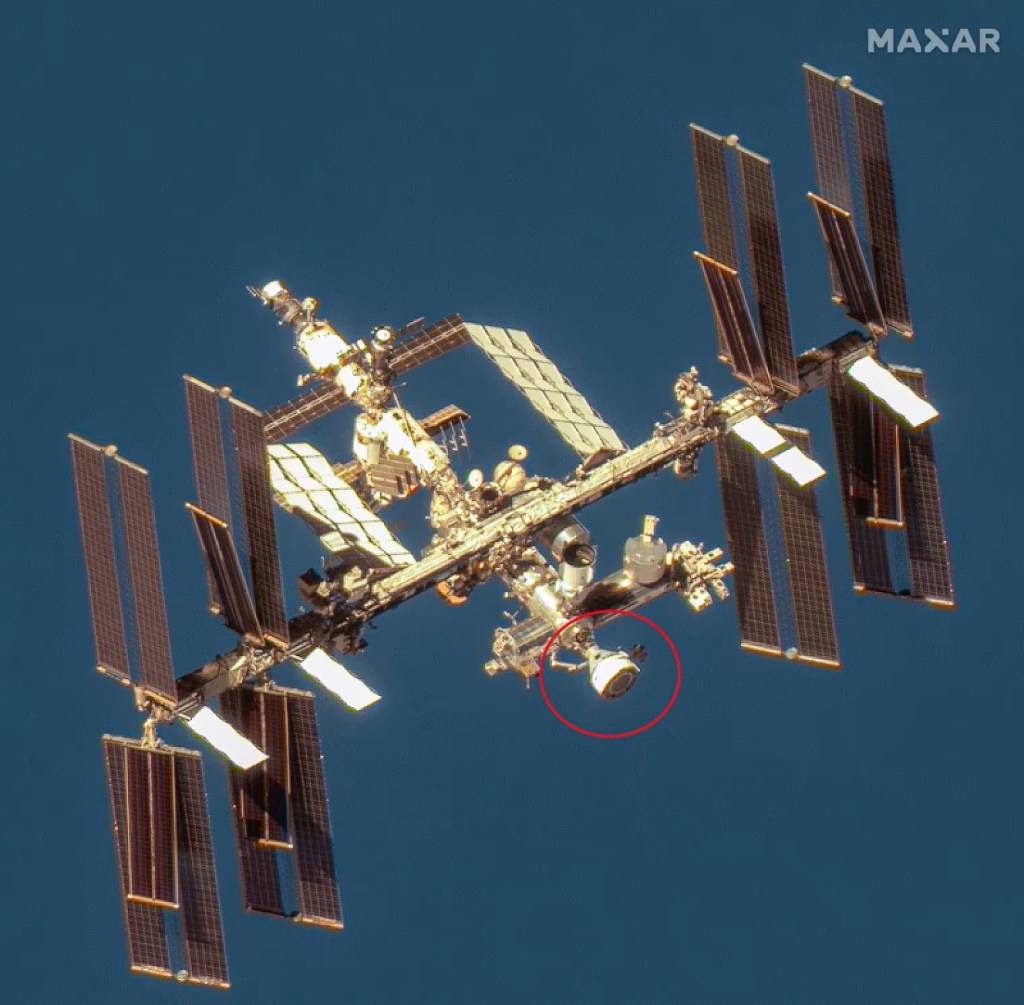
Starliner, the Boeing spacecraft whose launch was delayed by a helium leak, has now developed four additional helium leaks after docking successfully with the ISS.
They had to delay the docking due to a little problem with thrusters…
Five of the 28 thrusters were not operating but, after troubleshooting, Boeing recovered four of Starliner’s malfunctioning jets and NASA allowed the spacecraft to dock.
A contractor for Nasa urged the space agency to conduct more safety checks before the highly-anticipated first launch of its Starliner rocket – which is set to take off as soon as next week – “before something catastrophic happens”.
It was supposed to launch last week, but someone spotted a valve problem — *minutes* before the countdown procedure was about to start.
They’d better check for door plugs while they’re at it.
Boeing does not give a rat’s ass about whoever uses their products. They‘re only interest in paying dividends to stockholders. And of course paying the CEO’s ridiculously high salary.
NASA is trusting the future of space travel to people like Musk and companies like Boeing. Using taxpayer money to reward greed and incompetence.
The South Pole, where power plants are likely to be constructed (without human help…)
“The truth is that nuclear is the only option to power a moonbase,” says Simon Middleburgh from the Nuclear Futures Institute at Bangor University in Wales.
Researchers will fly rockets into the path of the eclipse, stand in zoos watching animals, send radio signals across the globe, and peer into space with massive cameras.
And you don’t need to be a scientist to take part.
If you’re lucky enough to have no clouds or rain, that is.
Things the eclipse affects:
Radio waves
Animal behavior
The birds and the bees (seriously; read about what tortoises did last time)
Things scientists can view thanks to an eclipse:
The solar wind (plasma on the surface of the Sun)
Coronal mass ejections (which interfere with satellites)
Dust rings around the Sun and possibly even new asteroids
The East Coast of North America, where most of my relatives live, is currently 13 hours behind me in Japan. So the event will be long over by the time I wake up.
Hope to see video of it on the morning news show tomorrow!
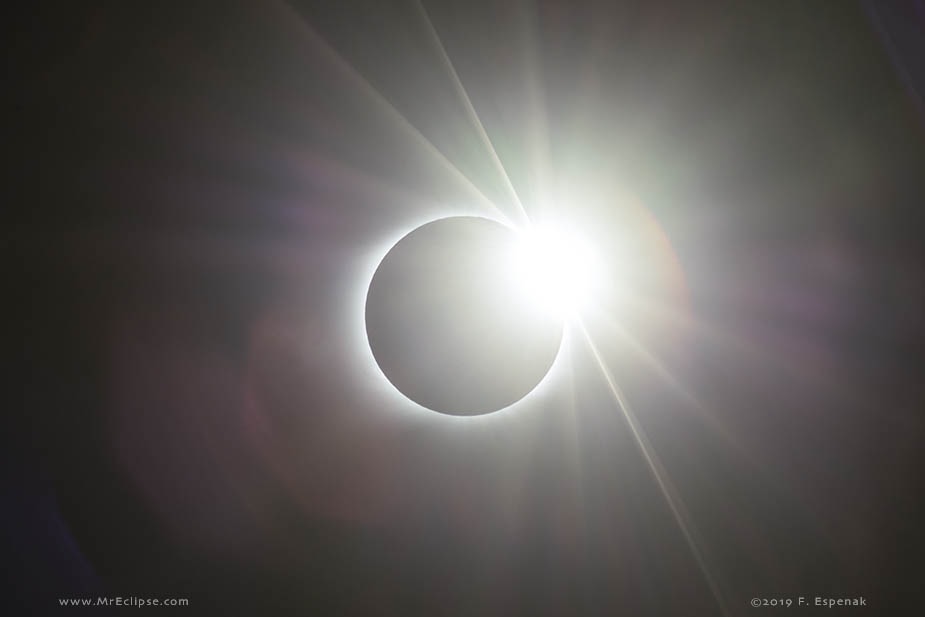
The eclipse begins as a small notch slowly appears along one edge of the Sun. During the next hour, the Moon gradually covers more and more of the Sun’s bright disk. You’ll need a Solar Filter to both view and photograph the partial phases.
On April 8, 2024, there will be a total solar eclipse across parts of North America. It starts on Mexico’s Pacific coast and ends on Canada’s Atlantic coast. (So, no, it’s not just “from San Antonio to the Canadian border” as one article puts it).
I’m a little jealous of friends and family in the path. The eclipse lasts for over four minutes this time — if you’re in the area, enjoy!