It’s easy to see why fractals have been used to explain the complexity of human consciousness. Because they’re infinitely intricate, allowing complexity to emerge from simple repeated patterns, they could be the structures that support the mysterious depths of our minds.
But if this is the case, it could only be happening on the quantum level, with tiny particles moving in fractal patterns within the brain’s neurons. That’s why Penrose and Hameroff’s proposal is called a theory of “quantum consciousness”.
Quantum computers can only operate at extreme low temperatures (-272C, or -460F, which is basically colder than even the average temperature of outer space, so cold that we made up a new temperature scale called Kelvin to measure it — and no, the “Kelvin timeline” of Star Trek was not named after the temperature but after J J Abram’s grandfather).
So anyway, how is it possible that human consciousness can be considered “quantum” if we need (quite obviously) a much higher temperature to survive? (Making us controlled by classical physics and not quantum physics.)
Our brains are composed of cells called neurons, and their combined activity is believed to generate consciousness. Each neuron contains microtubules, which transport substances to different parts of the cell. The Penrose-Hameroff theory of quantum consciousness argues that microtubules are structured in a fractal pattern which would enable quantum processes to occur.
Scientists have measured electron wave functions (their quantum state) by injecting photons into two types of fractal structures, one triangular and one square-shaped (like the Sierpinski carpet pictured above). The next step would be to take quantum measurements from the brain’s microtubules.
Hmm. I think I’ve seen a shape similar to the Sierinski carpet somewhere before…
All artificial intelligence, all robots and Chatbots and everything else electronically-programmed by a human being, will inevitably have human bias.
Even women prefer women’s voices to men’s when it comes to customer service.
On the other hand, women are also historically relegated to work with lower pay, lower status, kept out of positions of power — subject to the “male gaze.”
Now, we have AI that can be treated as sex objects. Even “married.”
So it is all “sinister,” as BBC asks?
Creepy, maybe. Sad, perhaps. Entirely predictable, definitely.
As we continue to lead more and more isolated individual lives, cut off from human contact and left unable to socialize, the rise of the “AI companion” seems inevitable…
For all these technological “advances,” we are no better than the ancients. We are still prisoners to our emotions — or to the biological impulses of electricity and hormones whose results we deem emotive.
While not perfect, this is some seriously scary stuff.
FWIW the researchers themselves did recognize this…
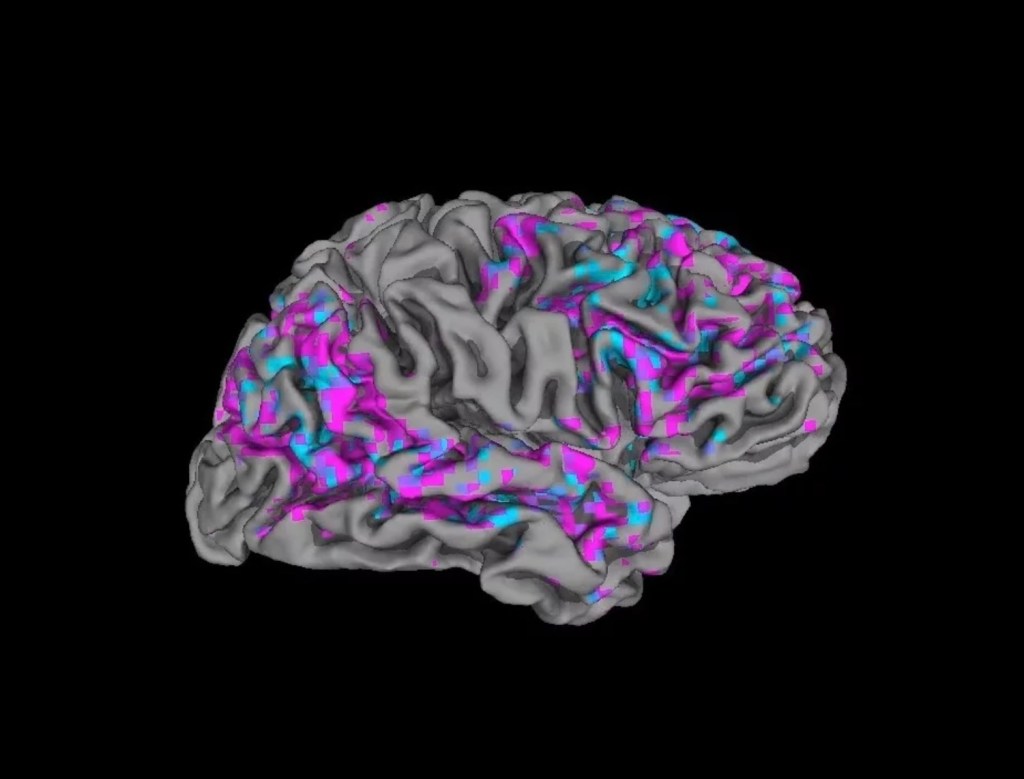
Although it’s nowhere near being able to decode spontaneous thoughts in the real world, the advance raises concerns that, with improvement, the technology might mimic some type of mind reading. “Our thought when we actually had this working was, ‘Oh my God, this is kind of terrifying,’” Huth recalls.
Participants have to consent to being “read,” and there are ways to prevent the software from figuring out even the “gist” of what they were thinking.
Still, imagine if some nefarious criminal group (or governmental agency, if there is a difference) decided to force someone to consent to have their thoughts read.
Long distance.
Permanently.
It’s getting harder and harder to distinguish scifi from reality.
Interestingly, they position this advancement as progress in privacy rights; “In addition, they protect individuals’ privacy and the required equipment can be bought at a reasonable price,” they wrote.
“Embedding a similar type of computer in a soldier’s brain could suppress their fear and anxiety, allowing them to carry out combat missions more efficiently.”
Sounds like science fiction, but it’s pretty close to reality. BCI (brain computer interface) is being tested in patients who lack muscle control but imagine if this tech gets weaponized (and what hasn’t been, eventually).
But what if BCI were used to suppress emotions in a healthy brain? Or used to implant thoughts? Or worse?
“…if a BCI tampers with how the world seems to a user, they might not be able to distinguish their own thoughts or emotions from altered versions of themselves…”
(same website as above…note that the PC version of WordPress does not do “quotations” correctly any more…)
PKD fans will instantly recognize this.
Androids don’t just dream of electric sheep. 🐑
(Fans of Ghost in the Shell and more importantly its movie sequel Innocence should also recognize the potential hacking danger…imagine if the government could control our emotions, thoughts, and memories…)
As the training progressed, the participants changed the way they used the device, which resulted in new finger coordination patterns. This was recorded in their hand movements as well as in their brains.
…the team’s results suggest that, while the physical processes that drive the structure of the Universe and the structure of the human brain are extremely different, they can result in similar levels of complexity and self-organisation…
“But decoding and storing memories raise a new set of ethical, moral and legal questions. For instance, who would own these memories after a person has died? Could the police obtain warrants to search through memories? Given that memory itself isn’t completely reliable, could memories be used in lawsuits? How could we ensure that unscrupulous professionals don’t sell or share them?”
Hm, I think I can see another direction this might eventually take…










 M Thomas Apple Author Page