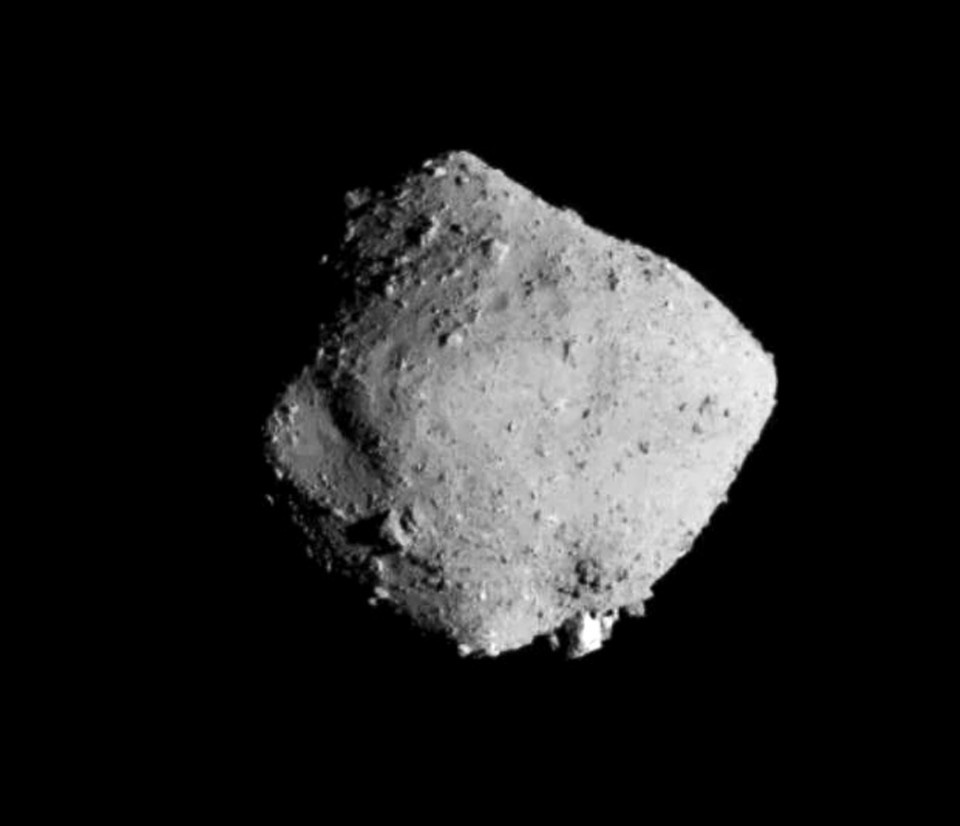
More than 20 types of amino acids have been detected in samples Japan’s Hayabusa2 space probe brought to Earth from an asteroid in late 2020, a government official said Monday, showing for the first time the organic compounds exist on asteroids in space.
This lends support to the hypothesis that life on Earth was brought to it during the Late Heavy Bombardment period – in which meteors brought not just water but the building blocks of life…
Now imagine if someone were to find an asteroid with addition proteins NOT found on Earth… (i.e., my novel’s scientific premise…)
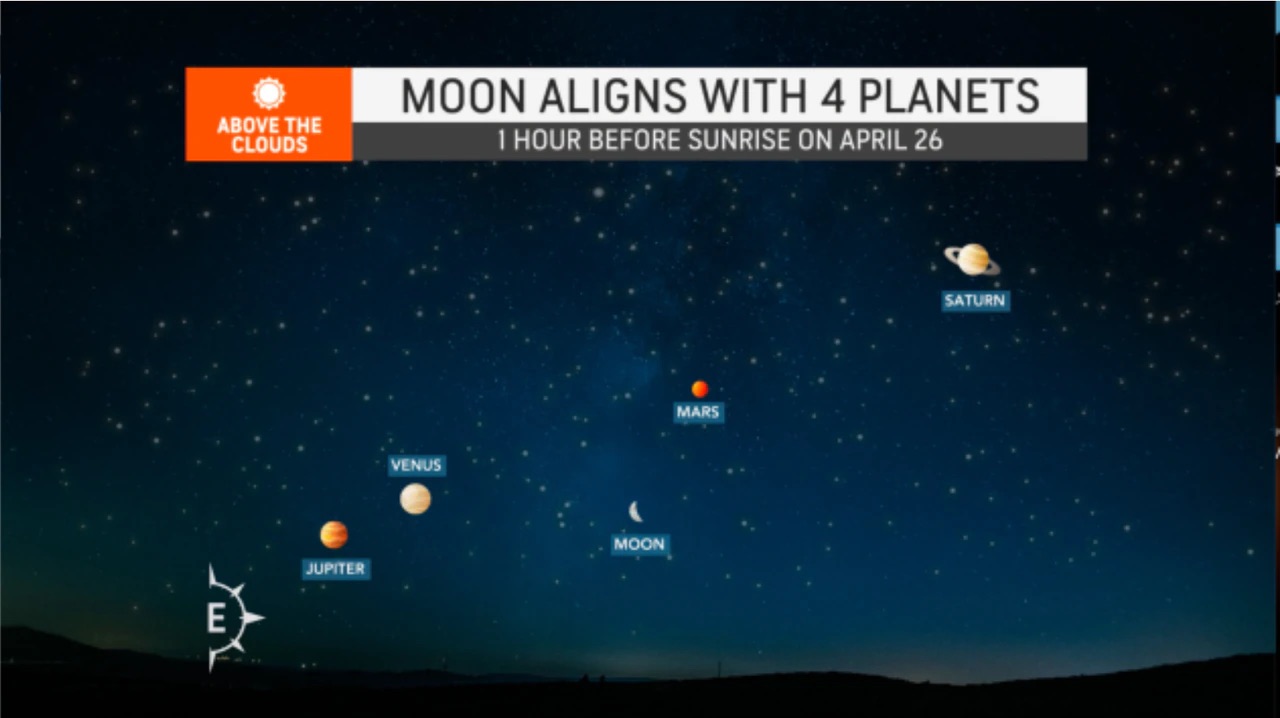
(Note: You won’t be able to see the planets actually looking like these photoshopped images…unless you happen to have a really powerful telescope in your backyard.)
Not sure why I first got this info from a site based in New Jersey. The info about what time of day and in what part of the sky is only relevant to people living in the NJ_NYC area.
Still, it’s an interesting phenomenon that occurs once every few years…
2005. 2016. 2020. And 2022. Not exactly a regular pattern, it seems.
And, no, there is no “spiritual significance” to a planetary alignment. It’s an illusion, an imaginary lining up of the solar system that doesn’t affect you personally. Sorry.
But it’s still fun to watch. Er, if you enjoy getting up before dawn (I don’t).
According to nj.com, “The planetary parade of sorts will occur when Jupiter, Venus, Mars and Saturn all appear to be lined up in a row above the horizon during the pre-dawn hours — starting Saturday morning, April 23. The alignment will also be visible during the next few mornings, and April’s crescent moon will soon join the parade, according to experts from LiveScience and AccuWeather.”
Yeah, lots of web sites are covering this. At least the one I linked above doesn’t have automated videos, flashing ad gifs, and other random pop-ups that drain your smartphone battery.
In short, the algae will use sunlight to transform CO2 into sugars that are then enhanced by bio-engineered E.coli into 2,3-butanediol. Interestingly, 2,3-BDO is not entirely conceptual as it currently exists and is mainly used to produce rubber components. It has just never been thought of as fuel before.
Ya know, I’m pretty sure we need to figure out “this whole food-air deal” first (to quote comedian Bill Hicks).
“The US space agency confirmed that there were currently no plans for a field or project office to explore the topic in any detail but that could change as we get closer to putting humans on Mars.“
“We give off waste heat (from industry and homes and so on) and artificial light at night, but perhaps most significantly, we produce chemicals that fill our atmosphere with compounds that wouldn’t otherwise be present. These artificial atmospheric constituents just might be the thing that gives us away to a distant alien species scanning the galaxy with their own powerful telescope.”
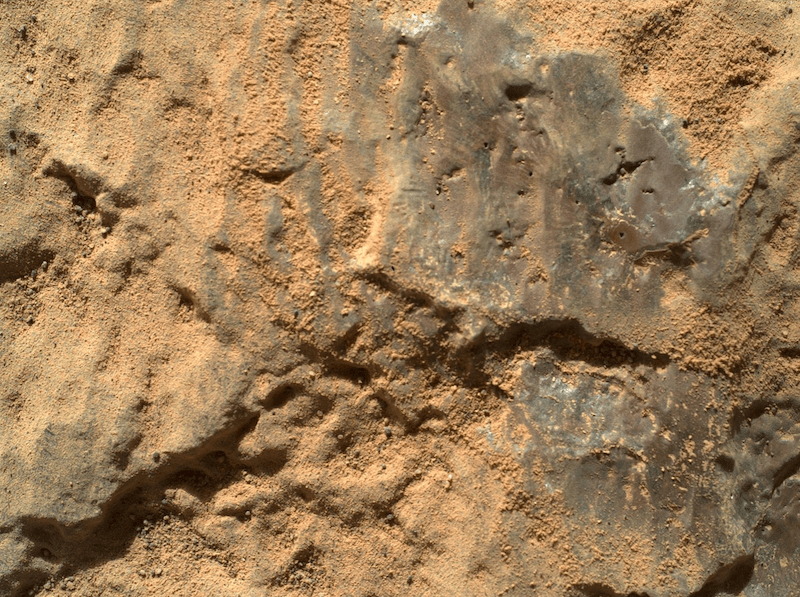
SuperCam showed that the coatings are enriched in hydrogen and sometimes magnesium. In addition, images from Mastcam-Z suggest that they also contain iron oxides. Both the hydrogen and iron oxides point to past water being involved in the formation of the coatings. That shouldn’t be too surprising, perhaps, since this area in Jezero Crater used to be a lake a few billion years ago.
The rocks resemble so-called desert varnish, which protect microbes from the sun’s radiation. It’d be interesting to find out whether cyanobacteria that once existed on Mars did this…but the four billion year old question is, how did those bacteria get there in the first place?
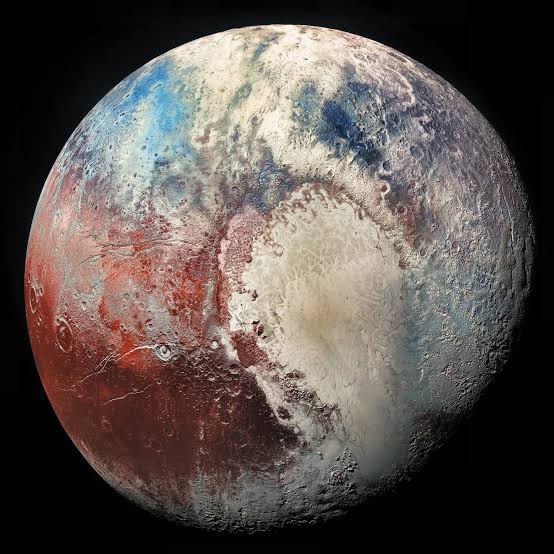
Demoted by the IAU in 2006, the Once and Future “9th planet”
…a study announced in December from a team of researchers in the journal Icarus now claims the IAU’s definition was based on astrology — a type of folklore, not science — and that it’s harming both scientific research and the popular understanding of the solar system.
I’m not sure I agree that moons of Jupiter and Saturn should be classified as “planets,” but frankly I see little difference between “dwarf planets” and “planets.”
Plus it wrecks the song I learned to remember the order…
OK, I readily admit that I am once again waaaay behind on my scifi blogging.
At some point last week, I looked up from the mass amounts of work I had left to do and went, “Uh. August 21st? Was that really the last time I posted?”
Uh. Yup.
😣
I’ll do my best to get the rest of Riss’s story online on a biweekly basis, like I promised I would.
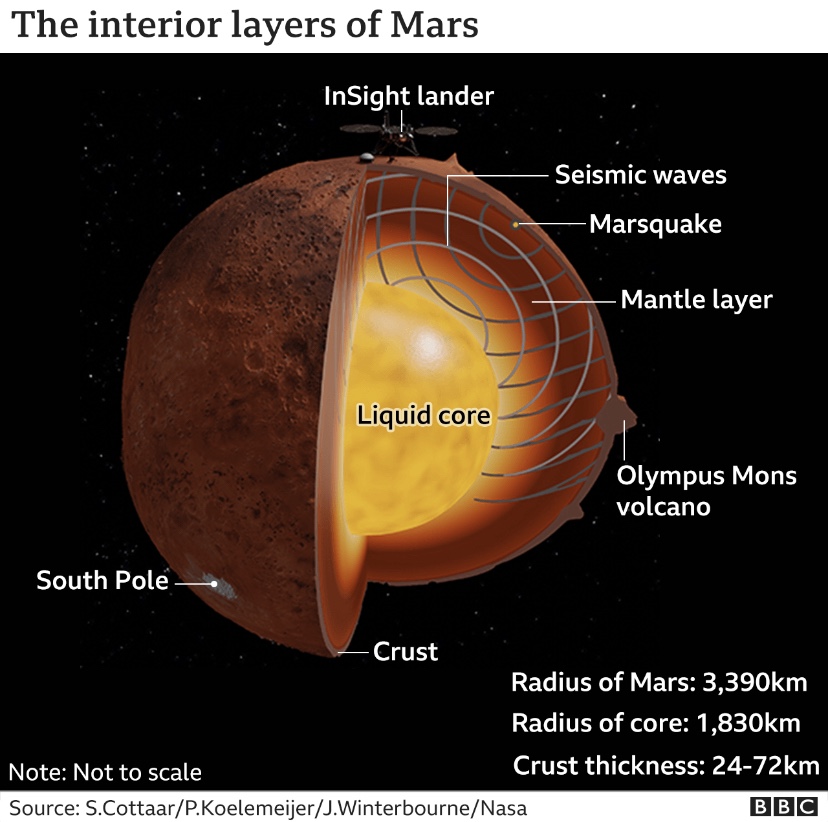
Well, OK, technically it’s the mantle, not the crust.
But it is thick. Super thick. And no gradations like the Earth.
Extrapolating to the known surface geology of the rest of the planet, this suggests an average thickness of between 24km and 72km. By contrast, Earth’s average crustal thickness is 15-20km.




 M Thomas Apple Author Page