
Um. Yeah. Like, I’ve, uh, never done this before…
Back with more science, space, and etc. posts soon!

February 17, 2026
December 19, 2025
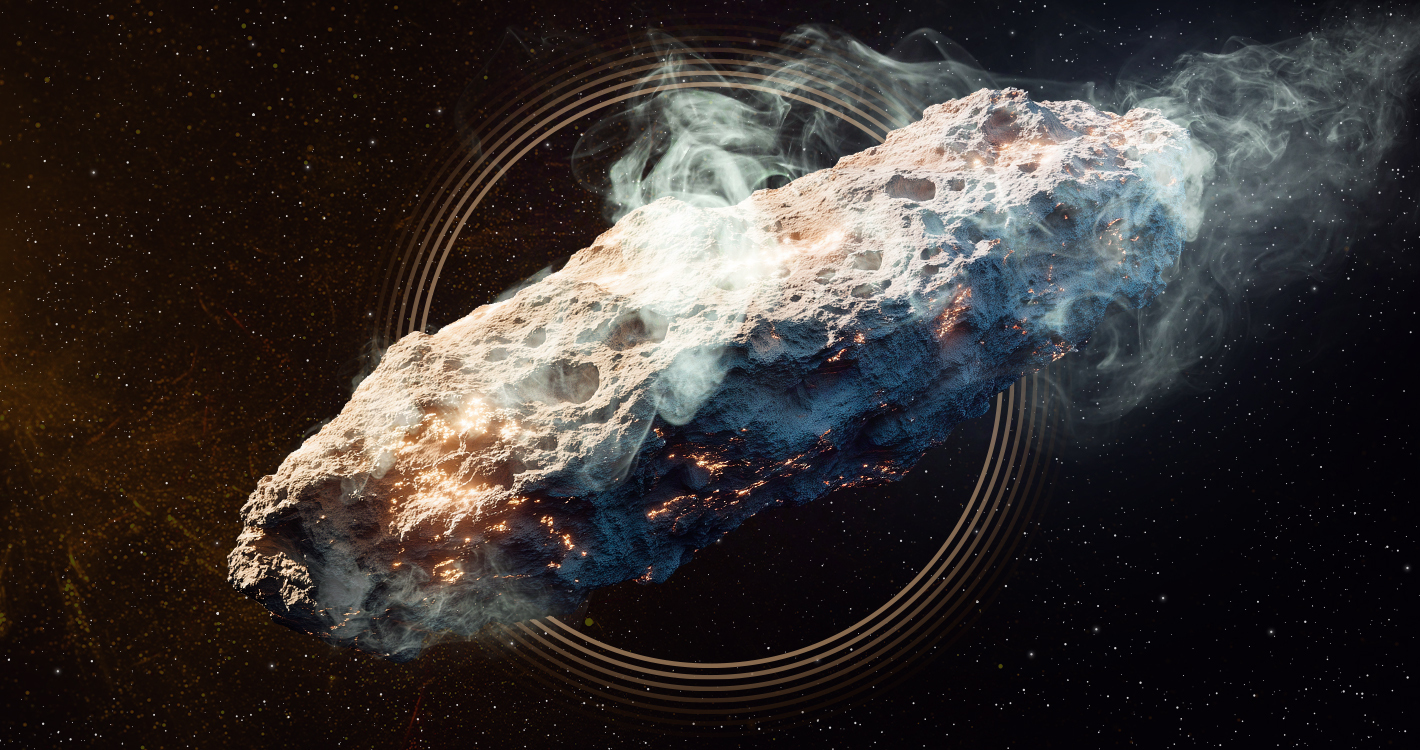
https://www.space.com/news/live/interstellar-comet-3i-atlas-closest-to-earth-flyby-week-dec-18-2025
Discovered on July 1 by the NASA-funded ATLAS telescopes in Chile, 3I/ATLAS is only the third confirmed interstellar object known to have passed through our cosmic neighborhood, following 1I/‘Oumuamua in 2017 and comet 2I/Borisov in 2019. Its trajectory shows that it originated from beyond our solar system and will eventually travel back into interstellar space.
Of course, Avi Loeb has already claimed (once again) that an interstellar comet is an “alien probe.”
And naturally, other astrophysicists immediately refuted him. Again.
It’s fast. REAL fast. So fast that even as it entered the solar system it was traveling the distance from the Earth to the Sun in only a month, and then it began to pick up even more speed (from the Sun’s gravity, NOT from “jets out the back” or whatever else unscientific SF fans say online).
Of course, we can assume that the aliens’ spaceship will detach from it precisely during its approach to Mars, or during its passage through perihelion when we cannot see it. In this case, it will have to slow down by more than 20 km/s.
And even so, this will not help the aliens much, because the trajectory will remain retrograde relative to the direction of the planets’ rotation around the Sun. So, if the aliens who flew to us billions of years ago have a plan that is a little more complicated than becoming kamikaze pilots, they will have to slow down again, spending a lot of energy on it. And the aliens still need to get that energy from somewhere.
So, most likely, we should not expect any extraterrestrial visitors at the end of the year. And we will not be able to admire the interstellar comet itself. By the time it emerges from behind the Sun, its brightness will already be approximately 11 stellar magnitudes, meaning it will be inaccessible even to small amateur instruments, let alone the naked eye.
So, nah. Sorry.
–> LIVESTREAM from 11 p.m. EST December 19th here: https://www.space.com/astronomy/comets/watch-interstellar-comet-3i-atlas-make-its-closest-approach-to-earth-in-free-livestream-on-dec-18
(FWIW, the last two sentences are NOT supposed to be quotes, but wordpress is quite frankly broken.)
August 5, 2025
Hi, everyone. I haven’t written a blog post in a very long time.
For various reasons.
I’ll see if I can start posting a few entries on recent science events in a few days (for starters, four astronauts finally arrived at the ISS, the first replacements following the Boeing Starliner fiasco).
But for right now, I want to follow up this short post with some analysis I got from our friend ChatGPT…
…about Adam’s Stepsons and Bringer of Light. Stay tuned!
September 4, 2024
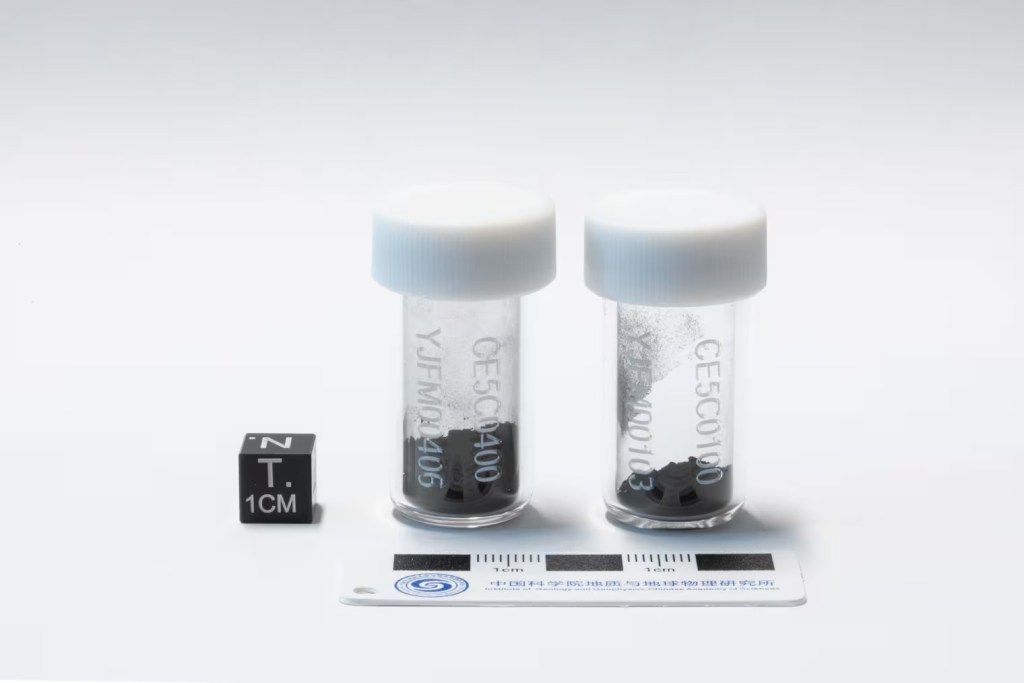
Using the new method, one metric tonne of lunar soil will be able to produce about 51 to 76 kilograms of water, equivalent to more than a hundred 500-millileter bottles of water, or the daily drinking water consumption of 50 people, the state broadcaster said.
https://www.nbcnews.com/science/space/chinese-scientists-use-lunar-soil-produce-water-rcna167951
The soil was from the 2020 expedition, which was the first in 44 years to bring back soil from the Moon.
Considering all of NASA’s problems, it looks like China will have a moon base years before the US does…and probably in prime resource locations as well.
And don’t forget that the hydrogen in the soil can also be used for rocket fuel. It would be a lot easier to launch ships to Mars and beyond without having to deal with Earth’s gravity…
June 17, 2024
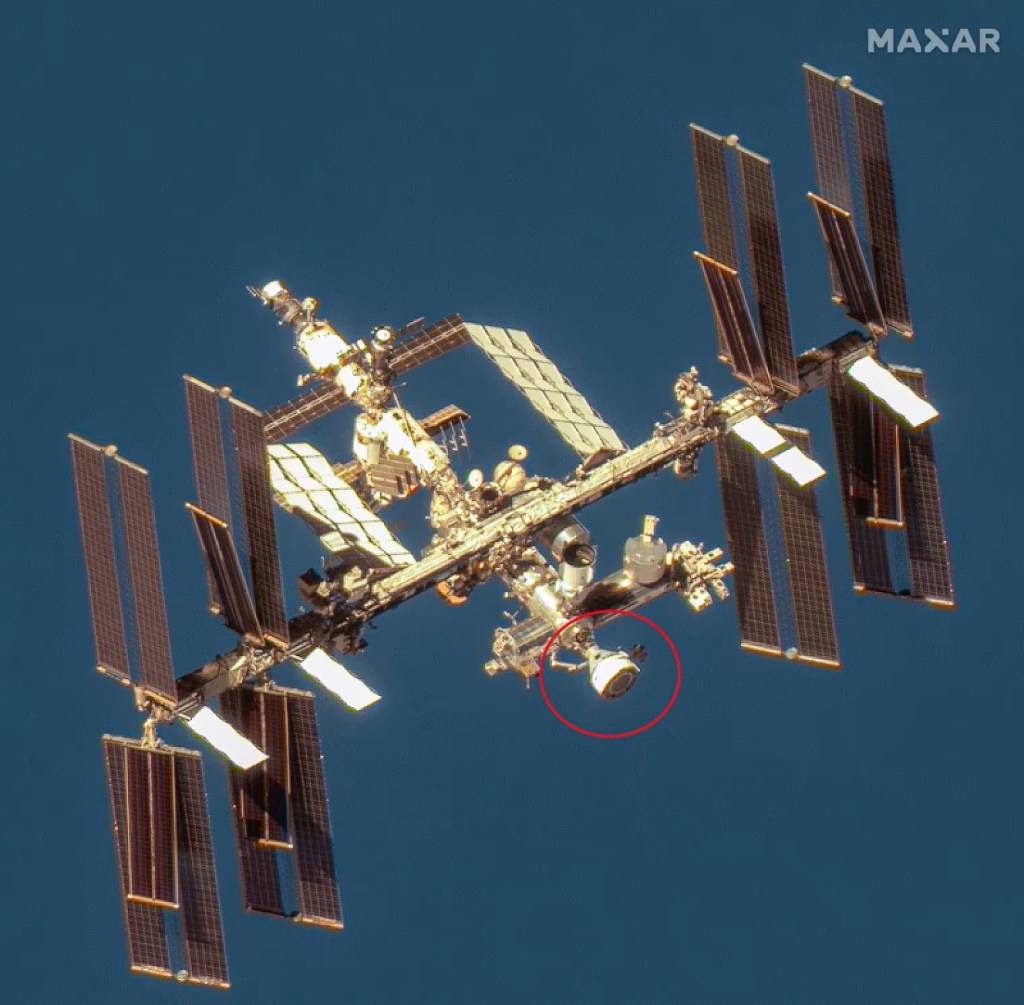
Starliner, the Boeing spacecraft whose launch was delayed by a helium leak, has now developed four additional helium leaks after docking successfully with the ISS.
They had to delay the docking due to a little problem with thrusters…
Five of the 28 thrusters were not operating but, after troubleshooting, Boeing recovered four of Starliner’s malfunctioning jets and NASA allowed the spacecraft to dock.
So their return to Earth has been delayed so that they can run some more tests.
I sure hope they have built some redundancies to this system. Remember, this is Boeing. QC is not exactly high on their priorities list…
May 15, 2024

A contractor for Nasa urged the space agency to conduct more safety checks before the highly-anticipated first launch of its Starliner rocket – which is set to take off as soon as next week – “before something catastrophic happens”.
https://www.independent.co.uk/tech/nasa-contractor-boeing-starliner-launch-b2542947.html
It was supposed to launch last week, but someone spotted a valve problem — *minutes* before the countdown procedure was about to start.
They’d better check for door plugs while they’re at it.
Boeing does not give a rat’s ass about whoever uses their products. They‘re only interest in paying dividends to stockholders. And of course paying the CEO’s ridiculously high salary.
NASA is trusting the future of space travel to people like Musk and companies like Boeing. Using taxpayer money to reward greed and incompetence.
We can do better than this.
May 7, 2024
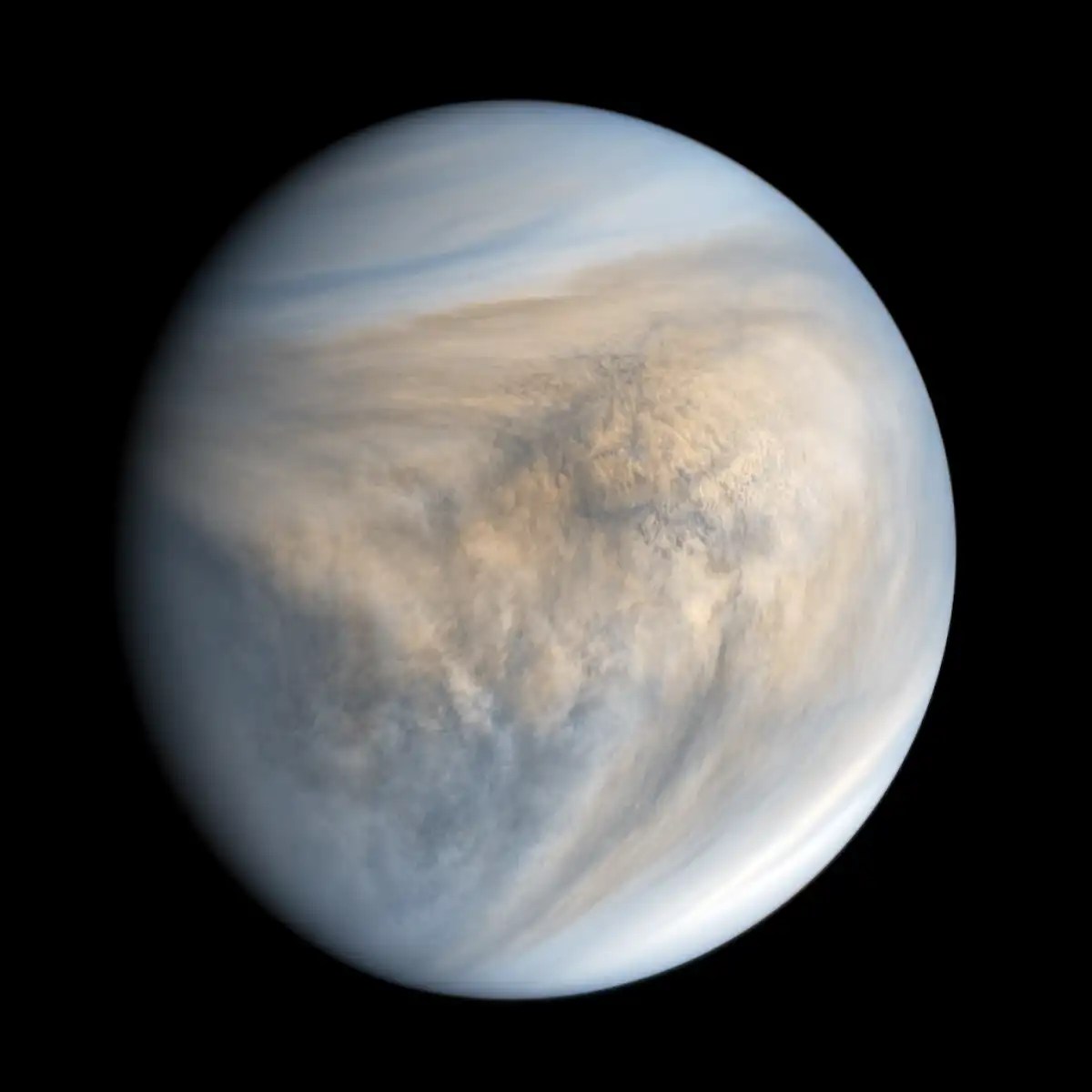
Over time, that water has nearly all been lost. Figuring out how, when and why Venus lost its water helps planetary scientists like me understand what makes a planet habitable — or what can make a habitable planet transform into an uninhabitable world.
https://theconversation.com/venus-is-losing-water-faster-than-previously-thought-heres-what-that-could-mean-for-the-early-planets-habitability-229342
The process in which Venus lost most of its water is called “hydrodynamic escape.” When Venus got too hot, the hydrogen in its atmosphere left. (The linked article explains this using a metaphor of having too many blankets on your bed.)
However, Venus is still losing hydrogen, even though there is too little of it for hydrodynamic escape to work. So, logically, there must be another process at work: “HCO⁺ dissociative recombination,” in which individually positively charged atoms of hydrogen, carbon, and oxygen in the atmosphere react with negatively charged electrons. The process was first examined on Mars, and based on a reexamination of results from previous missions (Pioneer Venus 1 and Pioneer Venus 2), the same research group thinks it’s time to try it on Venus…perhaps a first step to seeing whether Venus had life at some point.
April 30, 2024
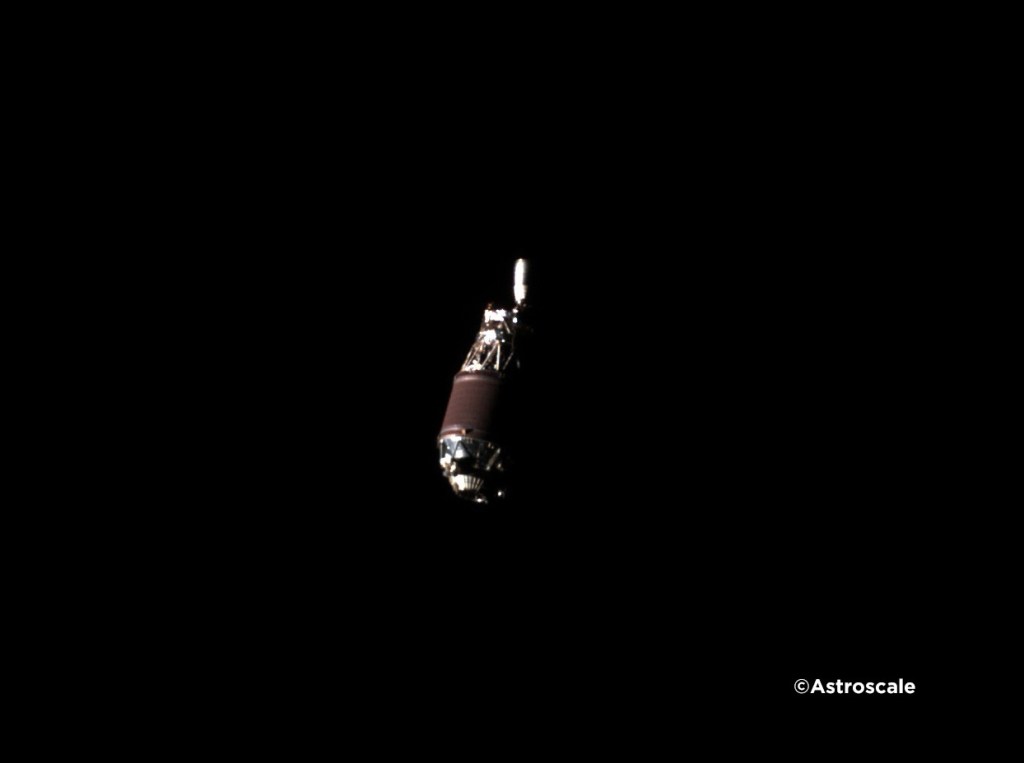
Japanese space company Astroscale Holdings Inc has unveiled what it calls the world’s first publicly released close-up image taken of space debris, hailing it as progress toward understanding the challenges posed by trash orbiting Earth.
https://japantoday.com/category/tech/update1-japan-startup-reveals-world%27s-first-close-up-space-debris-image?
Hmm.🤔 what will happen to the rocket and the satellite that took this picture?
April 23, 2024

NASA says it is once again able to get meaningful information back from the Voyager 1 probe, after months of troubleshooting a glitch that had this venerable spacecraft sending home messages that made no sense.
https://www.npr.org/2024/04/23/1246392066/nasa-voyager-1-spacecraft-talks-back
Hmm. Just a short while ago, Voyager’s days were numbered.
I guess these things were built to last… (also built when NASA got a lot more funding…)
April 11, 2024

There are many words that could be used to describe WASP-76b — hellish, scorching, turbulent, chaotic, and even violent. This is a planet outside the solar system that sits so close to its star it gets hot enough to vaporize lead. So, as you can imagine, until now, “glorious” wasn’t one of those words.
https://www.space.com/hellish-exoplanet-rainbow-glory-effect-cheops
This planet (located in the constellation Pisces) seems to have a rainbow effect of concentric rings…despite being so hot that iron falls from the sky.
Space sustainability watch, co-produced by a human and an AI agent
Writing Fanfiction in the worlds of Tolkien and Beyond!
Learning more about our place in the universe...
Best Tech Gadgets Advise
Writing blogs is miracle I am a writer blogger and my site mission is to give information on maximum information to audiences
Reflections of an inquiring retiree ...
Simple ideas to make every room feel stylish and welcoming
Rock & Metal Reviews That Hit Hard
Short stories | Reflections | Poetry

