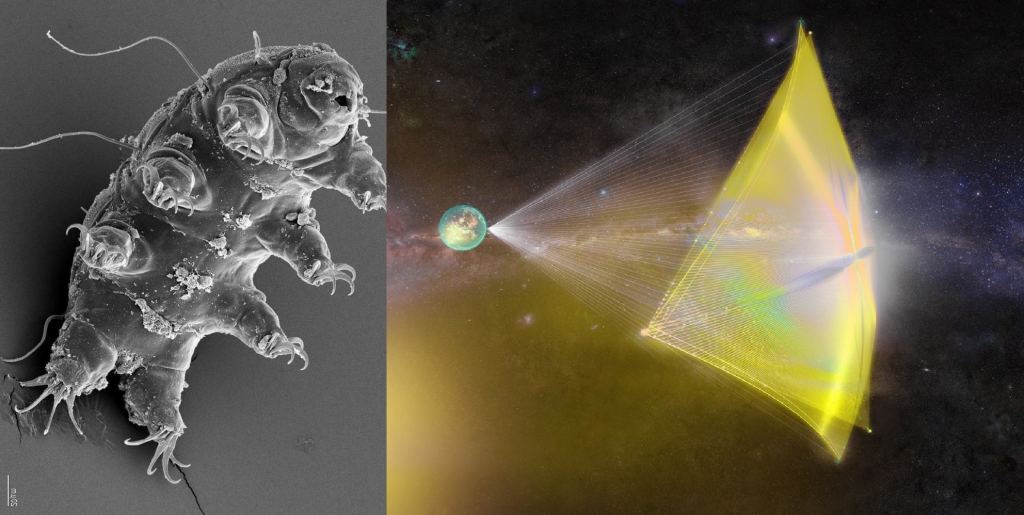
Hang on, I think I’ve seen this before…
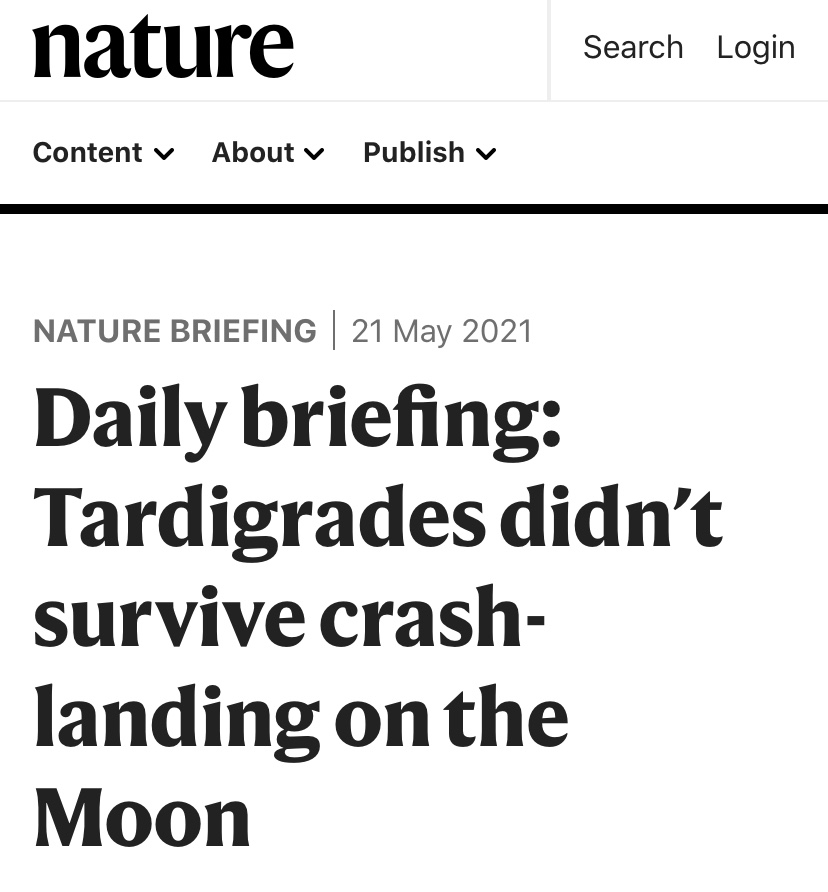
Oh.
Not such a great idea, then, to send them on an interstellar cruise…

November 12, 2021
Hang on, I think I’ve seen this before…
Oh.
Not such a great idea, then, to send them on an interstellar cruise…
September 18, 2021
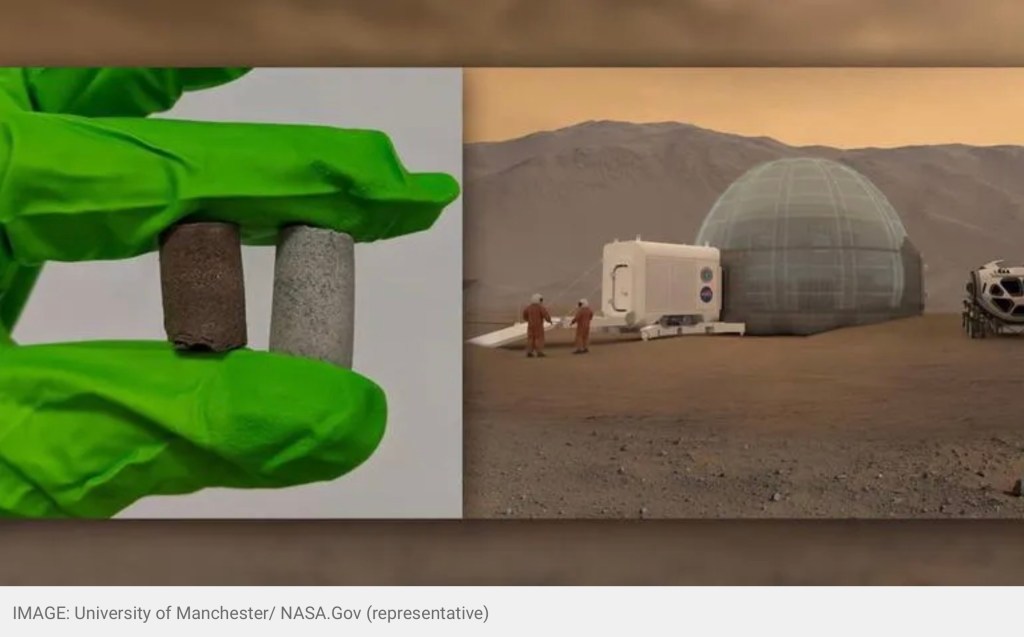
The blood, sweat, and tears of pioneering astronauts could literally turn Mars regolith into building materials.
First, however, they’d need to get the 3D printers there…
June 25, 2021

It’s becoming increasingly common to see social media posts claiming that the mRNA COVID-19 vaccines, which include those made by Pfizer and Moderna, could alter a person’s DNA. Some posts even suggest that nano-machines are being injected into the body.
https://cosmosmagazine.com/health/covid/technically-no-longer-human-can-mrna-covid-19-vaccines-meld-with-your-dna/
Yeah, I’ve seen some of these posts. Talked to a neighbor who was convinced Bill Gates was trying to inject us all with a chip to control our minds.
Is there any truth to these rumours? Could an mRNA vaccine be modifying your DNA?
No.
(Read the linked Cosmos article for more details!)
Actually, all you need to do is use logic and reasoning, apply some critical thinking, and demand lots of science-based evidence.
It’s called the Baloney Detection Kit and was introduced in a Cornell University undergraduate course about critical thinking and the scientific method by astrophysicist Carl Sagan.

In his book The Demon-haunted World, he lays out nine steps to bust BS and call out unscientific baloney. I use it with my second year undergrad students in a current news and global issues course.
The link above to the kit also outlines some of the most important logical fallacies to avoid, with number 8 and 9 being the most difficult to explain and convince people about (because they involve education about basic statistics).
So will this convince anti-vaxxers who make outlandish claims online?
Probably not. Unless it goes viral 😉.
June 19, 2021

The inclusion of an ion propulsion system in a long-running, Earth-orbiting space station will give researchers a chance to test out the tech while astronauts are still close to home — and if it works as hoped, it could one day ferry explorers to Mars and even more distant destinations.
https://www.freethink.com/articles/ion-propulsion
That’s a big “if.”
Another is what the price will be, since no doubt this neat new tech won’t easily be shared among nation-states.
Just yesterday Chinese astronauts entered their new space station for the first time. They weren’t allowed into the ISS. Now they don’t need the ISS.
The old rivalries will follow humanity into space…but for how long will the rivalries remain…
June 5, 2021
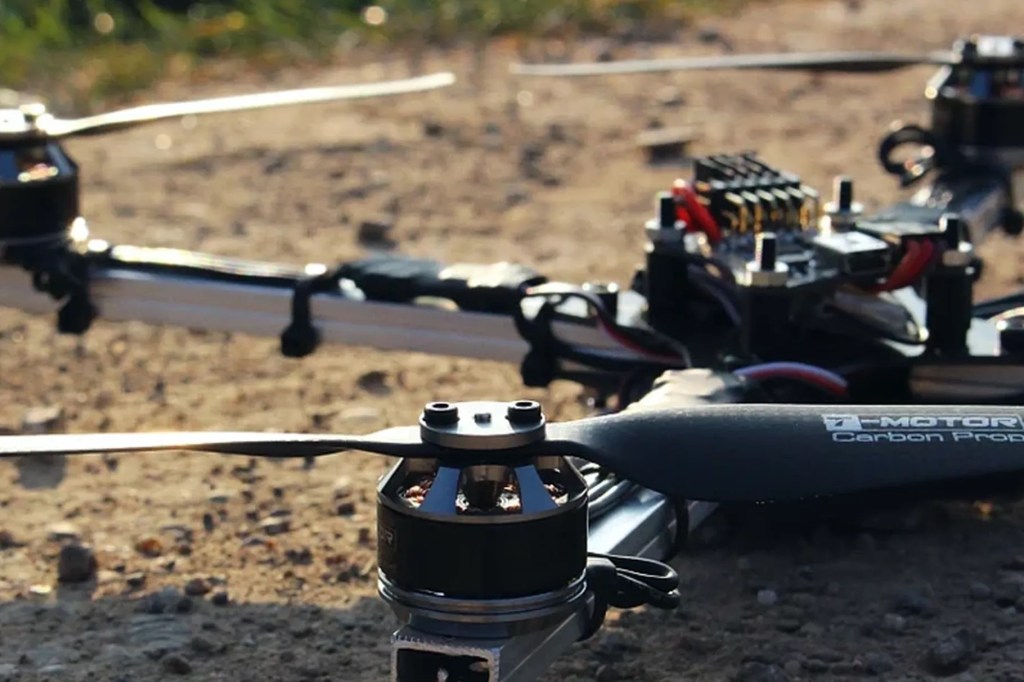
Diving into the topic doesn’t reveal that the world quietly experienced the opening salvos of the Terminator timeline in 2020. But it does point to a more prosaic and perhaps much more depressing truth: that no one can agree on what a killer robot is, and if we wait for this to happen, their presence in war will have long been normalized. It’s cheery stuff, isn’t it? It’ll take your mind off the global pandemic at least.
https://www.theverge.com/2021/6/3/22462840/killer-robot-autonomous-drone-attack-libya-un-report-context
Actually, the truly scary “killer robots” would be much less like Terminator and more like the self-replicating ones in PDK’s “Second Variety” (or Screamers for those who haven’t read the original short…my recommendation? forget the B movie, read the story).

But there are already plenty of “semi-automated” machines that kill. It’s relatively easy to program a device to wait until someone approaches, and then shoot/radiate/explode. Strictly speaking, even basic landmines fit this definition.
What would help is the media stopping sensationalistic yellow journalism that throws around fear-mongering hyped-up headlines to sell copy.
Yeah, right. Like that’ll happen any time soon.
Machines killing without a human operator? Already here.
Machines seeking out and killing humans without pre-programmed responses and of their own accord?
We’re a long way away from that.
For now.

May 20, 2021

This is a neat summary of the current state of faster-than-light (FTL) theories. (From April 27, 2021).
As the author concludes in the words of Captain Picard, “Things are only impossible until they are not.”
https://astronomy.com/news/2021/04/warp-drives-physicists-investigate-faster-than-light-space-travel
May 20, 2021

As the training progressed, the participants changed the way they used the device, which resulted in new finger coordination patterns. This was recorded in their hand movements as well as in their brains.
https://gizmodo.com/like-a-part-of-their-body-people-adapt-to-an-extra-thu-1846926329
The only problem with the design is that you have to control it with your foot. Not ideal if you’re walking!
Not to worry. That’s the next step. Er, stage.
May 4, 2021

“When they did that design, they should have stopped and thought, ‘you know, that’s going to leave a big chunk of debris in orbit, we should change the design of the engine’,” McDowell says. “But they didn’t. This is real negligence.”
https://www.inverse.com/science/long-march-5b-uncontrolled-reentry
Four years ago, China’s first space station landed in the Pacific Ocean between Australia and Chile, after an uncontrolled reentry. China didn’t care.
Last year, pieces from a Long March 5B rocket landed in Cote d’Ivoire. They damaged buildings in two villages. China didn’t care.
This launch of the same rocket design could land anywhere from New York to New Zealand, covering a wide range of habitation. China doesn’t care.
On the other hand, once somebody in their government reads about the criticism by the scientific community, they’ll petulantly whine that this often happened in the 1960s, so that makes it OK for them to ignore rocket safety designs known for the past 30 years.
Maybe it’s technology they haven’t yet stolen from other countries.
As the self-acknowledged center of the known universe, the Middle Kingdom only cares what others think of it. Like a spoiled child that thinks it knows everything but fears it does not, China only reacts to its own mistakes by lashing out at others and disclaiming responsibility.
If you want to be respected as a superpower, you need to learn how to respect other countries and stop dumping your trash on them. Respect is not given, it is earned. China has done little to earn any respect by the scientific community.
April 19, 2021
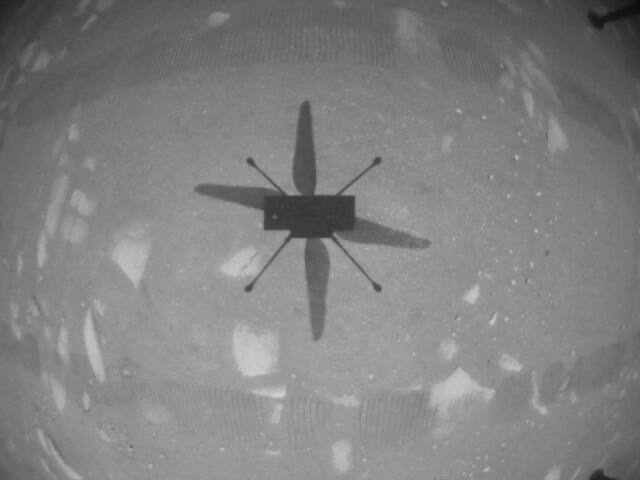
“We together flew on Mars. We together have our Wright brothers moment.”
https://www.washingtonpost.com/technology/2021/04/19/nasa-ingenuity-helicopter-mars/
Yeah, yeah, I know. Technically, a German immigrant in Connecticut flew a plane before Orville and Wilbur.
But PR counts. Kudos, NASA!
April 12, 2021

Using blobs of skin cells from frog embryos, scientists have grown creatures unlike anything else on Earth, a new study reports. These microscopic “living machines” can swim, sweep up debris and heal themselves after a gash.
https://www.sciencenews.org/article/frog-skin-cells-self-made-living-machines-xenobots/amp?__twitter_impression=true
The possibilities are endless…

Writing Fanfiction in the worlds of Tolkien and Beyond!
Learning more about our place in the universe...
Best Tech Gadgets Advise
Marvel Comics Reviews, Previews and News
Writing blogs is miracle I am a writer blogger and my site mission is to give information on maximum information to audiences
Reflections of an inquiring retiree ...
Bring the Outdoors In, and the Indoors Out
Rock & Metal Reviews That Hit Hard
Short stories | Reflections | Poetry
Read. Reflect. Grow
 M Thomas Apple Author Page