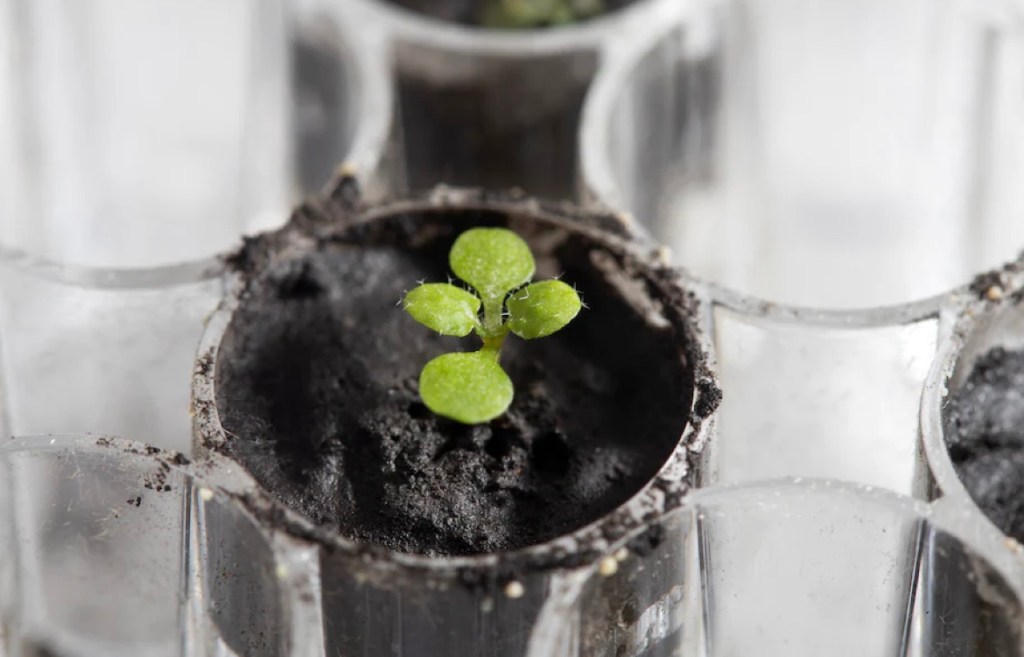
The samples were extremely hydrophobic, and repelled water as if it were the most disgusting thing ever invented. Researchers labored to get the lunar soil to gradually soak up water. They also added a nutrient solution.
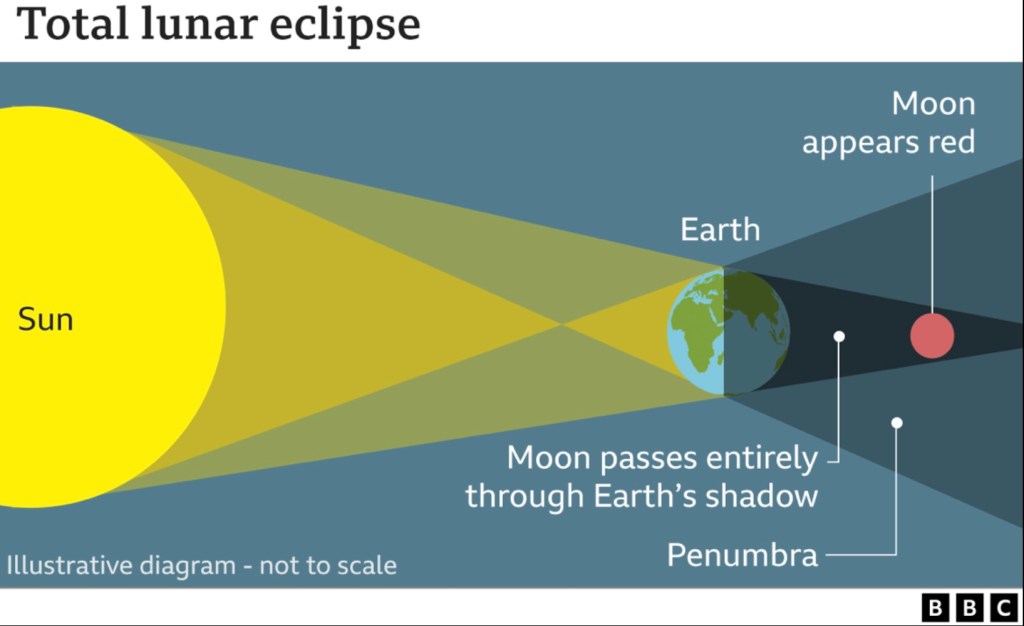
I love the “illustrative diagram” note for people who might complain this is not scientifically accurate due to scale.
…if you are lucky enough to live Western Europe, parts of northwestern Africa, and some of the Americans…
As for why the Moon appears red…
“You’ll actually be seeing every sunrise and every sunset occurring around the Earth at once. All of that light will be projected on to the Moon.” (Dr Gregory Brown, Royal Observatory
And if you happened to be standing on the Moon at the time, you’d see a blood ring encircling the Earth in front of you (ah, assuming you were not on the other side of the Moon).
Come on. Somebody has got to figure out how to get a picture of that.
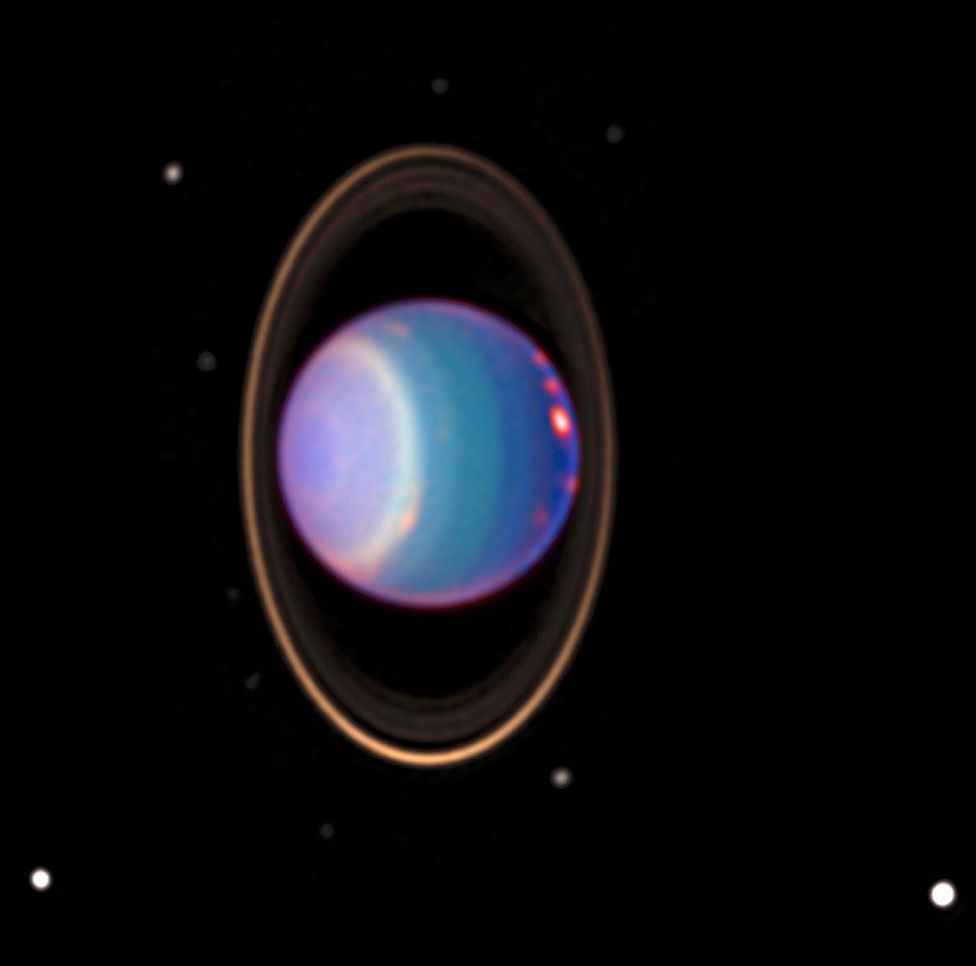
“Researchers think an in-depth study of Uranus can help them better understand the many similarly sized objects now being discovered around other stars.“
Uranus’s strange tilt is probably due to getting smacked by a very large body a long time ago…
Uranus is weird. It has rings. It has 13 moons, some of which may harbor life beneath their icy surfaces.
It has a funny name.
I get it. But learning more about how its formation affects planet formation is just not that important.
“Pure” researchers probably are interested, but frankly, if NASA wastes its time doing this, they will miss the opportunity to settle the Moon and Mars, mine asteroids for valuable resources, and explore other moons like Titan and Europa.
China will get there first.
Pure research is all fine and dandy, but it’s also incredibly expensive — taxpayer dollars should be spent on projects with more tangible benefits.
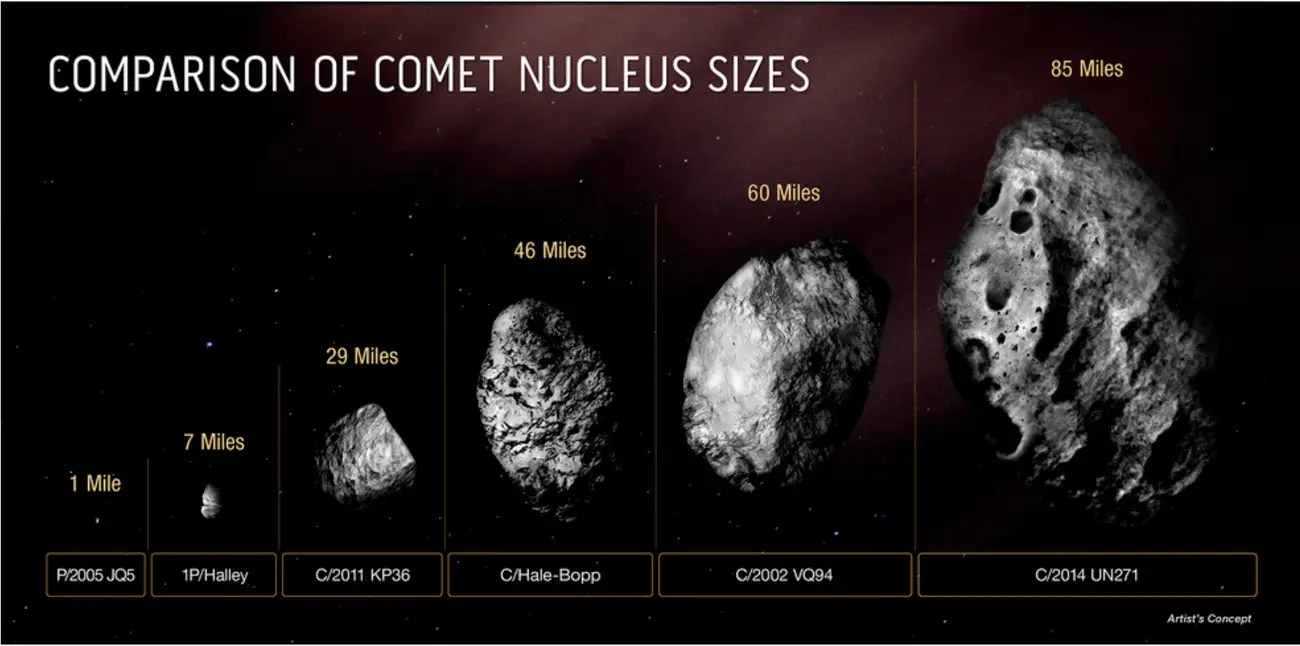
C/2014 UN271 on the far right has a nucleus 50 larger than the average comet.
“Its size, which NASA noted is larger than the state of Rhode Island, is an estimation because the comet is still too far away for Hubble to tell for certain.”
Note that the original title was “…toward the Inner Solar System”…and yet the article goes on to explain that it won’t come any closer than a billion miles from the Sun, “‘slightly farther than the distance of the planet Saturn,’ NASA said in a statement.“
Uh. The inner solar system is *no where near* Saturn. Try again, fear-mongers.
Sigh.
Anyway, it really is the proverbial “tip of the iceberg,” since this was seen with Hubble, and we have yet to see just what the new James Webb telescope can do. The Oort Cloud is a big place. There must be millions upon millions comets just waiting to be discovered.
In short, the algae will use sunlight to transform CO2 into sugars that are then enhanced by bio-engineered E.coli into 2,3-butanediol. Interestingly, 2,3-BDO is not entirely conceptual as it currently exists and is mainly used to produce rubber components. It has just never been thought of as fuel before.
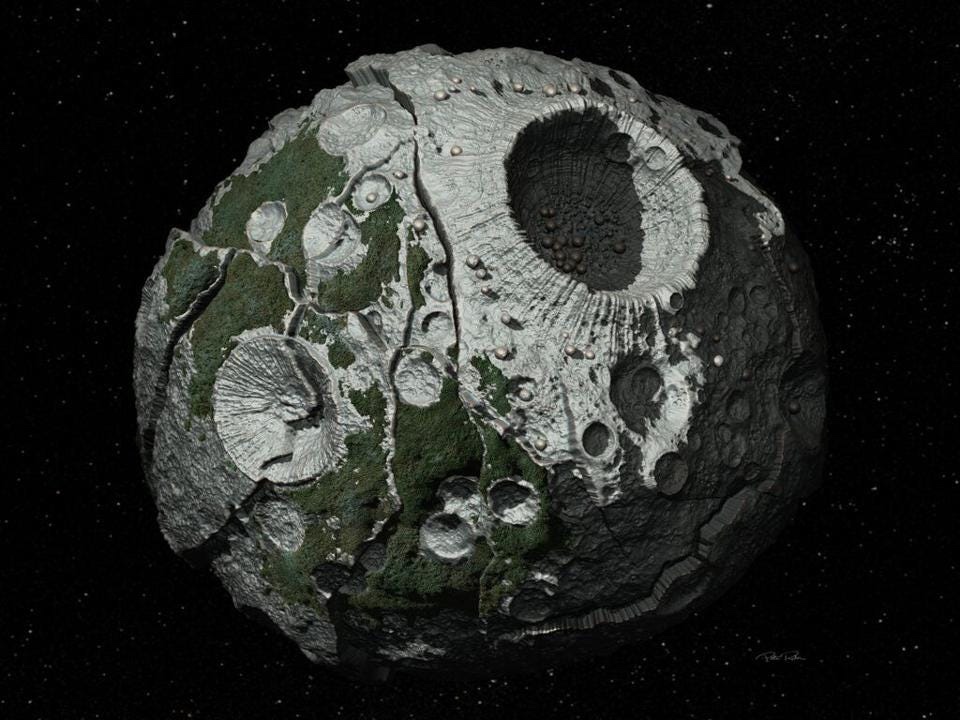
Psyche is an asteroid that was probably once the heart of a planet in the early system, one that didn’t survive the violent process of planet formation.
Yep — that “worth more than the global economy” rock in space.
But we’ll have to wait a few years to find out if it’s “less metal and more hard rock” — the Psyche Mission rockets off in August 2022 and the probe won’t arrive for four more years.
“We give off waste heat (from industry and homes and so on) and artificial light at night, but perhaps most significantly, we produce chemicals that fill our atmosphere with compounds that wouldn’t otherwise be present. These artificial atmospheric constituents just might be the thing that gives us away to a distant alien species scanning the galaxy with their own powerful telescope.”
“The laser, a 10-meter wide array on Earth, would heat hydrogen plasma in a chamber behind the spacecraft, producing thrust from hydrogen gas and sending it to Mars in only 45 days. There, it would aerobrake in Mars’ atmosphere, shuttling supplies to human colonists or, someday perhaps, even humans themselves.”
The only problem is that there’s no way to slow the thing down right now…”aerobraking” using current technology would cause gees of 8 or above for several minutes and temperatures hot enough to cook whatever’s in the ship to a nice toasty crisp.
Not even the G-Force would survive! Well, OK, maybe. (But only if they reverted to their original Japanese name – “Gatchman.”)
But what if robots could design a receiving station with lasers to “catch” the ship and slow it down…?
Hmmm. Sounds like a science fiction work in progress…
SuperCam showed that the coatings are enriched in hydrogen and sometimes magnesium. In addition, images from Mastcam-Z suggest that they also contain iron oxides. Both the hydrogen and iron oxides point to past water being involved in the formation of the coatings. That shouldn’t be too surprising, perhaps, since this area in Jezero Crater used to be a lake a few billion years ago.
The rocks resemble so-called desert varnish, which protect microbes from the sun’s radiation. It’d be interesting to find out whether cyanobacteria that once existed on Mars did this…but the four billion year old question is, how did those bacteria get there in the first place?