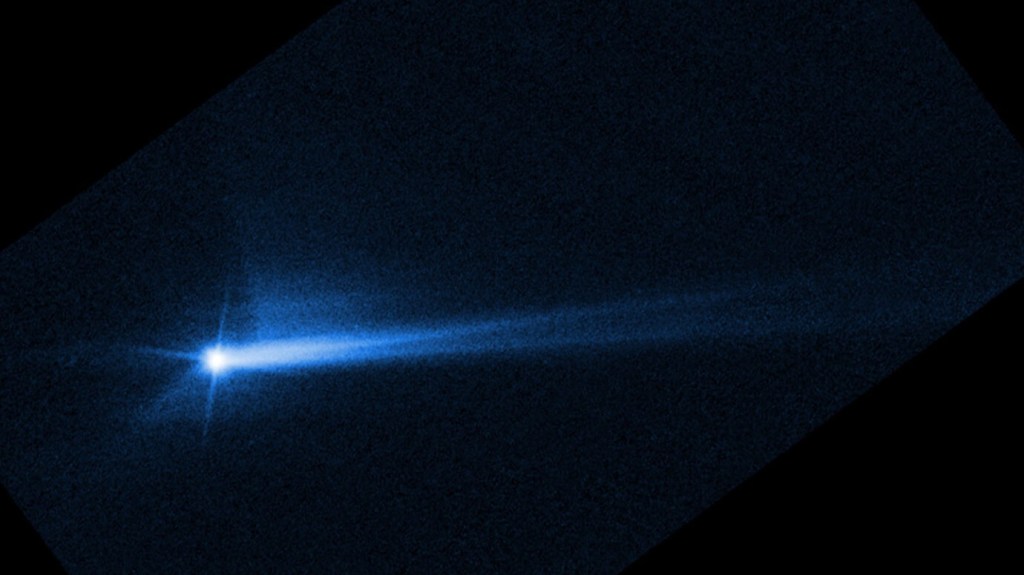
A change of 32 minutes in orbit — but only 4% of the total orbital period. To deflect an asteroid away from Earth, it’d better be done several years in advance. 🌏
Half of a dilithium crystal? (It’s a new type of crystal called “Chang’esite” (after the ancient Chinese moon goddess).
I should be posting another chapter from Bringer of Light, but I don’t feel like writing that right now, what with a humongoid typhoon slowing churning its way here.
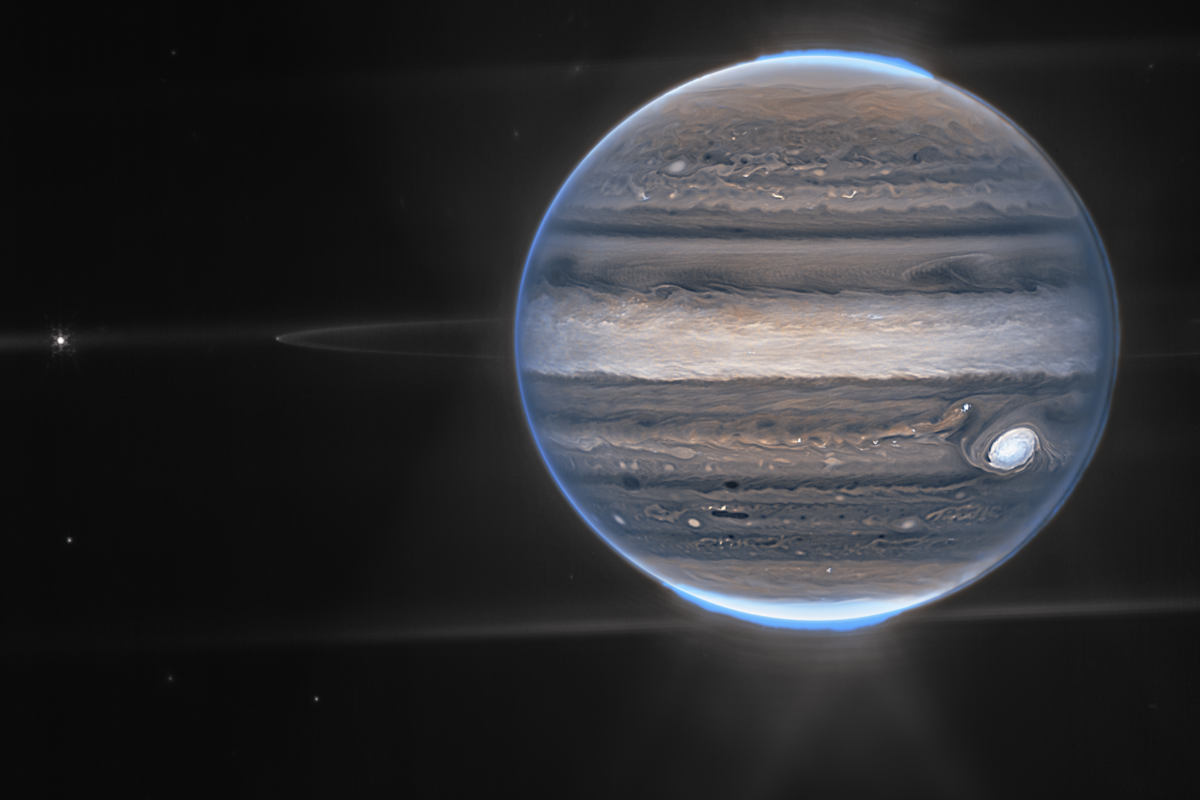
Courtesy NASA. Note that the blue, white, green, yellow, and orange colors are artificial, only added to make features revealed by infrared stand out for human eyes. You can see the planet’s rings, aurora, and two “tiny” moons (at left; they’re not really that tiny!).
“We’ve never seen Jupiter like this. It’s all quite incredible,” said planetary astronomer Imke de Pater, of the University of California, Berkeley, who helped lead the observations.
“We hadn’t really expected it to be this good, to be honest,” she added in a statement.
The above is supposed to be in “quote” format, but WP really messed up this feature when they switched to so-called “block” mode (which I can’t stand).
Anyway, the image is fairly spectacular, from the new James Webb Space Telescope which is positioned 1 million miles away from Earth (i.e., in the second LaGrange point, or L2).
First of all, stop calling it “the golden asteroid.” That’s confusing people (the headline of the article linked below even uses the phrase “gold mine.” Come on, lazy journalists.)
If 16 Psyche is worth mining, when could such operations proceed? Citigroup thinks that space mining, including from the moon and asteroids, will be a $100 billion-per-year business by 2040. Launch costs will continue to decrease and experience in operating in space will continue to expand until such a business makes economic sense.
Well, how heavy do you think the materials to make buildings and ships in outer space are?
If we’re serious about putting people on the Moon and Mars, then it makes much more sense to set up robotic mining factories and assemble everything in space.
All this needs is a little incentive…like a new space race…
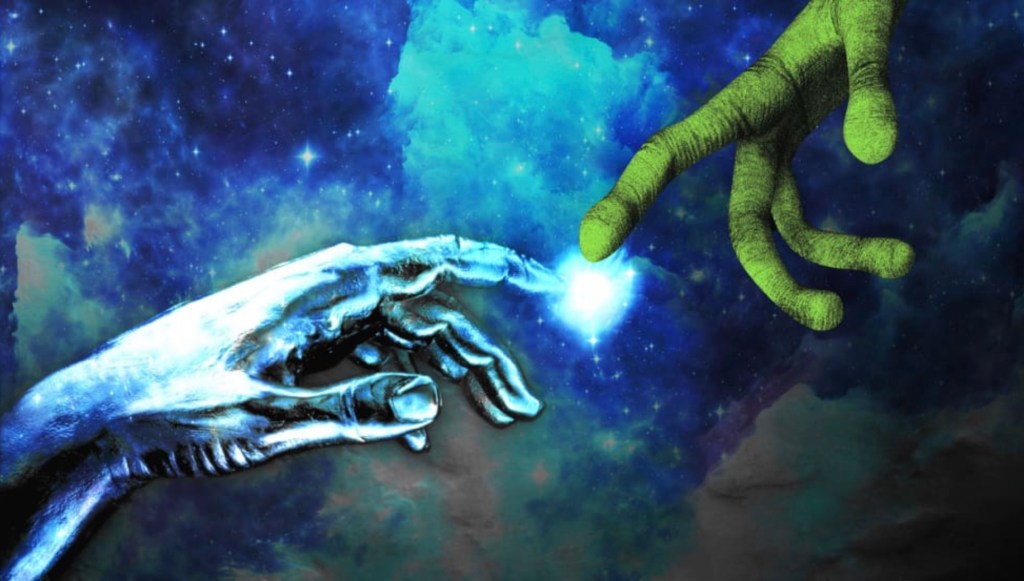
Our search for alien life is getting serious. With better telescopes and a growing scientific consensus that we’re probably not alone in the universe, we’re beginning to look farther and wider across the vastness of space for evidence of extraterrestrials.
But it’s possible we’re looking for too few signs in too few places. Having evolved on Earth, surrounded by Earth life, we assume alien life would look and behave like terrestrial life.
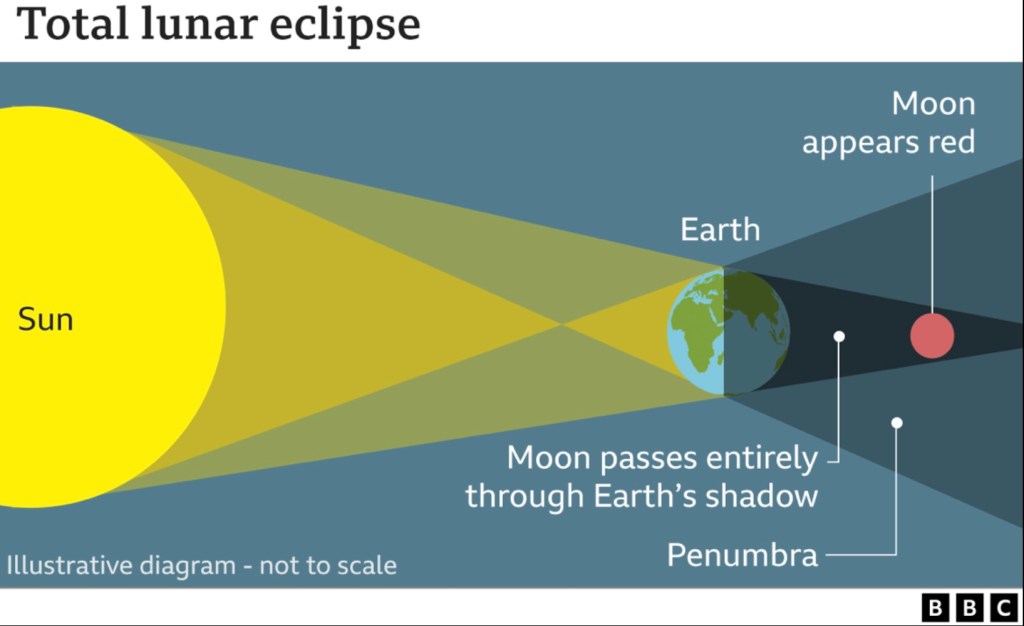
I love the “illustrative diagram” note for people who might complain this is not scientifically accurate due to scale.
…if you are lucky enough to live Western Europe, parts of northwestern Africa, and some of the Americans…
As for why the Moon appears red…
“You’ll actually be seeing every sunrise and every sunset occurring around the Earth at once. All of that light will be projected on to the Moon.” (Dr Gregory Brown, Royal Observatory
And if you happened to be standing on the Moon at the time, you’d see a blood ring encircling the Earth in front of you (ah, assuming you were not on the other side of the Moon).
Come on. Somebody has got to figure out how to get a picture of that.
In short, the algae will use sunlight to transform CO2 into sugars that are then enhanced by bio-engineered E.coli into 2,3-butanediol. Interestingly, 2,3-BDO is not entirely conceptual as it currently exists and is mainly used to produce rubber components. It has just never been thought of as fuel before.
Ya know, I’m pretty sure we need to figure out “this whole food-air deal” first (to quote comedian Bill Hicks).
“The US space agency confirmed that there were currently no plans for a field or project office to explore the topic in any detail but that could change as we get closer to putting humans on Mars.“



 M Thomas Apple Author Page