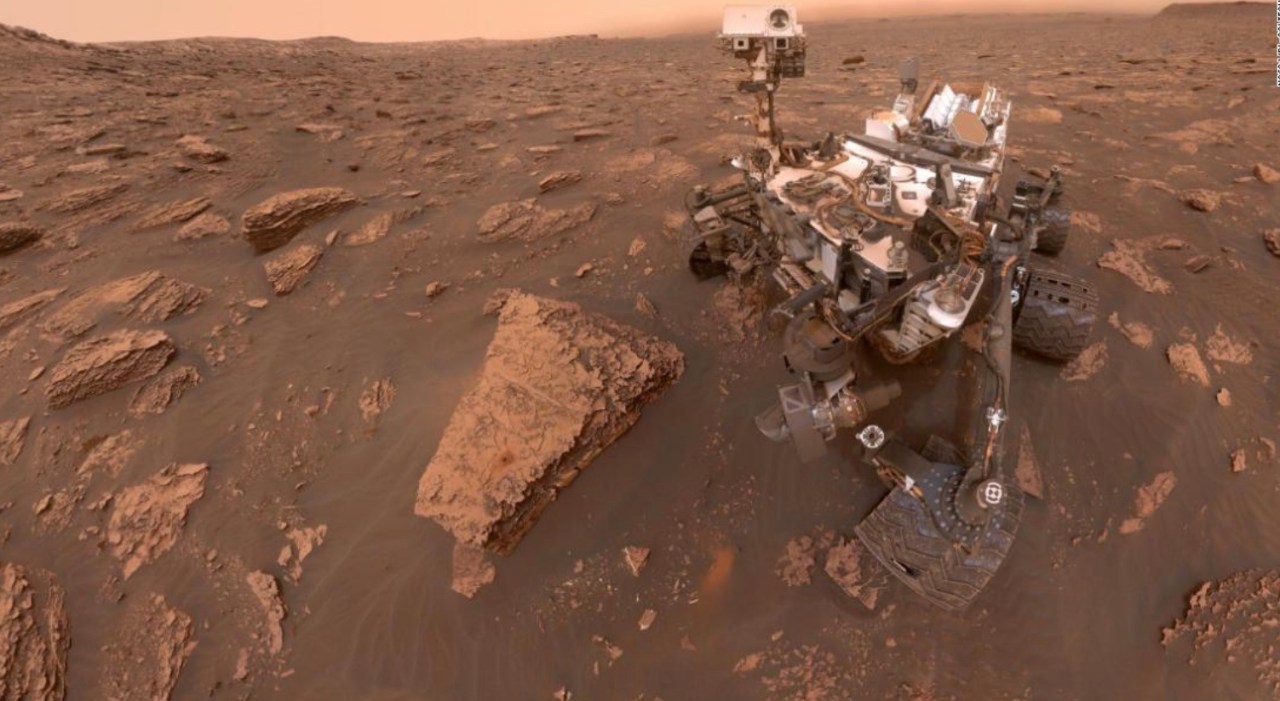
“What is the evidence against the possibility of life on Mars?” Levin wrote. “The astonishing fact is that there is none.”
Uh, no, sorry. That’s an illogical fallacy called “begging the question.”
Often phrased like this: “Absence of evidence is not evidence of absence.”
Or, as a friend once joked, “Just because you haven’t found any aliens doesn’t mean there aren’t any!”
Well, yeah, but that doesn’t prove anything except that we just don’t know.
See, science doesn’t work like that. It demands skepticism, careful theorizing based on positive evidence.
And replication.
If findings can’t be independently confirmed and reproduced by an outside observer, then the evidence isn’t strong enough.
Sorry. No smoking gun. Yet.
(Believe me, if scientists knew that Mars had life, we’d hear about it ad infinitum. Carl Sagan put it best: Scientists are terrible at keeping secrets.)
After completing its first year of observations in the southern sky, NASA’s Transiting Exoplanet Survey Satellite has spotted some intriguing new exoplanets only 31 light-years away from Earth.
Um. “Only” 31 light years.
One planet is 22% larger than Earth, has a surface average of around 490ºF, and a year of just under 4 days.
Another is more than 6 times the size of Earth, is a balmy -64ºF, and a year of about 56 days.
My award-winning SF novella Adam’s Stepsons featured clones, which as some reviewers noted came a little after the peak of clones (although I wonder if we have yet to hit the “peak,” given scientific progress).
So as I was scouring the net for summer reads, I came across a lot of books about clones and ethical dilemmas (or lack thereof).
The main article I’ve linked here is from Tor.com, which often posts great stuff about SF Continue Reading
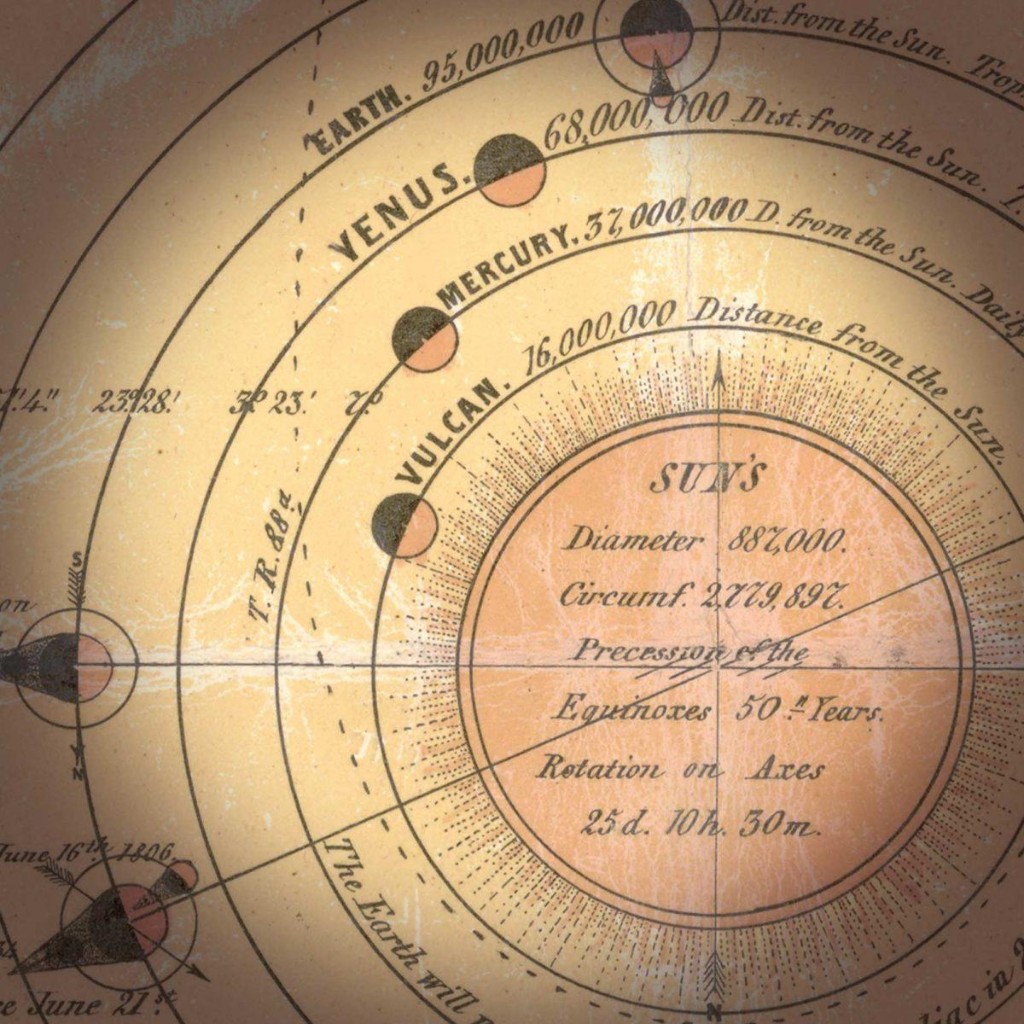
As a kid I remember reading about “Vulcan,” which people used to think existed between Mercury and the Sun but always orbited on the opposite side.
Completely fictional, of course.
But…
Vulcan made a comeback as the fictional home of Spock in Star Trek. It was said by Star Trek creator Gene Roddenberry to be orbiting around 40 Eridani (also called HD 26965), a triple star system in the constellation of Eridanus “the river” in the southern hemisphere just 16 light years distant. In September 2018, astronomers at the University of Florida in Gainesville found a “super-Earth” exoplanet orbiting exactly where Vulcan was said to be.
Still, the fact that someone as highly educated as Chi wrote an entire book based on salvation by extraterrestrials could be a sign of how daunting our future is starting to look.
Or, conversely, how wack some Oxford dons really are…
“Fundamentally, we may be able to change how we create and use the materials with lifelike characteristics. Typically materials and objects we create in general are basically static… one day, we may be able to ‘grow’ objects like houses and maintain their forms and functions autonomously.”
You mean like Iron Man from a decade ago (as seen in Infinity War)?
Honestly, scientists these days…can’t even keep up with comic books from the ’80s…
(That said, I’m not entirely thrilled with the idea of living in a living house that can maintain its own form and feed itself…on what?! you might ask…)
[A]n obvious obstacle to identifying our neighbors is the tendency to limit our imagination to what we already know. But this should not necessarily remain the case in the future.
Frankly, I think it’s high time that somebody invent the warp drive so that the Vulcans will finally notice us.








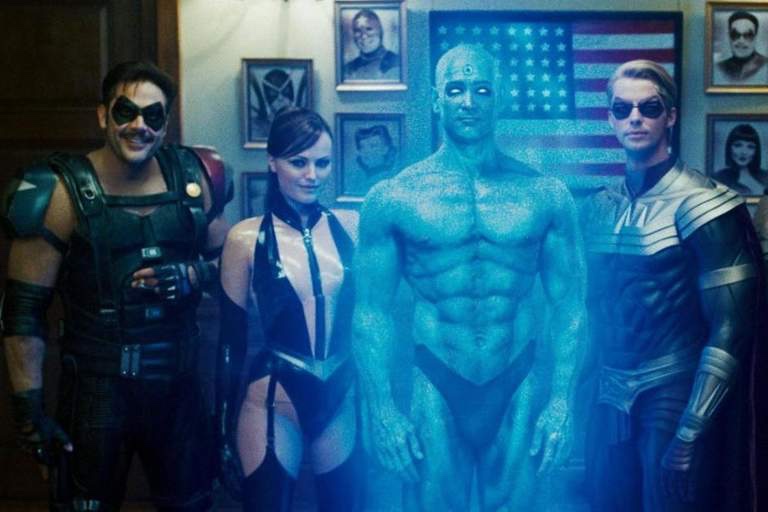 Ten years ago, Alan Moore (and Dave Gibbons)’s Watchmen finally made it out of development hell and onto the big screen.
 M Thomas Apple Author Page